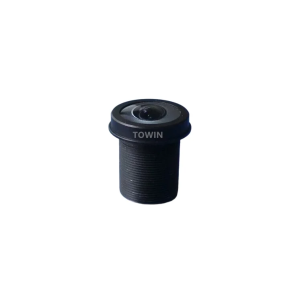



Fisheye Lens – CCL118019MP
05/21/2020
Fisheye Lens – CCL118024MP
05/21/2020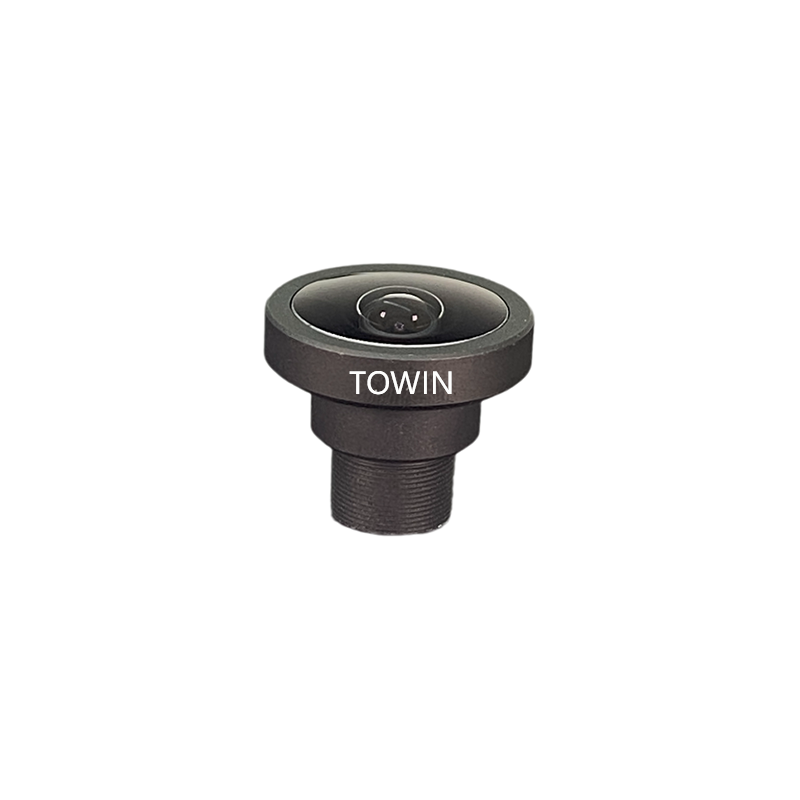
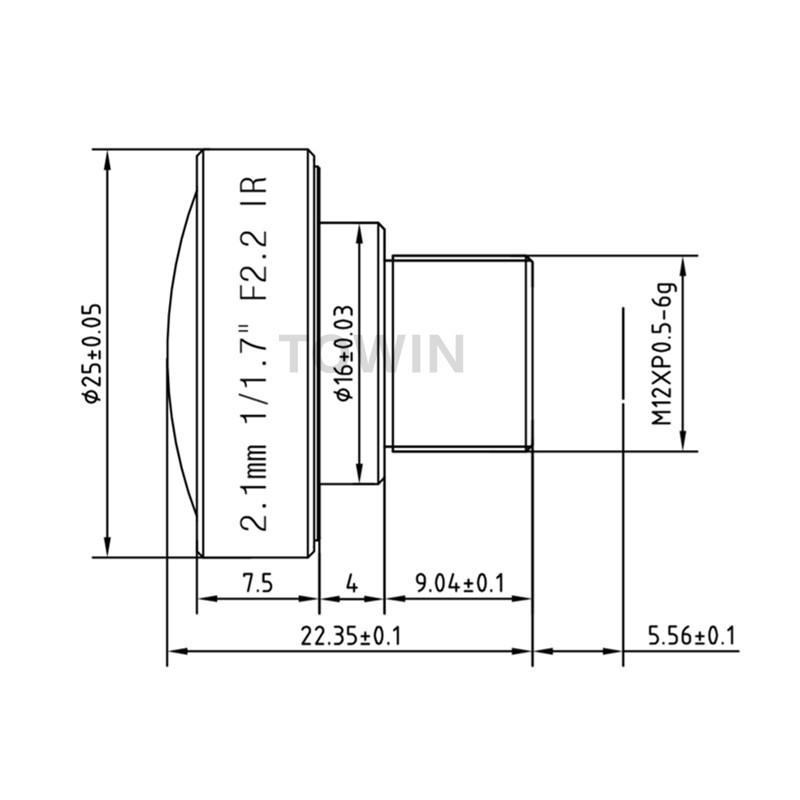
Fisheye Lens – CCL118021MPR
2.1mm 8MP M12 fisheye lens with 180° FOV, 1/1.8″ format, F2.2 aperture, IR correction and 27.9mm TTL.
CCL118021MPR Fisheye CCTV HD lens IR corrected 1/1.8″ Φ5.6 M12 lens 180° 8MP F2.2 security surveillance
| IMAGE FORMAT | Φ5.6, 1/1.8″ |
| FOCAL LENGTH | 2.1mm |
| F.O.V. | 180°(D) |
| 180°(H) | |
| 180°(V) | |
| RESOLUTION | 8 Megapixel |
| DISTORTION | -94% |
| APERTURE | F2.2 |
| MOUNT | M12x0.5 |
| IRIS | Fixed |
| M.O.D. | 0.1m |
| T.T.L. | 27.9mm |
| IR | Corrected |
2.1mm 8MP M12 Fisheye IR Corrected Lens – 180° FOV
This 2.1mm M12 fisheye lens is designed for compact camera systems requiring high-resolution imaging and extremely wide scene coverage. Supporting a 1/1.8″ image format, 8 megapixel resolution, and a 180° field of view in diagonal, horizontal, and vertical directions, the lens enables a single camera to capture a very broad surrounding area. Its 2.1mm focal length and F2.2 fixed aperture provide an effective optical configuration for ultra-wide-angle imaging, while the M12x0.5 mount supports integration into compact embedded camera modules. With an IR-corrected optical design, this 8MP M12 fisheye lens is suitable for imaging systems where wide coverage and consistent optical performance across visible and near-infrared wavelengths are important.
M12 Fisheye Lens Core Highlights
- 8MP High-Resolution Imaging: Supports 8 megapixel imaging for detailed capture in compact camera systems.
- 180° Ultra-Wide FOV: Provides 180° diagonal, horizontal, and vertical viewing coverage.
- 2.1mm Fixed Focal Length: Short focal length enables extremely wide-area scene capture.
- IR Corrected Optical Design: Helps maintain consistent optical performance across visible and near-infrared wavelengths.
- M12x0.5 Mount: Compact threaded interface simplifies integration into embedded camera platforms.
M12 Fisheye Lens Applications & Compatible Devices
High-Resolution Panoramic Monitoring
The combination of 8MP resolution and 180° FOV makes this lens suitable for systems that need both broad scene coverage and higher image detail. A single camera can monitor a large area while providing more pixels for subsequent image analysis.
Compatible devices: panoramic monitoring cameras, wide-area security cameras, ceiling-mounted cameras, high-resolution embedded cameras.
For security-focused optical requirements, explore TOWIN’s Smart Security Solutions.
Indoor Wide-Area Security
The 180° viewing angle is useful for monitoring rooms, entrances, retail environments, corridors, and other areas where a conventional narrow-angle lens may leave blind zones. The 0.1m minimum object distance also allows the lens to work in relatively close-range installation environments.
Compatible devices: indoor security cameras, smart home cameras, IoT monitoring devices, compact network cameras.
Robotics and Environmental Awareness
For mobile robots and compact autonomous platforms, an ultra-wide-angle lens can provide a broad view of the surrounding environment. The 8MP resolution adds greater image detail for systems performing visual analysis after image capture.
Compatible devices: mobile robots, service robots, autonomous platforms, embedded vision modules.
See Robotics Vision Solutions for application-specific optical requirements.
Embedded Vision Systems
The M12x0.5 interface and relatively compact 27.9mm TTL make this lens suitable for embedded camera architectures where optical size and field of view are important design considerations.
Compatible devices: embedded camera modules, smart devices, IoT imaging systems, compact vision cameras.
8MP Resolution for Ultra-Wide Imaging
One of the main advantages of this model is the combination of 8MP resolution and 180° FOV. Ultra-wide fisheye lenses traditionally prioritize scene coverage, while higher resolution allows the captured image to retain more usable detail across the large viewing area.
The specified -94% distortion is an inherent characteristic of the fisheye optical configuration. Therefore, this lens should be selected when extremely wide coverage is more important than maintaining straight-line geometry. Applications requiring geometrically corrected images can combine the optical system with suitable digital distortion correction.
For additional information about distortion characteristics, visit the Distortion Guide.
IR Corrected Optical Performance
This model is specified as IR Corrected, making it different from a standard visible-light-only fisheye lens. IR correction can help control wavelength-dependent focus shifts and maintain more consistent image sharpness when the camera system operates across visible and near-infrared wavelengths.
This characteristic can be valuable in smart monitoring and embedded imaging systems that use near-infrared illumination or require stable imaging performance across different wavelengths.
How to Select This 8MP M12 Fisheye Lens
When selecting an ultra-wide M12 lens, the sensor format, image circle, required field of view, resolution, distortion characteristics, mechanical dimensions, and wavelength requirements should be considered together.
This model is best suited to projects where 8MP image detail and 180° scene coverage are both important. The 1/1.8″ format and Φ5.6 image circle should also be matched with the camera sensor before final integration.
Use the Sensor Guide to evaluate sensor compatibility and the FOV Calculator to plan the required viewing coverage.
For additional M12 optical options, visit the M12 Lenses category.
Frequently Asked Questions
Q1: What type of lens is this?
A: This is a 2.1mm fixed focal M12 fisheye lens designed to provide a 180° field of view in diagonal, horizontal, and vertical directions.
Q2: What resolution does this lens support?
A: The specified resolution is 8 megapixels, making it suitable for high-resolution compact camera systems.
Q3: What sensor format is supported?
A: The lens is specified for a 1/1.8″ image format with a Φ5.6 image circle.
Q4: Is this lens suitable for low-distortion applications?
A: No. The specified -94% distortion is characteristic of the fisheye optical design. The lens prioritizes extremely wide 180° coverage rather than rectilinear image geometry.
Q5: Is the lens IR corrected?
A: Yes. The specification identifies the lens as IR Corrected, making it suitable for systems requiring optical performance across visible and near-infrared wavelengths.
Q6: What mount does this lens use?
A: The lens uses an M12x0.5 mount, which is suitable for compact embedded camera modules and miniature imaging systems.
Q7: What is the minimum object distance?
A: The specified M.O.D. is 0.1m, or 100mm, supporting close-range wide-area imaging.
Q8: Can this lens be used for panoramic imaging?
A: Yes. Its 180° field of view makes it suitable for panoramic and wide-area imaging applications where maximum scene coverage from a single camera is required.
Explore Related TOWIN Products and Solutions
Explore additional compact M12 optical products, visit the M12 Lenses category.
For application-specific M12 requirements, explore the M12 Lens Solution.
For guidance on choosing the appropriate optical configuration, visit the Lens Selection Guide.
If you require a customized optical configuration for your camera system, contact TOWIN Lens.
Online contact