

Drone Imaging Lens Solutions
High-performance optical lenses for aerial photography, mapping, inspection, surveillance and AI vision systems.



Drone Imaging Lenses for UAV Vision Systems

Drone vision systems require lightweight, high-performance optical lenses to capture clear and accurate images during flight. Lens weight, resolution, distortion control, and field of view directly affect flight efficiency, image quality, and AI-based visual perception.

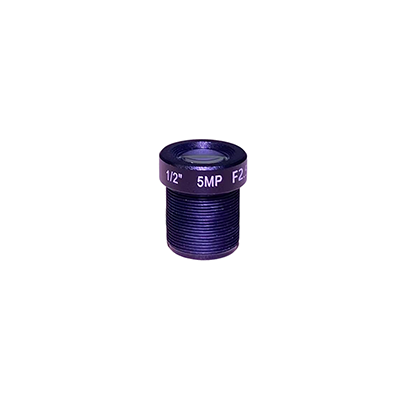
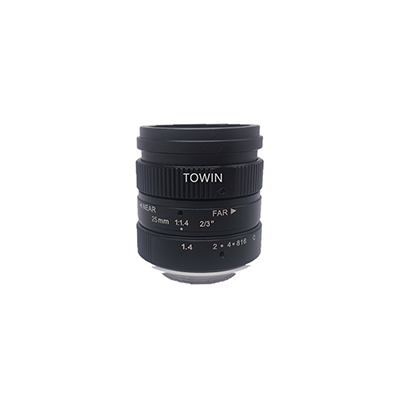
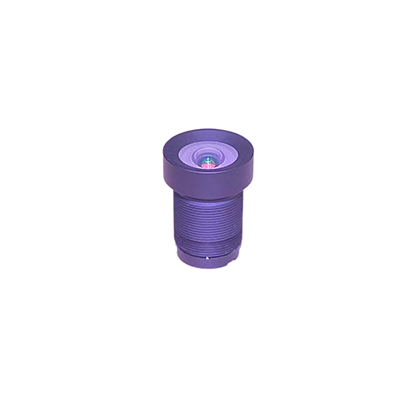
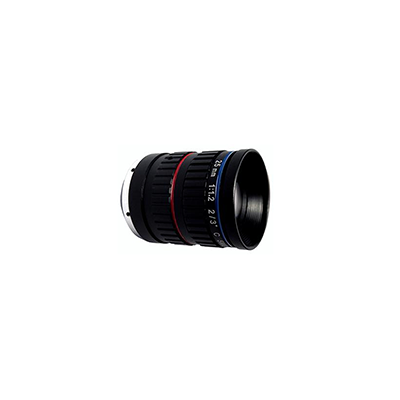
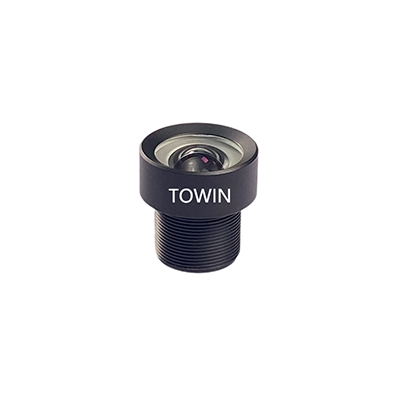
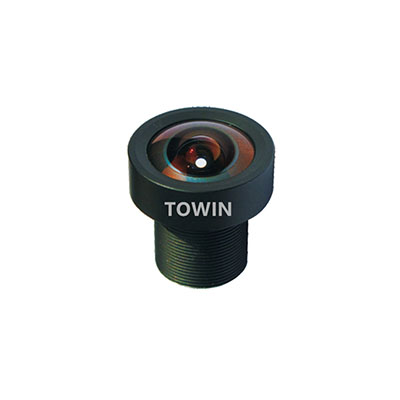
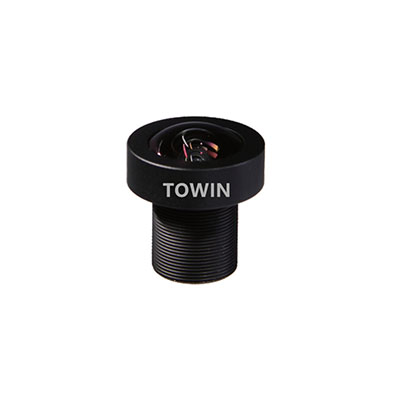
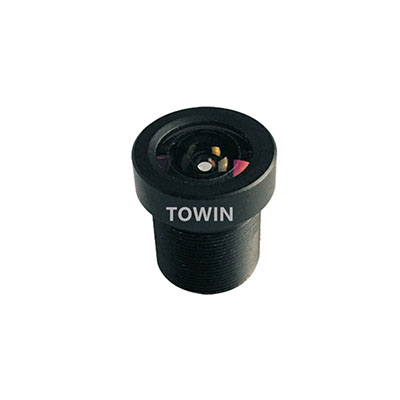
TOWIN provides customized drone imaging lens solutions for aerial photography, UAV mapping, industrial inspection, agriculture monitoring, thermal imaging, public safety, and autonomous navigation applications.

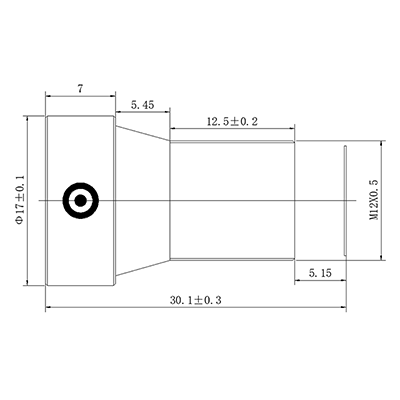
Our UAV lenses are optimized for compact camera modules, AI vision systems, and high-precision aerial imaging, supporting resolutions up to 20MP, lightweight designs from 3–20g, low distortion performance below 0.5%, and M12 / C-Mount integration.
Applications of Drone Imaging
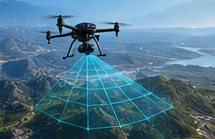
Aerial Mapping
Lens Requirements
Distortion <0.5%
High MTF
Large Image Circle
8MP+
Recommended Lens
Thermal Drone
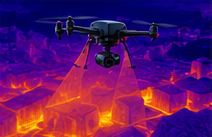
Lens Requirements
IR 850nm
IR 940nm
Thermal Compatible
High Transmission
Recommended Lens

Agriculture Drone
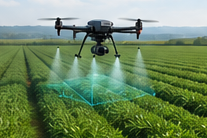
Lens Requirements
Wide Angle
Lightweight
Waterproof
Anti-vibration
Recommended Lens

Inspection Drone
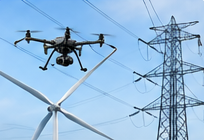
Lens Requirements
High Resolution
Long Working Distance
High Contrast
Stable Performance
Recommended Lens
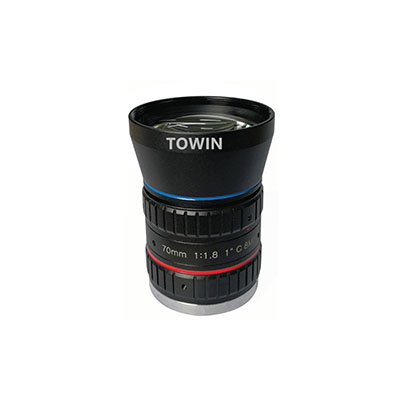
Surveillance Drone
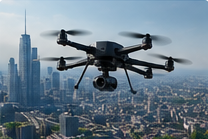
Lens Requirements
High Sensitivity
Low Distortion
Wide FOV
Day & Night
Recommended Lens
FPV / Racing Drone
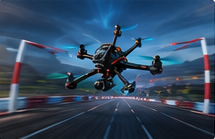
Lens Requirements
Ultra Wide Angle
Low Latency
Lightweight
High Durability
Recommended Lens
Why Choose TOWIN for Drone Imaging Lenses


Core Features & Typical Parameters
| Feature | Typical Value |
|---|---|
| Resolution | 2MP – 20MP |
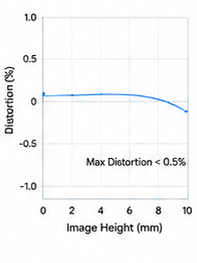
| Distortion | < 0.5% |
| Weight | 3 – 15g |
| Sensor Size | 1/4" – 1" |
| FOV (Diagonal) | 60° – 180° |
| Operating Temperature | -40°C ~ 85°C |
| IR Wavelength | 850nm / 940nm |
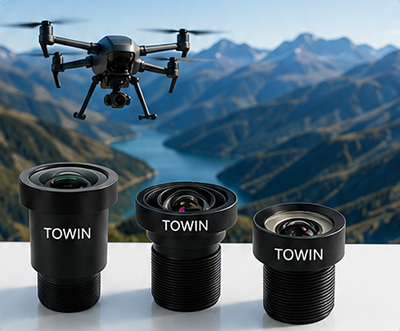
Technical Specifications Overview
Optical Specifications
| Parameter | Typical |
|---|---|
| Resolution | Up to 20MP |
| Sensor | 1/4" – 1" |
| FOV | 60° – 180° |
| Distortion | < 0.5% |
| CRA | Optimized |
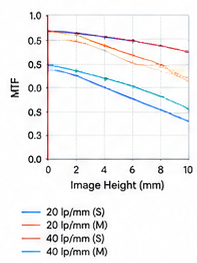
| MTF | High Performance |
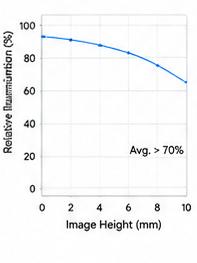
| Relative Illumination | > 70% |
| Wavelength (IR) | 850nm / 940nm |
Mechanical Specifications
| Parameter | Value |
|---|---|
| Mount | M12 / C |
| Weight | 3 – 20g |
| Dimensions | Customizable |
| Operating Temperature | -40°C ~ 85°C |
| Storage Temperature | -40°C ~ 85°C |
| IR Wavelength | 850nm / 940nm |
| Focus Type | Fixed / Manual |
| Vibration Resistance | > 10G |
Optical Performance for Drone Imaging
MTF Curve
Distortion Curve
Relative Illumination
CRA Distribution
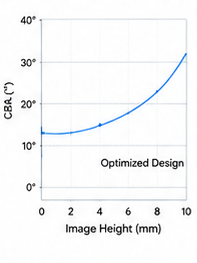
Typical optical performance of TOWIN drone imaging lenses.
Drone Lens Selection Flow
Select Drone Type
Define the drone platform and mission type.

Select Camera Sensor
Choose the sensor size and type (e.g., 1/2.3", 1").

Determine Flight Altitude
Identify the typical operating altitude of the drone.

Calculate Required FOV
Calculate the required field of view.

Choose Focal Length
Select the focal length to achieve the desired FOV.

Check Weight
Ensure the lens weight is suitable for the payload.

Confirm Distortion
Confirm distortion meets the accuracy requirements.
Select Lens
Choose the best lens that meets all requirements.
TOWIN offers a wide range of lightweight, high-performance lenses for every mission.
Drone Optical Spec Recommendations
| Application | Resolution | Sensor | Distortion | FOV (Diagonal) | Recommended Lens | Key Requirements |
|---|---|---|---|---|---|---|
| FPV Drone | 2MP | 1/3" | <2% | 160° | Wide Angle Lens | • Ultra wide angle • Low latency • Lightweight |
| Mapping UAV | 12MP | 1" | <0.5% | 80° | Low Distortion Lens | • Low distortion • High resolution • Accurate mapping |
| Inspection Drone | 8MP | 1/1.8" | <1% | 70° | Telephoto Lens | • Long working distance • High contrast • Stable imaging |
| Thermal Drone | 640×512 | Thermal Sensor | IR | 45° | Thermal Lens | • IR 850/940nm • High transmission • Thermal optimized |
| Agriculture UAV | 5MP | 1/2.3" | <1% | 100° | Wide Angle Lens | • Wide coverage • Lightweight • Dust & water resistant |
| AI Navigation | 2MP | 1/2.7" | <1% | 120° | M12 Lens | • Wide FOV • Low distortion • Compact & lightweight |


How to Choose a Drone Camera Lens
Precise Matching
Improve imaging effect
Professional Reliable
Industrial-grade quality
Flexible Compatible
Multi-scenario applications
High-Definition Imaging
Higher resolution
STEP 1 Sensor size
The lens's imaging circle must completely cover the sensor to ensure complete imaging and image quality.


STEP 2 Field of view (FOV)
The field of view determines how much of the scene a drone camera can cover at once. Wide-angle lenses are suitable for shooting over a wide area, while narrow field of view lenses are suitable for observing distant objects.
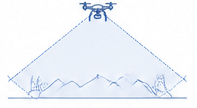
Landscape imaging
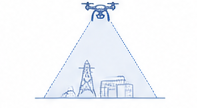
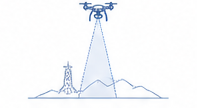
Monitoring
STEP 3 Focal length selection
Different drone applications require different focal lengths, which directly affect the coverage area, target size, and imaging accuracy.
| Focal Length | Corresponding Application |
|---|---|
| 1.8mm | FPV drones and ultra-wide aerial imaging |
| 2.8mm | General UAV surveillance and navigation |
| 4mm | Industrial inspection and security monitoring |
| 6mm | Agricultural drones and infrastructure inspection |
| 8mm+ | Long-range observation and precision monitoring |
⊕ Explore more optical lens solutions for drone imaging, robotics, and machine vision applications.
Recommended Lens Categories
M12 Lenses
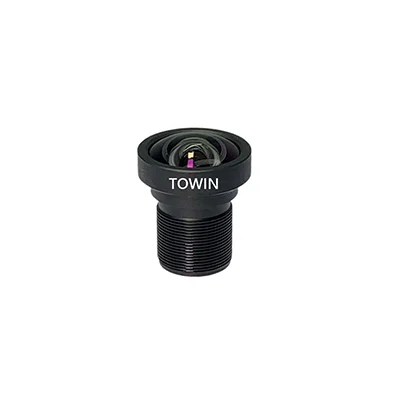
Low Distortion Lens
Thermal Imaging Lenses
Wide-Angle Lens
Typical Drone Vision Systems
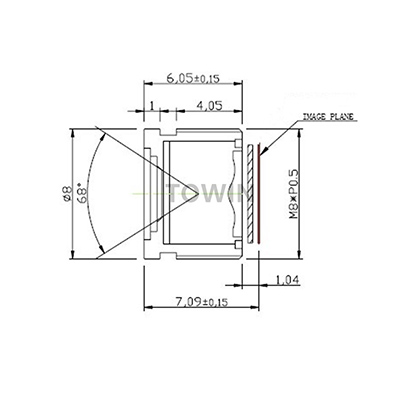
FPV Camera Systems
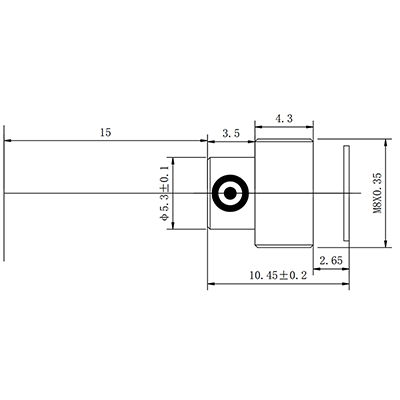
AI Drone Vision
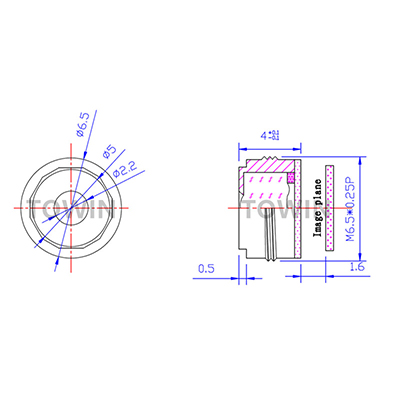
Mapping & Survey
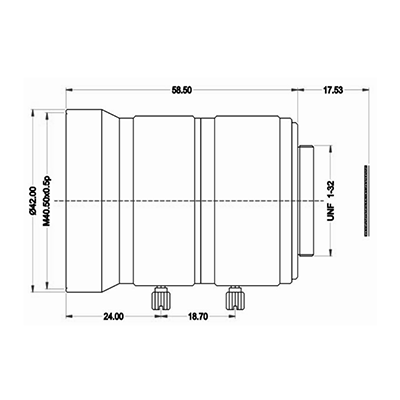
Thermal UAV Systems
Custom Drone Lens Development
TOWIN provides customized optical lens solutions for UAV manufacturers, drone camera developers, and AI vision system integrators.
We support:
- Custom focal length design
- Sensor matching optimization
- Low distortion optical engineering
- IR and thermal compatibility
- Lightweight mechanical structures
- Customized lens mount solutions
- ODM/OEM optical development
Optical Engineering Capabilities for Drone Imaging
Optical Design & Simulation
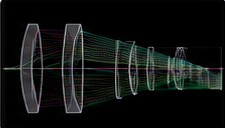
Advanced optical simulation ensures high performance and reliability.
Mechanical & Structural Optimization

Optimized mechanical design for lightweight and reliable integration.
Optical Performance Validation
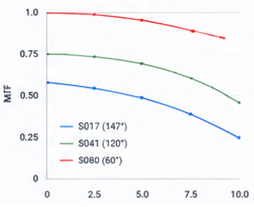
Comprehensive testing ensures stable performance in real-world conditions.
Prototype & Mass Production
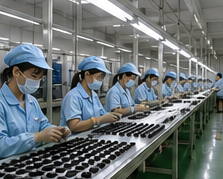
From prototype to mass production, we ensure consistent quality and supply.
Knowledge Center
Frequently Asked Questions
Need a Custom Drone Imaging Lens Solution?
Let’s Build the Right Optical Solution Together
Have a question, need a quote, or want to discuss your project? Our optical experts are ready to help.

Expert Support
Get professional advice from our optical engineers.

Tailored Solutions
We provide customized lens solutions that fit your application.

Reliable Quality
High-quality manufacturing with strict testing and quality control.

Fast Response
We value your time and will get back to you as soon as possible.
Send Us a Message