

Machine Vision Lens Selection Guide
Learn how to choose the right machine vision lens by matching sensor size, field of view, working distance, resolution, and imaging requirements. Explore lens selection methods for industrial vision systems.
Why Choosing the Right Lens Is Critical
Selecting the right lens is one of the most important steps in building a reliable machine vision system. While the image sensor captures visual data, the lens determines how that data is formed, directly affecting image quality, measurement accuracy, field of view, and inspection reliability.
An unsuitable lens can cause blurred images, geometric distortion, insufficient coverage, poor edge sharpness, or inconsistent image quality. These issues reduce detection accuracy and may lead to measurement errors or missed defects, even when using a high-resolution industrial camera.
A successful lens selection requires balancing several key factors, including sensor size, focal length, working distance, field of view, resolution requirements, and environmental conditions. Understanding how these parameters work together helps engineers choose the most suitable lens for each machine vision application.

Image Quality
Sharp, clear images for reliable inspection.

Measurement Accuracy
Minimize distortion for precise dimensional analysis.

Field of View
Capture the required inspection area.

System Reliability
Ensure stable performance across industrial environments.
| Wrong Lens Selection | Correct Lens Selection | |
|---|---|---|
| Blurred images | → | Sharp images |
| Narrow field of view | → | Complete coverage |
| High distortion | → | Accurate measurements |
| Poor edge quality | → | Uniform image sharpness |
| Reduced detection accuracy | → | Reliable inspection results |
How Lens Selection Affects System Performance
Image Quality
High-quality lens delivers sharp images with excellent contrast, edge-to-edge clarity, letting machine vision reliably spot tiny defects and fine details.
- ✓High sharpness
- ✓Excellent contrast
- ✓Clear edge performance
- ✓Better defect detection
Measurement Accuracy
Low-distortion optics help maintain geometric accuracy, enabling precise dimensional measurement and reducing inspection errors in metrology applications.
- ✓Low distortion
- ✓High dimensional accuracy
- ✓Stable measurement
- ✓Reliable metrology results
Field of View
Selecting the correct focal length ensures the camera captures the required inspection area while maintaining sufficient image resolution for accurate analysis.
- ✓Appropriate coverage
- ✓Optimized focal length
- ✓Balanced resolution
- ✓Efficient inspection
System Efficiency
A properly matched lens improves overall system efficiency by reducing redesign, minimizing hardware changes, and ensuring long-term imaging stability.
- ✓Lower engineering risk
- ✓Reduced redesign
- ✓Cost and time saving
- ✓Long-term reliability
An optimized lens not only improves image quality but also enhances inspection reliability, reduces engineering effort, and maximizes the overall performance of the entire vision system.
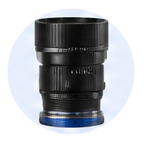
Lens Selection
Choose the right lens
Sharp Image
Clear and high-quality image

Accurate Detection
AI algorithms work accurately

Reliable Inspection
Stable and reliable results
Key Parameters in Lens Selection
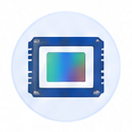
1. Sensor Size
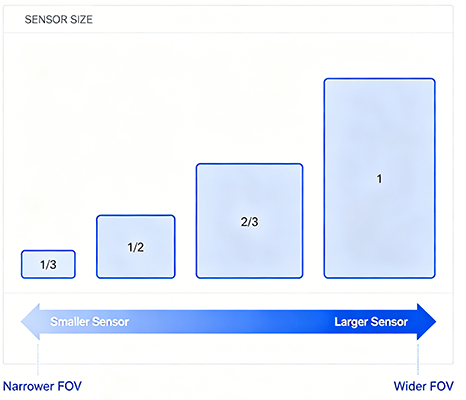
The lens image circle must fully cover the camera sensor to avoid vignetting and ensure complete image coverage.
2. Field of View (FOV)
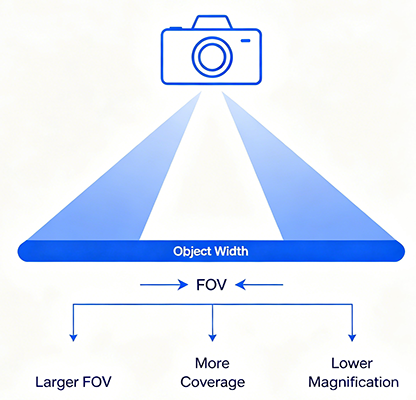
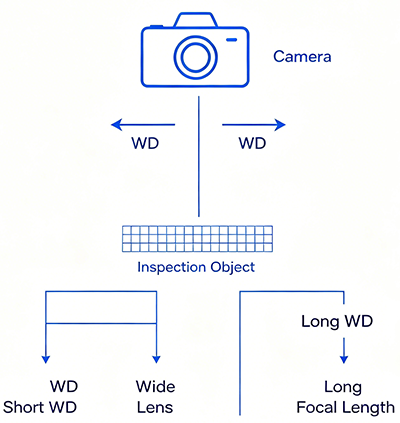
Define the physical area that must be captured. A larger field of view typically requires a shorter focal length.
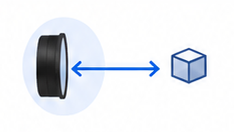
3. Working Distance (WD)
The distance between the lens and the object directly influences focal length selection and imaging scale.
4. Focal Length
Controls image magnification, viewing angle, and the relationship between working distance and field of view.

5. Resolution
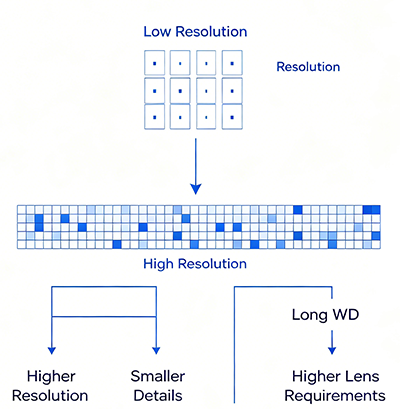
The lens resolving power should match or exceed the sensor resolution to preserve image detail and inspection accuracy.
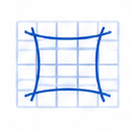
6. Distortion
Low-distortion lenses maintain geometric accuracy and are recommended for measurement, metrology, and precision inspection.
How These Parameters Work Together

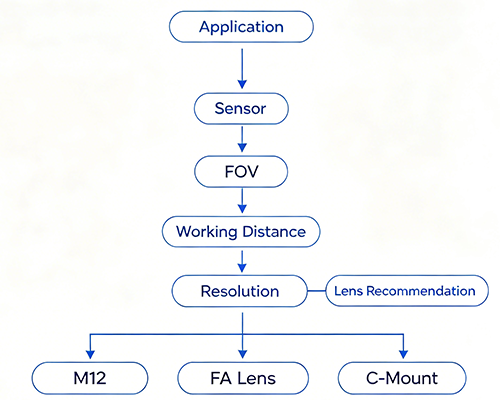
Define the inspection task and system requirements.
Choose the camera sensor based on resolution and size.
Determine the target area that must be visible.
Set the distance between lens and object.
Calculate the focal length to achieve the required FOV at WD.
Verify that the lens resolution meets or exceeds the sensor.
Confirm distortion and select the optimal lens.
A well-matched lens that carefully considers all key parameters will deliver sharp, accurate, and reliable images, enabling your machine vision system to perform at its best.
Lens Selection Checklist (Before You Start)


Machine Vision Lens Selection Workflow
Step 1. Define Your Application
Different applications have different requirements. Define your application clearly to determine the right lens specifications.
Common Machine Vision Applications
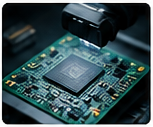
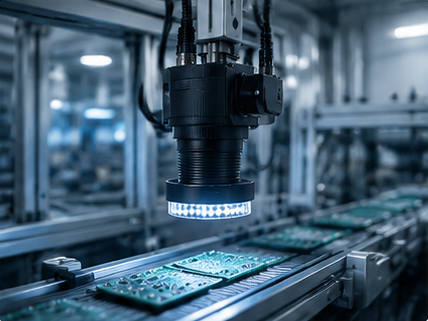
PCB Inspection
Detect defects and measure components on PCBs.
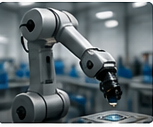
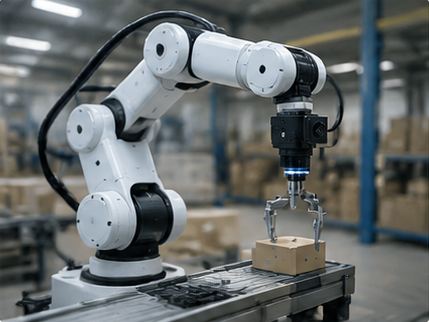
Robot Guidance
Enable robots to locate and pick objects accurately.

Quality Control
Inspect products for defects, shape, color, and labels.
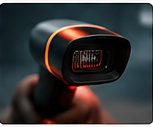
Barcode Reading
Read 1D/2D barcodes quickly and reliably.
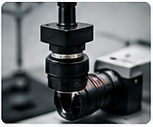
Measurement
Perform high-precision dimensions and tolerance checks.

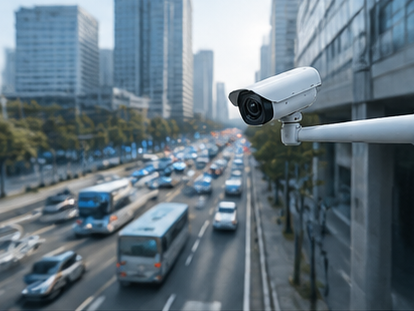
Traffic Monitoring
Capture license plates and monitor traffic flow.
Lens Selection Examples by Application
PCB Inspection
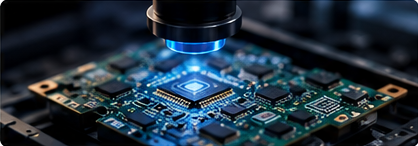
Inspect circuit boards for solder joints, components, and surface defects.
Recommended Lens
8mm Low Distortion Lens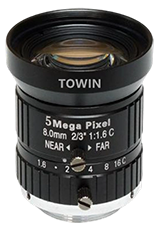
- ✓ Low distortion < 0.5%
- ✓ High resolution performance
- ✓ Compact design for tight space
- ✓ Optimized for close-range imaging
Ensures accurate defect detection and measurement with clear edge detail across the entire image.
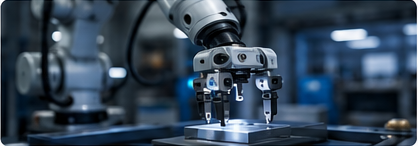
Robot Guidance
Enable robots to locate, pick, and place objects accurately.
Recommended Lens
12mm FA Lens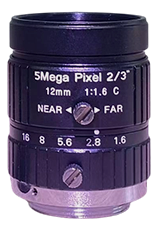
- ✓ Wide field of view
- ✓ High depth of field
- ✓ Robust mechanical design
- ✓ Stable performance in motion
Provides stable image quality and wide coverage for reliable robot positioning and guidance.
Smart Traffic Monitoring
Capture vehicle plates, monitor traffic flow, and detect incidents.

Recommended Lens
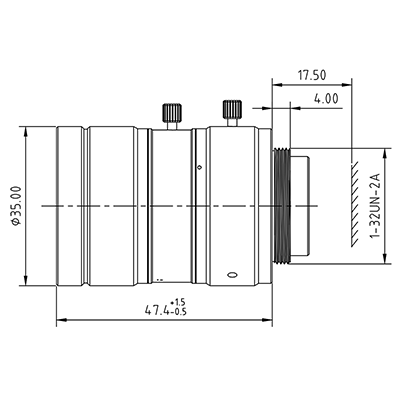
35mm C-Mount Lens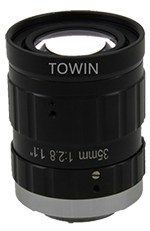
- ✓ Long focal length
- ✓ High resolution at distance
- ✓ Low distortion
- ✓ C-Mount for industrial cameras
Captures clear license plates and road details even at long distances.
How to Use These Examples
These examples provide a starting point for lens selection.
Use our FOV Calculator and Lens Selection Workflow to fine-tune the specifications for your exact application.
Related Vision Applications
Common Lens Selection Mistakes to Avoid
1. Choosing a Lens Based Only on Sensor Size
Sensor size alone does not determine the correct lens.
Consider sensor size, field of view, working distance, focal length, and image circle together.
2. Ignoring Working Distance
Working distance directly affects focal length selection and image magnification.
Calculate the working distance first to determine the appropriate focal length and FOV.
3. Overlooking Distortion
High distortion can reduce dimensional accuracy and affect measurement results.
For measurement and metrology applications, choose low-distortion lenses.
4. Focusing Only on Camera Resolution
A high-resolution sensor cannot compensate for a low-quality lens.
Ensure the lens resolving power matches or exceeds the sensor resolution.
5. Ignoring Field of View Requirements
Selecting a focal length without calculating the required FOV may lead to incomplete coverage or cropping.
Calculate the required field of view based on the target size and working distance.

6. Forgetting Image Circle Compatibility
If the lens image circle is smaller than the sensor, vignetting and image loss will occur.
Ensure the image circle fully covers the sensor size.
Avoiding these common mistakes helps ensure better image quality, more accurate measurements, improved system reliability, and fewer engineering revisions throughout your machine vision project.
Helpful Lens Selection Tools
FOV Calculator
Calculate the required field of view based on sensor size, focal length, and working distance.
Sensor Guide
Compare sensor sizes, image formats, and pixel characteristics to ensure proper lens compatibility.
Lens Basics
Learn essential concepts including focal length, aperture, image circle, and distortion.
Distortion Guide
Understand barrel, pincushion, and low-distortion optics for precision measurement applications.
Related Articles

Frequently Asked Questions
Need Help Selecting the Right Lens?
Our optical engineers can help you choose the ideal machine vision lens based on your sensor, field of view, working distance, and application requirements.
Let’s Build the Right Optical Solution Together
Have a question, need a quote, or want to discuss your project? Our optical experts are ready to help.

Expert Support
Get professional advice from our optical engineers.

Tailored Solutions
We provide customized lens solutions that fit your application.

Reliable Quality
High-quality manufacturing with strict testing and quality control.

Fast Response
We value your time and will get back to you as soon as possible.
Send Us a Message