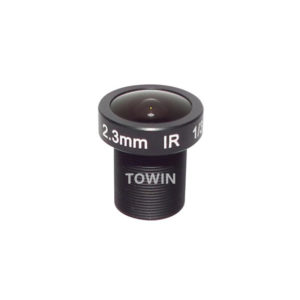



Fisheye Lens – S5318620F69
09/02/2025
Automotive Lens – S01014019516F69
09/02/2025
Fisheye Lens – S5419025F69
2.0mm M12 8MP automotive fisheye lens with 190° FOV, F2.5 aperture and IP69K protection for surround-view and vehicle monitoring cameras.
S5419025F69 is 8-Megapixel F2.5 190° Fisheye CCTV Lens with Built-In IR Filter, M12/S-Mount IP69K Waterproof Lens for Surveillance or Industrial applications.
| IMAGE FORMAT | Φ5.4 |
| FOCAL LENGTH | 2.0mm |
| F.O.V.@1/2.3″ | 190° (D) |
| 190° (H) | |
| 155° (V) | |
| RESOLUTION | 8 Megapixel |
| DISTORTION | <-99% |
| APERTURE | F2.5 |
| MOUNT | M12x0.5 |
| IRIS | Fixed |
| T.T.L. | 21.2mm |
| STRUCTURE | 6G+IRCF |
| WATERPROOF | IP69K |
2.0mm M12 8MP Automotive Fisheye Lens
This 2.0mm M12 automotive fisheye lens is designed for vehicle imaging systems that require extremely wide environmental coverage together with high-resolution image capture. With a 190° diagonal and horizontal FOV, 155° vertical FOV, 8MP resolution, F2.5 aperture, and IP69K protection, it is well suited for automotive surround-view, parking assistance, vehicle monitoring, and other wide-area vision applications.
M12 Fisheye Lens Highlights
- 190° ultra-wide FOV captures an exceptionally broad area around the vehicle.
- 8MP high resolution provides detailed image information for advanced automotive cameras.
- 2.0mm fisheye design delivers extensive coverage from a compact camera position.
- M12x0.5 mount supports compact embedded automotive camera modules.
- IP69K protection supports demanding vehicle-mounted environments exposed to water, dust, and high-pressure cleaning.
2.0mm M12 Fisheye Lens Applications
Core Automotive Applications
The combination of a 190° field of view and 8MP resolution makes this lens suitable for automotive systems that need both extensive environmental coverage and high image detail. The fisheye design allows a very large viewing angle to be captured from a compact vehicle-mounted camera.
Designed for automotive fisheye imaging applications, this lens can be considered for:
- Automotive surround-view camera systems
- Parking assistance cameras
- Vehicle perimeter monitoring
- Front-view wide-area cameras
- Rear-view and reverse-assistance systems
- Side-view vehicle cameras
- Vehicle blind-zone monitoring
- Commercial vehicle camera systems
- Bus and truck monitoring cameras
- Embedded automotive vision modules
The 190° diagonal and horizontal FOV provides extremely broad scene coverage, while the 155° vertical FOV can help capture areas close to the vehicle as well as objects within the surrounding environment.
For automotive perception projects, this lens can be evaluated together with TOWIN’s ADAS Lens Solutions.
Compatible Devices
This lens can be considered for integration with compatible:
- 1/2.3″ automotive camera modules
- 8MP vehicle cameras
- M12 automotive camera modules
- Surround-view camera systems
- Parking cameras
- Vehicle monitoring cameras
- Blind-zone monitoring cameras
- Commercial vehicle vision systems
- Outdoor vehicle-mounted camera modules
- Embedded automotive imaging devices
The M12x0.5 mount provides a compact interface for camera module integration. Engineers should verify the sensor position, image circle, lens-to-sensor distance, housing dimensions, optical axis, and installation clearance during system design.
190° Fisheye Optical Design
With 190° diagonal and horizontal FOV, this lens is designed for extremely wide-angle fisheye imaging. Such a large angular range allows a camera to capture an extensive surrounding scene from a single installation position.
The specified -99% distortion is characteristic of an extreme wide-angle fisheye optical design and should not be interpreted using the same criteria as a conventional low-distortion automotive lens.
Fisheye images naturally introduce significant geometric deformation, especially toward the edges of the image. For automotive applications, image calibration and dewarping can be used to convert the captured fisheye image into a more practical perspective when required by the camera system.
When selecting an automotive fisheye lens, engineers should evaluate FOV, sensor format, image circle, installation position, and required output projection together. TOWIN’s Lens Selection Guide provides additional guidance for lens selection.
8MP High-Resolution Vehicle Imaging
A major advantage of this lens is its combination of 8MP resolution with a 190° field of view.
High resolution allows the camera system to retain more image information across the extremely wide scene. This can be valuable for vehicle monitoring applications where multiple areas need to be captured within one image.
The F2.5 aperture provides a practical optical configuration for the compact fisheye design. Actual image brightness and low-light performance will depend on the camera sensor, exposure settings, illumination, ISP, and overall imaging system.
For additional information about sensor and lens compatibility, see TOWIN’s Sensor Guide.
IP69K Protection for Automotive Environments
The IP69K protection rating makes this lens suitable for demanding vehicle-mounted environments where the optical assembly may be exposed to dust, water, and high-pressure cleaning.
This characteristic can be valuable for cameras installed in exposed areas of vehicles, including exterior monitoring and surround-view camera modules.
The IP69K specification applies to the lens as specified. The final environmental protection of the complete camera system depends on the housing, sealing structure, connectors, cable interfaces, and assembly design.
Optical Coverage and Image Processing
A 190° fisheye lens can significantly reduce blind areas around a camera compared with a conventional narrow-angle lens. However, the extremely wide projection also means that objects near the image edges may appear significantly stretched or compressed.
For automotive systems, the lens therefore works together with:
- Camera ISP
- Fisheye calibration
- Image dewarping
- Lens shading correction
- Vehicle camera software
- Multi-camera image stitching
When several cameras are used together, optical alignment and calibration are important for producing consistent surround-view imagery.
Frequently Asked Questions
Q: What is the field of view of this 2.0mm automotive fisheye lens?
A: The lens provides approximately 190° diagonal, 190° horizontal, and 155° vertical FOV when used with a 1/2.3″ sensor.
Q: Is this lens suitable for automotive surround-view systems?
A: Yes. Its 190° ultra-wide field of view, 8MP resolution, M12x0.5 mount, and IP69K protection make it suitable for vehicle surround-view and other wide-area automotive imaging applications.
Q: Is this a fisheye lens?
A: Yes. The 2.0mm focal length, 190° field of view, and extremely high geometric distortion are characteristic of a fisheye optical design.
Q: Does the -99% distortion mean the lens has poor optical performance?
A: No. High distortion is inherent to extreme fisheye projection for ultra-wide FOV capture. Automotive cameras adopt calibration and dewarping to restore regular viewing perspective.
Q: What sensor format is this lens designed for?
A: The listed FOV specification is based on a 1/2.3″ sensor, and the lens has a Φ5.4mm image format specification.
Q: What is the advantage of 8MP resolution for a 190° fisheye lens?
A: The higher resolution provides more image information across the very wide field of view, which can be useful when the automotive system needs to monitor multiple areas around the vehicle.
Q: Is the lens waterproof?
A: The lens is specified with an IP69K protection rating. The final protection of the complete automotive camera depends on the housing, seals, connectors, and overall system assembly.
Q: Can this lens be used for ADAS applications?
A: Suitable for select ADAS and vehicle‑perception systems needing ultra‑wide environmental coverage. Compatibility hinges on camera placement, FOV, sensor, image‑processing setup and system‑level requirements.
Online contact