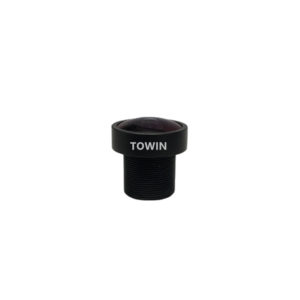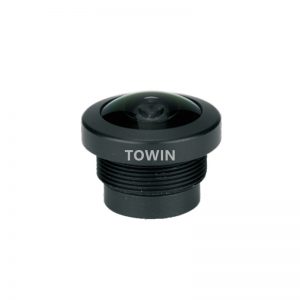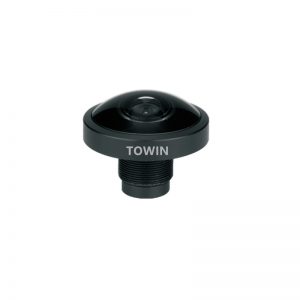



Fisheye Lens – S01812819018F
09/05/2025
Automotive Lens – S02312814522F69
09/05/2025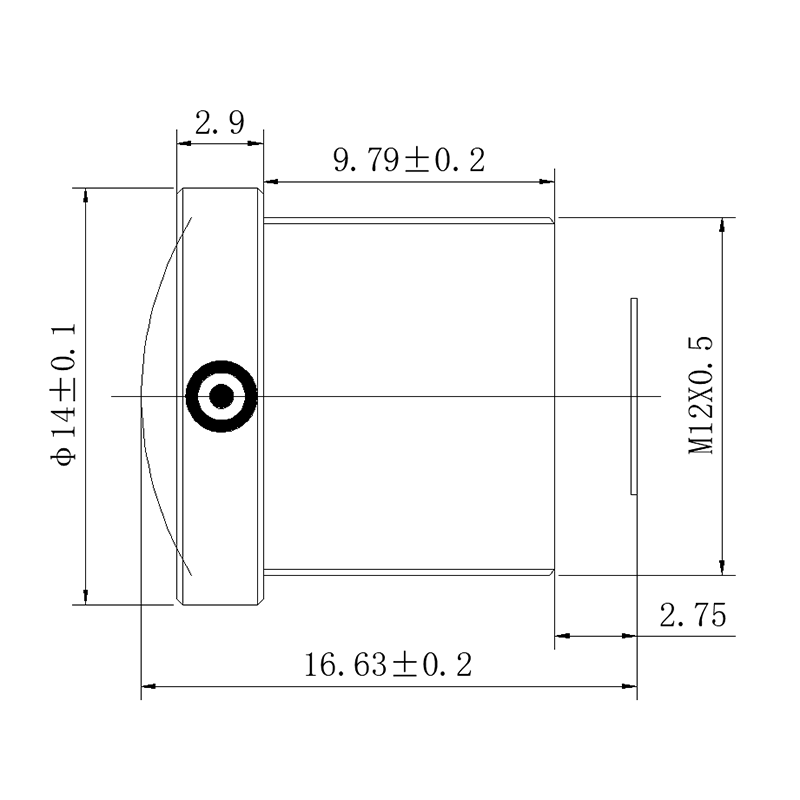
Fisheye Lens – S02106819020F69
2.1mm 2MP M12 fisheye automotive lens with 190° FOV, F2.0 aperture, M12X0.5 mount and IP69K protection for rugged vehicle imaging.
S02106819020F69 is Fisheye CCTV Lens with Built-In IR Filter, M12-mount IP69K Waterproof Automotive Lens, F2.0 aperture for security surveillance.
| IMAGE FORMAT | Max Φ6.9 |
| FOCAL LENGTH | 2.1mm |
| F.O.V. | 190° (D=6.61) |
| 159° (H=5.76) | |
| 86° (V=3.24) | |
| RESOLUTION | 2 MP |
| DISTORTION | <-89% |
| APERTURE | F2.0 |
| MOUNT | M12x0.5 |
| IRIS | Fixed |
| M.O.D. | 0.2m |
| T.T.L. | 16.63mm |
| STRUCTURE | 6G+IRCF |
| WATERPROOF | IP69K |
2.1mm 2MP M12 Fisheye Automotive Lens
This 2.1mm 2MP M12 fisheye automotive lens is designed for ultra-wide vehicle imaging, delivering a 190° diagonal field of view with strong fisheye characteristics. Featuring an M12X0.5 mount, F2.0 fixed aperture, IP69K protection, and 6G+IRCF optical construction, it is built for compact automotive camera modules operating in demanding outdoor environments.
M12 Fisheye Automotive Lens Core Highlights
- 190° ultra-wide FOV captures an exceptionally broad area from a compact camera position.
- Strong fisheye optical design delivers very wide scene coverage for vehicle-mounted imaging.
- IP69K protection supports demanding automotive environments exposed to water, dust, and high-pressure cleaning.
- 2MP resolution provides practical image detail for compact automotive camera systems.
- M12X0.5 fixed-focus design simplifies integration into space-constrained vehicle camera modules.
2.1mm M12 Fisheye Automotive Lens Applications
Core Application Scenes
This 2.1mm M12 fisheye automotive lens is designed for vehicle-mounted imaging systems that require extremely broad coverage from a compact optical assembly. Its 190° diagonal field of view enables a camera module to capture a very large surrounding area, making it suitable for close-range vehicle observation and wide-area environmental imaging.
The lens uses a deliberately strong fisheye optical design, with specified distortion below -89%. Rather than targeting straight-line preservation, this optical configuration prioritizes maximum angular coverage, making it suitable for applications where capturing objects across a very wide surrounding area is more important than maintaining rectilinear geometry.
The IP69K protection rating is a major feature for automotive deployment. It provides a robust environmental protection level for camera modules that may be exposed to water, dust, road contaminants, and high-pressure cleaning conditions. This makes the lens suitable for externally mounted vehicle cameras and other automotive imaging equipment operating in harsh environments.
The 0.2m minimum object distance also supports relatively close-range imaging, while the compact M12X0.5 interface allows the lens to be integrated into small camera housings. The F2.0 fixed aperture provides a stable optical configuration without requiring an adjustable iris.
For broader vehicle vision system development, this lens can be integrated into ADAS solutions where ultra-wide close-range imaging is required.
Compatible Device List
- Exterior Automotive Camera Modules: IP69K protection makes the lens suitable for exposed vehicle camera positions subject to water, dust, and aggressive cleaning environments.
- Vehicle Surrounding-View Cameras: The 190° diagonal FOV provides exceptionally broad coverage around the camera installation position.
- Close-Range Automotive Monitoring: The 0.2m M.O.D. supports imaging of nearby vehicle surroundings and objects.
- Compact Vehicle Vision Systems: The M12X0.5 mount and 16.63mm T.T.L. support integration into compact camera assemblies.
- Outdoor Automotive Imaging Devices: The IP69K-rated construction is suitable for demanding outdoor vehicle operating conditions.
- Wide-Angle Embedded Camera Modules: The fixed focal length and fixed iris provide a stable optical configuration for embedded automotive cameras.
Designed for ultra-wide-angle automotive imaging, exterior vehicle cameras, close-range monitoring, and rugged outdoor vision systems.
For additional compact automotive optical configurations, explore the M12 Lenses product range.
Frequently Asked Questions
Q: What type of lens is this 2.1mm M12 lens?
A: It is a 2.1mm M12 fisheye automotive lens designed for extremely wide-angle vehicle imaging, with a 190° diagonal field of view.
Q: What is the field of view of this lens?
A: The lens provides 190° diagonal, 159° horizontal, and 86° vertical FOV, delivering exceptionally broad scene coverage.
Q: Why does this lens have distortion below -89%?
A: The lens uses a strong fisheye optical design. The high negative distortion is an intentional characteristic that allows the lens to achieve its extremely wide 190° diagonal field of view.
Q: Is this a low-distortion lens?
A: No. This lens should not be classified as a low-distortion lens. Its <-89% distortion specification is characteristic of a fisheye design optimized for maximum viewing coverage.
Q: Why is this lens classified as an automotive lens?
A: Its IP69K protection rating makes it suitable for demanding vehicle-mounted environments, including exposure to water, dust, road contaminants, and high-pressure cleaning conditions. Combined with its ultra-wide FOV, the lens is well suited to automotive camera applications.
Q: Is the lens suitable for outdoor vehicle cameras?
A: Yes. The IP69K-rated construction is particularly suitable for externally mounted automotive cameras that require strong environmental protection.
Q: What does IRCF mean in the optical structure?
A: IRCF refers to an IR Cut Filter configuration. It manages infrared wavelengths for visible-light camera systems. It should not be interpreted as proof that the lens is an IR-corrected lens.
Q: What is the minimum object distance of this lens?
A: The specified M.O.D. is 0.2m, allowing the lens to capture relatively close objects and vehicle surroundings.
Related Optical Resources
For automotive wide-angle camera development, selecting the correct sensor and optical configuration is important because sensor format directly affects the resulting field of view. The Sensor Guide provides useful information for evaluating sensor compatibility, while the Lens Selection Guide can help compare different focal lengths and optical configurations.
For projects where the required field of view needs to be evaluated against sensor size and focal length, the FOV Calculator can be used during the initial optical selection process.
Because this lens intentionally uses strong fisheye distortion, the Distortion Guide is also relevant for understanding how different lens designs affect image geometry.
For additional information about optical fundamentals and lens construction, see Lens Basics and Optical Design.
For automotive vision applications, see the ADAS solution; For additional compact lens options, explore the M12 Lenses product range; For customized requirements, please contact Towin.
Online contact