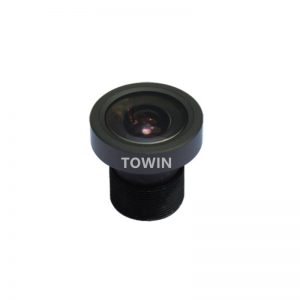



Low Distortion Lens – CCL118040MPFR
10/29/2025
Wide Angle Lens – S02612513120F
10/30/2025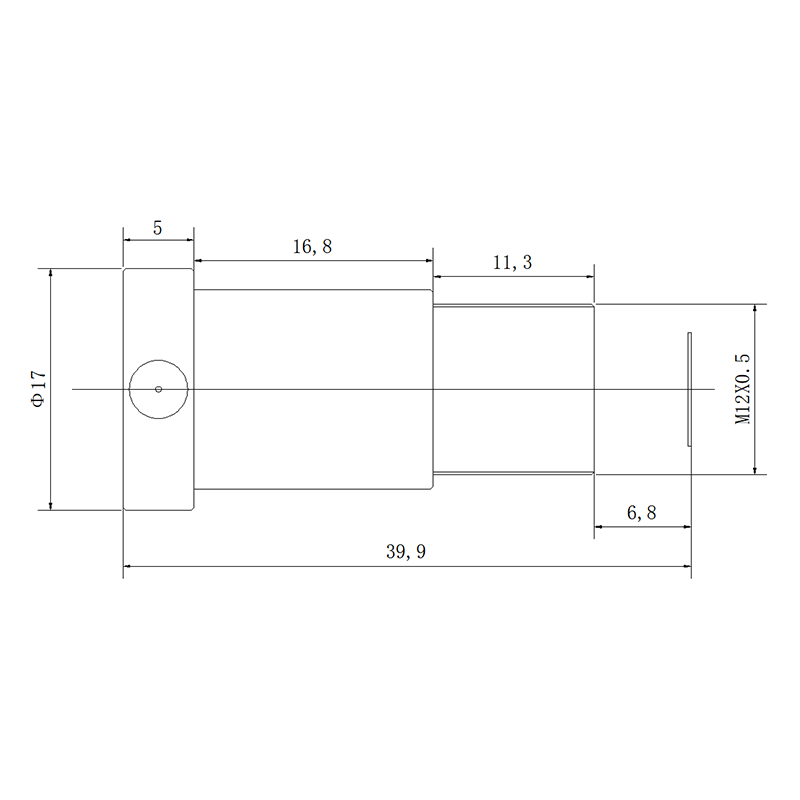
Wide Angle Lens – CCL117080MPF-1
7.97mm M12 Wide Angle lens for 2/3″ and 1/1.8″ sensors, featuring 12MP resolution, F1.8 aperture, wide FOV, and < -16% distortion.
CCL117080MPF-1 is 12-Megapixel Wide-angle M12 CCTV lens with Built-In IR Filter, 7.97mm focal length F1.8 aperture, Suitable for security Surveillance.
| IMAGE FORMAT | 2/3″, 1/1.8″ |
| FOCAL LENGTH | 7.97mm |
| F.O.V.(2/3″) | 89°(D) |
| 70°(H) | |
| 51° (V) | |
| F.O.V.(1/1.8″) | 70°(D) |
| 56°(H) | |
| 40° (V) | |
| RESOLUTION | 12 MP |
| APERTURE | F1.8 |
| DISTORTION | <-16% |
| MOUNT | M12 |
| IRIS | Fixed |
| B.F.L. | 9.98mm |
| STRUCTURE | With IRCF |
M12 7.97mm 12MP Wide Angle Lens
This 7.97mm M12 Wide Angle lens is designed for high-resolution wide-area imaging on 2/3″ and 1/1.8″ sensors. With 12MP resolution, an F1.8 aperture, and up to 89° diagonal FOV on a 2/3″ sensor, it provides broad scene coverage for compact industrial and machine vision systems.
The lens supports two commonly used sensor formats, allowing optical engineers to select between different image coverage configurations. For sensor and lens matching considerations, the Sensor Guide provides additional information for selecting a compatible imaging configuration.
Product Core Highlights
- 12MP High Resolution: Supports detailed imaging for demanding compact vision systems.
- Wide-Angle Design: Provides broad scene coverage with up to 89° diagonal FOV on 2/3″ sensors.
- F1.8 Large Aperture: Helps maintain strong light throughput for wide-angle imaging.
- Dual Sensor Compatibility: Supports both 2/3″ and 1/1.8″ image formats.
- M12 Compact Mount: Enables integration into compact embedded camera modules.
M12 7.97mm Wide Angle Lens Applications
Core Application Scenes
This 12MP M12 Wide Angle lens is designed for imaging systems that need to capture a relatively broad scene from a compact camera position. Its 89° diagonal FOV on a 2/3″ sensor provides wide-area coverage, while the F1.8 aperture helps maintain sufficient light throughput when the available illumination is limited.
Unlike a low distortion lens, this optical design intentionally allows substantial geometric distortion, with specified distortion below -16%. This characteristic makes the lens suitable for applications where wide scene coverage is more important than maintaining straight-line geometry, such as panoramic observation, spatial awareness, compact robotic vision, and wide-area embedded imaging.
The lens supports both 2/3″ and 1/1.8″ sensors. On a 2/3″ sensor, it provides a significantly wider 89° diagonal FOV, while the 1/1.8″ configuration produces a 70° diagonal FOV. This allows system designers to adjust the imaging coverage according to the selected camera sensor.
For applications where engineers need to determine the relationship between sensor format, focal length, and viewing coverage, the FOV Calculator can be used during the optical selection process.
Compatible Device List
- Industrial Vision Cameras: Suitable for compact industrial cameras requiring high-resolution wide-area imaging.
- Robotic Vision Modules: The broad viewing angle can help robotic systems observe a larger surrounding area from a constrained mounting position.
- Embedded Vision Cameras: The M12 mount supports integration into compact camera modules for equipment and smart devices.
- Panoramic Imaging Systems: The wide-angle optical configuration can be used where broader scene capture is required from a single compact camera.
- AI Vision Devices: The 12MP optical capability provides detailed image data for embedded vision systems using image-processing or AI-based analysis.
For applications involving robotic perception and spatial visual sensing, TOWIN’s Robotics Vision solutions provide additional information about optical requirements for robotic imaging systems.
Designed for high-resolution wide-area imaging, compact robotic vision, and embedded Wide Angle camera applications.
Frequently Asked Questions
Q: What sensor sizes are compatible with this M12 Wide Angle lens?
A: The lens is designed for both 2/3″ and 1/1.8″ image formats. The resulting field of view varies according to the sensor size.
Q: What is the field of view on a 2/3″ sensor?
A: On a 2/3″ sensor, the lens provides an 89° diagonal, 70° horizontal, and 51° vertical field of view.
Q: What is the field of view on a 1/1.8″ sensor?
A: On a 1/1.8″ sensor, the specified FOV is 70° diagonal, 56° horizontal, and 40° vertical.
Q: Is this M12 lens a Wide Angle lens?
A: Yes. The lens is classified as a Wide Angle lens based on its wide-angle optical configuration and specified distortion of less than -16%. The relatively high distortion is an intentional characteristic of this type of optical design.
Q: Is this lens a low distortion lens?
A: No. Its specified distortion is below -16%, so it should not be classified as a low distortion lens. It is better suited to applications prioritizing broad scene coverage over strict geometric accuracy.
Q: What resolution does this M12 Wide Angle lens support?
A: The lens is specified for 12MP resolution, making it suitable for high-resolution embedded and industrial imaging systems.
Q: What is the aperture of this lens?
A: The lens has a fixed F1.8 aperture, providing relatively high light throughput for wide-angle imaging applications.
Q: Does the IRCF specification mean that this lens is IR corrected?
A: No. The specified structure includes IRCF, which refers to an IR Cut Filter. This should not be interpreted as an IR-corrected optical design. The lens is primarily configured for visible-light imaging.
Online contact