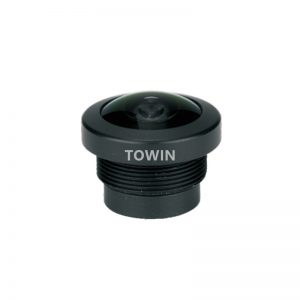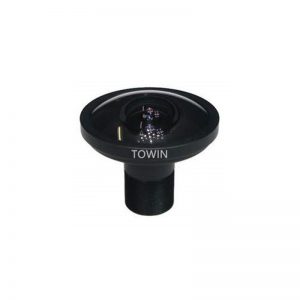



Fisheye Lens – S2918521F
09/28/2025
Fisheye Lens – S3122922
09/28/2025
Fisheye Lens – S3121020F
1.2mm M12 5MP fisheye lens with 210° FOV, F2.0 aperture and M12 × 0.5 mount for panoramic, security, robotics and ultra-wide embedded vision.
S3121020F is Fisheye CCTV Lens with Built-In IR Filter, 1/3″ & 1/4″ M12x0.5 Mount, 5-Megapixel, 210° Diagonal Field of View, F2.0 for Security Surveillance.
| IMAGE FORMAT | Φ3.1, 1/3″, 1/4″ |
| FOCAL LENGTH | 1.2mm |
| F.O.V.@1/3″ | 210°(D) |
| 210°(H) | |
| 210°(V) | |
| F.O.V.@1/4″ | 210°(D) |
| 210°(H) | |
| 135°(V) | |
| RESOLUTION | 5 MP |
| TV DISTORTION | <-24% |
| APERTURE | F2.0 |
| MOUNT | M12x0.5 |
| IRIS | Fixed |
| M.O.D. | 0.3m |
| T.T.L. | 17.2mm |
| STRUCTURE | 6G+IRCF |
1.2mm M12 5MP 210° Fisheye Lens
This 1.2mm M12 fisheye lens provides an extremely wide 210° field of view for 1/3″ and 1/4″ image sensors, making it suitable for applications requiring maximum scene coverage from a compact optical module. With 5MP resolution, F2.0 aperture, M12 × 0.5 mounting, and a 17.2mm total optical length, it combines high-resolution imaging with extreme wide-angle coverage.
The lens is designed for panoramic imaging, smart security, robotics perception, embedded vision, and other applications where a conventional lens cannot provide sufficient angular coverage.
1.2mm M12 5MP 210° Fisheye Lens Core Highlights
- 210° ultra-wide FOV provides exceptionally broad scene coverage
- 1.2mm fisheye focal length delivers extreme wide-angle imaging
- 5MP resolution supports detailed wide-area imaging
- F2.0 aperture provides a practical balance between light transmission and compact optical design
- M12 × 0.5 mount supports compact camera and embedded vision integration
- 6G + IRCF optical structure supports specialized imaging configurations
- Supports both 1/3″ and 1/4″ image formats
1.2mm M12 5MP 210° Fisheye Lens Applications
Core Application Scenes
Ultra-Wide Security Monitoring
The 210° horizontal FOV allows a single camera to capture an exceptionally broad scene. This is useful for monitoring applications where reducing blind areas and maximizing environmental visibility are more important than maintaining conventional rectilinear geometry.
Panoramic Imaging
With 210° diagonal and horizontal coverage on a 1/3″ sensor, this lens is well suited to panoramic and wide-area imaging modules. It can capture a much larger surrounding scene than conventional fixed focal lenses.
Compact Robotics Perception
The extreme field of view provides a large angular observation range for robotic systems. It can support environmental awareness, obstacle observation, and surrounding-scene perception from a compact camera module.
Embedded Fisheye Vision
The M12 × 0.5 mount makes the lens suitable for OEM camera modules requiring an extremely wide optical field without a large industrial lens assembly.
Wide-Area Observation
For applications where the primary requirement is to observe a large area from a single camera position, the 210° FOV can provide broad scene coverage and reduce the number of cameras required for certain viewing configurations.
Designed for ultra-wide panoramic imaging, security monitoring, robotics perception, and compact embedded fisheye vision applications.
Compatible Device List
- M12 camera modules — M12 × 0.5 mounting supports compact optical integration.
- Fisheye security cameras — 210° FOV provides exceptionally broad monitoring coverage.
- Panoramic camera modules — Suitable for wide-area surrounding-scene capture.
- Robotics vision modules — Supports broad environmental perception.
- Embedded vision cameras — Compact M12 construction simplifies integration into OEM camera designs.
- Wide-area observation systems — Suitable for applications requiring extreme angular coverage.
For compact M12 optical systems, see the M12 Lens product range and M12 Lens solutions.
For security applications, the Smart Security solution provides additional information about intelligent imaging systems; For robotic applications, explore Robotics Vision.
You can also compare this lens with other Fisheye Lenses when selecting an optical configuration according to sensor format and required FOV.
Frequently Asked Questions
Q: What is the field of view of this 1.2mm M12 fisheye lens?
A: On a 1/3″ sensor, the lens provides 210° diagonal, 210° horizontal, and 210° vertical FOV. On a 1/4″ sensor, it provides 210° diagonal, 210° horizontal, and 135° vertical FOV.
Q: Is this a fisheye lens?
A: Yes. The 1.2mm focal length, 210° field of view, and -24% TV distortion are characteristic of an extreme fisheye optical design.
Q: What image formats are supported?
A: The specified image formats include Φ3.1, 1/3″, and 1/4″. Detailed FOV specifications are provided for 1/3″ and 1/4″ sensors.
Q: What is the resolution of this M12 fisheye lens?
A: The lens is specified for 5MP resolution, making it suitable for compact high-resolution wide-area imaging systems.
Q: Is this a low distortion lens?
A: No. The TV distortion is below -24%, and the lens is designed to achieve an extremely wide 210° field of view. It should therefore be classified as a fisheye lens rather than a conventional low-distortion lens.
Q: What does the -24% TV distortion specification mean?
A: The negative TV distortion indicates significant geometric projection distortion associated with the lens’s extreme wide-angle design. This distortion is part of how the optical system achieves its very large field of view.
Q: Does the IRCF specification mean the lens is IR corrected?
A: Not necessarily. IRCF indicates an infrared-related optical component, but it does not by itself confirm IR-corrected optical performance.
Q: What is the minimum object distance?
A: The specified M.O.D. is 0.3m, or 300mm.
Online contact