

1. What Is Optical EFL?
EFL stands for Effective Focal Length. In a conventional optical system operating in air, it is the distance between the rear principal plane and the rear focal point. The principal plane is a reference plane used to describe the optical behavior of a lens system.
For a compound lens containing multiple optical elements, the principal plane may not coincide with the physical center or surface of the lens. This is why effective focal length should not be interpreted as the distance from the lens housing to the image sensor.
EFL is commonly expressed in millimeters (mm). It is an important specification in camera lenses, industrial imaging systems, embedded vision devices, and other optical applications.
What Does EFL Tell You About a Lens?
- Field of view: EFL influences how much of a scene a camera can capture when sensor size and object distance are fixed.
- Image scale: EFL affects the relationship between an object’s size and its projected image.
- Lens selection: EFL helps engineers identify candidate lenses for a particular sensor, working distance, and coverage requirement.
- Optical system design: EFL is used when evaluating the imaging behavior of a lens system.
EFL should not be considered in isolation. Sensor dimensions, working distance, optical resolution, distortion, aperture, and the lens’s supported image circle also influence overall imaging performance.
2. What Does 1.85mm EFL Mean in a Lens?
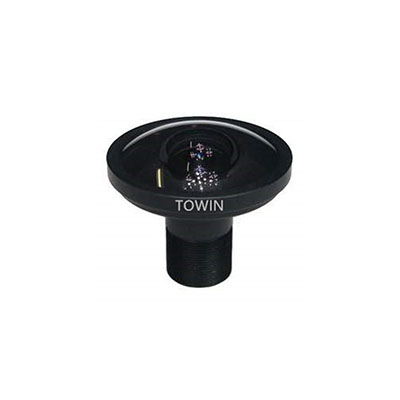
A lens specification of 1.85mm EFL indicates that the lens system has an effective focal length of approximately 1.85 millimeters. It does not mean that the lens itself is 1.85mm long or that the distance between the last lens element and the sensor must be 1.85mm.
In many conventional imaging applications, a shorter focal length produces a wider field of view than a longer focal length when the sensor format, object distance, and other relevant conditions remain the same.
A 1.85mm lens may therefore be a candidate for applications requiring broad scene coverage in a compact camera system. However, whether it provides the required coverage depends on the sensor dimensions, lens design, working distance, and intended image area.
Is a 1.85mm Lens Always Wide-Angle?
A focal length of 1.85mm is short for many conventional camera lens applications, but focal length alone does not establish the exact field of view or distortion characteristics.
To determine whether a lens is suitable for a wide-angle application, check its horizontal, vertical, and diagonal field of view for the intended sensor format. Also review image-circle coverage, edge sharpness, distortion, and any application-specific optical requirements.
For industrial applications, the right choice is the lens that meets the required imaging performance, not necessarily the lens with the shortest focal length.
3. How Does EFL Affect Field of View?
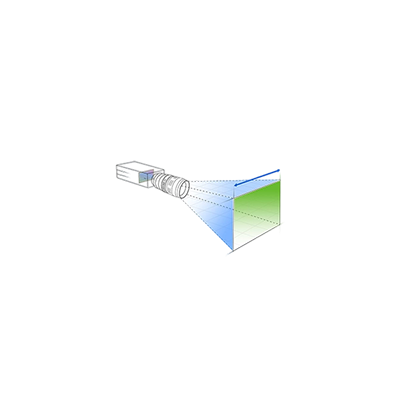
Field of view (FOV) describes the physical area visible to a camera at a given object distance. Effective focal length and sensor size are two important factors that determine the angular field of view.
For an ideal rectilinear imaging system, the approximate angular field of view along one sensor dimension can be calculated as:
FOV angle = 2 × arctan (sensor dimension / (2 × focal length))
This formula provides a useful first-order estimate for a conventional rectilinear lens. Real lenses may differ because of distortion, optical design, image cropping, and the usable image circle.
How Sensor Size Changes the Field of View
When focal length remains fixed, a larger sensor dimension generally captures a wider angular field of view, provided the lens covers the sensor. A smaller sensor captures a narrower field of view under otherwise equivalent conditions.
For example, two cameras using lenses with the same 1.85mm EFL may produce different fields of view if their sensor dimensions differ. This is why focal length should always be evaluated together with sensor format.
If you are comparing camera formats or checking lens compatibility, read the TOWIN Image Sensor Guide for more information about sensor size, pixel size, resolution, and lens matching.
How Working Distance Changes the Captured Area
Working distance is the distance between the lens and the object being imaged. For many conventional imaging systems, increasing working distance increases the physical area captured, while decreasing working distance reduces the captured area.
The exact relationship depends on the optical system and focusing configuration. Close-range imaging may also require consideration of magnification, focus adjustment, and changes in effective optical behavior.
For practical calculations and industrial imaging examples, see Focal Length Calculation for Machine Vision and Industrial Lens Selection.
4. EFL vs. BFL: What Is the Difference?
EFL and BFL are both important optical parameters, but they describe different distances. Confusing them can lead to errors when integrating a lens with a camera or mechanical assembly.
| Parameter | Full Name | Definition | Why It Matters |
|---|---|---|---|
| EFL | Effective Focal Length | Distance from the relevant principal plane to the corresponding focal point. | Describes the optical system’s effective focal length and helps determine image scale and field of view. |
| BFL | Back Focal Length | Distance from the rear optical surface to the rear focal point, under the specified optical conditions. | Helps determine the available optical space behind the lens for mechanical integration. |
For a compound lens, the principal plane can be displaced from the last optical surface. As a result, EFL and BFL are generally not interchangeable and may have different values.
In a simplified thin-lens model, the two distances may be approximately equal. However, engineers should use the manufacturer’s actual optical specifications when designing a real camera assembly.
What About TTL and Working Distance?
Total track length (TTL) generally describes a mechanical or optical length defined by the lens manufacturer’s specification. Its precise reference points should be checked in the relevant datasheet. Working distance describes the distance from the lens’s specified reference surface to the object.
EFL, BFL, TTL, and working distance serve different purposes. When checking whether a lens fits a camera housing, do not use EFL as a substitute for a mechanical dimension or mounting distance.
5. How to Choose a Camera Lens Based on EFL
Effective focal length is an important starting point, but selecting a suitable lens requires evaluating the complete imaging system. For machine vision, the goal is to capture the required area while preserving enough image detail for inspection, measurement, or identification.
Step 1: Confirm the Sensor Size
Identify the sensor’s physical dimensions, resolution, pixel size, and required image coverage. Check that the lens image circle fully covers the active sensor area.
Step 2: Define the Required Field of View
Determine the width and height of the object area that must appear in the image. Include any necessary margin for object movement, positioning tolerance, or inspection software.
Step 3: Measure the Working Distance
Determine the available distance between the camera and the target. Mechanical constraints, lighting, protective windows, and installation space may limit the practical working distance.
Step 4: Estimate the Required Focal Length
Use the sensor dimensions, desired field of view, and working distance to estimate a suitable focal length. The thin-lens approximation can provide an initial estimate, but close-range applications and complex optical systems may require a more detailed calculation.
Step 5: Check Optical Performance
Confirm resolution, MTF, distortion, aperture, depth of field, focus range, and illumination requirements. The lens must reproduce the smallest feature that the application needs to detect or measure.
Follow the TOWIN Machine Vision Lens Selection Guide for a more complete selection workflow, including sensor compatibility, field of view, working distance, and optical performance.
For applications that require accurate dimensional measurement, consider a TOWIN Low-Distortion M12 Lens as one candidate. Confirm that its focal length, sensor format, resolution, and distortion specifications meet your actual application requirements before selecting it.
6. Common Mistakes When Interpreting EFL
Mistake 1: Treating EFL as the Physical Lens Length
EFL is an optical parameter, not the overall length of the lens barrel. Use the manufacturer’s mechanical drawing and TTL or other specified dimensions when checking installation space.
Mistake 2: Assuming EFL and BFL Are Identical
EFL is referenced to a principal plane, whereas BFL is referenced to the rear optical surface. Always check which measurement is required for the application.
Mistake 3: Choosing a Lens Based Only on Focal Length
Two lenses with the same EFL may differ in distortion, resolution, aperture, image circle, and optical construction. A focal-length match alone does not guarantee compatibility.
Mistake 4: Ignoring Sensor Size
Sensor dimensions influence the field of view. Verify the lens’s supported image format before comparing field-of-view specifications.
Mistake 5: Overlooking Image Quality at the Edges
A lens may provide the desired coverage but still fail to deliver sufficient sharpness or geometric accuracy across the entire image. Evaluate image quality under the actual working conditions.
7. Frequently Asked Questions About Optical EFL
What does EFL stand for in optics?
EFL stands for Effective Focal Length. It describes the effective focal length of an optical system and is commonly expressed in millimeters.
What does 1.85mm EFL mean?
It means the optical system has an effective focal length of approximately 1.85mm. It does not specify the overall physical length of the lens or its back focal length.
Does a shorter EFL always provide a wider field of view?
Under otherwise equivalent conditions, a shorter focal length generally provides a wider field of view. However, the exact result depends on sensor dimensions, optical design, distortion, and image cropping.
What is the difference between EFL and BFL?
EFL is measured relative to a principal plane, while BFL is measured from the rear optical surface to the rear focal point. They are not generally interchangeable in compound lens systems.
How does sensor size affect EFL?
Sensor size does not directly change the specified EFL of a given lens. It changes the field of view captured by that lens and determines whether the lens provides sufficient image-circle coverage.
How do I choose the correct EFL for a machine vision camera?
Start with the sensor dimensions, required field of view, and working distance. Then evaluate resolution, distortion, aperture, depth of field, and mechanical compatibility before confirming the lens.
Conclusion: Why Optical EFL Matters in Lens Selection
Optical EFL (Effective Focal Length) is a fundamental parameter for understanding how a lens forms an image. A 1.85mm EFL specification identifies the effective focal length of an optical system, but it does not independently determine field of view, image quality, or mechanical compatibility.
For reliable lens selection, evaluate EFL alongside sensor size, working distance, field of view, resolution, distortion, and the manufacturer’s optical and mechanical specifications. Understanding these relationships helps engineers choose lenses that meet the requirements of their camera and imaging application.
TOWIN provides industrial optical lens solutions and technical resources to support machine vision and imaging system development. Explore the Machine Vision Lens Selection Guide or review our guide to selecting the right lens for a machine vision camera to plan your next imaging project.