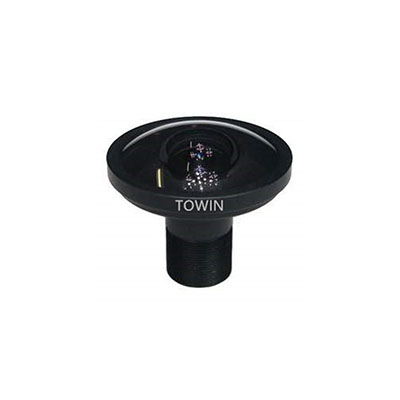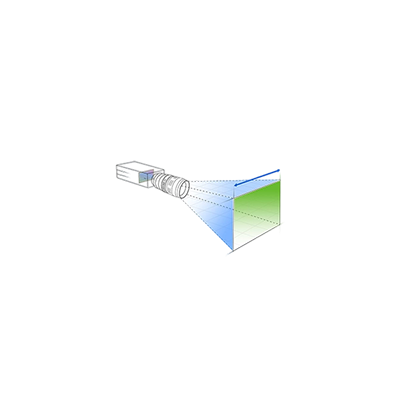



What Is an M12 Lens? Specifications & Selection Guide
10/27/2026
What are M12 lenses used for? M12 lenses are widely used in compact imaging systems, including machine vision, robotics, automotive cameras, smart security, drone imaging, medical devices, biometric recognition, and intelligent traffic monitoring. Their compact design, flexible focal lengths, and different optical configurations make them suitable for embedded cameras and space-constrained imaging equipment.
Also known as S-Mount lenses or board lenses, M12 lenses are commonly integrated into small camera modules where size, weight, and optical performance must be carefully balanced. Depending on the optical design, they can provide wide-angle imaging, low-distortion performance, high-resolution image capture, and infrared compatibility.
However, choosing an M12 lens involves more than selecting a suitable focal length. Sensor size, field of view (FOV), resolution, distortion, aperture, and working distance all influence the final imaging result.
In this guide, we will explore eight common M12 lens applications, compare their optical requirements, and explain how to select the right M12 lens for different imaging projects.
1. What Are M12 Lenses Commonly Used For?
M12 lenses are primarily used in compact camera modules, embedded vision systems, and intelligent imaging devices. Their M12 × 0.5 threaded interface allows them to be integrated into compatible camera holders and optical assemblies.
Unlike larger industrial lens formats, M12 lenses are particularly useful when the camera module must fit into a limited installation space without sacrificing the optical performance required by the application.
Common M12 lens configurations include:
- Wide-Angle M12 Lenses: Designed to capture a larger viewing area in compact camera systems.
- Low-Distortion M12 Lenses: Suitable for applications requiring better geometric accuracy and image consistency.
- Fisheye M12 Lenses: Provide ultra-wide-angle imaging for panoramic and surround-view applications.
- Megapixel M12 Lenses: Designed to support higher-resolution image sensors.
- Low-Light M12 Lenses: Feature optical configurations intended for imaging under limited illumination.
- Automotive M12 Lenses: Designed for selected vehicle camera applications with specific optical and environmental requirements.
Explore the complete range of TOWIN M12 lenses to compare available focal lengths, sensor formats, fields of view, resolutions, and other optical specifications.
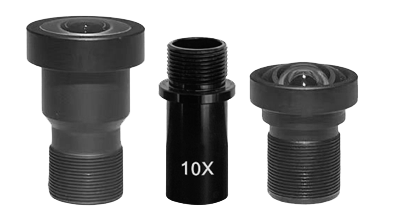
M12 Industrial Lens
2. Eight Common Applications of M12 Lenses
M12 lenses are used across different industries because their compact optical structure supports a wide range of embedded imaging designs. However, each application has different requirements for image coverage, resolution, distortion, and environmental performance.
2.1 M12 Lenses for Machine Vision and Industrial Inspection
Machine vision is one of the important application areas for compact M12 lenses. They can be integrated into embedded inspection cameras and industrial vision modules used for object recognition, barcode reading, positioning, and automated quality control.
In space-constrained equipment, an M12 lens provides a compact optical option for capturing images without requiring a large industrial lens assembly.
Typical applications include:
- Barcode and QR code scanning
- Small-part inspection
- Object detection and classification
- Component positioning
- Embedded industrial inspection cameras
- Compact factory automation equipment
Recommended optical considerations:
- Resolution: Match the lens resolving capability to the camera sensor and required inspection detail.
- Distortion: Consider low-distortion designs when geometric accuracy is important.
- Field of View: Ensure the entire inspection area is captured at the required working distance.
- Depth of Field: Maintain acceptable image sharpness across the target’s depth range.
For demanding industrial measurement, larger sensors, or more specialized optical configurations, C-Mount lenses may be a better choice.
Learn more about TOWIN machine vision solutions and explore our C-Mount machine vision lenses.
2.2 M12 Lenses for Robotics, AGV, and AMR Systems
Robotics systems rely on visual information to recognize objects, navigate working environments, detect obstacles, and perform positioning tasks. M12 lenses are suitable for selected robotic camera modules where compact dimensions and a suitable field of view are important.
For autonomous mobile robots (AMRs) and automated guided vehicles (AGVs), wide-angle M12 lenses can help capture a larger surrounding area. Low-distortion configurations may also be considered when image geometry is important for navigation and visual measurement.
Typical applications include:
- AGV and AMR navigation
- Robot obstacle detection
- Object recognition and tracking
- Pick-and-place positioning
- Embedded robotic vision modules
- Visual guidance systems
Recommended optical considerations:
- Wide Field of View: Capture sufficient environmental information for navigation and obstacle detection.
- Low Distortion: Help maintain geometric consistency when the application requires accurate visual positioning.
- Depth of Field: Support imaging across the expected object-distance range.
- Mechanical Stability: Consider vibration and shock requirements in mobile robotic equipment.
The final lens configuration should be evaluated together with the camera sensor, image-processing algorithm, and mounting position.
Explore TOWIN robotics vision solutions for more information.

Robotics Vision
2.3 M12 Lenses for Automotive Cameras and ADAS
Automotive camera systems use compact optical modules to capture images around and inside vehicles. M12 lenses can be considered for selected automotive imaging applications where a small optical assembly and wide-angle coverage are required.
Depending on the camera architecture, they may be used in rear-view cameras, surround-view systems, parking assistance cameras, and selected in-vehicle monitoring modules.
Automotive imaging requires careful consideration of field of view, image distortion, temperature variation, vibration, and long-term optical stability.
Typical applications include:
- Rear-view camera systems
- Surround-view monitoring
- Vehicle parking assistance cameras
- Selected driver monitoring camera modules
- Compact automotive vision systems
Recommended optical considerations:
- Wide-Angle Imaging: Capture the required surrounding area.
- Distortion Control: Maintain suitable image geometry for the intended application.
- Resolution: Provide sufficient image detail for detection and recognition.
- Temperature Performance: Verify optical focus and mechanical stability across the specified temperature range.
- Environmental Reliability: Consider vibration, humidity, dust, and other installation conditions.
It is important to distinguish between a standard M12 lens and an automotive-qualified optical assembly. Automotive projects should verify the required qualification, environmental testing, and reliability specifications before selecting a lens.
Discover TOWIN ADAS and automotive vision solutions.

Automotive
2.4 M12 Lenses for Smart Security and Surveillance Cameras
M12 lenses are widely used in compact security cameras, IP camera modules, and intelligent surveillance equipment. Their different focal lengths allow camera manufacturers to configure systems for wide-area monitoring or more focused observation.
For example, a wide-angle lens may be suitable for monitoring a room or entrance, while a longer focal length may be preferred when more detail is required from a narrower viewing area.
For day-and-night surveillance, IR-corrected M12 lenses can help maintain focus consistency between visible and near-infrared wavelengths.
Typical applications include:
- Compact CCTV cameras
- Smart home security cameras
- IP surveillance camera modules
- Facial detection and monitoring devices
- Low-light surveillance systems
Recommended optical considerations:
- Aperture: Select an appropriate F-number for available lighting conditions.
- Field of View: Balance monitoring coverage and target detail.
- IR Correction: Consider infrared-corrected optics for day-and-night imaging.
- Resolution: Match the optical performance to the camera sensor.
- Distortion: Control image deformation where accurate recognition is required.
For surveillance systems that require adjustable focal length or specialized iris configurations, CS-Mount lenses may also be worth considering.
Explore smart security camera lens solutions and TOWIN CS-Mount lenses.
2.5 M12 Lenses for Drone and UAV Imaging
Drone camera systems must balance image quality, payload weight, physical dimensions, and power consumption. M12 lenses offer a compact optical option for selected UAV and embedded imaging modules.
Depending on the application, different M12 lens configurations can support aerial observation, navigation, inspection, and first-person-view (FPV) imaging.
Typical applications include:
- UAV inspection cameras
- FPV drone camera modules
- Aerial observation systems
- Compact navigation cameras
- Drone-based equipment inspection
Recommended optical considerations:
- Weight and Dimensions: Keep the optical module compatible with the payload design.
- Field of View: Choose appropriate scene coverage for aerial imaging.
- Resolution: Ensure sufficient detail for inspection and image analysis.
- Distortion: Evaluate distortion requirements for mapping and measurement tasks.
- Vibration Resistance: Consider mechanical stability during flight.
For mapping and measurement applications, optical distortion and calibration requirements should be evaluated carefully rather than selecting a lens based only on its viewing angle.
Learn more about TOWIN drone imaging solutions.
2.6 M12 Lenses for Medical Imaging Devices
Some compact medical imaging devices use M12 lenses when small dimensions and application-specific optical performance are required.
Depending on the imaging architecture, M12 lenses may be considered for compact inspection cameras, selected endoscopic camera modules, dental imaging equipment, and other embedded medical imaging systems.
Different medical imaging tasks require different optical characteristics. Some prioritize a compact design and wide field of view, while others require high resolution, accurate color reproduction, and controlled distortion.
Typical applications include:
- Compact medical inspection cameras
- Selected endoscopic imaging modules
- Dental imaging devices
- Biomedical imaging equipment
Recommended optical considerations:
- Image Resolution: Ensure sufficient detail for the intended imaging task.
- Working Distance: Match the optical configuration to the camera’s installation and target distance.
- Distortion: Control geometric deformation when accurate observation or measurement is needed.
- Color Performance: Evaluate color reproduction and chromatic aberration.
- Mechanical Integration: Confirm compatibility with the imaging module and housing.
For larger sensors or more specialized medical optical systems, other industrial lens formats may provide greater design flexibility.
Explore TOWIN medical imaging solutions.
2.7 M12 Lenses for Biometric Recognition and AI Cameras
Biometric recognition systems use cameras to capture facial features, iris patterns, and other visual information for identity verification and access control.
M12 lenses can be integrated into compact biometric camera modules where space-efficient optical design is important. The appropriate focal length and field of view depend on the camera-to-subject distance, sensor format, and recognition requirements.
Some applications also require near-infrared imaging, making wavelength compatibility an important part of lens selection.
Typical applications include:
- Facial recognition terminals
- Access control cameras
- Compact iris imaging modules
- AI identity verification devices
- Embedded biometric camera systems
Recommended optical considerations:
- Resolution: Capture sufficient facial or iris detail.
- Focal Length: Match the camera distance and target dimensions.
- Distortion: Maintain suitable geometric consistency.
- Wavelength: Verify visible and near-infrared performance when applicable.
- Image Uniformity: Consider sharpness and illumination across the required image area.
Explore biometric recognition imaging solutions.
2.8 M12 Lenses for Intelligent Traffic Monitoring and ANPR
Intelligent transportation systems use cameras to monitor vehicle movement, identify license plates, and collect traffic information. M12 lenses can be considered for selected compact traffic camera modules, depending on the required optical performance and installation conditions.
For automatic number plate recognition (ANPR), lens selection must account for vehicle distance, target size, vehicle speed, lighting conditions, and the number of pixels required across the license plate.
A wider field of view is not always the best solution. If the camera captures too large an area, the license plate may occupy too few pixels for reliable recognition.
Typical applications include:
- Compact traffic monitoring cameras
- Selected ANPR and LPR camera modules
- Vehicle detection systems
- Intelligent transportation monitoring
- Compact roadside imaging devices
Recommended optical considerations:
- Focal Length: Match the lens to the installation distance and target dimensions.
- Resolution: Ensure sufficient pixel detail on the license plate.
- Distortion: Control geometric deformation when image analysis requires it.
- IR Compatibility: Consider infrared performance for nighttime illumination.
- Environmental Performance: Verify suitability for outdoor temperature and weather conditions.
For longer monitoring distances or more demanding traffic imaging systems, a C-Mount lens may offer additional optical configuration options.
Discover TOWIN smart traffic lens solutions and explore our C-Mount lens range.
3. M12 Lens Application and Optical Parameter Comparison
Although M12 lenses are used across many industries, each application has different optical requirements. The best lens is not necessarily the one with the widest field of view or the highest megapixel rating. It is the one that matches the camera sensor, target dimensions, working distance, illumination, and imaging objective.
The following table summarizes common lens selection priorities for different M12 lens applications.
| Application | Lens Configuration to Consider | Important Parameters | Main Selection Priority |
|---|---|---|---|
| Machine Vision | Low-distortion M12 lens | Resolution, distortion, FOV | Inspection accuracy |
| Robotics / AGV | Wide-angle or low-distortion M12 lens | FOV, distortion, depth of field | Navigation and obstacle detection |
| Automotive | Application-specific automotive M12 lens | FOV, distortion, temperature performance | Environmental compatibility |
| Smart Security | Wide-angle or IR-corrected M12 lens | Aperture, FOV, IR correction | Day-and-night imaging |
| Drone Imaging | Compact wide-angle M12 lens | Weight, FOV, resolution | Compact integration |
| Medical Imaging | Low-distortion or application-specific M12 lens | Resolution, color, distortion | Image clarity |
| Biometric Recognition | High-resolution M12 lens | Resolution, focal length, wavelength | Recognition detail |
| Smart Traffic | Low-distortion or IR-compatible M12 lens | Focal length, resolution, IR correction | Target identification |
These are general engineering guidelines rather than fixed specifications. The actual lens configuration should be verified against the camera sensor, target size, working distance, lighting conditions, and required image quality.
3.1 Which Parameters Matter Most?
When comparing M12 lens specifications, engineers should pay particular attention to the following parameters:
- Effective Focal Length (EFL): Determines the optical magnification and influences the field of view.
- Sensor Size: Defines the image area that the lens must adequately cover.
- Horizontal Field of View (HFOV): Indicates the horizontal scene coverage at a specified working distance.
- Resolution: Describes the lens’s ability to reproduce fine image details and should be evaluated with the sensor.
- Distortion: Measures geometric image deformation, which is important for measurement and recognition.
- F-Number: Influences light collection and depth of field.
- Total Track Length (TTL): Helps determine whether the lens fits the camera’s mechanical design.
For a deeper understanding of these specifications, visit the TOWIN optical design guide.
4. How to Choose the Right M12 Lens for Your Application
Choosing the right M12 lens requires a systematic evaluation of the complete imaging system. Instead of selecting a lens based on one specification, engineers should consider how the optical design interacts with the sensor, target, installation distance, and lighting environment.
4.1 Match the Lens to the Camera Sensor
The image circle of the lens should adequately cover the active area of the camera sensor. If the image circle is too small, the captured image may show vignetting or dark corners.
Before selecting a lens, confirm:
- Sensor format, such as 1/4″, 1/3″, 1/2.7″, 1/2.3″, or 1/1.8″.
- Sensor resolution and pixel size.
- Required image circle.
- Lens resolution and MTF performance.
- Optical and mechanical compatibility.
For more information, read the industrial lens selection guide.
4.2 Determine the Required Field of View
Field of view determines how much of the scene a camera can capture. A wider FOV covers a larger area, while a narrower FOV captures a smaller scene and may be more suitable for distant or detailed targets.
When determining the required FOV, consider:
- Target width and height.
- Camera-to-object working distance.
- Sensor dimensions.
- Required image coverage.
- Minimum detail that must be recognized.
For example, a robotic navigation camera may need a wide field of view to observe its surroundings, while a traffic recognition camera may need a narrower view to capture sufficient license plate detail.
Use the TOWIN Field of View Calculator to estimate the required imaging coverage.
4.3 Select the Appropriate Focal Length
Focal length influences the field of view when the sensor size and working distance are fixed.
- Short focal lengths: Generally provide wider viewing angles and are useful for compact wide-area monitoring.
- Medium focal lengths: Can provide a balance between scene coverage and target detail.
- Long focal lengths: Generally provide narrower viewing angles and are useful for smaller or more distant targets.
The correct focal length should be calculated from the sensor dimensions, required field of view, and working distance rather than selected by guesswork.
4.4 Evaluate Resolution and Optical Performance
Lens resolution should be compatible with the camera sensor. A high-megapixel sensor does not automatically guarantee a high-quality image if the lens cannot resolve the required details.
Other important optical characteristics include:
- Modulation Transfer Function (MTF).
- Geometric distortion.
- Chromatic aberration.
- Relative illumination.
- Edge-to-edge image sharpness.
For inspection and measurement applications, distortion control and image consistency may be more important than simply choosing the highest megapixel specification.
Read the lens distortion guide to understand how distortion affects imaging accuracy.
4.5 Consider Aperture and Lighting Conditions
The aperture controls how much light reaches the image sensor. A larger aperture, represented by a lower F-number, generally allows more light to enter the lens.
However, aperture selection also affects depth of field, optical aberrations, and image performance. For low-light surveillance, night vision, and outdoor imaging, the lens aperture should be evaluated together with sensor sensitivity and the illumination system.
For day-and-night applications, also check whether the lens supports the required infrared wavelengths and whether IR correction is necessary.
4.6 Check Mechanical and Environmental Requirements
Optical performance alone is not enough. The lens must also fit the camera housing and operate reliably under the intended environmental conditions.
Important mechanical and environmental considerations include:
- M12 × 0.5 thread compatibility.
- Overall lens length and mechanical clearance.
- Focusing and locking requirements.
- Operating temperature range.
- Vibration and shock requirements.
- Dust, humidity, and water protection requirements.
For OEM and ODM projects, these requirements should be confirmed before finalizing the optical design.
5. M12 vs. C-Mount vs. CS-Mount: Which Lens Should You Choose?
M12, C-Mount, and CS-Mount lenses are widely used in different imaging systems. Although they all serve camera applications, their mechanical interfaces, mounting distances, and typical optical configurations are different.
Understanding these differences helps camera manufacturers and system integrators choose an appropriate lens platform.
| Feature | M12 / S-Mount | C-Mount | CS-Mount |
|---|---|---|---|
| Thread | M12 × 0.5 | 1″-32 UN | 1″-32 UN |
| Flange Focal Distance | Depends on lens and camera design | 17.526 mm | 12.526 mm |
| Physical Design | Compact and lightweight | Industrial lens format | Compact CCTV lens format |
| Typical Applications | Embedded cameras, robotics, compact vision | Machine vision, industrial inspection, FA | CCTV and IP surveillance cameras |
| Main Advantage | Space-saving integration | Broad optical configuration options | Security camera compatibility |
5.1 When Should You Choose an M12 Lens?
Choose an M12 lens when your project requires:
- A compact and lightweight camera module.
- Space-saving optical integration.
- Embedded vision or AI camera applications.
- Robotics, AGV, or drone imaging.
- Small camera modules for volume production.
Explore the complete TOWIN M12 lens product range.
5.2 When Should You Choose a C-Mount Lens?
C-Mount lenses are often preferred for industrial camera systems requiring larger sensor coverage, flexible focal lengths, higher optical resolution, or more demanding inspection performance.
They are commonly considered for:
- Factory automation and industrial inspection.
- High-resolution machine vision cameras.
- Precision measurement and metrology.
- Larger image sensor formats.
- Specialized optical configurations.
View TOWIN C-Mount lenses for industrial imaging applications.
5.3 When Should You Choose a CS-Mount Lens?
CS-Mount lenses are commonly used in CCTV and IP surveillance camera systems. They are suitable for camera designs requiring compatible CS-Mount interfaces and security-oriented optical configurations.
Typical applications include:
- Fixed-focal-length security cameras.
- Varifocal surveillance cameras.
- Day-and-night monitoring systems.
- DC auto iris and P-Iris camera systems.
Although C-Mount and CS-Mount lenses use the same nominal thread, their flange focal distances differ by 5 mm. Camera and lens compatibility must therefore be confirmed before installation.
Explore TOWIN CS-Mount lenses.
6. Frequently Asked Questions About M12 Lenses
Q1: What are M12 lenses mainly used for?
A: M12 lenses are mainly used in compact imaging systems, including machine vision, robotics, automotive cameras, smart security, drones, medical devices, biometric recognition, and traffic monitoring. Their compact size makes them suitable for embedded cameras and space-constrained equipment.
Q2: Are M12 lenses suitable for machine vision?
A: Yes. M12 lenses can be used in compact machine vision applications such as barcode reading, object detection, small-part inspection, and embedded automation systems. The appropriate lens depends on sensor size, resolution, field of view, working distance, and distortion requirements. For demanding metrology or larger sensors, a C-Mount or specialized industrial lens may be more suitable.
Q3: What is the difference between an M12 lens and an S-Mount lens?
A: M12 lens generally refers to a lens with an M12 × 0.5 threaded mounting interface. S-Mount is another commonly used name for this board-level lens format. The terms are frequently used interchangeably, but the actual mechanical and optical specifications should always be checked.
Q4: What sensor sizes are compatible with M12 lenses?
A: M12 lens compatibility depends on its optical image circle and design. Different models can support sensor formats such as 1/4″, 1/3″, 1/2.7″, 1/2.3″, and 1/1.8″. Always check the individual lens specification to confirm that it adequately covers the active sensor area.
Q5: Can M12 lenses be used in low-light environments?
A: Yes. Some M12 lenses feature larger apertures and optical configurations suitable for low-light imaging. For day-and-night applications, IR-corrected versions may also be considered. The final choice should account for aperture, sensor sensitivity, illumination, and wavelength requirements.
Q6: Are M12 lenses better than C-Mount lenses?
A: Neither mount is universally better. M12 lenses are generally preferred for compact, lightweight, and embedded imaging systems. C-Mount lenses offer a broader range of configurations for many industrial camera applications, including larger sensors and demanding inspection tasks. Selection should depend on the optical and mechanical requirements of the project.
Q7: How do I choose the right focal length for an M12 lens?
A: Start by identifying the camera sensor size, working distance, and required field of view. Shorter focal lengths generally produce wider viewing angles, while longer focal lengths produce narrower viewing angles. Use a field of view calculator to estimate the required focal length before comparing individual lens models.
Q8: Can TOWIN provide customized M12 lenses?
A: TOWIN offers M12 lens products and OEM/ODM optical development support. Depending on project requirements, customization may involve focal length, field of view, sensor matching, distortion optimization, and wavelength-related configurations. Contact TOWIN with your camera specifications and application requirements to discuss a suitable optical solution.
7. Conclusion: Finding the Right M12 Lens for Your Imaging Project
So, what are M12 lenses used for? They are used in a wide range of compact imaging systems, from machine vision and robotics to automotive cameras, smart security, drone imaging, medical devices, biometric recognition, and intelligent traffic monitoring.
The most important factor is matching the lens to the actual imaging requirements. Sensor size, focal length, field of view, resolution, distortion, aperture, working distance, and environmental conditions should all be evaluated before selecting a lens.
TOWIN provides a range of M12 lenses for different industrial and embedded imaging applications, together with optical engineering support for customized projects.
If you are developing a new camera module or looking for a suitable lens for an existing imaging system, prepare your sensor specifications, required field of view, working distance, and application details before selecting a product.
Contact TOWIN to discuss your M12 lens requirements and find the right optical solution for your project.