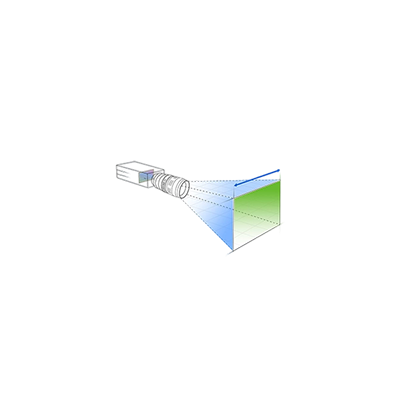



How to Select the Right Lens for a Machine Vision Camera
10/23/2026
What Are M12 Lenses Used For? 8 Applications & Selection Guide
10/30/2026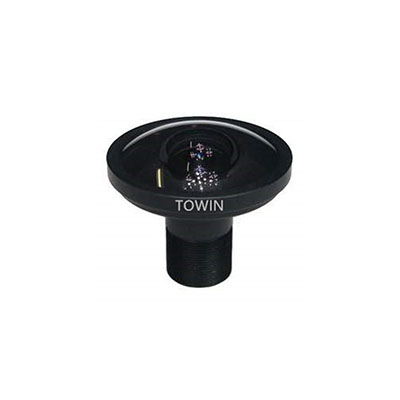
An M12 Lens is a compact camera lens commonly used in embedded vision systems, board cameras, robotics, smart security devices, and other space-constrained imaging applications. Also known as an S-mount lens or board lens, it typically uses an M12 × 0.5 threaded mount for installation in a compatible lens holder.
M12 lenses are available in different focal lengths, fields of view, apertures, sensor formats, and optical configurations. Choosing the right lens requires more than matching the thread size. You also need to consider sensor compatibility, working distance, resolution, distortion, and the mechanical space available in your camera system.
In this guide, we explain how M12 lenses work, compare M12 vs. C-mount vs. CS-mount lenses, and provide a practical selection process to help you identify the right optical solution for your application.
1. What Is an M12 Lens Mount?
An M12 lens mount is a threaded mounting interface commonly used for miniature camera lenses. The term M12 × 0.5 refers to a nominal thread diameter of 12 mm and a thread pitch of 0.5 mm.
Because these lenses can be installed in compatible holders on compact camera modules and printed circuit board (PCB) cameras, they are often called board lenses. Their small form factor makes them suitable for systems where size, weight, and integration flexibility are important.
Explore TOWIN M12 lenses to review available lens types and specifications for different imaging applications.
What Does M12 × 0.5 Mean?
The designation describes the lens thread rather than its focal length or optical performance. The 12 mm value represents the nominal thread diameter, while 0.5 mm indicates the distance between adjacent thread peaks.
A matching thread alone does not guarantee complete compatibility. The lens holder, thread engagement depth, optical alignment, back focal position, and available mechanical clearance must also be considered during camera integration.
Why Are M12 Lenses Also Called Board Lenses?
M12 lenses are widely used with compact board-level cameras because their threaded mounting design supports integration into relatively small camera assemblies. Depending on the lens design, they can be used in embedded AI cameras, robotics, barcode readers, automotive imaging devices, and industrial vision equipment.
What Are the Main Advantages of M12 Lenses?
- Compact design: Suitable for space-constrained camera modules.
- Flexible optical configurations: Available with different focal lengths, apertures, and fields of view.
- Integration flexibility: Useful for embedded cameras and custom imaging systems.
- Application versatility: Can support machine vision, robotics, smart security, and other imaging tasks when properly specified.
The actual advantages depend on the specific lens model and application requirements. An M12 mount does not automatically guarantee a particular resolution, distortion level, or image quality.
2. Key M12 Lens Specifications Explained
Before selecting an M12 Lens, understand the optical and mechanical parameters that determine whether a lens can deliver the required image quality and fit your camera system.
Focal Length and Field of View (FOV)
Focal length affects the field of view (FOV) captured by a camera. With the same sensor size and comparable optical conditions, a shorter focal length generally provides a wider view, while a longer focal length provides a narrower view.
The appropriate focal length depends on sensor dimensions, working distance, target size, and the amount of scene you need to capture. Do not select a lens based on focal length alone.
For example, a compact robot navigating through a wide area may require a wider field of view, while a camera inspecting a small component may need a narrower field of view to capture more detail.
Sensor Size and Image Circle
The lens image circle must adequately cover the camera sensor. If the image circle is too small, the image may exhibit vignetting or dark corners. Sensor format compatibility should therefore be checked against the manufacturer’s specifications.
Two M12 lenses with identical focal lengths may behave differently when paired with different sensor sizes. Always confirm the sensor format and required image coverage before choosing a lens.
Resolution and Pixel Size
Lens resolution should be evaluated alongside sensor resolution and pixel size. A camera’s megapixel rating alone does not determine the detail captured by the complete imaging system.
Optical performance can also vary across the image field, especially toward the corners. For machine vision and inspection tasks, review the lens’s documented resolution performance and test the assembled camera under actual operating conditions.
Aperture and Low-Light Performance
The F-number describes the relationship between focal length and aperture diameter. A lower F-number generally allows more light to reach the sensor, which can help in low-light environments or when shorter exposure times are required.
However, aperture selection involves trade-offs. Depth of field, optical aberrations, illumination, exposure time, and the lens’s performance at the selected aperture all affect the final image.
Optical Distortion and Total Track Length (TTL)
Optical distortion changes the apparent geometric position of objects in an image. It may be particularly important for dimensional measurement, positioning, and precision inspection. A low-distortion lens can help reduce geometric errors, although system calibration may still be necessary.
Total track length (TTL) is a mechanical design parameter describing the overall axial length of a lens assembly according to the manufacturer’s stated measurement convention. It is important when integrating a lens into a compact camera housing.
If geometric accuracy is a priority, review low-distortion M12 lens options and verify the specified distortion performance for the intended sensor and field of view.
3. M12 vs. C-Mount vs. CS-Mount Lenses
M12, C-mount, and CS-mount lenses serve different camera integration needs. Although all three are used in imaging systems, their mounting interfaces and typical applications differ.
Understanding these differences helps you avoid compatibility issues before selecting a lens for an embedded camera, industrial inspection system, or surveillance device.
| Feature | M12 / S-Mount | C-Mount | CS-Mount |
|---|---|---|---|
| Mount interface | Typically M12 × 0.5 thread | 1-32 UNF thread | 1-32 UNF thread |
| Standard flange focal distance | Depends on the lens and holder design | 17.526 mm | 12.526 mm |
| Typical design priority | Compact size and integration | Broad industrial lens configurations | Compact CCTV and network camera systems |
| Common applications | Embedded vision, robotics, board cameras | Machine vision, factory automation, inspection | CCTV, IP cameras, video surveillance |
| Main selection considerations | Holder compatibility, sensor coverage, TTL | Flange distance, image circle, sensor format | Flange distance, sensor format, camera compatibility |
M12 vs. C-Mount
M12 lenses are often preferred when a camera needs a compact, lightweight optical assembly. They are commonly used in embedded vision devices, small robots, and space-constrained camera modules.
C-mount lenses are widely used in industrial machine vision and factory automation. Depending on the model, they can provide a broad selection of optical configurations, sensor coverage options, and features for inspection and measurement.
If your application requires industrial inspection optics or a different sensor format, explore TOWIN C-mount lenses and compare the available specifications with your camera requirements.
M12 vs. CS-Mount
M12 and CS-mount lenses use different mounting interfaces. CS-mount lenses use a 1-32 UNF thread and a standard flange focal distance of 12.526 mm. M12 lenses generally use an M12 × 0.5 thread, with the mechanical and optical positioning determined by the particular lens and holder design.
C-mount and CS-mount interfaces share the same nominal thread but have different flange focal distances. They should not be treated as interchangeable without the appropriate camera interface and optical spacing.
For CCTV and network camera systems designed around a CS-mount interface, review TOWIN CS-mount lenses and confirm compatibility with your camera.
Which Lens Mount Should You Choose?
- Choose M12 when compact size, low weight, and embedded camera integration are key priorities.
- Consider C-mount when your industrial camera requires a suitable combination of sensor coverage, optical performance, and lens configuration.
- Consider CS-mount when your camera system is specifically designed for the CS-mount interface.
The mounting interface is only one part of the decision. Sensor compatibility, focal length, resolution, distortion, working distance, and mechanical clearance must also match the application.
4. Common Applications of M12 Lenses
Because of their compact form factor and range of optical configurations, M12 lenses are used in a variety of embedded and industrial imaging applications.
Embedded Vision and AI Cameras
Embedded vision systems often have strict limits on size, weight, and power consumption. An appropriately selected M12 lens can support compact AI cameras used for object recognition, people counting, barcode reading, and edge-computing applications.
Robotics and Machine Vision
Robots and automated guided vehicles may use compact cameras for navigation, obstacle detection, positioning, and visual inspection. Lens selection depends on the required field of view, working distance, image detail, and environmental conditions.
Automotive Imaging
Compact camera modules can be used in automotive imaging applications such as surround-view cameras, rear-view cameras, and other vehicle vision systems. Automotive projects may require additional verification of temperature performance, vibration resistance, optical stability, and environmental protection.
Explore automotive lens options and confirm the specific requirements for your vehicle camera project.
Wide-Angle and Panoramic Imaging
Wide-angle and fisheye configurations can capture a large scene from a compact camera module. They are useful for applications where broad coverage is more important than minimizing geometric distortion.
Depending on the imaging objective, you can review M12 fisheye lenses or wide-angle lens options. Check the specified field of view and distortion characteristics before selecting a model.
5. How to Choose the Right M12 Lens
Selecting the right M12 Lens begins with the camera’s technical requirements rather than the lens’s physical size or focal length alone. Follow these steps to narrow down suitable options.
Step 1: Confirm Camera and Mount Compatibility
Identify the camera model, lens holder, thread specification, mounting depth, and available installation space. Confirm that the lens can be mounted securely and positioned correctly relative to the sensor.
Step 2: Match the Sensor Size
Check the camera sensor format and the lens’s supported image circle. The lens should cover the required sensor area without unacceptable vignetting or loss of image quality.
Step 3: Determine Field of View and Working Distance
Establish the distance between the camera and the target, the target’s dimensions, and the horizontal and vertical scene coverage you need.
These requirements help determine the appropriate focal length. For a more accurate selection, consider sensor dimensions and working distance together rather than relying on a general focal-length recommendation.
Step 4: Match Resolution, Distortion, and Aperture
Define the smallest detail that must be resolved, the acceptable geometric distortion, and the lighting conditions. Applications involving dimensional measurement may require stricter distortion control than general object detection.
Aperture and exposure should also be evaluated together, especially when the system operates in low light or needs to capture moving objects.
Step 5: Check Mechanical and Environmental Requirements
Confirm total track length, holder depth, focus adjustment, cable and housing clearance, and any environmental requirements. Automotive, outdoor, and industrial installations may need additional validation for temperature, vibration, moisture, and contamination.
Step 6: Shortlist Suitable Models and Validate Performance
Once the requirements are defined, compare candidate lenses using their published specifications. If the application is demanding, test a sample with the actual camera sensor, lighting, target, and working distance before finalizing the design.
Start with the TOWIN M12 lens catalog to review available models. You can also use the optical lens selection tool to help organize your requirements and narrow down possible options.
For projects with specific optical or mechanical requirements, visit TOWIN’s industrial lens manufacturing and customization services to discuss the application with the team.
6. Frequently Asked Questions About M12 Lenses
What Is an M12 Lens?
An M12 lens is a compact camera lens that typically uses an M12 × 0.5 threaded mount. It is commonly used in board cameras, embedded vision systems, robotics, and other compact imaging devices.
What Does M12 × 0.5 Mean?
M12 × 0.5 indicates a nominal thread diameter of 12 mm and a thread pitch of 0.5 mm. It describes the mounting thread, not the focal length or the image quality of the lens.
Are M12 and S-Mount Lenses the Same?
The terms are often used interchangeably for miniature threaded lenses. However, the actual thread, holder, and mechanical dimensions should always be confirmed from the specific product documentation.
Are M12 Lenses Compatible With All Camera Sensors?
No. Compatibility depends on the lens’s image circle, sensor dimensions, optical performance, and mechanical arrangement. Always check the manufacturer’s specifications for the intended camera sensor.
How Do I Choose the Right Focal Length for an M12 Lens?
Consider sensor size, working distance, target dimensions, and required field of view. A shorter focal length generally provides a wider view, while a longer focal length provides a narrower view when other conditions are comparable.
Can M12 Lenses Be Used for Machine Vision?
Yes. M12 lenses can be used in suitable machine vision systems, particularly compact embedded applications. The right model depends on the required resolution, distortion, field of view, lighting, and inspection accuracy.
Are M12 Lenses Suitable for Low-Light Applications?
Some M12 lenses feature relatively large apertures that can help collect more light. Actual low-light performance also depends on sensor sensitivity, exposure time, illumination, and the lens’s optical characteristics.
Can TOWIN Provide Customized M12 Lenses?
TOWIN provides industrial optical lens products and supports customized optical solutions. Availability depends on the project requirements and technical feasibility. Share your sensor format, focal length, field of view, working distance, mechanical constraints, and target performance when requesting a recommendation.
To discuss a project, visit TOWIN’s industrial lens manufacturing services or contact the team through the website.
Conclusion: Is an M12 Lens Right for Your Application?
An M12 Lens is a practical option for compact cameras and embedded vision systems that require a small mounting interface and an appropriate combination of optical performance and mechanical integration. However, choosing the right lens involves more than matching the thread size.
Evaluate sensor compatibility, focal length, field of view, resolution, distortion, aperture, and available installation space before selecting a model. Compare alternative mounts when your camera or application requires a different optical configuration.
Ready to identify a suitable lens for your project? Explore TOWIN M12 lenses or contact the team to discuss your imaging requirements and potential customization options.