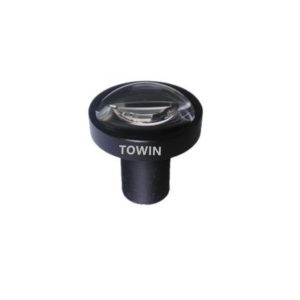



Wide Angle Lens – S03412610316F69
09/08/2025
Wide Angle Lens – S04011712116F
09/08/2025
Low Distortion Lens – S03414007026F
3.4mm M12 low distortion wide-angle lens with 90° FOV, <6% TV distortion and IP68 protection for automotive and outdoor cameras.
S03414007026F is Wide-angle CCTV low-distortion lens with Built-In IR Filter, 3.4mm 1/4″ M12 mount, F2.6 aperture, IP68 Waterproof Automotive Lens.
| IMAGE FORMAT | 1/4″ |
| FOCAL LENGTH | 3.4mm |
| F.O.V. (NT99141) | 90°(D=4.45) |
| 70°(H=3.84) | |
| 40° (V=2.16) | |
| RESOLUTION | MP |
| TV DISTORTION | <6% |
| APERTURE | F2.6 |
| MOUNT | M12x0.5 |
| IRIS | Fixed |
| M.O.D. | 0.1m |
| T.T.L. | 20.12mm |
| STRUCTURE | 3G1P+IRCF |
| WATERPROOF | IP68 |
3.4mm M12 Low Distortion Lens
This 3.4mm M12 low distortion lens is designed for 1/4″ imaging sensors and provides a 90° diagonal field of view with less than 6% TV distortion. With IP68 protection, F2.6 aperture, and a compact M12x0.5 mount, it is suitable for automotive cameras, outdoor monitoring, embedded vision, and compact imaging systems requiring wide coverage with controlled distortion.
For more compact lens options, explore the M12 Lens product range.
M12 Low Distortion Lens Core Highlights
- 90° diagonal FOV — provides broad scene coverage while maintaining controlled optical distortion.
- <6% TV distortion — suitable for applications where image geometry and object shape need to remain relatively accurate.
- F2.6 fixed aperture — provides a stable optical configuration for compact camera systems.
- IP68 waterproof protection — suitable for demanding outdoor and vehicle-mounted environments.
- M12x0.5 compact mount — integrates easily with small camera modules and embedded imaging devices.
3.4mm M12 Low Distortion Lens Applications
Automotive Camera Systems
The combination of a 3.4mm focal length, 90° diagonal FOV, <6% TV distortion, and IP68 protection makes this lens suitable for automotive camera systems that need broad coverage without the extreme geometric distortion associated with fisheye optics.
Potential applications include:
- Parking cameras
- Vehicle side-view cameras
- Rear-view and auxiliary cameras
- Blind-spot monitoring
- Vehicle-mounted monitoring systems
- Compact ADAS camera modules
The controlled distortion is particularly useful when the camera needs to preserve the relative shape and position of objects in the image.
For automotive vision applications, see TOWIN’s ADAS Vision solution.
Outdoor Monitoring
The IP68 rating provides protection against dust and water ingress, making the lens suitable for outdoor camera modules and equipment exposed to changing weather conditions.
Suitable applications can include:
- Outdoor security cameras
- Industrial monitoring cameras
- Vehicle-mounted cameras
- Agricultural equipment cameras
- Outdoor embedded vision systems
- Smart infrastructure monitoring
For security-oriented camera applications, the Smart Security solution provides additional application information.
Low-Distortion Embedded Vision
Unlike an ultra-wide fisheye lens, this model combines a relatively broad 90° diagonal FOV with less than 6% TV distortion. This makes it appropriate for compact embedded cameras where wide coverage is required but excessive image curvature is undesirable.
Potential systems include:
- Embedded CMOS camera modules
- Compact M12 cameras
- Robotics vision modules
- Industrial inspection cameras
- Smart devices
- Machine vision subsystems
When selecting a lens for a particular sensor, the Sensor Guide can help verify sensor size and optical compatibility.
Designed for automotive, outdoor monitoring, and compact embedded vision applications requiring wide field coverage with controlled distortion and IP68 environmental protection.
Optical Design and Lens Selection
The 3G1P + IRCF optical structure provides a compact optical configuration for this M12 lens. The integrated IRCF is an IR Cut Filter and should not be interpreted as an IR-corrected optical design.
Because the lens provides <6% TV distortion, it is better suited to applications where straight-line representation and geometric consistency matter than strongly distorted fisheye imaging.
For applications where distortion performance is a key selection criterion, the Distortion Guide explains the different types of lens distortion and how they affect imaging performance.
Frequently Asked Questions
Q1: What type of lens is this 3.4mm M12 lens?
A: It is a fixed-focal, low-distortion wide-angle M12 lens designed for 1/4″ imaging sensors.
Q2: Is this lens a fisheye lens?
A: No. Although the lens provides a 90° diagonal FOV, its TV distortion is specified at less than 6%, which is substantially different from the strong distortion normally associated with fisheye optics.
Q3: What is the field of view of the lens?
A: With the NT99141 configuration, the specified FOV is 90° diagonal, 70° horizontal, and 40° vertical.
Q4: Is the lens suitable for automotive cameras?
A: Yes. Its IP68 protection, compact M12x0.5 mount, wide field of view, and controlled distortion make it suitable for various vehicle-mounted imaging applications.
Q5: What does the IP68 rating mean for this lens?
A: IP68 indicates strong protection against dust and water ingress, making the lens suitable for outdoor and demanding vehicle-mounted camera environments.
Q6: Does IRCF mean the lens is IR corrected?
A: No. IRCF means an IR Cut Filter is included in the optical structure. An IR-corrected lens is specifically designed to compensate for focus shifts between visible and near-infrared wavelengths.
Q7: What is the minimum object distance?
A: The specified minimum object distance is 0.1 meter, allowing the lens to capture relatively close subjects while maintaining a wide field of view.
Q8: What sensor format is this lens designed for?
A: The lens is specified for a 1/4″ image format, with the listed FOV measured using the NT99141 sensor configuration.
Online contact
| SENSOR | |
|---|---|
| E.F.L. | |
| H. F.O.V. | |
| RESOLUTION | |
| Max Dist. | |
| FNo. | |
| FEATURE | |
| MOUNT | |
| IRIS | |
| T.T.L.(mm) | |
| MARK |