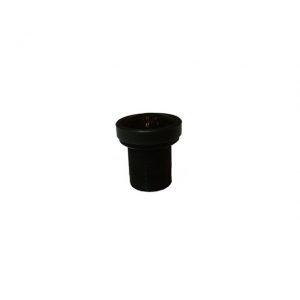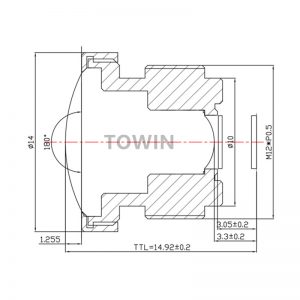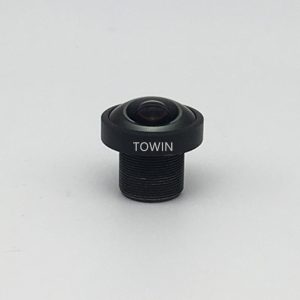



Fisheye Lens – S02212814824F
10/12/2025
C-Mount Lens – C041220PM1
10/13/2025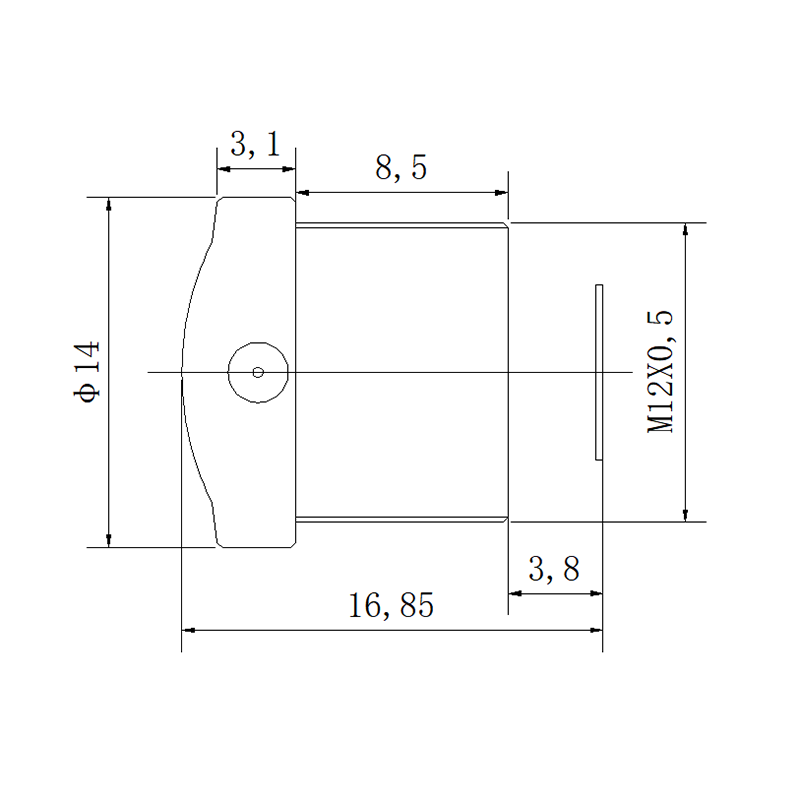
Fisheye Lens – S02212815022F – IMX224
2.2mm M12 200° fisheye lens for IMX224 3MP cameras, featuring F2.2 aperture, < -85% distortion, 0.1m M.O.D., and 6G+IRCF structure.
S02212815022F – IMX224 is 2.2mm Fisheye CCTV Lens with Built-In IR Filter, 3-Megapixel M12/S-Mount lens, F2.2 Aperture Suitable for security Surveillance.
| IMAGE FORMAT | Φ6.8 |
| FOCAL LENGTH | 2.2mm |
| F.O.V. | 200°@Φ6.8 |
| F.O.V. (IMX224) | 168°(D=6.09) |
| 131°(H=4.89) | |
| 96°(V=3.66) | |
| RESOLUTION | 3 MP |
| DISTORTION | <-85% |
| APERTURE | F2.2 |
| MOUNT | M12x0.5 |
| IRIS | Fixed |
| M.O.D. | 0.1m |
| T.T.L. | 16.85mm |
| STRUCTURE | 6G+IRCF |
2.2mm M12 200° Fisheye Lens for IMX224 3MP Imaging
This 2.2mm M12 fisheye lens is designed for ultra-wide imaging, providing up to a 200° field of view with a Φ6.8 image format and 168° diagonal coverage on the IMX224 sensor. With 3MP resolution, an F2.2 fixed aperture, 0.1m minimum object distance, and compact M12x0.5 mounting, it is suitable for machine vision, robotics vision, embedded imaging, and applications requiring exceptionally broad scene coverage.
Product Core Highlights
- 200° maximum FOV provides exceptionally broad coverage from a single compact optical system.
- 168° diagonal FOV on IMX224 enables extensive scene capture while maintaining 3MP imaging.
- < -85% distortion delivers a pronounced fisheye projection for extreme wide-area imaging.
- F2.2 fixed aperture provides a relatively bright optical configuration for embedded camera systems.
- 0.1m M.O.D. supports close-range imaging where a large surrounding area must remain visible.
- M12x0.5 mount enables integration with compact embedded and industrial camera modules.
- 6G+IRCF structure combines a multi-element optical configuration with an integrated IR cut filter.
2.2mm M12 200° Fisheye Lens Applications
Core Application Scenes
The defining feature of this lens is its 200° field of view at Φ6.8, combined with an IMX224-specific diagonal FOV of 168°. This makes it appropriate for imaging systems where maximum scene coverage is more important than maintaining conventional rectilinear image geometry.
For machine vision, the lens can be used when a single camera needs to observe a very large area from a relatively close installation position. The 3MP resolution provides practical image detail for applications such as area observation, object presence detection, equipment monitoring, and wide-field inspection.
In robotics vision, the 168° diagonal field of view on the IMX224 can provide broad environmental awareness around a robotic platform. This can be useful for navigation-related vision, workspace observation, obstacle awareness, and other tasks where a narrow forward-facing view would leave significant blind areas.
The 0.1m M.O.D. is an important characteristic for close-range applications. When the camera is installed near equipment, objects, or structures, the lens can maintain an exceptionally broad viewing angle while supporting short working distances.
For embedded imaging systems, the M12x0.5 mount and 16.85mm TTL allow the lens to be integrated into compact camera assemblies. Its fixed iris provides a simple optical configuration without the need for mechanical iris adjustment.
The < -85% distortion specification clearly positions this product as an extreme fisheye lens. The high distortion is an intentional characteristic of the optical design, allowing the lens to achieve its exceptionally wide field of view. Applications requiring accurate geometry should therefore include image calibration and fisheye dewarping in the image-processing pipeline.
Compatible Devices
This lens can be considered for integration with:
- IMX224-based 3MP camera modules
- M12 embedded camera modules
- Compact machine vision cameras
- Robotics vision cameras
- Embedded AI vision systems
- Ultra-wide fisheye camera modules
- Wide-area monitoring devices
- Compact inspection systems
- Environmental observation cameras
- Industrial embedded imaging equipment
For additional M12 optical configurations, explore the M12 Lens product range; For other extreme ultra-wide optical designs, see the Fisheye Lens category.
For machine vision systems requiring broad scene coverage, visit the Machine Vision solution; For robotic platforms requiring extensive environmental visibility, see the Robotics Vision solution.
Use the FOV Calculator to evaluate the relationship between sensor format, focal length, and required field of view.
For technical guidance on selecting the appropriate optical configuration, see the Lens Selection Guide.
For applications where fisheye distortion needs to be evaluated or corrected, the Distortion Guide provides additional optical information.
Designed for extreme ultra-wide fisheye machine vision, robotics vision, and embedded imaging applications.
Frequently Asked Questions
Q: What is the maximum field of view of this 2.2mm M12 lens?
A: The lens provides a maximum specified FOV of 200° at the Φ6.8 image format. With the IMX224 sensor, the specified FOV is 168° diagonal, 131° horizontal, and 96° vertical.
Q: Is this a fisheye lens?
A: Yes. The 200° maximum FOV and distortion below -85% indicate an extreme fisheye optical design.
Q: Why is the distortion below -85%?
A: The high distortion is an inherent characteristic of the extreme fisheye design. It allows the lens to capture an exceptionally wide scene that would not be possible with conventional rectilinear optics.
Q: Is this lens suitable for low-distortion imaging?
A: No. With distortion specified at < -85%, this lens should not be categorized as a Low Distortion Lens. It is intended for maximum field-of-view applications where fisheye projection is acceptable or can be digitally corrected.
Q: Is this lens compatible with the IMX224?
A: Yes. The lens has a specified IMX224 FOV of 168° diagonal, 131° horizontal, and 96° vertical, with 3MP imaging capability.
Q: What is the minimum object distance?
A: The specified M.O.D. is 0.1m, allowing the lens to be used for close-range ultra-wide imaging.
Q: What does IRCF mean in the 6G+IRCF structure?
A: IRCF refers to an infrared cut filter. It should not be interpreted as IR correction. The filter controls infrared wavelengths reaching the image sensor.
Q: Can the fisheye distortion be corrected digitally?
A: Yes. Software-based fisheye calibration and dewarping can transform the strongly distorted image into a more conventional viewing geometry when required by the application.
Online contact