


How to Choose the Right Robotic Camera Lens
07/24/2026
How Does TOF Lens Work? Understanding TOF Optical Design and Depth Sensing
07/26/2026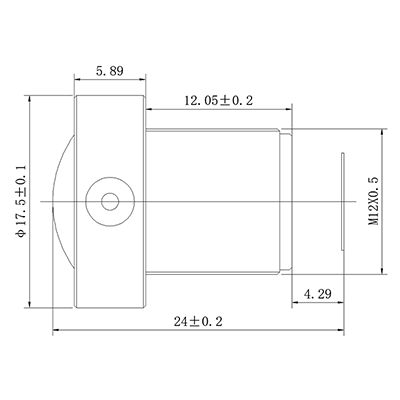
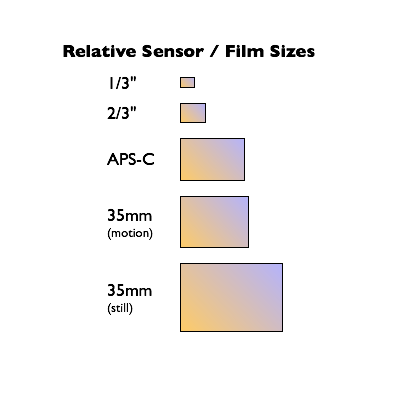
What sensor sizes can M12 lenses support? M12 lenses can support a wide range of sensor formats, including 1/4″, 1/3″, 1/2.7″, 1/2.3″, 1/1.8″, and 1/1.7″ sensors, depending on the optical design, image circle coverage, and application requirements. Because M12 lenses are compact, flexible, and available in various optical configurations, they are widely used in machine vision, robotics, AI cameras, security systems, and embedded imaging applications.
Selecting the correct sensor size compatibility is one of the most important steps when choosing an M12 lens. A mismatch between the lens and camera sensor can result in image quality issues such as vignetting, reduced field of view, and poor edge sharpness. Understanding sensor formats helps engineers select the right lens configuration for their imaging systems.
This guide explains M12 lens sensor compatibility, compares common sensor sizes, explains how sensor size affects optical performance, and provides a practical method for selecting the right M12 lens for different applications.
For a complete overview of available configurations, explore our M12 lens solutions designed for industrial imaging and embedded vision applications.
Understanding M12 Lens Sensor Compatibility
An M12 lens uses an M12×0.5 thread mount and is commonly known as a board lens or S-mount lens. While the mechanical mounting standard is the same, different M12 lenses are designed with different image circle coverage and optical performance to support different sensor formats.
The sensor size supported by an M12 lens depends mainly on several optical factors, including image circle diameter, focal length design, lens resolution, and the required field of view. A lens designed for a smaller sensor may not fully cover a larger sensor, which can cause dark corners or reduced image quality.
For industrial vision applications, sensor compatibility should always be considered together with resolution requirements, working distance, field of view, and optical performance. Choosing the correct combination ensures that the camera system can achieve reliable and accurate imaging results.
What Sensor Sizes Can M12 Lenses Support?
M12 lenses commonly support sensor sizes ranging from compact formats such as 1/4″ sensors to larger formats such as 1/1.7″ sensors. The ideal choice depends on the application, required image quality, and system design. Below are the most common sensor sizes used with M12 lenses.
M12 Lens for 1/4″ Sensor
1/4″ sensors are among the smallest formats commonly used with M12 lenses. They are widely used in compact imaging devices, embedded cameras, IoT vision systems, and cost-sensitive applications where small size and easy integration are important.
M12 lenses designed for 1/4″ sensors typically focus on compact mechanical design, wide field of view, and efficient system integration. These lenses are suitable for applications where space limitations are more important than maximum image detail.
M12 Lens for 1/3″ Sensor
1/3″ sensors provide a balance between compact size and imaging performance, making them a popular choice for security cameras, robotics systems, and embedded industrial vision applications. M12 lenses for 1/3″ sensors offer flexible focal lengths and reliable image quality for general-purpose imaging.
This sensor format is commonly selected when engineers need a practical combination of cost efficiency, field of view flexibility, and acceptable resolution performance.
M12 Lens for 1/2.7″ Sensor
1/2.7″ sensors are widely used in AI cameras, smart security devices, and intelligent imaging systems. Compared with smaller sensor formats, they provide improved image quality and better low-light performance while maintaining a compact system design.
M12 lenses compatible with 1/2.7″ sensors are often selected for applications requiring a balance between resolution, cost, and integration flexibility.
M12 Lens for 1/2.3″ Sensor
1/2.3″ sensors are commonly used in higher-performance compact imaging systems, including machine vision, robotics, drones, and industrial cameras. Their larger imaging area allows better image detail and improved optical performance compared with smaller sensor formats.
When using an M12 lens with a 1/2.3″ sensor, engineers should ensure that the lens provides sufficient image circle coverage and resolution capability to maintain image quality across the entire sensor area.
M12 Lens for 1/1.8″ Sensor
1/1.8″ sensors are often used in applications requiring higher image quality and greater detail recognition, such as industrial inspection, measurement systems, and advanced machine vision applications.
M12 lenses designed for 1/1.8″ sensors usually require optimized optical performance, higher resolution capability, and better edge-to-edge sharpness to fully utilize the larger sensor area.
M12 Lens for 1/1.7″ Sensor
1/1.7″ sensors represent one of the larger sensor formats commonly supported by high-performance M12 lenses. They are suitable for advanced imaging applications requiring higher resolution, larger field of view, and improved image quality.
These lenses are commonly used in demanding applications such as high-resolution machine vision, AI imaging systems, and precision inspection equipment where optical performance is critical.
M12 Lens Sensor Size Compatibility Comparison
Understanding sensor size compatibility helps engineers select the correct M12 lens for their camera system. Different sensor formats require different optical designs to ensure complete image coverage, sufficient resolution, and consistent image quality.
| Sensor Size | Typical Application | M12 Lens Requirements | Recommended Lens Type |
|---|---|---|---|
| 1/4″ | Embedded cameras, IoT devices, compact vision systems | Compact design and efficient integration | Standard M12 lens |
| 1/3″ | Security cameras, robotics, general imaging | Balanced optical performance and field of view | General-purpose M12 lens |
| 1/2.7″ | AI cameras, smart devices, intelligent vision | Higher resolution and improved image quality | High-resolution M12 lens |
| 1/2.3″ | Machine vision, drones, industrial imaging | Larger image circle and better optical performance | High-performance M12 lens |
| 1/1.8″ | Precision inspection, measurement systems | High MTF and edge-to-edge sharpness | Low distortion M12 lens |
| 1/1.7″ | Advanced machine vision and AI imaging | Maximum image coverage and resolution capability | Premium M12 lens |
How Sensor Size Affects M12 Lens Performance
Sensor size has a direct impact on image quality, field of view, and lens selection. Although two cameras may use the same M12 lens, different sensor sizes can produce different imaging results.
Sensor Size and Field of View
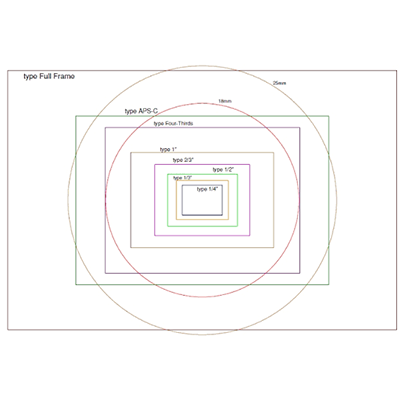
Sensor size affects how much of the lens image circle is captured by the camera. A larger sensor generally captures a wider image area, while a smaller sensor captures a narrower portion of the projected image.
For example, the same focal length M12 lens may provide a wider field of view on a larger sensor compared with a smaller sensor. Therefore, engineers should always consider sensor size when calculating the required field of view.
You can use our FOV calculator to estimate the relationship between sensor size, focal length, and viewing area.
Sensor Size and Image Quality
Larger sensors generally provide better light collection capability and improved image quality, especially in challenging lighting conditions. However, achieving the best performance requires matching the sensor with an M12 lens that provides sufficient image circle coverage and optical resolution.
A lens designed only for a smaller sensor may not fully utilize the advantages of a larger sensor and may cause issues such as blurred edges or image vignetting.
Sensor Size and Resolution Requirements
Sensor size and resolution should be considered together when selecting an M12 lens. A high-megapixel sensor requires a lens with sufficient resolving power to capture fine image details.
For applications such as PCB inspection, automated measurement, and defect detection, engineers should evaluate optical performance factors including MTF, distortion, and edge sharpness instead of selecting a lens based only on megapixel ratings.
Learn more about optical performance considerations through our optical design guide .
Why Sensor Compatibility Is Important for Machine Vision
In machine vision systems, image accuracy directly affects inspection results, object recognition, and automated decision-making. Choosing an M12 lens with the correct sensor compatibility ensures that the camera can capture complete and reliable image information.
Common problems caused by incorrect sensor and lens matching include:
- Image vignetting caused by insufficient image circle coverage
- Reduced edge sharpness due to optical limitations
- Incorrect field of view calculations
- Lower measurement accuracy in inspection applications
- Reduced performance of AI image processing algorithms
For industrial applications, selecting the correct combination of sensor size, lens resolution, and optical design is essential for achieving stable imaging performance.
How to Choose the Right M12 Lens for Your Sensor
Choosing the right M12 lens requires more than simply matching the lens mount. Engineers should evaluate the complete imaging system, including sensor format, resolution requirements, field of view, and application conditions.
Step 1: Identify Your Camera Sensor Size
The first step is confirming the sensor format used by the camera module. Common M12-compatible sensor sizes include 1/4″, 1/3″, 1/2.7″, 1/2.3″, 1/1.8″, and 1/1.7″.
Selecting a lens designed for the correct sensor size ensures proper image coverage and avoids unnecessary optical limitations.
Step 2: Check Image Circle Coverage
The lens image circle must be large enough to cover the entire sensor area. If the image circle is smaller than the sensor, the captured image may show dark corners or reduced brightness near the edges.
For larger sensors such as 1/1.8″ and 1/1.7″, high-performance M12 lenses with optimized optical designs are recommended.
Step 3: Match Resolution Requirements
The selected M12 lens should provide enough optical resolution for the camera sensor. High-resolution applications require lenses with excellent MTF performance and strong image clarity across the entire frame.
TOWIN provides M12 lens products supporting different sensor formats and imaging requirements.
Step 4: Consider Application Requirements
Different applications require different optical characteristics. Machine vision inspection may require low distortion and high resolution, while robotics systems may prioritize wider field of view and compact integration.
For example, engineers can select:
- Low distortion M12 lenses for measurement and inspection
- Wide-angle M12 lenses for robotics and navigation
- Compact M12 lenses for embedded AI cameras
M12 Lens Sensor Matching Checklist
| Selection Factor | Why It Matters |
|---|---|
| Sensor Size | Determines image coverage and compatibility |
| Resolution | Ensures sufficient image detail |
| Focal Length | Controls field of view and magnification |
| Distortion | Affects measurement accuracy |
| Working Distance | Determines installation and imaging conditions |
Recommended M12 Lens Solutions by Sensor Size
Different sensor sizes require different optical designs to achieve the best imaging performance. TOWIN provides M12 lens solutions optimized for various sensor formats, from compact embedded cameras to high-resolution industrial vision systems.
The following recommendations can help engineers select a suitable M12 lens based on sensor size and application requirements.
M12 Lenses for 1/4″ and 1/3″ Sensors
For smaller sensor formats such as 1/4″ and 1/3″, compact M12 lenses are commonly used in embedded vision systems, smart devices, robotics modules, and cost-sensitive imaging applications. These lenses provide flexible focal lengths and efficient integration for applications where size and weight are important factors.
Recommended applications include:
- Embedded cameras
- Smart sensors
- Compact robotics systems
- AI vision modules
M12 Lenses for 1/2.7″ and 1/2.3″ Sensors
M12 lenses designed for 1/2.7″ and 1/2.3″ sensors are widely used in higher-performance imaging applications. These sensor formats provide a good balance between image quality, field of view, and system cost, making them suitable for machine vision, industrial cameras, and intelligent imaging systems.
Recommended applications include:
- Machine vision inspection
- Barcode recognition
- Robotics vision
- Drone imaging
M12 Lenses for 1/1.8″ and 1/1.7″ Sensors
Larger sensor formats such as 1/1.8″ and 1/1.7″ require M12 lenses with larger image circle coverage and higher optical performance. These lenses are suitable for applications requiring high resolution, accurate measurement, and excellent image quality.
Recommended applications include:
- Precision inspection
- High-resolution machine vision
- AI-based image analysis
- Industrial measurement systems
Explore TOWIN’s complete range of M12 lens products to find optical solutions matched with different sensor sizes and application requirements.
Common Questions About M12 Lens Sensor Compatibility
What sensor sizes can M12 lenses support?
M12 lenses can support a variety of sensor sizes, including 1/4″, 1/3″, 1/2.7″, 1/2.3″, 1/1.8″, and 1/1.7″ sensors depending on the optical design and image circle coverage. The correct M12 lens should be selected based on sensor size, resolution requirements, field of view, and application conditions.
Can M12 lenses support 1/2.3″ sensors?
Yes, many M12 lenses are designed to support 1/2.3″ sensors, especially for applications requiring higher image quality and wider image coverage. These lenses are commonly used in machine vision, robotics, drone imaging, and industrial camera systems where compact size and high performance are required.
Can M12 lenses support 1/1.7″ sensors?
Yes, high-performance M12 lenses can support larger sensors such as 1/1.7″ formats when the optical design provides sufficient image circle coverage and resolution capability. These lenses are suitable for demanding applications such as high-resolution machine vision, AI imaging, and precision inspection.
Does sensor size affect M12 lens field of view?
Yes, sensor size directly affects the field of view of an M12 lens. A larger sensor can capture more of the lens image circle, while a smaller sensor captures a narrower image area. Therefore, sensor size must be considered together with focal length and working distance when calculating the required field of view.
How do I match an M12 lens with my camera sensor?
To match an M12 lens with a camera sensor, engineers should consider sensor size, image circle coverage, resolution, focal length, field of view, and application requirements. Choosing a lens with proper sensor compatibility ensures better image quality and reliable system performance.
Can TOWIN customize M12 lenses for different sensor sizes?
Yes, TOWIN provides customized M12 lens solutions for different sensor formats and application requirements. Customization options include focal length adjustment, sensor matching, distortion optimization, IR correction, coating selection, and mechanical design modifications for OEM and ODM projects.
Related Resources for M12 Lens Selection
Choosing the correct M12 lens requires understanding not only sensor compatibility but also optical parameters and application requirements. The following resources can help engineers make better lens selection decisions:
- M12 lens solutions – Learn more about M12 lens applications, advantages, and industrial imaging solutions.
- M12 lens products – Explore different M12 lens models and optical configurations.
- Sensor size guide – Understand how sensor formats affect lens selection and image performance.
- FOV calculator – Calculate field of view based on sensor size, focal length, and working distance.
- Lens distortion guide – Learn how distortion affects machine vision accuracy and image measurement.
Conclusion: Choosing the Right Sensor Size for M12 Lenses
What sensor sizes can M12 lenses support? M12 lenses support a wide range of sensor formats, from compact 1/4″ sensors to larger 1/1.7″ sensors, providing flexible optical solutions for different imaging requirements. However, the best lens choice depends on the relationship between sensor size, resolution, field of view, and application needs.
For compact embedded systems, smaller sensor formats can provide efficient integration and cost advantages. For advanced machine vision and high-resolution imaging applications, larger sensors combined with optimized M12 lenses can deliver improved image quality and accuracy.
Selecting the correct sensor-compatible M12 lens is essential for achieving reliable imaging performance. By evaluating sensor size, optical specifications, and application requirements, engineers can build more effective vision systems.
Explore TOWIN’s M12 lens solutions or contact our optical engineering team for customized recommendations based on your camera sensor and application requirements.