



What Is Optical Design in Machine Vision?
07/14/2026
What is an Industrial Lens? A Complete Guide to Industrial Camera Lenses
07/16/2026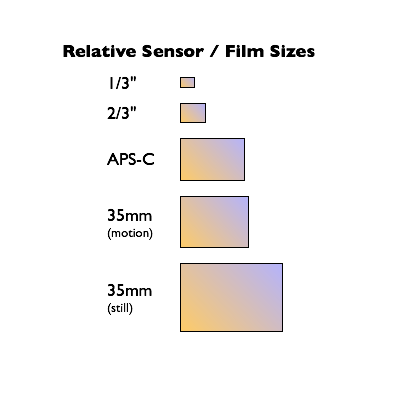
Sensor size affect optical design is one of the most important considerations when developing industrial imaging systems. The relationship between the camera sensor and optical lens directly determines image quality, field of view, resolution performance, and overall system reliability.
In industrial applications, a lens does not work independently. It must be carefully matched with the image sensor to ensure that the captured image contains sufficient detail, uniform brightness, and accurate geometry. A mismatch between sensor size and lens design can lead to problems such as vignetting, reduced edge sharpness, incorrect field of view, and poor measurement accuracy.
From machine vision inspection and robotics to smart security and medical imaging, optimized optical design helps engineers achieve stable and reliable imaging performance. Understanding the relationship between sensor size and optical parameters is therefore essential when selecting or designing an industrial lens.
To understand the fundamentals behind this relationship, you can first explore our guide on optical design principles , which explains how resolution, distortion, field of view, and other optical factors influence imaging performance.
Why Sensor Size Matters in Optical Design
The image sensor is the component that converts optical information into digital data. However, the quality of this information depends heavily on whether the lens is designed for the specific sensor format.
A well-matched optical system ensures that the lens can fully utilize the sensor area while maintaining image quality from the center to the edges. During optical design, engineers must consider several sensor-related factors, including:
- Image circle compatibility: The lens must provide enough coverage for the entire sensor.
- Field of view: Sensor dimensions directly influence the visible area captured by the camera.
- Resolution performance: Larger sensors often require higher-performing optical designs.
- Chief Ray Angle (CRA): Sensor characteristics affect how light reaches the pixels.
- Relative illumination: Proper matching helps maintain brightness consistency across the image.
In practical industrial imaging systems, selecting the correct sensor size is not simply a camera specification decision. It is an optical engineering decision that affects the entire imaging chain.
Relationship Between Sensor Size and Lens Image Circle
One of the most important concepts in sensor matching is the relationship between sensor size and lens image circle.
Every optical lens produces a circular image projection called the image circle. The image sensor must fit completely inside this circle to achieve full image coverage.
When the sensor is larger than the lens image circle, the captured image may suffer from:
- Dark corners caused by insufficient illumination
- Loss of edge information
- Reduced resolution at the image boundary
- Uneven image quality across the sensor area
For example, a lens designed for a 1/3″ sensor may not fully cover a 1″ sensor because the larger sensor requires a larger image circle. However, a lens designed for a larger sensor can usually be used with a smaller sensor because only the central portion of the image circle is utilized.
Common Sensor Formats and Image Circle Requirements
| Sensor Format | Approximate Image Area | Optical Requirement |
|---|---|---|
| 1/4″ | Small | Compact lens design, common for embedded cameras |
| 1/3″ | Small-Medium | M12 lenses for compact imaging systems |
| 1/2.7″ | Medium | Suitable for many industrial vision applications |
| 1/2.3″ | Medium-Large | Requires improved resolution and image coverage |
| 1/1.8″ | Large | Higher-performance optical design required |
| 1″ | Very Large | Large image circle and high-resolution lens design |
For more information about matching camera sensors with lenses, visit our detailed sensor compatibility guide .
How Sensor Size Influences Lens Selection
Choosing the correct lens requires more than checking focal length. Engineers must evaluate sensor size together with working distance, field of view, resolution requirements, and lens mount type.
For example:
| Sensor Size | Recommended Lens Consideration | Typical Applications |
|---|---|---|
| Small Sensors | Compact M12 lenses with optimized image circle | Embedded cameras, robotics |
| Medium Sensors | High-resolution M12 or C mount lenses | Machine vision inspection |
| Large Sensors | Large image circle lenses with strong edge performance | Precision measurement and industrial imaging |
A correct lens selection process should always begin with sensor size because it determines the optical requirements of the entire imaging system.
Engineers can also refer to our industrial lens selection guide to understand how sensor size, focal length, and application requirements work together.
How Sensor Size Affects Field of View (FOV)
One of the most noticeable effects of sensor size in optical design is its influence on field of view (FOV). The same lens can capture different viewing areas depending on the size of the image sensor behind it.
When using the same focal length lens:
- A larger sensor captures a wider field of view.
- A smaller sensor captures a narrower field of view.
- The effective viewing angle changes even though the lens focal length remains unchanged.
The relationship between sensor size, focal length, and field of view can be explained by the following formula:
FOV = 2 × arctan (Sensor Size / 2 × Focal Length)
For example, an 8mm lens paired with a 1/3″ sensor will provide a narrower viewing angle compared with the same 8mm lens paired with a 1″ sensor.
| Lens | Sensor Size | FOV Performance |
|---|---|---|
| 8mm Lens | 1/3″ Sensor | Narrower viewing area |
| 8mm Lens | 1/2.3″ Sensor | Medium viewing area |
| 8mm Lens | 1″ Sensor | Wider viewing area |
Therefore, sensor size must always be considered when calculating the required lens focal length for a specific application.
For engineers designing vision systems, our FOV Calculator can help estimate the relationship between sensor size, focal length, working distance, and image coverage.
Sensor Size and Resolution Performance
Sensor size also has a significant impact on optical resolution requirements. A larger sensor usually contains a larger imaging area, which means the lens must maintain high optical performance across the entire image plane.
In industrial imaging, resolution is not determined only by the camera sensor. The lens must also provide sufficient resolving power to match the sensor’s pixel size and density.
A high-resolution sensor paired with an unsuitable lens may result in:
- Reduced image sharpness
- Loss of fine details
- Poor edge performance
- Lower inspection accuracy
Sensor Size and Optical Resolution Relationship
| Sensor Condition | Optical Requirement | Impact |
|---|---|---|
| Small Sensor | Compact optical design | Lower image coverage requirement |
| High-resolution Sensor | High MTF lens performance | Better detail reproduction |
| Large Sensor | Large image circle + edge correction | Consistent image quality across the frame |
This is why optical engineers evaluate sensor size together with parameters such as MTF, distortion, and relative illumination during lens development.
You can learn more about these optical performance factors in our guide: optical design parameters and engineering principles .
How Sensor Size Affect Optical Design Parameters
Sensor size affect optical design parameters. A properly optimized lens system must balance these factors to achieve reliable imaging performance.
| Optical Parameter | Influence of Sensor Size | Why It Matters |
|---|---|---|
| Image Circle | Larger sensors require larger optical coverage | Ensures complete image capture without vignetting |
| Field of View | Larger sensors increase captured image area | Determines inspection coverage and viewing angle |
| MTF | Large sensors require consistent resolution across the frame | Maintains image sharpness and defect recognition accuracy |
| Distortion | Larger sensor areas expose more lens edges | Important for accurate measurement applications |
| CRA (Chief Ray Angle) | Sensor structure influences incoming light angle requirements | Improves sensor efficiency and image uniformity |
| Relative Illumination | Large sensors require better brightness control | Prevents dark corners and uneven exposure |
Why Sensor Matching Is Critical in Optical Design
A successful optical system requires precise matching between the lens and sensor. Even when a camera uses a high-performance image sensor, poor lens compatibility can limit the final image quality.
During optical design, engineers typically evaluate:
- Sensor format: Determines required image circle size.
- Pixel size: Influences required lens resolution.
- Sensor diagonal: Defines lens coverage requirements.
- CRA compatibility: Ensures proper light transmission into pixels.
- Application requirements: Determines the balance between FOV, distortion, and resolution.
For example, a machine vision system used for PCB inspection may prioritize resolution and low distortion, while a robotics vision system may require a wider field of view and compact optical design.
Sensor Size Selection Guide for Industrial Imaging Systems
Selecting the correct sensor size depends on the application requirements, working environment, and expected image performance.
| Application | Recommended Sensor Consideration | Key Optical Requirement |
|---|---|---|
| Machine Vision Inspection | Medium to large sensors | High resolution, low distortion, excellent MTF |
| Robotics Vision | Compact sensors with suitable FOV | Wide angle capability and low CRA |
| Smart Security | Large coverage sensors | Low-light performance and illumination control |
| Embedded Vision Systems | Small sensors | Compact M12 lens compatibility |
Choosing the right sensor size is the first step toward building an optimized imaging system. After sensor selection, engineers should evaluate focal length, working distance, resolution, and lens mount requirements.
How to Select the Right Lens Based on Sensor Size
Selecting the correct industrial lens requires a comprehensive understanding of sensor size, application requirements, and optical performance. Sensor size should always be considered together with focal length, working distance, resolution, and lens mount.
A practical lens selection workflow includes the following steps:
↓
Step 2: Confirm Lens Image Circle Compatibility
↓
Step 3: Calculate Required Field of View
↓
Step 4: Match Resolution and MTF Requirements
↓
Step 5: Select Lens Mount and Optical Format
↓
Step 6: Verify Final Optical Performance
M12 Lens Selection Based on Sensor Size
M12 lenses are widely used in embedded vision systems because of their compact size, flexible design, and compatibility with various sensor formats. However, choosing the correct M12 lens requires careful consideration of sensor size.
| Sensor Size | Recommended Lens Type | Typical Applications |
|---|---|---|
| 1/4″ Sensor | Compact M12 Lens | Embedded cameras, compact vision systems |
| 1/3″ Sensor | Standard M12 Lens | Security cameras, robotics |
| 1/2.7″ Sensor | High-resolution M12 Lens | Machine vision and AI cameras |
| 1/2.3″ Sensor | Advanced M12 Lens design | High-detail inspection systems |
| 1/1.8″ Sensor | Large image circle M12 or C mount lens | Industrial inspection and measurement |
For more information about compact industrial optics, explore our M12 lens solutions designed for different sensor formats and imaging requirements.
C Mount Lens Selection for Larger Sensors
When using larger image sensors, C mount lenses are often preferred because they provide larger image circles, higher resolution capability, and stronger optical performance.
| Sensor Format | Lens Recommendation | Main Advantage |
|---|---|---|
| 1/1.8″ | High-performance M12 or C mount lens | Improved edge resolution |
| 2/3″ | C mount lens | Large image coverage |
| 1″ | High-resolution C mount lens | Excellent image quality for precision imaging |
For applications requiring high accuracy, larger sensors combined with optimized C mount lenses can provide better measurement capability and improved image consistency.
Sensor Size Considerations in Different Industrial Applications
Machine Vision Inspection
Machine vision systems often require high resolution, accurate measurement, and reliable defect detection. Sensor size selection affects the achievable image detail and lens performance.
- Large sensors provide more image information for detailed inspection.
- Low distortion lenses improve measurement accuracy.
- High MTF performance improves defect recognition.
Learn more about industrial imaging requirements in our machine vision lens solutions .
Robotics Vision Systems
Robotics applications often require a balance between compact design, wide field of view, and reliable object recognition.
- Medium-sized sensors are commonly used for compact robotic systems.
- Wide-angle lenses help robots understand surrounding environments.
- CRA optimization improves sensor compatibility.
Explore more about optical requirements for robots in our robotics vision solutions .
Smart Security Imaging
Security imaging systems often prioritize coverage area, low-light performance, and image consistency. Sensor size influences the balance between field of view and image quality.
More details can be found in our smart security lens solutions .
Frequently Asked Questions
1. Why does sensor size affect optical design?
Sensor size determines the required image circle, field of view, resolution capability, and optical compatibility. A properly matched sensor and lens combination ensures better image quality and system performance.
2. Can one lens work with different sensor sizes?
Yes, but performance may vary. A lens designed for a larger sensor can usually cover a smaller sensor, while a smaller-format lens may not fully cover a larger sensor.
3. Does a larger sensor always provide better image quality?
Not necessarily. A larger sensor can capture more information, but it also requires a higher-performance optical design to fully utilize its capability.
4. How does sensor size influence field of view?
With the same focal length lens, a larger sensor captures a wider field of view, while a smaller sensor provides a narrower viewing angle.
5. Why is image circle important when selecting a lens?
The image circle determines whether the lens can fully cover the sensor area. An insufficient image circle may cause dark corners and reduced image quality.
6. How does sensor size affect lens resolution requirements?
Larger sensors often require higher optical resolution because the lens must maintain image quality across a larger imaging area.
7. What sensor sizes are commonly used with M12 lenses?
Common M12 lens sensor formats include 1/4″, 1/3″, 1/2.7″, 1/2.3″, and 1/1.8″. The correct lens depends on sensor size, resolution, and application requirements.
8. How do I choose the right lens for my sensor?
Start by identifying the sensor size, then evaluate image circle compatibility, focal length, field of view, resolution, distortion, and lens mount requirements.
Conclusion
Sensor matching is one of the foundations of successful industrial imaging system development. The relationship between sensor size and lens design influences image coverage, field of view, resolution, distortion control, and overall optical performance.
From compact embedded cameras using M12 lenses to precision inspection systems using larger optical formats, engineers must carefully balance sensor characteristics with lens capabilities to achieve reliable results.
Understanding how sensor size affect optical design helps engineers select suitable lenses, optimize imaging performance, and develop more accurate machine vision systems.
For customized industrial lens development, TOWIN provides optical design support, sensor matching, and application-specific lens solutions.
Contact TOWIN optical engineers for customized lens solutions.
.png)