


Choosing between these lens types depends on whether your imaging system prioritizes maximum scene coverage or a more conventional image with controlled geometric distortion. This guide compares their optical characteristics, explains how fisheye lenses differ from standard wide-angle lenses, and explores applications in photography, surveillance, robotics, and machine vision.
What Is a Fisheye Lens?
A fisheye lens is an ultra-wide-angle lens designed to capture a very large portion of the surrounding scene. Depending on its optical design and sensor format, a fisheye lens may provide a field of view approaching or exceeding 180 degrees.
To capture such a wide scene, fisheye lenses commonly use non-rectilinear projection designs. Straight lines away from the image center may appear curved, especially when they do not pass through the center of the image. This appearance is often an intentional characteristic of the optical design rather than a manufacturing defect.
Fisheye lenses are used in panoramic imaging, security cameras, compact embedded vision systems, robotics, and applications where broad environmental coverage is important. Explore TOWIN fisheye lenses for ultra-wide-angle imaging to compare available focal lengths, sensor formats, and field-of-view specifications.
What Is a Normal Lens?
The term “normal lens” is commonly used to describe a lens that produces a conventional perspective rather than the distinctive curved appearance associated with a fisheye image. In photography, it may refer to a lens with a moderate field of view. In industrial imaging, the term can also be used informally to distinguish a conventional rectilinear lens from a fisheye design.
A normal lens does not have one universal field of view. Its viewing angle depends on focal length and sensor size. A lens that provides a relatively narrow view on one sensor may provide a wider view on another sensor.
Conventional rectilinear lenses are often preferred when maintaining the appearance of straight lines and controlling geometric distortion are important. However, actual distortion and image quality depend on the specific lens design and should be verified against the application requirements.
Fisheye Lens vs. Normal Lens: Key Differences
The most important difference between a fisheye lens and a normal lens is how much of the scene they capture and how that scene is projected onto the sensor. The following comparison summarizes their typical characteristics.
| Feature | Fisheye Lens | Normal Lens |
|---|---|---|
| Field of view | Extremely wide; some designs approach or exceed 180 degrees | Varies with focal length and sensor size |
| Image projection | Commonly uses a non-rectilinear projection | Often uses rectilinear projection |
| Image appearance | May show pronounced curvature near the edges | Generally preserves straight scene lines more naturally |
| Distortion | Strong image mapping is often intentional | Geometric distortion depends on the optical design |
| Scene coverage | Captures a broad surrounding area | Captures the area determined by its field of view |
| Typical applications | Panoramic imaging, surveillance, robotics, and wide-area vision | General imaging, inspection, and applications requiring conventional projection |
| Image correction | May require fisheye calibration and dewarping | May require distortion correction depending on the application |
Neither lens type is universally better. A fisheye lens is useful when a very wide field of view is essential, while a conventional lens may be more appropriate when image geometry and controlled distortion are priorities.
Fisheye Lens vs. Wide-Angle Lens
A fisheye lens and a conventional wide-angle lens can both capture more of a scene than a standard lens with a narrower field of view. Their main difference is the way the scene is projected onto the image sensor.
A conventional rectilinear wide-angle lens is designed to keep straight lines in the subject approximately straight in the image, apart from residual optical distortion. A fisheye lens uses a different projection to accommodate an extremely wide field of view, often producing more noticeable curvature near the image edges.
| Comparison | Fisheye Lens | Rectilinear Wide-Angle Lens |
|---|---|---|
| Coverage | Often provides extremely wide coverage | Provides wide coverage based on focal length and sensor size |
| Straight lines | May appear curved away from the image center | Generally remain straight, subject to residual distortion |
| Image geometry | Uses fisheye projection characteristics | Uses rectilinear projection |
| Common use | Panoramic viewing and environmental awareness | Wide-angle photography, inspection, and applications requiring conventional geometry |
The distinction is based on optical projection rather than focal length alone. Two lenses with similar focal lengths can produce different images because their projection designs, sensor formats, and optical characteristics differ.
How Does Fisheye Distortion Affect Images?
Fisheye lenses map a very wide angular field onto a finite sensor area. As a result, objects and lines near the edge of the image may appear curved or stretched compared with a conventional rectilinear image.
This effect can be beneficial when the primary goal is to capture as much of the surrounding environment as possible. For example, a security camera may use a fisheye lens to monitor a large room from a single installation point. A mobile robot may use one to observe nearby obstacles and improve environmental awareness.
However, fisheye projection can complicate dimensional measurement and geometric analysis. If an application requires a conventional view, software can remap a calibrated fisheye image into a rectilinear or other corrected projection. Such correction changes image geometry and may reduce effective resolution near the edges.
For precision inspection, engineers should evaluate calibration accuracy, residual distortion, pixel resolution, and the required measurement tolerance before selecting a fisheye lens.
When Should You Use a Fisheye Lens?
1. Panoramic Imaging
Fisheye lenses are useful in panoramic imaging systems because they capture a broad angular field from a single camera position. They can reduce the number of cameras needed to observe a large surrounding area, although the final system design depends on coverage, resolution, overlap, and image-processing requirements.
2. Security and Wide-Area Monitoring
In surveillance applications, a fisheye lens can provide broad room coverage and help reduce blind spots. The captured image may then be dewarped into separate views for easier monitoring. Actual coverage depends on the camera position, sensor format, mounting height, and the lens’s specified field of view.
3. Robotics and Embedded Vision
Compact robots and embedded camera systems may benefit from fisheye optics when they need broad environmental awareness in a limited installation space. An ultra-wide lens can capture objects over a large angular range without mechanically moving the camera.
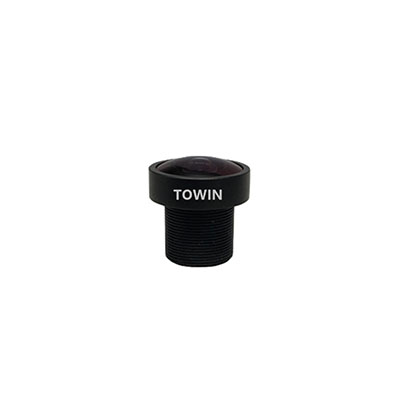
For compact applications, a 2.3 mm M12 fisheye lens with up to 170-degree diagonal FOV may be worth evaluating when its sensor format, resolution, and working distance match the system requirements.
4. Ultra-Wide Embedded Camera Systems
When the camera must fit into a small housing while capturing a very broad scene, a compact M12 fisheye lens can provide an appropriate optical solution. The final choice should account for sensor compatibility, field of view, resolution, mechanical dimensions, and distortion requirements.
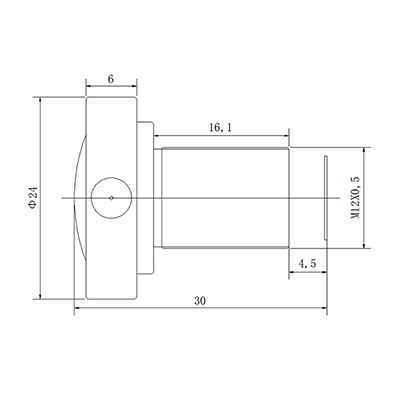
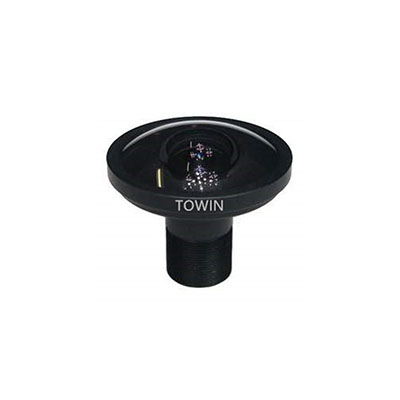
For systems requiring particularly broad coverage, review the specifications of this 1.85 mm M12 fisheye lens with 185-degree FOV . Its specified field of view and sensor format should be checked against the actual camera configuration before use.
How to Choose a Fisheye Lens for Machine Vision
Selecting a fisheye lens for machine vision requires more than choosing the widest available field of view. Engineers should identify the imaging objective and confirm that the lens can deliver the required coverage and usable image detail.
- Define the required field of view. Determine the horizontal, vertical, or diagonal coverage needed for the application.
- Check sensor compatibility. Confirm the active sensor dimensions, image circle, mount, and supported image format.
- Evaluate resolution. Check whether the lens can resolve the features required by the inspection or recognition task.
- Assess distortion requirements. Decide whether the application can use the native fisheye image or requires calibrated dewarping.
- Confirm working distance and installation space. Ensure the lens can focus on the target and fit within the camera housing.
- Validate the complete system. Test the lens with the intended sensor, illumination, software, and processing pipeline.
For a more comprehensive approach, consult the machine vision lens selection guide . When evaluating how focal length and sensor dimensions affect scene coverage, read how to choose the right focal length for machine vision .
Frequently Asked Questions
What is the main difference between a fisheye lens and a normal lens?
A fisheye lens is designed to capture an extremely wide field of view using a non-rectilinear projection. A normal lens generally produces a more conventional perspective. The main differences are field of view, projection, distortion characteristics, and intended application.
Is a fisheye lens the same as a wide-angle lens?
No. Both can capture a wide scene, but a conventional rectilinear wide-angle lens aims to keep straight scene lines approximately straight. A fisheye lens uses a different projection to accommodate an extremely wide field of view, often producing more noticeable curvature.
Why do fisheye lenses make straight lines look curved?
Many fisheye lenses use non-rectilinear projection designs to map a very wide angular field onto the sensor. This projection can make straight lines appear curved away from the image center. The effect is often intentional and can be corrected through calibrated image processing when required.
Are fisheye lenses suitable for machine vision?
Yes. Fisheye lenses can be useful for robotics, wide-area monitoring, environmental awareness, and applications requiring extensive scene coverage. For precise dimensional measurement, engineers must carefully evaluate distortion, calibration, resolution, and measurement accuracy.
Can fisheye distortion be corrected?
Yes. With suitable camera calibration and image-processing methods, a fisheye image can be remapped into a different projection. The correction may change the effective field of view and image resolution, so the final result should be tested against the application requirements.
How do I choose the right fisheye lens?
Start with the required field of view, sensor format, resolution, working distance, and mounting constraints. Then assess distortion and determine whether image correction is needed. Compare the actual optical specifications instead of selecting a lens based only on its focal length.
Explore TOWIN Fisheye Lenses
Selecting between a fisheye lens and a normal lens depends on the required scene coverage, projection, image quality, and application. A fisheye lens is often suitable for ultra-wide environmental imaging, while a conventional lens may be preferable when controlled geometric imaging is a higher priority.
Explore TOWIN’s fisheye lens product range to compare available optical configurations. For compact camera systems, review the 2.3 mm M12 fisheye lens and the 1.85 mm, 185-degree M12 fisheye lens to evaluate their specifications against your camera and application.
If your project requires a particular sensor format, field of view, resolution, or mechanical configuration, contact TOWIN with your imaging requirements to discuss an appropriate optical solution.