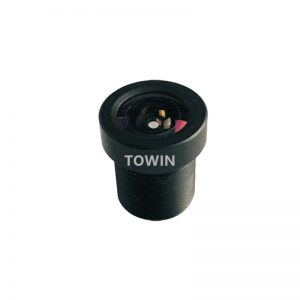



Wide Angle Lens – S02812710420F
07/16/2025
Wide Angle Lens – S02812711820
07/17/2025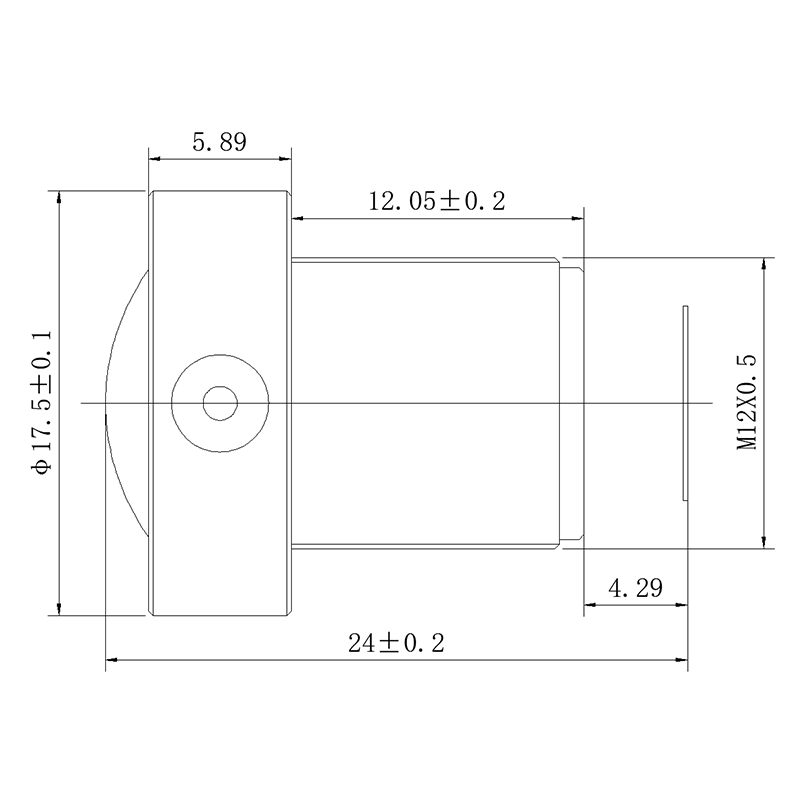
Wide Angle Lens – S03012312325F
3.0mm High Resolution Ultra Wide-angle lens, 1/2.3″ F2.5 M12/S-mount lens, 16 Megapixel CCTV HD lens.
S03012312325F is 3.0mm High Resolution Ultra Wide-angle lens with Built-In Filter, 1/2.3″ F2.5 M12/S-mount lens, 16 Megapixel CCTV HD lens.
| IMAGE FORMAT | Max Φ8.0mm |
| FOCAL LENGTH | 3.0mm |
| F.O.V. (1/2.3″) | 150° |
| 123° | |
| 93° | |
| RESOLUTION | 16 MP |
| DISTORTION | <63% |
| APERTURE | F2.5 |
| MOUNT | M12x0.5 |
| IRIS | Fixed |
| M.O.D. | 0.1m |
| T.T.L. | 24mm |
| STRUCTURE | 5G1M+IRCF |
3.0mm 16MP M12 Wide Angle Lens
This 3.0mm 16MP M12 Wide Angle Lens is designed for high-resolution camera systems that require an exceptionally wide field of view in a compact optical package. Supporting image formats up to Φ8.0mm and providing a 150° diagonal, 123° horizontal, and 93° vertical FOV on a 1/2.3″ sensor, it combines high-resolution imaging with broad scene coverage.
With a 16MP resolution rating, F2.5 aperture, M12×0.5 mount, 0.1m minimum object distance, and 5G1M+IRCF structure, this lens is particularly suitable for compact surveillance, panoramic monitoring, smart cameras, and embedded imaging systems requiring detailed wide-area image capture.
Explore TOWIN’s complete range of M12 Lenses for additional focal lengths and optical configurations.
Product Core Highlights
- 16MP high-resolution capability supports detailed imaging for demanding wide-area camera applications.
- 150° diagonal FOV captures an exceptionally broad scene from a compact 3.0mm focal length.
- Φ8.0mm maximum image format provides optical coverage beyond the specified 1/2.3″ sensor format.
- F2.5 fixed aperture provides a practical balance between light transmission and compact optical construction.
- 0.1m MOD enables close-range wide-area imaging where subjects may be positioned near the camera.
M12 Wide Angle Lens Applications
High-Resolution Wide-Area Surveillance
The combination of 16MP resolution and 150° diagonal FOV makes this lens suitable for applications where both broad coverage and image detail are important. Instead of using an extremely short focal length purely to maximize viewing angle, this 3.0mm configuration provides a strong balance between wide coverage and high-resolution capture.
Typical applications include indoor security monitoring, retail surveillance, public-area observation, entrance monitoring, and compact panoramic camera systems.
Designed for high-resolution wide-area surveillance, this lens helps camera designers combine extensive scene coverage with a 16MP imaging platform.
For dedicated security applications, see TOWIN’s Smart Security solutions.
Smart Camera & Embedded Vision
The M12×0.5 mounting interface makes the lens suitable for compact camera assemblies where optical space is limited. The 24mm TTL provides an important mechanical reference when integrating the lens into a camera housing.
Potential compatible devices include:
- High-resolution IP cameras
- Smart security cameras
- Compact panoramic cameras
- Retail monitoring cameras
- IoT vision devices
- Indoor monitoring modules
- Embedded wide-angle camera systems
- High-resolution surveillance modules
The 0.1m minimum object distance is particularly useful for systems that need to observe nearby objects while maintaining a broad field of view.
High-Resolution Panoramic Imaging
The 150° diagonal field of view provides broad scene coverage, while the 16MP resolution allows the camera system to retain substantial image detail across the captured scene.
This makes the lens a potential fit for applications such as:
- Wide-area room monitoring
- Retail shelf and store observation
- Entrance and doorway monitoring
- Indoor panoramic imaging
- Smart building cameras
- Compact security modules
When designing a wide-angle imaging system, field of view should always be evaluated together with sensor size and resolution. TOWIN’s Sensor Guide can help with sensor-format selection, while the FOV Calculator can be used to estimate viewing coverage.
Why Choose This 3.0mm 16MP M12 Wide Angle Lens?
Many compact wide-angle camera systems face a trade-off between field of view and image resolution. Extremely wide lenses can provide excellent scene coverage, but the camera system may also need sufficient optical resolution to preserve useful image detail.
This model addresses that requirement with a 16MP resolution rating and 150° diagonal FOV. Its 3.0mm focal length provides broad coverage, while the 1/2.3″ sensor format and Φ8.0mm maximum image format provide useful optical compatibility references for camera designers.
The lens is also designed with a 0.1m minimum object distance, which expands its usability for close-range monitoring applications.
For projects comparing different wide-angle optical designs, TOWIN’s Lens Selection Guide provides additional guidance on focal length, sensor size, FOV, and other lens parameters.
Understanding the 5G1M + IRCF Structure
This lens uses a 5G1M + IRCF optical structure. The 5G1M designation describes the specified lens construction, while IRCF refers to an IR Cut Filter configuration.
It is important to distinguish this from an IR Corrected Lens. An IR cut filter is intended to filter infrared wavelengths in a visible-light camera system, while IR-corrected optics are designed to manage focus differences across wavelengths.
For systems requiring dedicated optical filtering components, TOWIN also offers Optical Filters and IR Cut Filter Switcher Holders.
Frequently Asked Questions
Q: What is the field of view of this 3.0mm M12 lens?
A: On a 1/2.3″ sensor, the lens provides a 150° diagonal FOV, 123° horizontal FOV, and 93° vertical FOV.
Q: What makes this lens different from a standard M12 wide-angle lens?
A: Its combination of 16MP resolution and 150° diagonal FOV makes it particularly suitable for high-resolution wide-area imaging where both scene coverage and image detail are important.
Q: Is this lens suitable for 16MP cameras?
A: Yes. The lens has a specified 16MP resolution rating and supports a maximum image format of Φ8.0mm.
Q: Is this a low-distortion lens?
A: No. The specified distortion is less than 63%, so the lens is intended for wide-angle or fisheye-style imaging rather than applications requiring highly accurate geometric reproduction.
Q: Is this lens IR corrected?
A: No. The lens is specified with IRCF, which refers to an IR Cut Filter. This should not be confused with an IR-corrected optical design.
Q: What sensor format is specified for the FOV?
A: The stated 150°D / 123°H / 93°V field of view is specified for a 1/2.3″ image sensor.
Q: What is the minimum object distance?
A: The minimum object distance is 0.1m, making the lens suitable for relatively close-range wide-area imaging.
Q: What mount does the lens use?
A: It uses an M12×0.5 mount, a compact mounting interface commonly used in embedded cameras, security cameras, and other small camera modules.
Related Optical Resources
Selecting a high-resolution wide-angle lens requires consideration of more than focal length. Sensor size, image circle, field of view, distortion, minimum object distance, and required image resolution should all be evaluated together.
TOWIN’s Lens Selection Guide provides practical guidance for selecting lenses based on camera and application requirements.
For high-resolution camera systems, understanding the relationship between sensor format and optical coverage is also important. Visit the Sensor Guide to learn more about sensor compatibility.
Because this lens uses a high-distortion fisheye-style optical design, the Distortion Guide can also help determine whether this type of lens is appropriate for your imaging application.
For custom optical requirements, including different focal lengths, sensor formats, mounts, or optical structures, contact TOWIN for lens selection and OEM/ODM support.
Online contact