


What Is Lens Distortion in Machine Vision?
06/10/2026
M12 Lens for 1/4 Sensor: Selection Guide for Compact Camera
06/11/2026
Introduction
Choosing the right M12 lens for a 1/2.3″ sensor is essential for achieving optimal image quality, field of view, and system performance. As image sensors continue to increase in resolution, selecting a lens that fully matches the sensor format becomes increasingly important.
A 1/2.3″ sensor is commonly used in machine vision systems, robotics cameras, drones, AI vision devices, smart security cameras, and embedded imaging applications. To maximize sensor performance, the lens must provide sufficient image circle coverage, resolution, and low distortion characteristics.
If you are new to board-level optics, you may first want to understand what an M12 lens is and how it differs from traditional industrial lenses.
This guide explains how to choose the best M12 lens for a 1/2.3″ sensor and highlights key considerations for various vision applications.
What Is a 1/2.3″ Image Sensor?
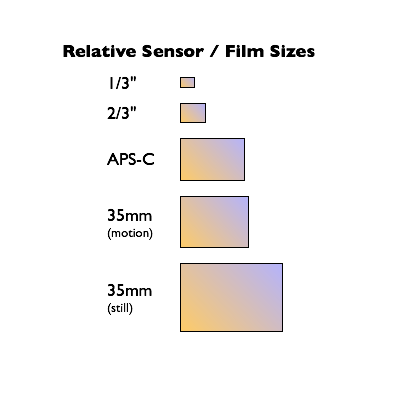
A 1/2.3″ image sensor typically measures approximately 6.17 mm × 4.55 mm with a diagonal size of around 7.7 mm.
This sensor format is widely used because it provides an excellent balance between:
- High resolution
- Compact camera size
- Affordable system cost
- Good low-light performance
Common applications include:
- Machine vision cameras
- Robotics vision systems
- Drones and UAV imaging
- Traffic monitoring cameras
- AI-powered security devices
- Barcode and QR code readers
Many modern Sony, OmniVision, and ON Semiconductor sensors use the 1/2.3″ optical format.
Why Sensor Compatibility Matters
One of the most common mistakes in camera design is selecting a lens designed for a smaller sensor.
When a lens image circle does not fully cover the sensor, users may experience:
- Dark corners (vignetting)
- Reduced edge sharpness
- Lower image quality
- Distortion near image borders
For this reason, engineers should always choose an M12 lens specifically designed to support a 1/2.3″ sensor format or larger.
To understand sensor coverage requirements in more detail, see our Image Sensor Size Guide.
Key Factors When Selecting an M12 Lens for a 1/2.3″ Sensor
1. Sensor Coverage
The lens image circle must fully cover the 7.7 mm diagonal sensor size.
Recommended support:
- 1/2.3″
- 1/1.8″
- 1/1.7″
Avoid using lenses designed only for:
- 1/4″
- 1/3″
- 1/2.7″
unless full coverage has been verified.
2. Focal Length Selection
The focal length determines the field of view.
| Focal Length | Typical Use |
|---|---|
| 2.1mm | Ultra-wide vision |
| 2.8mm | Robotics and navigation |
| 3.6mm | Security cameras |
| 4mm | Machine vision |
| 6mm | Object inspection |
| 8mm+ | Long-distance imaging |
For wide-area coverage, shorter focal lengths are preferred.
For inspection and measurement systems, longer focal lengths often deliver better image detail.
You can also calculate viewing angles using our Field of View Calculator Guide.
3. Resolution Matching
Modern 1/2.3″ sensors frequently support:
- 8MP
- 12MP
- 16MP
To achieve full sensor performance, the lens should support equivalent optical resolution.
Higher-resolution sensors require:
- Better MTF performance
- Improved corner sharpness
- Lower aberration
This is particularly important in machine vision applications where image accuracy directly impacts inspection results.
4. Distortion Control
Lens distortion affects measurement accuracy.
Applications such as:
- AOI inspection
- Robotics navigation
- SLAM systems
- Traffic recognition
typically require low distortion optics.
Learn more in our Lens Distortion Guide.
Recommended M12 Lens Applications for 1/2.3″ Sensors
Machine Vision
Industrial automation systems often combine 1/2.3″ sensors with high-resolution M12 lenses to perform:
- Defect detection
- Barcode reading
- PCB inspection
- Dimension measurement
Explore our Machine Vision Lens Solutions.
Robotics Vision
Robots require compact optical systems capable of delivering wide-angle imaging and accurate environmental awareness.
Typical uses include:
- AMR navigation
- AGV guidance
- SLAM mapping
- Obstacle detection
Learn more about Robotics Vision Lens Solutions.
Drone Imaging
Many drone camera systems use 1/2.3″ sensors because they offer an excellent balance between image quality and payload weight.
Applications include:
- Aerial photography
- Infrastructure inspection
- Mapping
- Agricultural monitoring
See our Drone Imaging Lens Solutions.
Smart Security
Security cameras often rely on 1/2.3″ sensors combined with wide-angle M12 lenses for:
- Face recognition
- License plate capture
- Perimeter monitoring
- AI surveillance
Explore Smart Security Lens Solutions.
M12 Lens vs C-Mount Lens for 1/2.3″ Sensors
Both lens types can support a 1/2.3″ sensor.
However, they serve different design priorities.
| Feature | M12 Lens | C-Mount Lens |
|---|---|---|
| Size | Compact | Larger |
| Weight | Lightweight | Heavier |
| Cost | Lower | Higher |
| Embedded Systems | Excellent | Limited |
| Machine Vision | Good | Excellent |
| Robotics | Excellent | Moderate |
For compact AI vision devices and embedded cameras, M12 lenses are typically the preferred choice.
For a detailed comparison, read our M12 Lens vs C-Mount Lens Guide.
Custom M12 Lens Design for 1/2.3″ Sensors
Standard lenses may not always satisfy application requirements.
Custom optical development may include:
- Specific focal lengths
- Low distortion design
- IR correction
- Waterproof construction
- Wide temperature operation
- High-resolution optimization
As an experienced M12 lens manufacturer, TOWIN provides OEM and ODM lens development services for machine vision, robotics, security, and embedded AI camera systems.
Frequently Asked Questions
Q: Can a 1/2.7″ lens be used on a 1/2.3″ sensor?
A: Generally not recommended. The image circle may not fully cover the sensor, causing vignetting and reduced image quality.
Q: What focal length is best for a 1/2.3″ sensor?
A: The ideal focal length depends on field-of-view requirements. Common choices range from 2.8mm to 6mm.
Q: Are M12 lenses suitable for machine vision?
A: Yes. High-resolution M12 lenses are widely used in industrial machine vision, robotics, and AI imaging applications.
Q: Can M12 lenses support 12MP sensors?
A: Yes. Many modern M12 lenses are optimized for 8MP, 12MP, and even higher-resolution image sensors.
Q: Do 1/2.3″ sensors work with fisheye lenses?
A: Yes. Wide-angle and fisheye M12 lenses are commonly paired with 1/2.3″ sensors for panoramic imaging and navigation systems.
Conclusion
Selecting the right M12 lens for a 1/2.3″ sensor requires careful consideration of sensor coverage, focal length, optical resolution, and distortion performance. Whether the application involves machine vision, robotics, drone imaging, or AI-powered security systems, a properly matched lens can significantly improve overall image quality and system reliability.
For complete product recommendations and application guidance, visit our M12 Lens Solutions page.