


M12 Lens for 1/2.3″ Sensor: Complete Selection Guide
06/10/2026
M12 Lens for 1/2.7 Sensor
06/11/2026
Selecting the right M12 Lens for 1/4 Sensor is essential for achieving optimal image quality, field of view, and system performance. Although 1/4″ sensors are relatively small, they remain widely used in compact security cameras, smart home devices, IoT cameras, doorbells, and embedded vision systems.
This guide explains how to choose the best M12 lens for a 1/4 sensor and how sensor size affects focal length, image coverage, and optical performance.
For a broader overview of M12 optics, visit our M12 Lens Solutions page.
What Is a 1/4 Sensor?
A 1/4-inch image sensor is a compact sensor format commonly found in:
- Smart home cameras
- Video doorbells
- IoT devices
- Embedded AI cameras
- Compact monitoring systems
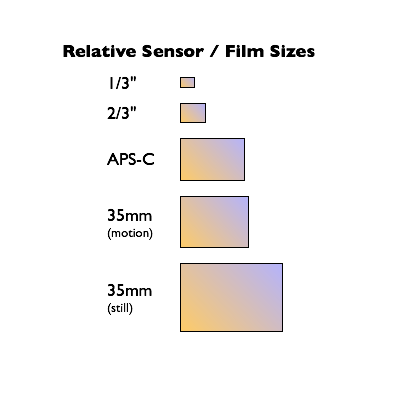
Compared with larger formats such as 1/3″, 1/2.7″, or 1/1.8″, a 1/4 sensor requires a smaller image circle and often allows the use of more compact lens designs.
Because of its small size, it can achieve wider viewing angles with shorter focal lengths.
Why M12 Lenses Are Ideal for 1/4 Sensors
M12 lenses, also known as board lenses or S-mount lenses, are particularly suitable for 1/4-inch sensors because they offer:
- Compact dimensions
- Lightweight construction
- Low manufacturing cost
- Flexible focal length options
- Easy integration into embedded devices
To better understand the differences between lens mounts, see our guide on M12 Lens vs C-Mount Lens.
Image Circle Requirements for 1/4 Sensors
When selecting an M12 lens, the image circle must fully cover the sensor.
Typical sensor specifications:
| Sensor Format | Approximate Diagonal |
|---|---|
| 1/4″ | 4.0 mm |
The lens image circle should be equal to or larger than the sensor diagonal to avoid vignetting and image darkening around the edges.
Many standard M12 lenses are designed to support 1/4″, 1/3″, and 1/2.7″ sensors simultaneously.
Recommended Focal Lengths for 1/4 Sensors
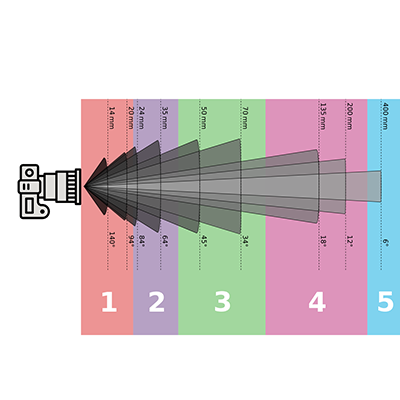
The ideal focal length depends on the desired field of view.
| Focal Length | Typical FOV | Application |
|---|---|---|
| 1.7 mm | Ultra Wide | Doorbells, Smart Home Cameras |
| 2.1 mm | Wide Angle | Security Monitoring |
| 2.8 mm | Standard Wide | Embedded Vision |
| 3.6 mm | Medium FOV | Access Control |
| 6 mm | Narrower View | Object Monitoring |
For a detailed explanation of focal length and viewing angle calculations, read our Field of View (FOV) Guide.
Common Applications of M12 Lenses for 1/4 Sensors
Smart Home Cameras
Compact security cameras often use 1/4 sensors paired with ultra-wide-angle M12 lenses to maximize scene coverage.
Video Doorbells
Doorbell cameras typically require wide horizontal viewing angles while maintaining a compact form factor.
IoT Devices
Small embedded systems benefit from lightweight M12 lens designs with low power requirements.
AI Edge Cameras
Entry-level AI vision devices frequently combine 1/4 sensors with board lenses for object detection and monitoring applications.
Optical Considerations
When choosing an M12 lens for a 1/4 sensor, consider the following:
Resolution Matching
The lens resolution should meet or exceed the sensor resolution to preserve image sharpness.
Distortion Control
Wide-angle lenses may introduce barrel distortion.
Learn more in our Lens Distortion Guide.
IR Performance
For day/night surveillance systems, an IR-corrected lens may be required to maintain focus consistency under infrared illumination.
How to Select the Right M12 Lens for a 1/4 Sensor
When evaluating a lens, consider:
- Sensor format
- Required field of view
- Working distance
- Resolution
- Lighting conditions
- Distortion requirements
For a complete selection process, read How to Choose the Right M12 Lens.
Related Sensor Compatibility Guides
Depending on your camera design, you may also be interested in:
Why Choose Towin for M12 Lens Solutions
Towin provides a wide range of M12 lenses for compact imaging systems, including:
- Wide-angle M12 lenses
- Low-distortion M12 lenses
- IR-corrected M12 lenses
- High-resolution M12 lenses
- Custom optical development services
Explore our complete M12 Lens Solutions portfolio to find the right lens for your application.
Frequently Asked Questions
Q: Can a 1/3 lens be used on a 1/4 sensor?
A: Yes. A lens designed for a larger sensor can generally cover a smaller sensor without issues.
Q: What focal length is best for a 1/4 sensor?
A: For wide-angle applications, focal lengths between 1.7 mm and 2.8 mm are commonly used.
Q: Are M12 lenses suitable for AI cameras?
A: Yes. M12 lenses are widely used in embedded AI vision and edge computing devices.
Q: Do I need an IR-corrected lens?
A: If your system uses infrared illumination or day/night imaging, an IR-corrected lens is recommended.
Q: Where can I find more M12 lens resources?
A: Visit our M12 Lens Solutions page for additional guides and lens recommendations.