


Low distortion M12 S-mount board lens
09/02/2025
How Do CCTV Lenses Work?
09/03/2025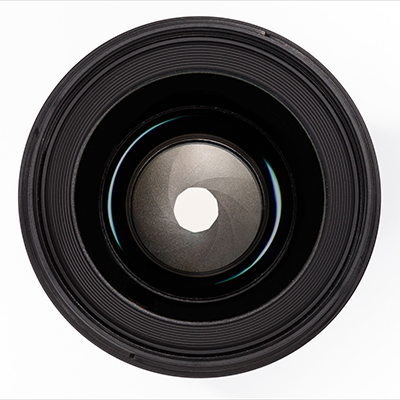
Choosing the right lens aperture for low-light imaging is essential when cameras need to capture clear details in dim environments. Whether used in industrial inspection, security surveillance, intelligent transportation, or machine vision, insufficient light can lead to image noise, motion blur, and reduced image detail.
A large aperture lens, such as F1.0, F1.2, or F1.4, allows more light to reach the image sensor than a smaller aperture such as F2.8. However, aperture alone does not determine image quality. Sensor compatibility, lens transmission, resolution, focal length, and optical design also influence low-light performance.
This guide explains how aperture works, compares common F-numbers, and shows how to select an appropriate industrial lens for low-light imaging applications.
1. What Is Lens Aperture and How Does It Affect Low-Light Imaging?
Aperture refers to the opening in a lens that controls how much light passes through the optical system and reaches the image sensor. It is commonly expressed as an F-number, such as F1.0, F1.2, F1.4, F2.0, or F2.8.
The F-number is calculated by dividing the lens focal length by the diameter of its entrance pupil. A smaller F-number represents a larger relative aperture and generally allows more light to reach the sensor under the same conditions.
F-number = Focal Length / Entrance Pupil Diameter
For example, an F1.2 lens has a larger relative aperture than an F2.8 lens, allowing more light to reach the image sensor when other conditions are comparable.
Why Does Aperture Matter in Low-Light Environments?
When illumination decreases, the camera receives fewer photons. This can make it difficult to maintain sufficient image brightness while preserving detail and limiting motion blur.
A larger aperture can help by:
- Allowing more light to reach the image sensor.
- Supporting shorter exposure times when capturing moving objects.
- Reducing the need to increase sensor gain excessively.
- Improving the available light budget for night surveillance and industrial imaging.
However, a larger aperture does not automatically guarantee a better image. Optical aberrations, lens transmission, sensor sensitivity, and depth of field must also be considered.
For a broader explanation of optical aperture and image quality, read how aperture affects image sharpness.
2. F1.0 vs F1.2 vs F1.4 vs F2.8: Which Aperture Is Better for Low Light?
When comparing lenses for low-light imaging, the maximum aperture is an important starting point. A smaller F-number generally provides greater image-plane illumination under equivalent optical and exposure conditions.
| Maximum Aperture | Relative Illumination* | Typical Consideration |
|---|---|---|
| F1.0 | 196% | Very low-light imaging |
| F1.2 | 136% | Low-light surveillance |
| F1.4 | 100% | Night monitoring and security |
| F2.8 | 25% | Applications with sufficient illumination |
*Theoretical relative image-plane illumination is calculated using the inverse square of the F-number, with F1.4 as the reference (100%). Actual transmitted light depends on lens transmission, optical design, wavelength, and other system conditions. These values are not measured T-stops or guaranteed camera performance.
F1.0 Aperture: For Very Low-Light Imaging
An F1.0 lens has a very large relative aperture and can be useful in applications where available illumination is extremely limited. It allows more light to reach the sensor than F1.4 or F2.8 lenses under comparable conditions.
F1.0 lenses can be considered for night surveillance, intelligent transportation systems, and industrial imaging environments where maintaining image brightness and capturing moving objects are important.
Explore TOWIN’s large aperture F1.0 lens solutions for low-light imaging for more information about optical configurations and application requirements.
F1.2 Aperture: A Balance of Light and Optical Performance
F1.2 lenses provide more theoretical image-plane illumination than F1.4 lenses. They can be suitable for security cameras and other imaging systems that operate in environments with limited ambient light.
When selecting an F1.2 lens, engineers should also evaluate edge sharpness, sensor compatibility, depth of field, and the required field of view.
F1.4 Aperture: For General Low-Light Applications
F1.4 is a commonly considered aperture for low-light security and monitoring systems. It provides a relatively large opening while allowing engineers to evaluate optical performance and system requirements across a range of applications.
F2.8 Aperture: When Illumination Is Sufficient
F2.8 lenses may be appropriate for industrial inspection and other imaging systems with controlled or sufficient lighting. In these environments, a smaller aperture may help achieve the required depth of field, depending on the optical design.
The best aperture is therefore determined by the complete imaging system rather than by the F-number alone.
3. How Aperture Affects Image Quality in Low-Light Conditions
Aperture influences more than image brightness. In industrial cameras and surveillance systems, it can also affect exposure time, depth of field, optical aberrations, and the amount of detail captured by the sensor.
Image Brightness and Exposure
A larger aperture allows more light to reach the sensor for a given exposure time. This can help maintain image brightness without relying entirely on longer exposures or increased sensor gain.
Motion Blur and Exposure Time
In applications such as vehicle monitoring, robotic vision, and automated inspection, moving objects must often be captured with limited motion blur.
A larger aperture can provide more light for a shorter exposure time, helping the camera capture moving targets. However, the final result also depends on illumination, sensor sensitivity, exposure settings, and motion speed.
Depth of Field
A larger aperture generally produces a shallower depth of field when other imaging parameters remain unchanged. This means a smaller range of object distances may appear acceptably sharp.
For machine vision inspection, sufficient depth of field may be more important than maximizing aperture size. Engineers should balance light collection with the required working distance and object depth.
Optical Sharpness and Aberrations
Some lenses exhibit stronger optical aberrations when operated at their maximum aperture. Stopping down may improve image quality in certain optical designs, although excessive stopping down can introduce diffraction and reduce fine-detail contrast.
For industrial applications, evaluating lens MTF performance and image quality across the sensor field is more useful than judging a lens by brightness alone.
Read more about aperture, optical sharpness, and lens resolution to understand these trade-offs.
4. How to Choose a Lens Aperture for Industrial Cameras
Selecting a suitable aperture for an industrial camera requires evaluating the complete optical system. The maximum aperture should match the available illumination, while the lens must also meet the camera’s sensor and image-quality requirements.
1. Evaluate the Available Illumination
Start by identifying the lighting conditions in the application. Indoor inspection systems with controlled LED illumination may not require the same aperture as outdoor security cameras operating at night.
For very low-light environments, F1.0, F1.2, or F1.4 lenses may be considered. For controlled lighting environments, F2.0 or F2.8 may also provide sufficient performance.
2. Match the Lens to the Image Sensor
Sensor compatibility is essential when selecting an industrial lens. The lens image circle must cover the active sensor area to avoid unwanted vignetting and image degradation.
Engineers should confirm sensor format, active dimensions, pixel size, and resolution requirements before choosing a lens.
3. Consider Resolution and MTF
A large aperture does not automatically mean high resolution. The lens must provide sufficient optical resolving power for the camera sensor and the details that need to be detected or measured.
For machine vision systems, lens MTF, sensor pixel pitch, and required object-space resolution should be evaluated together.
4. Select the Appropriate Focal Length and Field of View
Focal length determines the image scale and, together with sensor dimensions and working distance, influences the field of view.
A wide-angle lens may be appropriate for monitoring a large area, while a longer focal length may be necessary to capture distant objects or smaller details.
5. Check IR Compatibility for Night Vision
If the camera uses infrared illumination, visible-light performance alone is not enough to determine lens suitability.
Engineers should consider the intended IR wavelength, such as 850nm or 940nm, as well as infrared transmission and focus consistency between visible and infrared light.
An IR-corrected lens can help reduce focus shift when the imaging system switches between day and night operation.
Learn more about IR-corrected CCTV lenses and their role in day-night imaging.
5. Important Factors Beyond Aperture: Lens Transmission and Sensor Performance
When evaluating low-light imaging performance, maximum aperture should not be treated as the only deciding factor.
F-number vs. T-stop
F-number describes the geometric aperture of a lens, while T-stop accounts for light loss through the optical system. Two lenses with the same F-number may transmit different amounts of light because of differences in optical materials, coatings, and construction.
Therefore, engineers should consider actual lens transmission when comparing optical systems for demanding low-light applications.
Sensor Sensitivity and Pixel Size
Sensor sensitivity and pixel architecture influence how effectively incoming light is converted into an electrical signal. A suitable combination of lens aperture and sensor performance is important for achieving the required signal-to-noise ratio.
Lens Coatings and Optical Design
Optical coatings help control reflection and improve light transmission. Optical design also affects contrast, chromatic aberration, distortion, and image quality across the sensor.
For this reason, low-light lens selection should consider the complete optical specification rather than choosing a product solely by its maximum aperture.
6. Low-Light Lens Applications in Industrial Imaging and Surveillance
Night Vision and Security Surveillance
Security cameras operating at night need to capture useful image details under changing illumination. Large aperture lenses can help improve available light, while IR correction and wavelength compatibility are important when infrared illumination is used.
Explore TOWIN’s Night Vision CCTV Lens Selection Guide for information about 850nm and 940nm infrared applications, lens parameters, and day-night imaging requirements.
Intelligent Transportation Systems
Traffic monitoring systems may need to capture vehicles and road details in changing outdoor lighting conditions. Lens aperture, focal length, field of view, and IR compatibility should be selected according to the monitoring distance and identification requirements.
Industrial Inspection and Machine Vision
Industrial inspection systems may operate in dim production areas or use controlled illumination to inspect components, surfaces, and mechanical parts.
In these applications, aperture selection must balance light collection, depth of field, image resolution, and measurement accuracy. A large aperture is useful when light is limited, but it may not be necessary when the inspection system already has sufficient controlled lighting.
Explore TOWIN’s machine vision lens solutions for industrial imaging and automated inspection applications.
Smart Security and Outdoor Monitoring
Outdoor monitoring systems often face changing daylight, nighttime illumination, and environmental challenges. Choosing a suitable aperture together with the correct focal length, sensor format, and optical configuration helps build a more reliable imaging system.
Learn more about TOWIN smart security imaging solutions.
7. TOWIN Large Aperture Lens Solutions for Low-Light Imaging
TOWIN develops industrial and security camera lenses for different sensor formats, focal lengths, resolutions, and imaging conditions. For low-light applications, selecting the right combination of aperture, image format, optical performance, and mounting interface is essential.
F1.0 Low-Light Industrial Lens
TOWIN offers low-light-sensitive lens configurations with F1.0 maximum aperture for applications that require strong light-gathering capability.
One example is the S08011805710 8mm F1.0 M16 industrial lens. This model features an 8MP resolution, a 1/1.8-inch image format, a 66.5-degree diagonal field of view, and a fixed F1.0 aperture.
It can be considered for imaging systems that require an M16 mount and compatible 1/1.8-inch sensors. Its specified optical and mechanical parameters should be checked against the actual camera configuration before selection.
Wide-Angle F1.0 Low-Light Lens
For applications requiring a wider field of view, TOWIN also offers the S04012808510 4mm M12 F1.0 wide-angle lens. It features a 1/2.8-inch image format, 8MP resolution, and a 102-degree diagonal field of view.
This configuration may be evaluated for compact security and monitoring systems where wide-area coverage and low-light sensitivity are required.
Custom Optical Solutions
Every imaging system has different requirements. Sensor dimensions, focal length, working distance, mounting interface, field of view, and illumination conditions all influence lens selection.
TOWIN can evaluate optical configurations for different industrial and security imaging requirements. When a standard lens does not meet the project specifications, OEM/ODM development and customized lens solutions can also be considered.
Need a Lens for Low-Light Imaging?
Share your sensor format, resolution, focal length, working distance, aperture requirements, and application environment. TOWIN can help evaluate a suitable optical configuration for your imaging project.
8. Frequently Asked Questions About Lens Aperture for Low-Light Imaging
Q1: What is the best aperture for low-light imaging?
A large aperture such as F1.0, F1.2, or F1.4 is often considered for low-light imaging because a smaller F-number allows more light to reach the sensor. The best choice depends on the illumination level, sensor sensitivity, required depth of field, and optical performance.
Q2: Is F1.4 better than F2.8 for low-light conditions?
Under equivalent conditions, F1.4 provides approximately four times the theoretical image-plane illumination of F2.8. This can help improve exposure flexibility in dim environments. Actual performance also depends on lens transmission and the camera sensor.
Q3: What is the difference between F1.0 and F1.4?
F1.0 has a larger relative aperture than F1.4. Under ideal equivalent conditions, F1.0 provides approximately 1.96 times the image-plane illumination of F1.4. However, actual transmitted light depends on the optical system.
Q4: Does a larger aperture always produce a sharper image?
No. A larger aperture increases light collection but may also increase certain optical aberrations and reduce depth of field. Lens design, MTF performance, sensor pixel size, and operating aperture all influence final image sharpness.
Q5: Is F1.0 suitable for machine vision applications?
F1.0 lenses can be suitable for machine vision systems operating in low-light environments. However, applications with controlled lighting may benefit more from an aperture that provides the required depth of field, resolution, and optical performance.
Q6: What aperture should I choose for night vision CCTV cameras?
F1.2 and F1.4 lenses are common considerations for low-light surveillance, while F1.0 may be useful when light is extremely limited. For infrared night vision, also verify the lens’s IR wavelength compatibility and day-night focus performance.
Q7: Does lens aperture affect image noise?
A larger aperture can allow more photons to reach the sensor during the same exposure time. This may improve the signal-to-noise ratio and reduce the need for high sensor gain. However, noise also depends on sensor characteristics, exposure, illumination, and image processing.
Q8: What should I consider besides aperture when choosing an industrial lens?
Consider sensor format, resolution, pixel size, focal length, field of view, working distance, lens transmission, distortion, MTF, mount type, and environmental requirements. For night vision systems, also evaluate IR compatibility.
Conclusion: Choose the Right Aperture for Your Low-Light Imaging System
Selecting the right lens aperture for low-light imaging requires more than choosing the smallest available F-number. F1.0, F1.2, and F1.4 lenses can provide greater light-gathering capability, while F2.0 and F2.8 configurations may be appropriate for systems with sufficient illumination or specific depth-of-field requirements.
For industrial cameras, security surveillance, and machine vision applications, the best solution balances aperture, sensor compatibility, resolution, lens transmission, focal length, and optical performance.
By evaluating these parameters together, engineers can select a suitable industrial lens for reliable low-light imaging. TOWIN provides industrial lens solutions and optical customization support for different camera systems and application requirements.