DMS (Driver Monitoring System) infrared lenses
02/18/2026
Edge-to-edge sharpness in Fisheye lens imaging
02/20/2026
Introduction
In low-light environments—such as night surveillance, dimly lit factories, or evening traffic monitoring—standard camera lenses often struggle with insufficient light, leading to grainy images, motion blur, and lost details. This is where large aperture F1.0 lens shine. As the “eyes” of low-light imaging systems, F1.0 lenses deliver exceptional light-gathering capability, ensuring clear, high-quality visuals even in near-dark conditions.
Towin, a trusted manufacturer of professional optical lenses, offers a comprehensive range of F1.0 large aperture lenses tailored for CCTV, intelligent traffic, and security applications. This guide dives into the science behind F1.0 lenses, their core advantages, application scenarios, selection tips, and Towin’s top-tier product lineup—helping you find the perfect low-light imaging solution.
1. Why Do Low-Light Imaging Need F1.0 Large Aperture Lenses?
Low-light environments (≤10 lux) pose three critical challenges for standard lenses:
- Insufficient light intake: Small apertures (e.g., F2.0/F2.8) limit photon capture, forcing cameras to increase ISO (sensitivity), which introduces digital noise.
- Slow shutter speed: To compensate for low light, shutters stay open longer, causing motion blur for moving objects (e.g., vehicles, pedestrians).
- Poor contrast & detail loss: Dim light washes out edges, colors, and fine details, rendering images unusable for identification or analysis.
F1.0 large aperture lenses address these issues by:
- Maximizing light transmission: The aperture (F-number) is inversely proportional to light intake. F1.0 captures 2x more light than F1.4, 4x more than F2.0, and 8x more than F2.8—eliminating the need for high ISO or slow shutters.
- Maintaining image clarity: Adequate light ensures optimal signal-to-noise ratio (SNR), preserving details and contrast even in near-darkness.
- Enabling fast action capture: With more light, cameras use faster shutter speeds (e.g., 1/500s vs. 1/30s), freezing motion for sharp images of moving targets.
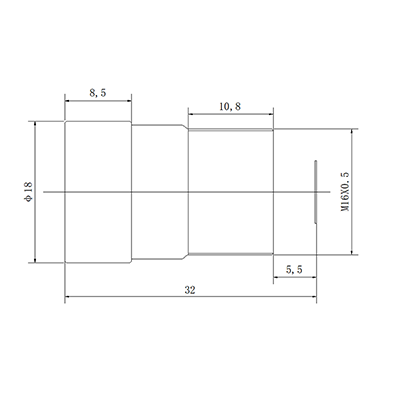
4mm 2-Megapixel Wide-angle lens
2. Optical Structure of F1.0 Lenses & Low-Light Imaging Adaptation Principle
Designing an F1.0 large aperture lens requires precise optical engineering to balance light intake, image sharpness, and aberration control. Here’s how Towin’s F1.0 lenses achieve optimal low-light performance:
Core Optical Design Elements
- Multi-element lens groups: Towin’s F1.0 lenses use advanced lens configurations (e.g., 2G3P for S03213007511IR) to correct spherical, chromatic, and coma aberrations—common issues with large apertures.
- IR correction coating: Most models feature IR-corrected optics (e.g., CCL121545AMP, S02013011210IR), ensuring consistent focus across visible and infrared (IR) spectra for seamless day-night switching.
- Large-diameter optical glass: High-quality glass with anti-reflective coatings minimizes light loss and glare, maximizing transmission efficiency.
- Fixed/auto iris options: Fixed iris (F1.0) for cost-effective stability; DC auto iris (e.g., CCL121545AMP) for dynamic light adjustment in variable low-light conditions.
Adaptation Principle for Low-Light Imaging
F1.0 lenses optimize the “exposure triangle” (aperture, shutter speed, ISO) for low light:
- Aperture set to F1.0 (maximum opening) → maximizes light.
- Camera uses lower ISO (≤800) → reduces noise.
- Faster shutter speed (≥1/125s) → avoids motion blur.
- IR correction ensures focus accuracy when switching to IR illumination at night, eliminating “focus shift” common in uncorrected lenses.
3. Core Advantages of F1.0 Lenses for Low-Light Imaging
- Superior light-gathering capability: F1.0 is one of the largest practical apertures for industrial/security lenses, delivering bright images in 0.1-10 lux environments (e.g., moonlit nights, unlit corridors).
- Low noise & high detail: By reducing ISO dependency, F1.0 lenses preserve fine details (e.g., license plates, facial features) without grainy artifacts.
- Day-night versatility: IR-corrected designs work with IR LEDs, making them ideal for 24/7 surveillance systems.
- Wide compatibility: Support for CCD/CMOS sensors (1/3″ to 1/1.2″) and multiple mounts (CS, M14, M16, M22) ensures integration with most cameras.
- Diverse focal length options: From 2mm wide-angle (130° FOV) to 15-45mm varifocal, covering close-range and long-distance low-light scenarios.
4. Core Application Fields & Targeted F1.0 Lens Recommendations
The core value of F1.0 large aperture lenses lies in imaging reliability in extreme low-light environments. Their application scenarios cover key fields requiring 24/7 monitoring and low-light detail capture. Below, we accurately match Towin’s F1.0 lens models to different scenarios based on core pain points and needs, highlighting product adaptation logic and key advantages:
4.1 Application Scenario-Lens Matching Table (Precise Adaptation)
| Core Application Scenarios | Key Pain Points | Recommended Lens Model | Core Advantages | Resolution/Focal Length | Mount Type |
| Night Outdoor Surveillance | Low light (≤5lux), long-distance, day-night switching | CCL121545AMP (15-45mm Varifocal) | F1.0+IR, 15-45mm zoom, DC auto iris | 1.3MP / 15-45mm (Varifocal) | CS |
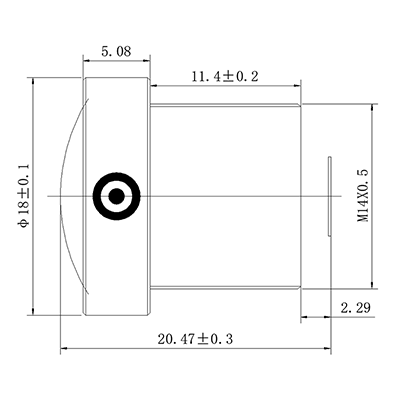
| Indoor Short-Distance Surveillance | Narrow space, wide coverage, concealed | S02013011210IR (2mm Wide-Angle) | 130° FOV, M14 compact, IR-corrected | MP / 2mm (Fixed Focal) | M14X0.5 |
| Intelligent Traffic Systems (ITS) | Night license plate recognition, anti-glare | CCL121545AMP (15-45mm Varifocal) | 10-30m license plate focus, anti-glare glass | 1.3MP / 15-45mm (Varifocal) | CS |
| Industrial Inspection | Low distortion, high detail, harsh environment | S06011205510FH (6mm Low Distortion) | 8MP ultra-HD, ≤3.8% distortion, -20℃~60℃ ruggedness | 8MP / 6mm (Fixed Focal) | M22X0.5 |
| HD Security Surveillance | 5MP+ HD, low noise, 24/7 full-color | S04012709010F (4mm HD) | 5MP, F1.0+filter, 88-90° FOV | 5MP / 4mm (Fixed Focal) | M12X0.5 |
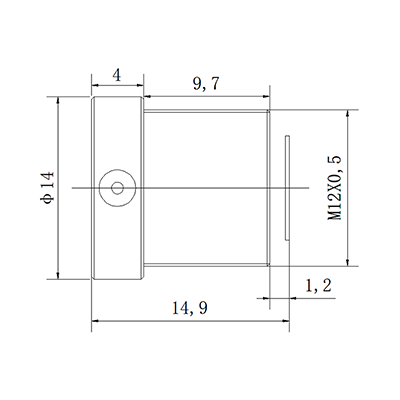
| Entry-Level Low-Light Surveillance | Cost-effective, easy installation, basic low-light | S03213007511IR (3.2mm Entry-Level) | ≤9% distortion, M12 mount, cost-performance | VGA / 3.2mm (Fixed Focal) | M12X0.5 |
| Wide-Scene Indoor Surveillance | Large coverage, multi-target, color accuracy | CCL1270410MPF (4mm Wide-Angle) | 110° FOV, 2MP, IR cut (true color) | 2MP / 4mm (Fixed Focal) | M16X0.5 |
4.2 In-Depth Analysis of Typical Scenarios (Why This Lens?)
1: Night Road/Park Outdoor Surveillance
- Core Needs: Capture long-distance moving targets (pedestrians/vehicles) in no-supplementary-light environments (e.g., moonlit nights, unlit parks) with clear feature recognition.
- Recommended Lens: CCL121545AMP (15-45mm Varifocal F1.0)
- Adaptation Logic:
- F1.0 large aperture delivers 8x more light intake than F2.8, enabling noise-free imaging in 0.1lux environments without increasing ISO;
- 15-45mm varifocal range flexibly switches between “panoramic monitoring” and “close-up capture,” allowing clear recognition of license plates/human faces beyond 30m;
- IR correction design combined with IR supplementary lights ensures no focus shift during night switching, maintaining consistent 24/7 imaging;
- DC auto iris quickly adapts to sudden strong light (e.g., vehicle high beams) to avoid overexposure or underexposure.
2: Narrow Indoor Corridor/Convenience Store Surveillance
- Core Needs: Full coverage of small spaces (no blind spots), compact lens size, and flexible installation.
- Recommended Lens: S02013011210IR (2mm Ultra-Wide-Angle F1.0)
- Adaptation Logic:
- 130° diagonal FOV covers the entire width of a 1.5m corridor with no monitoring blind spots;
- M14 small-mount design paired with a 1/3″ sensor is compatible with mini cameras for concealed installation (e.g., ceilings, corners);
- F1.0 large aperture adapts to energy-saving lighting (5-10lux) in convenience stores at night, clearly capturing details at cash registers/shelves;
- Manual focus design allows quick focus calibration during installation, suitable for non-professional installation scenarios.
3: Industrial Workshop Equipment Routine Checks (Dim Environments)
- Core Needs: Low distortion, high detail, short-distance imaging, and resistance to harsh environments.
- Recommended Lens: S06011205510FH (6mm Low-Distortion 8MP F1.0)
- Adaptation Logic:
- 8MP ultra-high resolution enables zooming in to view tiny equipment defects (0.1mm-level details);
- ≤3.8% distortion avoids false fault judgments caused by imaging stretching, meeting industrial inspection standards;
- 1/1.2″ large sensor preserves details in dark corners of workshops (≤3lux) without additional supplementary light;
- M22 mount + rugged housing adapts to workshop vibrations and temperature fluctuations (-20℃~60℃).
4: License Plate Recognition at Intelligent Traffic Intersections
- Core Needs: Fast capture of moving license plates (vehicle speed ≤60km/h) in night backlight/low-light conditions, and anti-glare.
- Recommended Lens: CCL121545AMP (15-45mm Varifocal F1.0)
- Adaptation Logic:
- F1.0 large aperture supports a high shutter speed of 1/500s, freezing vehicle motion trajectories with no license plate blur;
- 15-45mm varifocal range adjusts to intersection width (15mm for multi-lane coverage, 45mm for single-lane focusing);
- Low-dispersion optical glass + anti-reflective coating reduces vehicle headlight glare, ensuring clear license plate characters;
- CS mount is compatible with mainstream traffic cameras for plug-and-play use without additional debugging.
4.3 Selection Tips (Quick Scenario-Lens Matching)
- For long-distance zoom needs: Directly choose CCL121545AMP (15-45mm) for traffic/large park applications;
- For indoor wide coverage: Select S02013011210IR (2mm) or CCL1270410MPF (4mm) with FOV ≥90°;
- For HD detail requirements: Opt for S04012709010F (5MP) or S06011205510FH (8MP) suitable for key area surveillance;
- For industrial-grade low distortion: The only choice is S06011205510FH (≤3.8% distortion) to meet inspection needs;
- For cost-effectiveness: Choose S03213007511IR (3.2mm) for civilian basic surveillance scenarios.
Wide-angle 1/3″ manual focus lens
5. Core Selection Indicators for F1.0 Lenses
Choosing the right F1.0 lens requires matching technical specifications to your application. Focus on these key indicators:
A. Sensor Size Matching
- The lens’s “Image Format” must match or exceed the camera’s sensor size (e.g., a 1/2.7″ lens works with 1/2.7″, 1/2.8″ sensors but not 1/1.2″).
- Mismatched sensors cause vignetting (dark corners) or cropped images.
- Towin options: 1/3″ (S02013011210IR), 1/2.7″ (CCL1270410MPF), 1/2″ (CCL121545AMP), 1/1.2″ (S06011205510FH).
B. Focal Length & Field of View (FOV)
- Wide-angle (2mm-4mm): 90°-130° FOV, ideal for close-range, large-area coverage (e.g., rooms, small parking lots).
- Varifocal (15-45mm): Adjustable FOV (5°-15°), suitable for long-distance monitoring (e.g., traffic, building exteriors).
- Standard (6mm): Balanced FOV (55° H), for mid-range professional applications.
C. Resolution
- Match lens resolution to camera resolution (e.g., 5MP camera → 5MP lens like S04012709010F).
- Towin ranges: 1.3MP (CCL121545AMP) → 8MP (S06011205510FH) for HD/4K systems.
D. Mount Type
Ensure compatibility with your camera’s mount:
- CS mount: CCL121545AMP (CCTV box cameras)
- M14X0.5: S02013011210IR (compact board cameras)
- M16X0.5: CCL1270410MPF (specialized CCTV cameras)
- M12X0.5: S03213007511IR, S04012709010F (common security cameras)
- M22X0.5: S06011205510FH (professional high-resolution cameras)
E. Distortion Control
Critical for accurate measurement/identification:
- Low distortion (≤9%): S03213007511IR, S06011205510FH (≤3.8%)
- Standard distortion: S02013011210IR (<-19%), S04012709010F (<-29%)
F. Minimum Object Distance (M.O.D.)
Closest distance the lens can focus:
- 0.2m: CCL1270410MPF (close-range indoor use)
- 0.3m: S06011205510FH (professional inspection)
- 0.5m: CCL121545AMP (long-distance monitoring)
Low distortion Wide-angle CCTV VGA lens
6. Towin Large Aperture F1.0 Lens Series
Towin’s F1.0 large aperture lens lineup is engineered to deliver uncompromised low-light performance, with each model tailored to specific application needs. All lenses share core advantages—F1.0 maximum aperture for extreme light-gathering, high-quality optical glass, and industrial-grade durability—while offering unique features to address diverse monitoring scenarios.
6.1 CCL121545AMP (15-45mm Varifocal F1.0 Lens)
- F1.0 large aperture + IR correction: Ensures noise-free imaging in 0.1-5lux low-light environments, seamless day-night switching.
- 15-45mm varifocal focal length: Covers 5-50m long-distance monitoring, ideal for zooming in on moving targets (e.g., license plates, pedestrians).
- DC auto iris: Rapidly adapts to dynamic light changes (e.g., streetlights, vehicle headlights) to avoid over/underexposure.
- 1.3MP resolution & CS mount: Compatible with mainstream CCTV box cameras and intelligent traffic systems (ITS).
- Rugged design: Operates in -20℃~60℃, suitable for outdoor harsh environments.
6.2 CCL1270410MPF (4mm Fixed Focal F1.0 Lens)
- F1.0 aperture + 2MP HD resolution: Captures clear details in dim indoor/outdoor spaces (e.g., warehouses, offices).
- 110° wide FOV: Covers up to 50㎡ single-scene coverage with no blind spots.
- IR cut filter: Ensures accurate daytime color reproduction and compatibility with IR supplementary lights at night.
- M16X0.5 mount: Compact design fits specialized CCTV cameras, easy to install in confined spaces.
- Low dispersion glass: Reduces glare and aberration for sharp imaging.
6.3 S02013011210IR (2mm Ultra-Wide-Angle F1.0 Lens)
- 130° diagonal FOV: Ultra-wide coverage for narrow indoor spaces (corridors, small shops) with a single lens.
- F1.0 aperture + IR correction: No focus shift during day-night switching, clear imaging in 5-10lux dim lighting.
- M14X0.5 compact mount: Paired with 1/3″ sensor, compatible with mini cameras for concealed installation.
- Manual focus: Simple calibration for non-professional installers, cost-effective for entry-level surveillance.
6.4 S03213007511IR (3.2mm Fixed Focal F1.0 Lens)
- ≤9% low distortion: Ensures natural, non-stretched imaging for residential/retail basic monitoring.
- 2G3P lens structure: Balances cost and performance, minimizes aberration with high-quality optical glass.
- M12X0.5 universal mount: Works with most civilian security cameras, plug-and-play compatibility.
- F1.0 aperture + VGA resolution: Reliable low-light imaging for budget-friendly surveillance needs.
6.5 S04012709010F (4mm Fixed Focal F1.0 Lens)
- 5MP high resolution: Supports HD playback of key details (e.g., faces, objects) in critical areas (banks, jewelry stores).
- F1.0 aperture + built-in filter: Noise-free full-color night imaging without relying on supplementary light.
- 88-90° FOV: Balances wide coverage and detail capture, suitable for medium-sized indoor/outdoor spaces.
- M12X0.5 mount: Compatible with mainstream compact security cameras, easy to integrate.
6.6 S06011205510FH (6mm Fixed Focal F1.0 Lens)
- 8MP ultra-high resolution: Captures 0.1mm-level tiny details, ideal for industrial inspection (equipment defects, precision measurement).
- ≤3.8% ultra-low distortion: Meets industrial imaging standards, avoids false judgments from stretched images.
- 1/1.2″ large sensor: Maximizes light intake, preserves details in ≤3lux extreme low-light environments.
- M22X0.5 mount + rugged housing: Withstands workshop vibrations and temperature fluctuations (-20℃~60℃).
6.7 Consolidated Product Comparison Table
| Model | Image Format | Focal Length | Resolution | Mount Type | Aperture Type | Core Selling Points | Target Applications |
| CCL121545AMP | 1/2″ | 15-45mm (Varifocal) | 1.3MP | CS | DC Auto | IR correction, varifocal zoom, dynamic light adaptation | ITS, night outdoor surveillance (roads/parks) |
| CCL1270410MPF | 1/2.7″ | 4mm (Fixed) | 2MP | M16X0.5 | Fixed | 110° wide FOV, IR cut filter, color accuracy | Wide-scene indoor surveillance (warehouses/exhibition halls) |
| S02013011210IR | 1/3″ | 2mm (Fixed) | MP | M14X0.5 | Fixed | 130° ultra-wide FOV, compact design, IR correction | Indoor short-distance surveillance (corridors/shops) |
| S03213007511IR | 1/3″ | 3.2mm (Fixed) | VGA | M12X0.5 | Fixed | ≤9% low distortion, cost-effective, universal mount | Entry-level low-light surveillance (residences/small stores) |
| S04012709010F | 1/2.7″, 1/2.8″ | 4mm (Fixed) | 5MP | M12X0.5 | Fixed | 5MP HD, noise-free night imaging, built-in filter | HD security (banks/key areas) |
| S06011205510FH | 1/1.2″ | 6mm (Fixed) | 8MP | M22X0.5 | Fixed | 8MP ultra-HD, ≤3.8% ultra-low distortion, rugged | Industrial inspection (dim workshops/equipment checks) |
6.8 Series-Wide Advantages
- Universal low-light performance: All models feature F1.0 large aperture, delivering 4x-8x more light than F2.0/F2.8 lenses for noise-free imaging in extreme dim conditions.
- Diverse compatibility: Supports multiple mounts (CS, M12, M14, M16, M22) and sensor sizes (1/3″~1/1.2″), matching most security/industrial cameras.
- Durable & reliable: Industrial-grade housing withstands temperature fluctuations (-20℃~60℃) and vibrations, suitable for indoor/outdoor use.
- Scenario-specific design: From ultra-wide-angle to long-distance varifocal, from entry-level to 8MP ultra-HD, covering all low-light monitoring needs.
FAQs
Q1: What’s the difference between F1.0 and F1.2/F1.4 lenses for low light?
A1: F1.0 captures 40% more light than F1.2 and 100% more than F1.4—ideal for extreme low light (≤1 lux). F1.2/F1.4 are better for moderate low light but may require higher ISO.
Q2: Do Towin’s F1.0 lenses support IR illumination?
A2: Yes—most models (CCL121545AMP, S02013011210IR, S03213007511IR) are IR-corrected, ensuring focus consistency in visible and IR light. CCL1270410MPF includes an IR cut filter for day use.
Q3: How to choose between fixed and varifocal F1.0 lenses?
A3: Fixed focal length (2mm-6mm) is cost-effective for fixed-angle coverage. Varifocal (15-45mm) is flexible for scenarios needing adjustable zoom (e.g., traffic, large premises).
Q4: Can F1.0 lenses be used in bright environments?
A4: Yes—fixed iris models work with camera’s shutter/ISO control; DC auto iris (CCL121545AMP) adjusts to bright conditions to avoid overexposure.
Q5: What sensor size is best for F1.0 lenses?
A5: Larger sensors (1/1.2″, 1/2″) paired with F1.0 lenses deliver better low-light performance (more light per pixel). Smaller sensors (1/3″) are cost-effective for basic surveillance.
Conclusion
Large aperture F1.0 lens are the ultimate solution for low-light imaging, addressing noise, blur, and detail loss with superior light-gathering capability. Towin’s F1.0 lens series combines advanced optical design, diverse options, and industrial-grade reliability—making them ideal for CCTV surveillance, intelligent traffic systems, and professional monitoring.
Whether you need a wide-angle lens for indoor security or a varifocal lens for traffic monitoring, Towin has a tailored F1.0 solution. Explore our product pages for detailed specifications, or contact our technical team to find the perfect lens for your low-light application.
Ready to enhance your low-light imaging? Browse Towin’s F1.0 lens collection today!
CCL121545AMP 15-45mm Varifocal F1.0 Lens
CCL1270410MPF 4mm 2MP Wide-Angle Lens
S02013011210IR 2mm 130° Wide-Angle Lens
S03213007511IR Low Distortion 3.2mm Lens