


TOF Lens Assembly: The Role of Active Alignment
02/17/2026
Large aperture F1.0 lens for low-light imaging
02/19/2026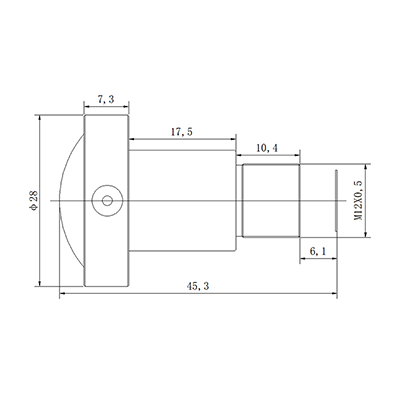
Table of Contents
Key Takeaways
- DMS infrared lenses enable 24/7 accurate driver monitoring via IR correction, even in low-light or night conditions.
- Core parameters (focal length, FOV, resolution, aperture) directly determine DMS performance and scene adaptability.
- TOWIN offers versatile DMS lens solutions: zoom/fixed focal length, 3MP/12MP resolution, and M12 universal mount.
- Ideal for commercial vehicles, passenger cars, ride-hailing fleets, and autonomous driving platforms.
- Selection should align with sensor size, monitoring distance, and low-light performance requirements.
Introduction
With the global emphasis on road safety and the rapid development of intelligent vehicles, Driver Monitoring Systems (DMS) have become a standard configuration in modern automobiles. At the heart of every reliable DMS lies a high-performance infrared lenses—its ability to capture clear, detailed driver facial features, eye movements, and behavioral cues (even in extreme lighting) directly impacts the system’s ability to detect fatigue, distraction, or abnormal states.
TOWIN Lens, a trusted provider of professional optical solutions, offers a range of IR-corrected DMS lenses tailored to meet the rigorous demands of automotive safety. This article dives into the working principles, key parameters, design requirements, application scenarios, and selection guidelines of DMS infrared lenses, while highlighting TOWIN’s industry-leading product lineup.
How DMS Infrared Lenses Work & Their Core Value
1. Working Principle
DMS infrared lenses operate by:
- Leveraging IR correction technology to eliminate chromatic aberration when paired with infrared illuminators (850nm/940nm).
- Capturing high-contrast images of the driver’s face, eyes, and upper body in all lighting conditions—from bright daylight to pitch-black nights.
- Transmitting clear optical signals to the DMS image sensor, enabling AI algorithms to analyze driver state (e.g., eye closure, head posture, yawning).
2. Core Value
- Safety Enhancement: Detect fatigue, distraction, or impairment in real time, triggering alerts to prevent accidents.
- Regulatory Compliance: Meet global automotive safety standards (e.g., EU General Safety Regulation 2022/2006, China GB 7258).
- 24/7 Reliability: IR correction ensures consistent performance across day/night cycles, eliminating lighting-related blind spots.
- Seamless Integration: Compact design and standard mounts adapt to various in-vehicle installation positions (steering column, rearview mirror).
3. Key Technical Parameters of DMS Infrared Lenses
Technical parameters are the foundation of DMS lens performance. Below is a detailed breakdown of critical specs, paired with TOWIN’s product data for reference:
| Parameter | Definition | Importance for DMS | TOWIN Product Range |
| Focal Length | Distance between the lens center and image sensor (fixed or zoom) | Determines monitoring distance and field of view. Shorter focal lengths = wider FOV (ideal for close-range driver capture). | 2.8-12mm (zoom); 3mm/3.2mm/3.5mm (fixed) |
| Image Sensor Format | Matching sensor size (e.g., 1/2″, 1/2.3″) | Ensures full sensor coverage without vignetting. | 1/2″, 1/2.3″, 1/2.7″, 1/1.7″ |
| Field of View (FOV) | Horizontal (H)/Vertical (V)/Diagonal (D) coverage | Wider HFOV (100°+) captures the entire driver’s face and upper body. | 31°-131° (H); 24°-100° (V); 40°-160° (D) |
| Resolution | Maximum image detail (MP) | Higher resolution enables precise AI analysis of micro-expressions (e.g., eye blinking). | 3MP, 12MP |
| Aperture (F-Number) | Controls light transmission (lower = more light) | Critical for low-light performance (in-vehicle night conditions). | F1.8 (high light transmittance); F2.0 (balanced performance) |
| Mount Type | Lens-sensor connection standard | Ensures compatibility with in-vehicle cameras. | M12X0.5 (universal S-Mount for automotive cameras) |
| Minimum Object Distance (MOD) | Closest distance the lens can focus on | Adapt to different in-vehicle installation distances (e.g., 0.1m for rearview mirror mounts). | 0.1m-0.3m |
Technical Characteristics & Design Requirements for DMS Lenses
DMS lenses face unique in-vehicle challenges (temperature fluctuations, limited space, varying lighting). Their design must prioritize:
Essential Technical Characteristics
- IR Corrected Optics: Ensures sharp images in both visible and infrared spectra—non-negotiable for 24/7 DMS operation.
- Wide Field of View: Horizontal FOV ≥100° to capture the driver’s face without missing key features (eyes, mouth, head position).
- Low F-Number: F1.8-F2.0 aperture to gather sufficient light in dimly lit cabins (e.g., night driving, tunnel passage).
- Manual Focus/Zoom: Precise calibration for fixed in-vehicle positions, avoiding auto-focus delays.
- Fixed Iris: Maintains consistent exposure in stable cabin lighting, reducing image flicker.
Rigorous Design Requirements
- Compact Form Factor: Fits tight in-vehicle spaces (e.g., rearview mirror, dashboard) with TTL (Total Track Length) ≤45mm.
- Temperature Resistance: Operates reliably in -40°C to +85°C (automotive-grade environmental standards).
- Anti-Glare Coating: Reduces reflections from sunlight or dashboard lights, ensuring clear driver imaging.
- High Resolution: Minimum 3MP for AI algorithm compatibility; 12MP for advanced driver state analysis.
Application Scenarios of DMS Infrared Lenses
DMS infrared lenses are widely used across automotive sectors, each with specific requirements:
Commercial Vehicles (Trucks, Buses):
- Need wide FOV (130°+) to cover drivers of varying heights.
- TOWIN CCL12030MP (3mm, 130° HFOV) is ideal for close-range cabin monitoring.
Passenger Cars (Sedans, SUVs):
- Balance between FOV and image detail; zoom lenses adapt to different cabin layouts.
- TOWIN S281212718F3 (2.8-12mm zoom) offers flexible adjustment for diverse vehicle models.
Ride-Hailing & Fleet Vehicles:
- 24/7 reliability and easy integration; fixed-focal lenses reduce maintenance.
- TOWIN CCL123035MP (3.5mm, F2.0) provides cost-effective, stable performance.
Autonomous Driving (L2+):
- High resolution (12MP) for precise driver state validation.
- TOWIN CCL117032MP (12MP, 160° DFOV) supports advanced AI-driven safety features.
DMS Infrared Lens Selection Guide
Follow these steps to choose the right DMS lens for your application:
1. Match Sensor Size:
- Confirm your DMS camera’s sensor format (e.g., 1/2″, 1/1.7″) to avoid vignetting.
- Example: 1/1.7″ sensor → TOWIN CCL117032MP (optimized for large sensors).
2. Define FOV Requirements:
- Close installation (rearview mirror): FOV ≥120° (e.g., CCL12030MP, 130° HFOV).
- Far installation (dashboard): Narrower FOV (31°-100°) → S281212718F3 zoom lens.
3. Prioritize Resolution:
- Basic DMS (fatigue detection): 3MP (all TOWIN 3MP models).
- Advanced DMS (facial expression analysis): 12MP (CCL117032MP).
4. Evaluate Low-Light Performance:
- Night-driving focus: Choose F1.8 aperture (S281212718F3) for better light transmission.
5. Check Installation Compatibility:
- Ensure M12X0.5 S-Mount compatibility (all TOWIN models meet this standard).
6. Consider MOD:
- Rearview mirror mounts (short distance): MOD ≤0.3m (CCL12030MP, 0.1m MOD for ultra-close focus).
TOWIN DMS Infrared Lens Product Lineup
TOWIN offers four high-performance DMS infrared lenses, tailored to diverse automotive needs:
Product Comparison Table
| Model | Focal Length | Sensor Format | HFOV | Resolution | Aperture | MOD | Key Advantages |
| S281212718F3 | 2.8-12mm (Zoom) | 1/2.7″ | 31°-100° | 3MP | F1.8 | 0.3m | IR corrected; manual zoom/focus; low F-number for low light |
| CCL123035MP | 3.5mm (Fixed) | 1/2.3″ | 103° | 3MP | F2.0 | 0.3m | Wide angle; compact design (TTL=22.4mm); cost-effective |
| CCL12030MP | 3mm (Fixed) | 1/2″ | 130° | 3MP | F2.0 | 0.1m | Ultra-wide FOV; ultra-close focus; ideal for rearview mirror mounts |
| CCL117032MP | 3.2mm (Fixed) | 1/1.7″ | 131° | 12MP | F2.0 | – | 12MP ultra HD; 160° diagonal FOV; advanced AI compatibility |
Highlighted Models
- S281212718F3 (Zoom Lens): The only zoom option in the lineup, offering 2.8-12mm focal length adjustment. Perfect for vehicles with variable cabin layouts, as it adapts to different driver heights and installation positions. F1.8 aperture ensures exceptional low-light performance.
- CCL117032MP (12MP Ultra-Wide Lens): Designed for high-end DMS and autonomous driving systems. 12MP resolution captures fine facial details, while 160° diagonal FOV ensures full driver coverage. IR correction guarantees clarity day and night.
- CCL12030MP (Ultra-Close Focus Lens): With 0.1m MOD, this lens excels in rearview mirror-mounted DMS cameras. 130° HFOV covers the entire driver’s face, and F2.0 aperture balances light transmission and image sharpness.

3mm wide angle IR corrected CCTV lens
FAQs
1. Why is IR correction necessary for DMS lenses?
IR correction ensures that both visible light (daytime) and infrared light (nighttime/illuminator) focus on the same sensor plane. Without it, images would be blurry in infrared mode—rendering night-time driver monitoring ineffective.
2. Fixed vs. zoom lens: Which is better for DMS?
Fixed lenses: Cost-effective, reliable, and compact (ideal for mass-produced passenger cars and fleets).
Zoom lenses: Flexible for variable cabin layouts (ideal for commercial vehicles or custom DMS installations).
3. What FOV is recommended for most in-vehicle DMS?
A horizontal FOV of 100°-130° is optimal—it covers the driver’s face, eyes, and head movements without excessive distortion.
4. How does aperture affect DMS performance?
Lower F-numbers (F1.8 > F2.0) allow more light to reach the sensor, improving image quality in low-light conditions (e.g., night driving, tinted windows). This is critical for accurate AI analysis of driver state.
5. Are TOWIN DMS lenses compatible with all in-vehicle cameras?
All TOWIN DMS lenses use the M12X0.5 S-Mount, the industry standard for automotive cameras. They support most common sensor formats (1/2″ to 1/1.7″) and are compatible with major DMS image sensors (e.g., Aptina MT9M001, MT9T001).
Conclusion
DMS infrared lenses are indispensable for modern automotive safety, and choosing the right lens directly impacts the reliability of driver monitoring. TOWIN’s product lineup—featuring zoom/fixed focal lengths, 3MP/12MP resolution, and universal M12 mounts—offers tailored solutions for every DMS application, from commercial fleets to high-end autonomous vehicles.
With IR correction, wide FOV, and low-light optimization, TOWIN lenses ensure 24/7 accurate driver state detection, helping automakers meet global safety regulations and enhance road safety. Contact our team today to find the perfect DMS infrared lens for your project!