


Fisheye vs Wide-Angle Lens: Comparing distortion and FOV
02/16/2026
DMS (Driver Monitoring System) infrared lenses
02/18/2026
Table of Contents
Key Takeaways
- Active Alignment: A micron-level precision technology for TOF lens assembly that dynamically calibrates component positions via real-time depth data feedback.
- Core Necessity: TOF depth measurement demands extreme precision, and active alignment is critical to resolving assembly deviations and ensuring optimal performance.
- Special Assembly Requirements: Must meet micron-level tolerances, multi-component coordination, distortion correction, and environmental adaptability standards.
- Technical Difference: Active alignment outperforms passive alignment in precision and consistency, making it a standard for mid-to-high-end TOF products.
- Towin Advantages: Offers a full product line covering low-distortion, wide-angle, and ultra-wide-angle options, with parameters optimized for active alignment to suit diverse scenarios.
- Core Applications: Security surveillance, 3D scanning, industrial automation, and smart homes, with key strengths in high-precision depth sensing and environmental adaptability.
Introduction
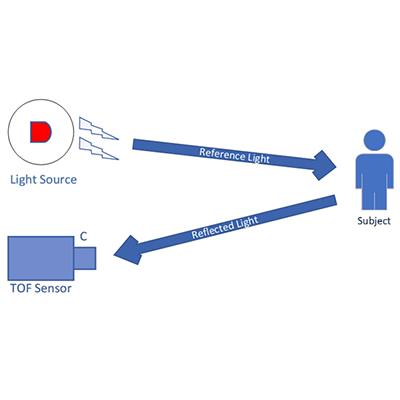
As the core component of 3D vision technology, TOF (Time of Flight) lenses have become indispensable in security, industrial, consumer electronics, and other sectors due to their real-time depth measurement capabilities. However, the performance of TOF lenses depends not only on optical design but also on assembly precision—active alignment technology is the key to unlocking their maximum potential. This article systematically explains the principles, advantages, and differences between active and passive alignment for TOF lenses, and delves into the technical adaptability and application scenarios of three popular Towin TOF lens models, providing practical references for industry selection.
What is Active Alignment Technology for TOF Lens?
Active alignment technology for TOF lenses is a closed-loop assembly solution with the following core logic:
- Real-time access to depth data from the TOF sensor during assembly;
- Algorithmic analysis of key indicators such as depth image clarity, distortion level, and depth error;
- Dynamic adjustment of the relative positions (X/Y/Z axes) and angles of the lens module, sensor, and IR filter;
- Final fixation and packaging once optimal depth sensing performance is achieved.
In simple terms, active alignment is a precise assembly method of “testing while assembling and adjusting while testing,” with the core goal of eliminating optical deviations caused by mechanical tolerances and ensuring the depth measurement accuracy and field-of-view consistency of TOF lenses.
Why Must TOF Lens Adopt Active Alignment Technology?
TOF systems operate based on 3D depth-sensing principles, imposing unique alignment requirements. The specific technical challenges, their impacts, and the active alignment solutions are summarized below:
| Technical Challenge | Impact | Active Alignment Solution |
| Optical axis deviation | Depth measurement errors, point cloud distortion | Achieve precise coincidence of lens and sensor optical axes via 6DoF adjustments |
| Sensor tilt relative to the image plane | Parallax errors, uneven depth measurement accuracy | Dynamically correct tilt angles (pitch/yaw) to ensure image plane flatness |
| Chief Ray Angle (CRA) mismatch | Pixel crosstalk, reduced signal-to-noise ratio (SNR) | Optimize lens position to match the technical parameters of the microlens array |
| Transmitter/receiver optical path misalignment | Signal attenuation, limited detection range | Achieve high-precision alignment of the Vertical-Cavity Surface-Emitting Laser (VCSEL) and receiver sensor optical paths |
| Fluctuations in manufacturing tolerances | Inconsistent performance across products | Compensate for manufacturing deviations in lens elements, holders, and sensors |
Special Requirements for TOF Lens Assembly
The optical structure and functional characteristics of TOF lenses dictate specific assembly requirements, for which active alignment is the core solution:
- Micron-level assembly tolerances: Axial/transverse deviations between the lens and sensor must be controlled within ±1μm, otherwise depth precision will be affected;
- Multi-component coordinated alignment: Simultaneous calibration of the lens, IR filter, sensor, and circuit board is required, rather than positioning a single component;
- Full-field distortion correction: Real-time detection of edge distortion during assembly to prevent local performance failures;
- Environmental adaptability guarantee: Compensation for the impact of temperature and humidity on optical performance through precise assembly;
- Batch consistency control: Ensuring consistent parameters (resolution, FOV, depth error) for each lens during industrial mass production.
Technical Comparison: Active vs. Passive Alignment for TOF Lenses
| Comparison Dimension | Active Alignment Technology | Passive Alignment Technology |
| Alignment Principle | Dynamic adjustment based on real-time depth data feedback | Static positioning based on mechanical fixture tolerances |
| Assembly Precision | Micron-level (within ±1μm) | Hundred-micron level (around ±50μm) |
| Performance Consistency | High (batch deviation < 3%) | Low (batch deviation > 10%) |
| Distortion Control Effect | Real-time correction, qualification rate > 99% | Dependent on optical design, qualification rate < 85% |
| Adapted Products | High-resolution, wide-angle, low-distortion TOF lenses | Entry-level, low-precision TOF lenses |
| Mass Production Efficiency | Medium (10-20 seconds per unit) | High (3-5 seconds per unit) |
| Comprehensive Cost | Higher (requires testing equipment + algorithms) | Lower (only mechanical fixtures needed) |
| Application Scenarios | Security, industrial, 3D scanning | Toys, entry-level sensing devices |
Towin TOF Lens Analysis (Based on Three Core Models)
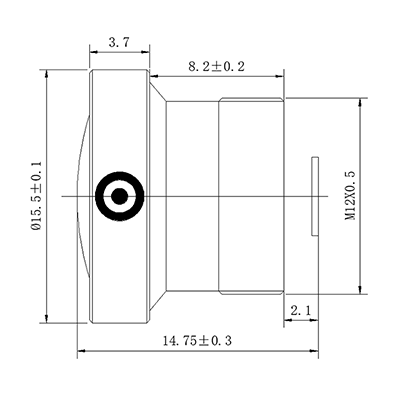
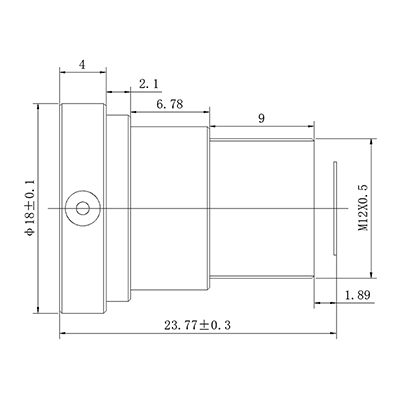
All three Towin TOF lens models (S08012004812IR, S04112009316IR, S01714012013IRB9) feature hardware compatible with active alignment technology. Below is a parameter comparison and technical analysis:
1. Core Parameter Comparison of Three Towin TOF Lens
| Parameter Dimension | S08012004812IR | S04112009316IR | S01714012013IRB9 |
| Model | S08012004812IR | S04112009316IR | S01714012013IRB9 |
| Effective Focal Length (E.F.L.) | 8.0mm | 4.1mm | 1.7mm |
| Diagonal Field of View (D.F.O.V.) | 60° | 120° | 147° |
| Horizontal Field of View (H.F.O.V.) | 48° | 93° | 120° |
| Resolution | 640×480 | 320×480 (nominal) | 640×480 (5.6μm) |
| Aperture (FNo.) | F1.2 | F1.6 | F1.3 |
| Maximum Distortion Rate | < -10% | < -41% (optical) / -13% (TV) | < -59% |
| Sensor Size | 1/2″ | 1/2″ | 1/4″ |
| IR Filter | 940nm BPF | – | 940nm Bandpass Filter |
| Mount Interface | M12×0.5 | M12×0.5 | M12×0.5 |
| Optical Structure | – | 6G+1ASPG | – |
| Total Length (T.T.L.) | 23.7mm | 23.50mm | 14.84mm |
| Core Features | Low distortion, security-specific | Wide angle, uniform image quality | Ultra-wide angle, 3D scanning-specific |
2. Product Technical Analysis & Active Alignment Adaptability
S08012004812IR: Low-Distortion Security-Specific TOF Lens
- Core Highlights: Distortion rate < -10% (industry-leading low distortion), F1.2 large aperture (excellent performance in low-light environments), 940nm IR filter (resists ambient light interference);
- Active Alignment Value: The low-distortion feature requires active alignment to correct optical center deviations, avoiding target distance miscalculations in security scenarios and ensuring precise depth data within the 60° field of view.
S04112009316IR: Wide-Angle Universal TOF Lens
- Core Highlights: 120° wide field of view, 6G+1ASPG optical structure (enhances image uniformity), manual focus (adapts to multi-distance scenarios);
- Active Alignment Value: Wide-angle lenses are prone to edge distortion. Active alignment dynamically adjusts the lens angle to ensure consistent depth precision within the 93° horizontal field of view, making it suitable for smart homes and large-area surveillance.
S01714012013IRB9: Ultra-Wide Angle TOF Lens for 3D Scanning
- Core Highlights: 147° ultra-wide field of view, 1.7mm short focal length (wide coverage at close range), 940nm bandpass filter (reduces interference);
- Active Alignment Value: High distortion (-59%) caused by the ultra-wide angle requires active alignment to optimize edge image quality. It also ensures precise alignment between the IR filter and sensor, improving coordinate accuracy for 3D scanning and tracking positioning.
TOF Lens Application Scenarios & Advantages
1. Core Application Scenarios
- Security Surveillance: S08012004812IR’s low distortion and large aperture make it ideal for residential areas, factories, and shopping malls, enabling precise detection of target distances and movement trajectories;
- 3D Scanning & Modeling: S01714012013IRB9’s ultra-wide angle and high resolution suit industrial part inspection, architectural modeling, and cultural relic digitization;
- Smart Homes: S04112004812IR’s wide angle supports human body sensing, gesture control, and collision avoidance for robot vacuums;
- Industrial Automation: All three models support close-range depth sensing (minimum object distance ≥ 0.2m), suitable for part positioning, assembly inspection, and robot vision guidance;
- VR/AR Devices: S01714012013IRB9’s ultra-wide angle and lightweight design (total length 14.84mm) enhance spatial positioning accuracy and immersion.
2. Core Technical Advantages
- High depth measurement precision: Active alignment achieves micron-level assembly with depth error < ±3%;
- Strong environmental adaptability: Large aperture + IR filter design supports low-light, outdoor, and other complex environments;
- Comprehensive field of view coverage: From 60° standard angle to 147° ultra-wide angle, adapting to diverse scenarios;
- Excellent batch consistency: Active alignment ensures uniform performance across each lens, reducing mass production defect rates;
- Easy integration: M12×0.5 standard interface is compatible with mainstream TOF sensor modules, simplifying device integration and maintenance.
Low-distortion M12 TOF lens
FAQs
Q1: Will active alignment technology increase the cost of TOF lenses?
A1: It will slightly increase hardware (testing equipment) and time costs, but can boost product yield to over 95%, reducing long-term comprehensive costs—ideal for mid-to-high-end scenarios.
Q2: Which Towin lens is suitable for indoor low-light security?
A2: The S08012004812IR is preferred, with its F1.2 large aperture and 940nm IR filter delivering clear depth sensing in low-light environments and low distortion preventing image deformation.
Q3: Can active alignment improve TOF lens distortion?
A3: Yes. Active alignment corrects “additional distortion” caused by assembly, ensuring the distortion rate stays within the nominal range when combined with the lens’s inherent optical design.
Q4: What are the advantages of the M12 interface?
A4: The M12×0.5 is an industry-standard interface with strong compatibility, directly adapting to mainstream TOF sensor modules and simplifying device integration and post-maintenance.
Q5: Why do ultra-wide angle TOF lenses rely more on active alignment?
A5: Edge light in ultra-wide angle lenses is susceptible to assembly deviations, leading to field-of-view shifts and excessive distortion. Active alignment dynamically compensates for these deviations to ensure consistent precision across the entire field of view.
Conclusion
The depth sensing performance of TOF lenses is the “dual result” of optical design and assembly precision, with active alignment technology being the key to breaking through assembly precision bottlenecks. Through real-time data feedback and dynamic calibration, active alignment not only addresses the low-distortion, wide-angle, and high-precision requirements of TOF lenses but also ensures batch production consistency.
Towin’s three TOF lens models cover low-distortion, wide-angle, and ultra-wide angle scenarios. Their hardware parameters (large aperture, IR filter, standard interface) are highly compatible with active alignment technology, providing cost-effective solutions for security, industrial, smart home, and 3D scanning applications.
As 3D vision technology becomes more widespread, TOF lens application scenarios will continue to expand, and active alignment technology will evolve toward “higher precision and efficiency.” Choosing TOF lenses compatible with active alignment technology is a critical decision to ensure product performance and enhance market competitiveness.