


Machine vision applications have different optical requirements. A lens used for object recognition may prioritize field of view and compact integration, while an inspection system may require higher resolution, controlled distortion, and consistent image quality across the entire sensor. Selecting an unsuitable lens can result in insufficient image detail, inaccurate object positioning, poor edge performance, or mechanical integration problems.
This guide explains how to evaluate an M12 lens for different machine vision applications, compare important optical specifications, and select a suitable configuration based on real engineering requirements. It also includes a practical selection example to help engineers and OEM manufacturers understand the decision-making process.
1. Why Are M12 Lenses Used in Machine Vision?
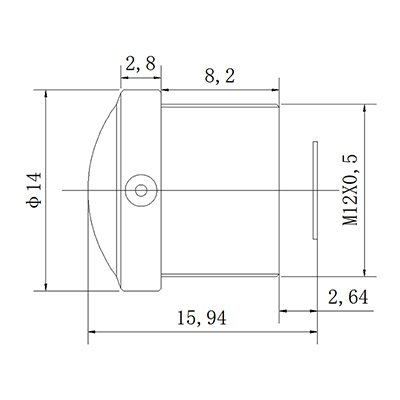
M12 lenses, also known as S-Mount or board lenses, use a standard M12×0.5 threaded interface. Their compact dimensions make them suitable for camera modules and embedded imaging systems where installation space, weight, and mechanical integration are important considerations.
Compared with larger industrial lens assemblies, M12 lenses can provide a compact optical solution for applications that do not require the size or optical configuration of a larger lens system.
1.1 Compact Design for Embedded Vision Systems
The small mechanical footprint of an M12 lens makes it useful for PCB-mounted cameras, embedded AI cameras, compact inspection devices, and robotic vision modules. It can help equipment manufacturers integrate imaging components into space-constrained products.
1.2 Multiple Optical Configurations
M12 lenses are available in different focal lengths, sensor formats, apertures, and optical designs. Depending on the product range, engineers can evaluate:
- Standard M12 lenses for general imaging.
- Wide-angle M12 lenses for larger scene coverage.
- Low-distortion M12 lenses for applications requiring more consistent image geometry.
- High-resolution M12 lenses for detailed imaging.
- Fisheye M12 lenses for panoramic imaging.
- Automotive M12 lenses for compact vehicle imaging systems.
Explore TOWIN M12 / S-Mount Lenses to compare available optical configurations and product specifications.
1.3 When Is an M12 Lens a Suitable Choice?
An M12 lens is worth evaluating when a machine vision project requires:
- A compact and lightweight optical assembly.
- Integration with an M12-compatible camera module.
- A suitable combination of sensor coverage and field of view.
- Optical performance that meets the required inspection or recognition accuracy.
- A practical solution for embedded or space-constrained imaging systems.
However, an M12 lens is not automatically suitable for every industrial inspection task. Applications requiring large image circles, demanding measurement accuracy, or specialized optical configurations may need a C-Mount or telecentric lens instead.
2. Key Optical Requirements When Choosing an M12 Lens
Before selecting an M12 lens, engineers should define the imaging requirements of the complete machine vision system. The following parameters are particularly important.
2.1 Sensor Size and Image Circle
The first step is to confirm the camera sensor format and its actual active imaging dimensions.
The lens image circle must cover the active sensor area. If the image circle is insufficient, the captured image may show dark corners, vignetting, or incomplete image coverage.
| Parameter | What to Check | Why It Matters |
|---|---|---|
| Sensor Format | 1/3″, 1/2.5″, 1/2.3″, 1/1.8″, etc. | Determines the required image coverage. |
| Sensor Dimensions | Active width and height in mm | Used for FOV calculations. |
| Image Circle | Lens image coverage | Prevents vignetting. |
| Pixel Size | Pixel pitch in μm | Influences optical resolution requirements. |
Do not assume that every M12 lens supports the same sensor size. Always verify the image format in the product datasheet.
For more information, read the TOWIN Image Sensor Guide.
2.2 Field of View, Working Distance, and Focal Length
Field of view (FOV) defines the real-world area captured by the camera. In machine vision, the required FOV should be determined by the target dimensions and inspection process.
For example:
- A wide FOV may be needed to capture an entire component or inspection area.
- A narrower FOV may be preferable when detecting small features.
- A longer working distance may require a different focal length to achieve the same target coverage.
For an approximate thin-lens calculation under relatively low-magnification conditions, focal length can be estimated using:
Focal Length ≈ (Sensor Width × Working Distance) / Horizontal FOV
All dimensions should use consistent units. This relationship is a preliminary estimate, not a substitute for checking the actual optical design and product datasheet.
Use the TOWIN FOV Calculator to estimate the relationship between sensor dimensions, focal length, working distance, and field of view.
For a more detailed explanation, see How to Choose a Lens Based on Field of View.
2.3 Resolution and MTF Performance
Resolution is especially important when a machine vision system needs to identify small defects, read characters, inspect electronic components, or measure object dimensions.
However, matching the lens megapixel rating to the camera megapixel rating is not enough to guarantee image quality.
Engineers should also evaluate:
- Sensor pixel size.
- Lens resolving capability.
- MTF performance.
- Center and edge sharpness.
- Image contrast.
- Illumination and exposure conditions.
MTF (Modulation Transfer Function) describes how effectively an optical system reproduces contrast at different spatial frequencies. It helps engineers evaluate whether a lens can reproduce the fine details required by the inspection system.
A high-resolution camera paired with an unsuitable lens may not deliver the expected imaging performance. For demanding applications, evaluate the optical performance across the full image field rather than relying on the megapixel specification alone.
Learn more in the TOWIN Optical Design Guide.
2.4 Distortion and Measurement Accuracy
Lens distortion changes the geometric relationship between an object and its captured image. Two common types are barrel distortion and pincushion distortion.
Distortion may be acceptable for some general recognition applications. However, it can become important in systems that depend on accurate object positioning, dimensional inspection, image alignment, or geometric measurement.
| Application | Distortion Consideration |
|---|---|
| General Object Detection | Evaluate according to recognition requirements. |
| Robotics Positioning | Consider geometric consistency and calibration. |
| PCB Inspection | Evaluate distortion and edge imaging performance. |
| Dimensional Measurement | Define a distortion tolerance based on measurement accuracy. |
| Precision Metrology | Consider specialized low-distortion or telecentric optics. |
A low-distortion specification alone does not guarantee measurement accuracy. Working distance, camera alignment, calibration, lens resolution, and mechanical stability also affect the final result.
For further technical information, visit the Lens Distortion Guide.
For applications that require controlled geometric imaging, engineers can also explore TOWIN Low Distortion Lenses.
2.5 Aperture, Light Sensitivity, and Depth of Field
The aperture determines how much light enters the optical system. It is commonly expressed as an F-number.
A smaller F-number generally allows more light to reach the sensor, which can help in low-light environments or when shorter exposure times are required.
However, aperture also affects depth of field and optical performance. A wider aperture may reduce depth of field, while stopping down the aperture can increase depth of field within practical limits.
When choosing an M12 lens, consider:
- Available lighting intensity.
- Object movement and exposure time.
- Required depth of field.
- Target surface characteristics.
- Camera sensor sensitivity.
For a broader introduction, read Lens Basics for Machine Vision.
2.6 Mechanical Compatibility and Environmental Conditions
Optical specifications must also match the physical camera design.
Before finalizing an M12 lens, verify the following:
- M12×0.5 thread compatibility.
- Total track length (TTL).
- Back focal distance and sensor positioning.
- Lens holder dimensions.
- Minimum object distance (MOD).
- Operating temperature range.
- Vibration and shock requirements.
- Dust and moisture protection where applicable.
For automotive and outdoor imaging applications, environmental performance and mechanical stability should be confirmed against the actual project requirements rather than assumed from the M12 mount designation.
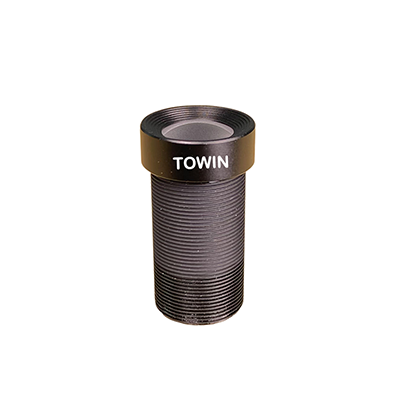
25mm M12 low-distortion lens
3. How to Choose an M12 Lens for Different Machine Vision Applications
Different machine vision applications require different combinations of optical performance. Instead of selecting a lens based on one specification, engineers should begin with the inspection objective and identify the parameters that matter most.
3.1 Compact Industrial Inspection
Compact inspection systems are often used to identify product defects, verify component placement, inspect packaging, and recognize small objects.
Important selection factors include:
- Resolution sufficient for the smallest feature being inspected.
- Appropriate FOV for the target area.
- Working distance and installation space.
- Distortion control where geometric accuracy is important.
- Consistent image quality across the required sensor area.
A high-resolution or low-distortion M12 lens may be worth evaluating when the camera must remain compact. However, for demanding dimensional inspection, compare the available M12 specifications with industrial C-Mount or telecentric alternatives.
3.2 Robotics and Embedded Vision
Robotics systems often use compact cameras for object recognition, navigation, positioning, and visual guidance.
In these systems, lens selection should consider:
- Camera size and installation constraints.
- Required horizontal and vertical FOV.
- Working distance and target position.
- Distortion and calibration requirements.
- Image quality under changing lighting conditions.
Wide-angle M12 lenses can be considered when a larger scene needs to be captured, while lower-distortion designs may be more appropriate when image geometry is important.
Explore TOWIN Robotics Vision Solutions for more information about optical requirements in robotic imaging systems.
3.3 Automotive and Surround-View Imaging
Automotive imaging systems often have strict requirements for size, field of view, environmental stability, and image performance.
For surround-view and compact vehicle camera systems, an M12 automotive lens may be evaluated based on:
- Required horizontal and diagonal FOV.
- Sensor format and resolution.
- Optical distortion characteristics.
- Operating temperature range.
- Vibration resistance and mechanical stability.
- Day and night imaging requirements.
Wide-angle or fisheye designs may be useful for broad scene coverage, but the appropriate optical design depends on the camera position and image processing requirements.
Browse TOWIN M12 / S-Mount Lens Products to review available automotive and wide-angle lens configurations.
3.4 Smart Security and AI Vision
Compact AI cameras and smart security devices use M12 lenses for object recognition, people detection, monitoring, and embedded image processing.
Depending on the application, engineers should evaluate:
- FOV and monitoring coverage.
- Resolution and target detail.
- Low-light performance.
- IR correction for infrared imaging.
- Day/night focus stability.
- Lens dimensions and camera integration.
For systems using infrared illumination, verify the required wavelength and optical performance rather than relying only on visible-light specifications.
Learn more about TOWIN Smart Security Solutions.

Low-distortion 5-Megapixel 2/3″ M12 lens
4. A Practical Example: Selecting an M12 Lens for Compact Machine Vision Inspection
To understand the selection process, consider a hypothetical compact inspection camera with the following requirements.
| Parameter | Example Requirement |
|---|---|
| Sensor Format | 1/2.3″ |
| Sensor Resolution | 8MP |
| Sensor Active Width | 6.17 mm (assumed) |
| Working Distance | 150 mm |
| Required Horizontal FOV | 100 mm |
| Application | Compact object inspection |
| Mount | M12×0.5 |
Step 1: Confirm Sensor Compatibility
The first requirement is to identify the actual sensor dimensions and confirm that the candidate lens image circle covers the active sensor area.
In this example, the assumed sensor width is 6.17 mm. The lens must also provide suitable optical performance for the camera’s pixel size and resolution.
Step 2: Calculate the Approximate Focal Length
Using the simplified focal length relationship:
f ≈ (Sensor Width × Working Distance) / Horizontal FOV
Substituting the example values:
f ≈ (6.17 × 150) / 100
f ≈ 9.26 mm
This result provides an initial focal length estimate. It is not a confirmed product recommendation. At this relatively close working distance, the actual optical conjugates, principal plane position, distortion, and lens design should be considered during final verification.
Step 3: Evaluate Optical Resolution and Distortion
Because this camera uses an 8MP sensor, the selected lens must provide sufficient resolving capability for the sensor’s pixel size and the smallest inspection feature.
If the system measures object dimensions, distortion should also be evaluated against the required measurement tolerance.
Step 4: Check Mechanical Integration
Even if the focal length and optical performance are suitable, the lens must fit the camera housing and holder.
Verify TTL, thread engagement, sensor positioning, MOD, and the available installation space before confirming the model.
Step 5: Validate the Complete Camera and Lens System
The final selection should be tested with the actual sensor, lighting, target, and mechanical configuration.
Evaluate image sharpness, edge performance, distortion, exposure, and repeatability under the intended operating conditions.
This example demonstrates that M12 lens selection is a system-level decision. A theoretical focal length is only the starting point; the final lens must satisfy the complete imaging requirement.
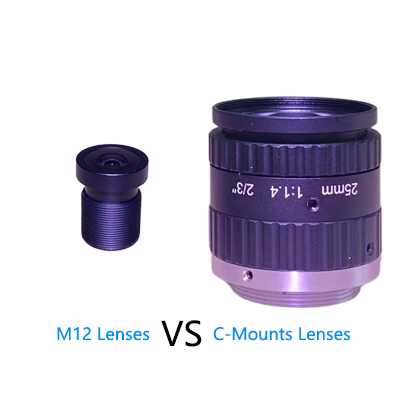
5. M12 vs. C-Mount vs. CS-Mount: Which Lens Mount Should You Choose?
M12 is not the only option for industrial imaging systems. C-Mount and CS-Mount lenses may be more suitable depending on the camera design and optical requirements.
| Comparison | M12 / S-Mount | C-Mount | CS-Mount |
|---|---|---|---|
| Thread Interface | M12×0.5 | 1-32 UNF | 1-32 UNF |
| Flange Focal Distance | Depends on optical assembly | 17.526 mm | 12.526 mm |
| Design Priority | Compact integration | Industrial optical flexibility | Compatible camera integration |
| Typical Applications | Embedded vision, compact cameras, robotics | Machine vision, inspection, factory automation | CCTV and compatible IP cameras |
| Selection Focus | Image circle, TTL, FOV, optical performance | Sensor format, resolution, FOV, optical design | Flange distance and camera compatibility |
When Should You Choose an M12 Lens?
- The camera has a compact M12-compatible interface.
- Space and weight are important design constraints.
- The available M12 optical configurations meet the required image quality.
- The application uses embedded or board-level camera modules.
When Should You Consider a C-Mount Lens?
- The project requires a broader range of industrial optical configurations.
- The camera uses a C-Mount interface.
- The application requires larger image formats or specialized optical performance.
- The system needs a different mechanical or optical architecture.
Explore TOWIN C-Mount Industrial Lenses for machine vision and industrial inspection applications.
When Should You Consider a CS-Mount Lens?
- The camera is designed for a CS-Mount interface.
- The application uses compatible CCTV or IP camera hardware.
- The optical and mechanical specifications match the camera requirements.
Browse TOWIN CS-Mount Lenses to compare available configurations.
There is no universally superior mount. The right choice depends on the camera interface, sensor, installation space, and required optical performance.
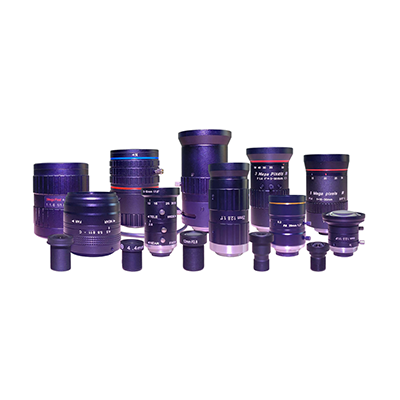
M12 vs C Mount vs CS Mount lens
6. Common Mistakes When Selecting an M12 Lens for Machine Vision
Even when the basic lens specifications appear suitable, several common selection mistakes can affect the final imaging result.
1. Choosing a Lens Based Only on Focal Length
Focal length alone cannot determine whether a lens is suitable. Sensor size, FOV, working distance, and distortion must also be considered.
2. Ignoring Image Circle Coverage
An M12 lens must cover the camera sensor. An insufficient image circle can cause vignetting and unusable image corners.
3. Matching Megapixels Without Checking MTF
A megapixel rating does not fully describe optical performance. Check pixel size, MTF, contrast, and edge sharpness.
4. Overlooking Distortion Requirements
Distortion may have little impact on some recognition tasks but can affect dimensional measurement and geometric inspection.
5. Ignoring Mechanical Compatibility
Thread type, TTL, sensor position, lens holder dimensions, and working distance must all be checked before integration.
6. Selecting a Lens Without Testing the Complete System
A lens should be evaluated with the actual camera, illumination, target, and operating environment. Theoretical specifications cannot replace application validation.
7. Frequently Asked Questions About M12 Lenses for Machine Vision
Q1: What is the most important factor when choosing an M12 lens for machine vision?
A: There is no single parameter that determines the right lens. Sensor compatibility, FOV, working distance, resolution, distortion, and mechanical requirements should be evaluated together according to the application.
Q2: Can an M12 lens be used for industrial inspection?
A: Yes. M12 lenses can be used in compact inspection systems when their optical performance meets the required resolution, FOV, distortion, and sensor coverage. For demanding precision measurement, compare M12 options with C-Mount or telecentric alternatives.
Q3: Can an M12 lens support an 8MP or 12MP camera?
A: Yes. Some M12 lenses are designed for higher-resolution sensors. However, actual imaging performance also depends on pixel size, MTF, image circle, and optical quality across the sensor.
Q4: Is a low-distortion M12 lens necessary for machine vision?
A: Not every application requires a low-distortion lens. However, applications involving dimensional measurement, geometric inspection, and precise object positioning may require tighter distortion control.
Q5: What is the difference between an M12 lens and a C-Mount lens?
A: M12 lenses prioritize compact mechanical integration, while C-Mount lenses are widely used in industrial imaging systems with a broad range of optical configurations. The appropriate choice depends on the camera interface and imaging requirements.
Q6: Can TOWIN provide customized M12 lenses?
A: TOWIN offers optical product development and OEM/ODM support. Depending on project feasibility, requirements may include focal length, FOV, sensor coverage, distortion, optical configuration, and mechanical dimensions. Contact the engineering team to discuss your specific project.
Q7: What information should I provide to a lens manufacturer?
A: Provide the camera or sensor model, sensor size, resolution, pixel size, required FOV, working distance, application, distortion tolerance, aperture, mounting dimensions, and environmental requirements. These details help engineers evaluate suitable lens configurations.
8. Conclusion: Choose the Right M12 Lens for Your Machine Vision Application
Choosing an M12 lens requires a complete understanding of the camera sensor, inspection target, working distance, field of view, optical resolution, distortion, and mechanical installation requirements.
For compact embedded vision and inspection systems, M12 lenses can provide a practical optical solution when their specifications match the application. However, demanding measurement and industrial imaging projects should also consider alternative optical configurations when necessary.
By evaluating the complete imaging system rather than focusing on a single specification, engineers can reduce integration risks and select a more suitable lens for their project.
How to Choose an M12 Lens for Machine Vision ultimately comes down to matching optical performance, mechanical compatibility, and real application requirements.
Need Help Selecting an M12 Lens for Your Project?
Every machine vision project has different optical and mechanical requirements. TOWIN provides a range of M12 / S-Mount industrial lenses for embedded vision, robotics, automotive imaging, and compact imaging systems.
Whether you need a standard M12 lens, a high-resolution configuration, or a low-distortion optical solution, our team can help evaluate suitable options based on your project specifications.
To help us understand your requirements, please share:
- Camera or sensor model.
- Sensor size and resolution.
- Required field of view.
- Working distance.
- Application and inspection objective.
- Distortion and resolution requirements.
- Mechanical and environmental constraints.
Explore TOWIN M12 / S-Mount Lenses
Contact TOWIN for Industrial Lens Selection and Custom Optical Solutions