


How to Choose the Right Focal Length for Machine Vision
09/15/2026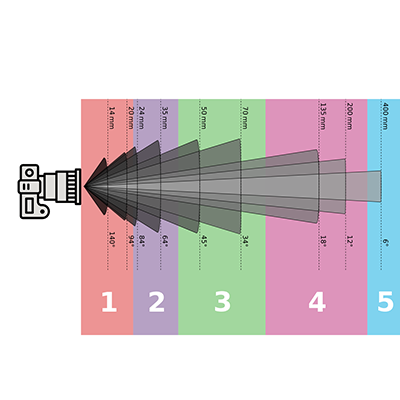
How to Choose a Lens Based on Field of View is a practical question for engineers designing machine vision, industrial inspection, robotics, and automated imaging systems. The required field of view (FOV) determines how much of the target must appear in the image, but FOV alone is not enough to select the correct industrial lens.
To select a suitable lens, you also need to consider sensor size, working distance, focal length, resolution, distortion, image circle, and lens mount. A lens that provides the correct FOV may still be unsuitable if it cannot resolve the required detail, does not cover the camera sensor, or introduces excessive distortion.
This guide explains how to move from a required field of view to an appropriate machine vision lens. It covers the key parameters, practical calculations, focal length selection, lens type comparison, and common mistakes to avoid.
For a broader overview of optical parameters, see TOWIN’s Lens Basics.
Quick Answer: How Do You Choose a Lens Based on Field of View?
To choose a lens based on field of view, first determine the physical area that the camera must capture. Then identify the camera sensor size and working distance. These parameters can be used to determine the focal length required to achieve the target FOV.
After calculating the approximate focal length, verify the actual lens specifications, including:
- Sensor compatibility
- Horizontal and vertical FOV
- Working distance
- Optical resolution
- Distortion
- Image circle
- Aperture
- Lens mount
- Application requirements
The practical lens selection process is:
Target Size → Required FOV → Sensor Size → Working Distance → Focal Length → Resolution → Distortion → Lens Type → Final Lens Selection
You can use TOWIN’s FOV Calculator to calculate the viewing area from your camera and lens parameters, or use the Focal Length Calculator when you need to determine the focal length required for a specific FOV or coverage area.
What Does FOV Mean for Lens Selection?
Field of view, or FOV, describes the physical area captured by a camera and lens combination. In machine vision, it is usually considered in horizontal, vertical, or diagonal dimensions.
For example, if an inspection system needs to capture an object that is 300 mm wide and 200 mm high, the lens must provide sufficient FOV to include the entire target and an appropriate inspection margin.
However, knowing that the required FOV is approximately 300 × 200 mm does not immediately tell you which lens to use.
A 12 mm lens, 16 mm lens, or 25 mm lens may produce different FOVs depending on the camera sensor and working distance. Therefore:
FOV is a key lens-selection requirement, not a standalone lens specification.
TOWIN’s Lens Selection Guide uses FOV together with sensor size, working distance, focal length, resolution, and distortion to establish a complete lens-selection process.
Why Is FOV Important When Choosing an Industrial Lens?
The lens must capture enough of the target for the machine vision system to perform its intended inspection or recognition task. If the FOV is too narrow, part of the target may be outside the image. If the FOV is unnecessarily wide, the target may occupy fewer pixels and important details may become harder to resolve.
For machine vision applications, the goal is therefore not simply to obtain the widest possible FOV. The goal is to obtain an appropriate FOV that provides complete coverage while making efficient use of the camera’s available resolution.
| FOV Condition | Potential Result | Selection Consideration |
|---|---|---|
| FOV too narrow | Part of the target may be cropped | Consider a shorter focal length or greater working distance |
| FOV too wide | Target occupies fewer pixels | Consider a longer focal length or optimized working distance |
| FOV properly matched | Target fills an appropriate portion of the image | Balance coverage, resolution, and inspection margin |
| Correct FOV but high distortion | Geometric accuracy may be reduced | Consider low-distortion optics for measurement applications |
The correct FOV therefore needs to be considered together with image resolution and optical quality rather than treated as an isolated number.
What Parameters Affect Lens FOV?
Several parameters work together to determine the FOV produced by a machine vision lens.
| Parameter | Effect on FOV | Why It Matters |
|---|---|---|
| Sensor Size | Affects the image area captured by a given focal length | Determines the relationship between focal length and FOV |
| Focal Length | Shorter focal lengths generally provide wider FOV | Controls viewing angle and image magnification |
| Working Distance | Changing distance changes the physical coverage | Must match the mechanical installation |
| Object Size | Determines the minimum required viewing area | Defines the target FOV |
| Lens Design | Can affect actual FOV and image geometry | Important for wide-angle and specialized optics |
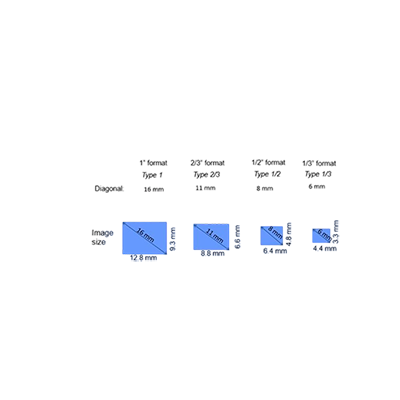
For more information about sensor formats and their relationship to industrial lenses, see the TOWIN Sensor Guide.
Sensor Size
Sensor size directly affects the FOV produced by a given focal length. A larger sensor generally captures a larger image area when used with the same focal length and working distance.
This means that a 12 mm lens does not have one universal FOV. Its actual FOV depends on the sensor it is paired with.
The lens image circle must also be large enough to cover the active sensor area. Otherwise, the system may experience vignetting or incomplete image coverage.
Focal Length
Focal length determines the angular relationship between the lens and the scene. For the same sensor and working distance, a shorter focal length generally produces a wider FOV, while a longer focal length generally produces a narrower FOV.
This is why focal length becomes one of the key parameters after the required FOV has been established.
If you want to understand the focal-length side of the selection process in greater detail, see How to Choose the Right Focal Length for Machine Vision.
Working Distance
Working distance (WD) is the distance between the front of the lens and the target object. It affects the relationship between focal length, magnification, and physical coverage.
The same target FOV may require a different focal length when the camera is installed at a different working distance.
Object Size
The physical size of the object determines the minimum FOV required by the imaging system. The required FOV should normally be slightly larger than the target so that the complete object remains inside the image.
How to Determine the Required FOV
Before choosing a lens, define exactly how much of the target needs to be visible.
Suppose a machine vision system needs to inspect an object measuring:
- Object width: 300 mm
- Object height: 200 mm
The required FOV should not necessarily be exactly 300 × 200 mm. A suitable inspection margin may be required to account for object positioning, mechanical variation, and the actual inspection area.
For example, if a 10% margin is required:
| Parameter | Target | Example Required FOV |
|---|---|---|
| Horizontal | 300 mm | 330 mm |
| Vertical | 200 mm | 220 mm |
The exact margin depends on the application. The important principle is to define the actual inspection area before selecting the lens.
If you already know your camera and lens parameters, use the FOV Calculator to estimate the resulting horizontal, vertical, and diagonal FOV.
How to Choose a Lens Based on Field of View
How to Choose a Lens Based on Field of View becomes much easier when the selection process is broken into clear engineering steps.
Step 1: Define the Inspection Area
Start with the physical dimensions that the camera must capture.
Record:
- Target width
- Target height
- Required inspection margin
- Object positioning variation
- Area that must remain visible during operation
The result is your required horizontal and vertical FOV.
Step 2: Identify the Camera Sensor
Determine the sensor format and, when possible, the actual active sensor width and height.
Common industrial sensor formats include 1/3″, 1/2″, 2/3″, 1″, 1.1″, and 4/3″. The actual dimensions should be used whenever available because nominal sensor formats do not always represent the exact active imaging area.
Also confirm that the selected lens has an image circle large enough for the sensor.
Step 3: Determine the Working Distance
Measure or define the distance between the lens and the target.
Mechanical constraints should be considered at this stage. Conveyor systems, robot arms, lighting, protective covers, machine structures, and moving components can all limit the available working distance.
Do not select a lens based on FOV alone without considering where the camera can physically be installed.
Step 4: Calculate the Required Focal Length
Once the sensor size, working distance, and required coverage are known, the required focal length can be estimated using a simplified geometric relationship:
f ≈ (S × WD) / W
Where:
- f = focal length
- S = sensor width
- WD = working distance
- W = required horizontal coverage width
For example, assume:
| Parameter | Value |
|---|---|
| Sensor width | 7.2 mm |
| Working distance | 500 mm |
| Required horizontal FOV | 250 mm |
The theoretical focal length is:
f ≈ (7.2 × 500) / 250 = 14.4 mm
This does not mean that a 14.4 mm lens must be used. It means that the optical design should be compared with available lenses around this focal-length range.
TOWIN’s Focal Length Calculator can calculate the theoretical focal length from either required coverage or horizontal FOV. The calculator also compares the calculated result with matching TOWIN industrial lenses.
Step 5: Compare Actual Lens Specifications
After calculating the approximate focal length, compare actual lens specifications rather than selecting the first lens with a similar focal length.
| Lens Parameter | What to Check |
|---|---|
| Focal Length | Does it provide the required FOV at the actual WD? |
| Sensor Compatibility | Does the image circle cover the sensor? |
| Resolution | Can the lens resolve the required image detail? |
| Distortion | Is geometric accuracy sufficient? |
| Aperture | Does it provide adequate light and depth of field? |
| Mount | Is it mechanically compatible with the camera? |
| Environmental Requirements | Does the lens meet temperature, vibration, or protection requirements? |
This final comparison is essential because two lenses with similar focal lengths can have significantly different optical characteristics.
FOV vs Focal Length: What Is the Relationship?
For the same sensor size and working distance, focal length and FOV generally move in opposite directions.
| Focal Length Direction | FOV Direction | General Imaging Effect |
|---|---|---|
| Shorter | Wider | More of the scene is captured |
| Medium | Moderate | Balanced coverage and magnification |
| Longer | Narrower | Smaller areas appear larger on the sensor |
For example, if the required FOV is too narrow with the current lens, a shorter focal length may increase coverage. If too much of the scene is visible and the target occupies too few pixels, a longer focal length may provide a better match.
However, changing focal length without checking sensor size and working distance can lead to incorrect selection.
How Sensor Size Changes Lens Selection
Sensor size must be considered together with FOV and focal length. For a given FOV, a larger sensor generally requires a longer focal length than a smaller sensor under the same imaging geometry.
| Sensor Consideration | Lens Selection Impact |
|---|---|
| Small sensor | May require a shorter focal length for a given FOV |
| Medium sensor | Provides a broader range of industrial lens options |
| Large sensor | May require longer focal length for the same FOV |
| Sensor larger than lens image circle | May cause vignetting or incomplete coverage |
For a deeper explanation of sensor formats, pixel size, and sensor selection, see the TOWIN Sensor Guide.
How Working Distance Changes Lens Selection
Working distance is another reason why FOV cannot be used as the only lens-selection parameter.
Consider two systems that both require a horizontal FOV of 300 mm:
| System | Required FOV | Working Distance | Lens Requirement |
|---|---|---|---|
| System A | 300 mm | 300 mm | One focal-length range |
| System B | 300 mm | 600 mm | Different focal-length range |
The required FOV is identical, but the camera-to-target geometry is different. Therefore, the appropriate focal length can also be different.
This is why practical lens selection should follow:
FOV + Sensor Size + Working Distance → Focal Length
rather than simply:
FOV → Lens
How to Choose a Lens Type Based on FOV
Once the required FOV has been established, the next step is to determine which lens category is appropriate for the application.
| Imaging Requirement | Possible Lens Direction | Key Consideration |
|---|---|---|
| Very wide coverage | Wide Angle Lens | Coverage, distortion, and edge performance |
| Very wide-angle imaging with specialized geometry | Fisheye Lens | Very wide FOV and distortion characteristics |
| Compact embedded vision | M12 Lenses | Size, sensor coverage, and FOV |
| Industrial inspection | C-Mount Lenses | Resolution, sensor format, and optical performance |
| Security and camera systems | CS-Mount Lenses | FOV, camera compatibility, and application requirements |
| Precision measurement | Low Distortion Lens | Geometric accuracy and image quality |
These categories are starting points rather than automatic recommendations. The final lens should always be verified against the complete imaging requirements.
Wide FOV Does Not Always Mean Fisheye
A common mistake is to assume that any application requiring a wide FOV should use a fisheye lens.
Wide-angle and fisheye lenses serve different optical requirements. A fisheye design can provide an extremely wide viewing angle, but it also has distinctive distortion characteristics. A rectilinear wide-angle lens may be more appropriate when maintaining straighter image geometry is important.
For machine vision inspection, the decision should therefore consider:
- Required FOV
- Required image geometry
- Distortion tolerance
- Target position
- Resolution requirements
- Available working distance
For applications where distortion must be controlled, review TOWIN’s Low Distortion Lens options and Distortion Guide.
How to Choose a Low-Distortion Lens for Precision FOV Requirements
Having the correct FOV does not automatically guarantee measurement accuracy.
For example, a machine vision system may capture a complete 100 × 100 mm component, but if the lens introduces significant geometric distortion near the image edges, measured dimensions may differ from the actual object dimensions.
For applications such as:
- Dimensional measurement
- Metrology
- Precision inspection
- Object positioning
- Pattern measurement
distortion should be considered together with FOV.
A practical selection sequence is:
Required FOV → Sensor → Working Distance → Focal Length → Distortion Requirement → Lens Selection
See TOWIN’s Distortion Guide for more information about geometric distortion and industrial lens selection.
How to Choose M12, C-Mount, or CS-Mount Lenses
Lens mount selection should follow the optical requirements, camera interface, and application environment.
| Mount | Typical Direction | Common Application |
|---|---|---|
| M12 | Compact optical systems | Embedded vision, AI cameras, robotics, compact imaging |
| C-Mount | Industrial machine vision | Inspection, automation, high-resolution imaging |
| CS-Mount | Camera and security systems | Surveillance, IP cameras, security imaging |
For compact imaging systems, explore M12 Lenses; For industrial machine vision applications, see C-Mount Lenses; For security-oriented applications, explore CS-Mount Lenses.
Lens Selection Examples by Application
Machine Vision Inspection
Machine vision inspection normally requires enough FOV to cover the inspection area while maintaining sufficient pixel density on the target.
Important parameters include:
- Required FOV
- Sensor resolution
- Working distance
- Lens resolution
- Distortion
See TOWIN’s Machine Vision Solutions for application-specific imaging requirements.
Robotics Vision
Robotic vision often requires a balance between FOV, working distance, object position, and camera movement. A sufficiently wide FOV can help capture moving or variably positioned objects, but excessive FOV can reduce the number of pixels available for small targets.
Explore TOWIN’s Robotics Vision Solutions for more information.
Barcode and OCR Inspection
Barcode and OCR systems require enough FOV to capture the target while maintaining sufficient optical resolution for small characters and codes.
In these systems, selecting the widest possible FOV is not necessarily the best approach. The target should occupy enough of the sensor to preserve the required detail.
Precision Measurement
Precision measurement requires both appropriate FOV and controlled distortion. A lens should provide complete coverage while maintaining the geometric accuracy required by the measurement system.
Traffic Monitoring
Traffic monitoring can involve long working distances and relatively large observation areas. In such systems, FOV, focal length, resolution, aperture, and environmental requirements should be evaluated together.
See TOWIN’s Smart Traffic Solutions for related application requirements.
Common Mistakes When Choosing a Lens Based on FOV
1. Choosing a Lens Based Only on FOV
FOV is important, but it does not define the complete optical system. Sensor size, working distance, resolution, distortion, and mount must also be verified.
2. Ignoring Sensor Size
The same focal length can produce different FOVs with different sensor sizes. Always verify the actual sensor dimensions and lens image circle.
3. Ignoring Working Distance
A target FOV cannot be translated into a focal length without considering the imaging distance. Different working distances can require different focal lengths for the same FOV.
4. Making the FOV Exactly Equal to the Object Size
Some applications require an inspection margin. If the FOV is exactly the same size as the object, normal positioning variation may cause part of the target to leave the image.
5. Choosing the Widest FOV Possible
A wider FOV is not automatically better. If the target becomes too small within the image, the number of pixels representing important features may decrease.
6. Ignoring Distortion
Distortion may be acceptable for some detection tasks but can become critical for measurement and geometric inspection.
7. Assuming the Calculated Focal Length Is the Final Lens
Geometric calculations provide a starting point. Actual optical performance can vary because of lens design, distortion, sensor position, aperture, and mechanical tolerances.
TOWIN’s calculators also identify their calculated focal length and FOV as theoretical starting points rather than guaranteed final specifications.
TOWIN Lens Selection by Field of View
At TOWIN, FOV can be used as the starting point for selecting an industrial lens, but the final selection should consider the complete optical configuration.
The practical process is:
Required FOV → Sensor Size → Working Distance → Focal Length → Resolution → Distortion → Mount → Lens Category → Product
For a known camera and lens configuration, start with the FOV Calculator.
If you already know the required FOV or target coverage and need to determine the focal length, use the Focal Length Calculator.
Then review the Lens Selection Guide to verify sensor compatibility, resolution, distortion, working distance, and other optical parameters.
Depending on the application, you can then explore TOWIN’s M12 Lenses, C-Mount Lenses, CS-Mount Lenses, Wide Angle Lenses, or Low Distortion Lenses.
If the required combination of FOV, sensor, working distance, resolution, and mechanical interface is not available as a standard configuration, you can contact TOWIN to discuss the lens requirements.
Frequently Asked Questions
Q: How do I choose a lens based on field of view?
A: First determine the required horizontal and vertical FOV, then identify the sensor size and working distance. Use these parameters to calculate an approximate focal length and compare actual lenses based on FOV, resolution, distortion, image circle, aperture, and mount.
Q: What lens should I use for a wide field of view?
A: The appropriate lens depends on the required FOV, sensor size, working distance, and distortion tolerance. Wide-angle lenses can be suitable for broad coverage, while fisheye lenses may be considered when an extremely wide viewing angle is required and their distortion characteristics are acceptable.
Q: Does a shorter focal length provide a wider FOV?
A: Generally, yes. For the same sensor size and working distance, a shorter focal length produces a wider FOV, while a longer focal length produces a narrower FOV.
Q: How does sensor size affect lens FOV?
A: Sensor size changes the image area captured by the lens. For the same focal length and working distance, a larger sensor generally captures a wider field of view than a smaller sensor.
Q: How does working distance affect lens selection?
A: Working distance changes the imaging geometry. When the required FOV remains the same, changing the working distance can change the focal length required to achieve that FOV.
Q: Is a wider FOV always better for machine vision?
A: No. An excessively wide FOV can make the target occupy fewer pixels, which may reduce the available detail for inspection. The FOV should be large enough to capture the complete target while maintaining suitable image resolution.
Q: How do I choose a low-distortion lens based on FOV?
A: First determine the required FOV and sensor configuration, then calculate the focal length and compare lenses based on their actual distortion specifications. Low-distortion optics are particularly important for dimensional measurement and precision inspection.
Q: Can I determine the lens from FOV alone?
A: No. FOV alone is not sufficient. Sensor size, working distance, focal length, resolution, distortion, image circle, mount, and application requirements should all be considered before final lens selection.
Conclusion
How to Choose a Lens Based on Field of View starts with defining the physical area that must be captured, not simply selecting a lens with a particular focal length.
The most practical selection sequence is:
Target Size → Required FOV → Sensor Size → Working Distance → Focal Length → Resolution → Distortion → Lens Type → Final Lens
Once the required FOV is known, use the sensor size and working distance to determine an appropriate focal-length range. Then verify the actual lens for resolution, image circle, distortion, aperture, mount, and application requirements.
For quick calculations, use TOWIN’s FOV Calculator to determine the viewing area or the Focal Length Calculator to estimate the focal length required for a known FOV or coverage area.
For complete optical selection, the Lens Selection Guide can be used together with the appropriate TOWIN product categories and application solutions.
Ultimately, How to Choose a Lens Based on Field of View is not about finding the widest possible viewing angle. It is about matching the FOV to the target, sensor, working distance, resolution, distortion requirements, and overall imaging system so that the selected industrial lens delivers the coverage and image quality the application requires.