


12-Megapixel IR corrected CCTV lens
08/04/2025
S-Mount Lens for License Plate Recognition (LPR)
08/05/2025
Aperture is one of the most critical settings in photography, influencing everything from exposure to depth of field. But does aperture affect image sharpness? The answer is both straightforward and nuanced, depending on how you use your camera’s lens.
Does Aperture Affect Image Sharpness? The Science Behind the Lens
Aperture refers to the opening in a lens through which light passes. It’s measured in f-stops (e.g., f/1.8, f/8, f/16), with smaller numbers representing wider openings and larger numbers representing narrower ones. While aperture primarily controls exposure and depth of field, it also has a significant impact on image sharpness—but not always in the way you might expect.
How Aperture Influences Sharpness
1. Diffraction:
- When you stop down your aperture (use a higher f-number like f/16 or f/22), light waves bend around the edges of the aperture blades, a phenomenon called diffraction. This bending causes light to scatter slightly, reducing the overall sharpness of the image. While diffraction is subtle at moderate apertures, it becomes noticeable at very small openings, leading to softer details.
2. Lens Aberrations:
- Every lens has optical imperfections, such as chromatic aberration or spherical aberration, which can degrade image quality. At wider apertures (e.g., f/1.4 or f/2.8), these aberrations are more pronounced because more light is entering the lens at extreme angles. Stopping down the aperture slightly (e.g., to f/4 or f/5.6) can minimize these issues, resulting in sharper images.
3. Depth of Field and Focus:
- Aperture also affects depth of field (DoF), or the range of distance in an image that appears acceptably sharp. Wider apertures create a shallow DoF, making it easier to miss focus on moving subjects or intricate details. Narrower apertures increase DoF, ensuring more of the scene is in focus—but as mentioned earlier, this comes with the trade-off of diffraction at very small openings.
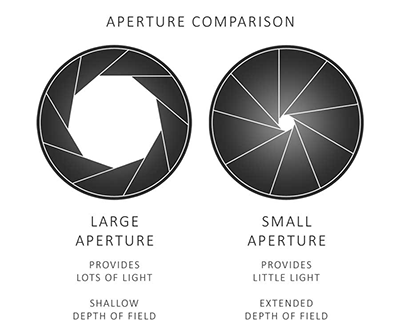
How Aperture Influences Sharpness
The Sweet Spot: Finding the Optimal Aperture for Sharpness
Most lenses have an “optimal aperture” where they produce the sharpest images. This sweet spot typically falls somewhere in the middle of the aperture range, often around f/5.6 to f/8 for many lenses. At these settings, you balance the reduction of lens aberrations with minimal diffraction, achieving the best possible sharpness.Recommended Reading:What is aperture in a camera lens?
To find your lens’s sweet spot:
- Take test shots at various apertures (e.g., f/2.8, f/4, f/5.6, f/8, f/11).
- Zoom in on the images to inspect detail sharpness.
- Compare the results to identify which aperture yields the crispest results.
Practical Tips for Maximizing Sharpness with Aperture
1. Avoid Extremes:
- Unless necessary for creative effect, avoid shooting at the widest or narrowest apertures your lens offers. For example, instead of using f/1.2 (which may introduce softness from aberrations), try f/2.8 or f/4. Similarly, instead of f/22 (which may suffer from diffraction), use f/11 or f/16.
2. Use a Tripod:
- At narrower apertures, longer exposure times are often required to compensate for reduced light. A tripod ensures your camera remains steady, preventing motion blur that could counteract the benefits of increased DoF.
3. Focus Carefully:
- When using wide apertures, precise focusing is essential because DoF is shallow. Use manual focus or your camera’s focus peaking feature to ensure critical elements are sharp. For landscapes, focus about one-third into the scene to maximize DoF.
4. Check Your Lens’s Performance:
- Not all lenses perform equally at every aperture. Some excel at wide openings, while others shine when stopped down. Research your lens’s reviews or conduct your own tests to understand its strengths and weaknesses.
5. Post-Processing Enhancements:
- Even with optimal aperture settings, minor sharpening in post-processing can enhance details. Use tools like Adobe Lightroom’s Sharpening sliders sparingly to avoid introducing artifacts.
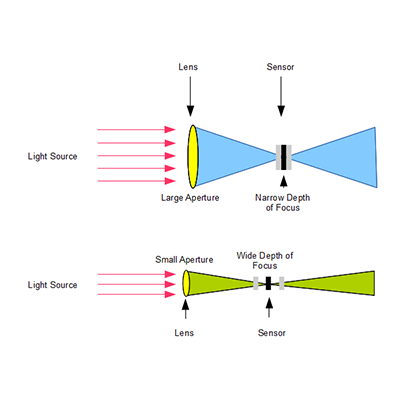
Optimal Aperture for Sharpness
Common Misconceptions About Aperture and Sharpness
Myth: “Wider apertures always produce softer images.”
- While wide apertures can introduce lens aberrations, they don’t inherently make images soft. Many high-end lenses perform exceptionally well at their maximum aperture, delivering sharp results with beautiful bokeh.
Myth: “Stopping down always improves sharpness.”
- While stopping down reduces aberrations, excessive stopping down (e.g., beyond f/16) introduces diffraction, which softens images. The key is finding the balance.
Myth: “Aperture is the only factor affecting sharpness.”
- Sharpness is influenced by multiple factors, including shutter speed, ISO, lens quality, and camera stability. Aperture is just one piece of the puzzle.
Conclusion
So, does aperture affect image sharpness? Absolutely—but understanding how it does so empowers you to make informed decisions behind the lens. By avoiding extremes, finding your lens’s sweet spot, and combining aperture knowledge with other sharpness-enhancing techniques, you can consistently capture images that are razor-sharp from corner to corner.