


High-clarity waterproof automotive lens
08/04/2025
Fisheye Lenses for CCTV Applications
08/04/2025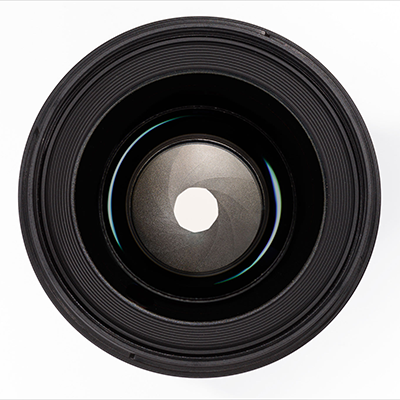
Aperture refers to the opening inside your camera lens through which light passes to reach the sensor. Think of it like the pupil of an eye—it widens in low light to let in more light and narrows in bright conditions to reduce exposure. This opening is measured in f-stops (e.g., f/1.4, f/2.8, f/8, f/16), with lower numbers indicating a wider aperture and higher numbers a narrower one.
For example, a lens set to f/1.4 has a much larger opening than one set to f/16, allowing significantly more light to hit the sensor. This direct relationship between aperture size and light intake is why adjusting your f-stop is one of the three pillars of exposure (alongside shutter speed and ISO).
How Aperture Affects Your Photos
1. Exposure (Brightness)
A wider aperture (low f-number) lets in more light, resulting in brighter images. Conversely, a narrow apertures (high f-number) reduces light, making photos darker. This is particularly useful in challenging lighting conditions. For instance, shooting indoors without a flash may require a wide aperture like f/2.8 to avoid underexposure.
2. Depth of Field (DoF)
Aperture’s most artistic effect is controlling depth of field—the range of sharpness in your image. A wide aperture (e.g., f/1.4) creates a shallow DoF, blurring the background and foreground while keeping the subject in focus. This technique is ideal for portraits, macro photography, or any scenario where you want to isolate your subject.
On the other hand, a narrow aperture (e.g., f/16) increases DoF, ensuring more of the scene is sharp. Landscape photographers often use this setting to capture intricate details from foreground rocks to distant mountains.
3. Sharpness and Diffraction
While narrow apertures expand DoF, they can introduce a phenomenon called diffraction. This occurs when light waves bend around the apertures blades, causing a slight loss of sharpness at very small openings (e.g., f/22). Most lenses perform best between f/5.6 and f/11, balancing DoF and clarity.

How Aperture Affects Your Photos
Practical Tips for Using Aperture Creatively
- Portrait Photography: Use a wide aperture (f/1.8 to f/2.8) to blur distracting backgrounds and draw attention to your subject’s face.
- Landscape Photography: Opt for a narrow aperture (f/8 to f/16) to keep everything from flowers to mountains in focus.
- Low-Light Situations: A wide aperture lets you shoot handheld in dim environments without raising the ISO, which can introduce noise.
- Astrophotography: The widest aperture (e.g., f/1.4) is crucial for capturing faint stars and the Milky Way.
Common Aperture Myths Debunked
Myth 1: “A lower f-number always means better quality.”
While wide apertures are great for low light and bokeh, lens quality varies. Some budget lenses may produce soft images at f/1.4, while premium lenses remain sharp. Test your gear to understand its sweet spot.
Myth 2: “You should always stop down to f/16 for landscapes.”
While narrow apertures increase DoF, they can soften images due to diffraction. Experiment with f/8 or f/11 for optimal sharpness.
Myth 3: “Aperture is the only setting that affects DoF.”
Depth of field also depends on your distance to the subject and the focal length of your lens. For example, a telephoto lens (200mm) at f/4 will have a shallower DoF than a wide-angle lens (24mm) at the same aperture.
Aperture vs. Other Camera Settings
Aperture works in tandem with shutter speed and ISO to control exposure. Here’s how they interact:
- Shutter Speed: Determines how long light hits the sensor. A fast shutter (1/1000s) freezes motion, while a slow one (1/30s) creates motion blur.
- ISO: Adjusts the sensor’s sensitivity to light. Higher ISO values (e.g., 3200) brighten images but add grain (noise).
To maintain a balanced exposure, changing the apertures requires adjusting one or both of these settings. For example, if you switch from f/2.8 to f/5.6 (reducing light by two stops), you’ll need to either slow the shutter speed by two stops or increase the ISO by two stops to compensate.Recommended Reading:3 Megapixel Large Aperture F1.8 for CCTV Lens

Apertures
Advanced Techniques: Hyperfocal Distance and Bokeh
- Hyperfocal Distance: This is the focus distance that ensures everything from half that distance to infinity remains sharp. It’s a favorite among landscape photographers using narrow apertures. Tools like the PhotoPills app can calculate this for you.
- Bokeh: The aesthetic quality of out-of-focus areas. Wide apertures with rounded blades produce smoother, creamier bokeh, while narrow apertures create harsher, hexagonal shapes.
Final Thoughts: Mastering Aperture for Stunning Results
Understanding what aperture is in a camera lens empowers you to take control of your photography. Whether you’re aiming for razor-sharp landscapes or creamy portraits, adjusting the f-stop is your gateway to creative expression. Experiment with different settings, study how light interacts with your lens, and don’t be afraid to break the rules once you grasp the basics.