


Pinhole lens 2.5mm IR HD CCTV M12 mount lens
11/14/2025
How does a C-Mount lens work?
11/17/2025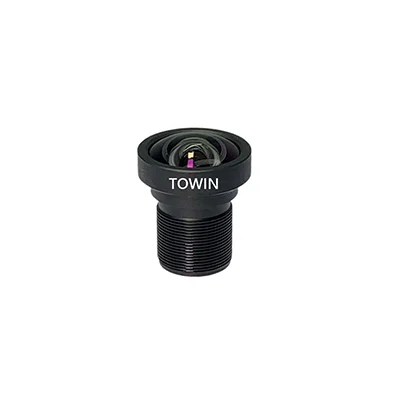
In M12 Lenses applications, the field of view (FoV) is a crucial consideration in camera systems. Whether for surveillance, robotics, or any project requiring precise vision, accurate calculation of the M12 Lens’s field of view maximizes system performance.
M12 Lens Fundamentals Analysis
In industrial and security fields, the compact M12 Lens is a high-quality optical component used in various imaging systems. In certain environments where larger lenses cannot be installed, the small and versatile M12 Lens becomes ideal for space-constrained environments. M12 Lenses primarily serve in machine vision, IoT devices, and surveillance cameras.
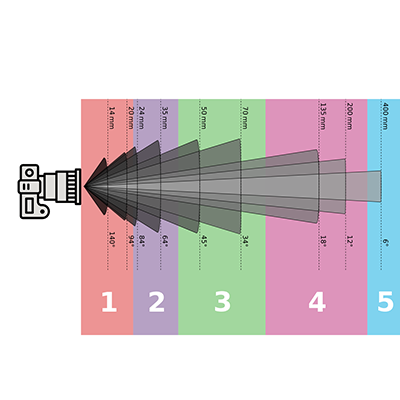
The visible area that a camera lens can capture is called the field of view. Understanding the size of a lens’s field of view is extremely helpful in how to use the lens. The Diagonal FoV Calculator for M12 Lenses can accurately calculate and determine the field of view that a camera can see through a specific M12 Lens, allowing for advance optimization of the field of view for the intended application.

Wide Angle M12 S-mount 3mm board lens
How to Calculate the Diagonal Field of View (FoV) of an M12 Lens
To calculate the diagonal field of view (FoV) of an M12 Lens, you need to know the following variables:
- 1. Sensor Size (Diagonal): The M12 Lens uses the diagonal size of the camera sensor. Sensor size plays a crucial role in determining the field of view.
- 2. Lens Focal Length: Focal length measures a lens’s ability to magnify an image. Shorter focal lengths provide a wider field of view, while longer focal lengths provide a narrower but sharper field of view.
The general formula for calculating diagonal field of view is:
FoV = 2 × arctan(Sensor Diagonal / 2 × Focal Length)
Where:
- Sensor diagonal size refers to the diagonal size of the sensor (unit: millimeters),
- Focal length refers to the focal length of the lens (unit: millimeters),
- Field of view refers to the diagonal angle of view (unit: degrees).
This formula helps you determine the area that the M12 Lenses can capture at a given distance.
Example of calculating diagonal field of view
- Assuming the camera sensor’s diagonal size is 6 mm (a common size for the M12 Lenses),
- the M12 Lenses’ focal length is 3.6 mm.
Now, substituting these values into the formula:
FoV = 2 × arctan(6/2 × 3.6) = 2 × arctan(6/7.2) = 2 × arctan(0.833) ≈ 2 × 39.8° = 79.6°
Therefore, the diagonal field of view of this M12 lens is approximately 79.6°.
Importance of the M12 Lens’s Diagonal Field of View
The diagonal field of view is crucial because it directly affects the camera’s coverage area. A wider field of view is beneficial for applications that require monitoring large areas, such as parking lot or street corner surveillance. On the other hand, for applications requiring higher detail in the focused area, such as face recognition or detection tasks, a narrower field of view may be more suitable.
By accurately calculating the diagonal field of view of the M12 lens, the appropriate lens can be selected based on the specific needs of the project. This ensures that the required coverage is achieved without unnecessary distortion or wasted resources.
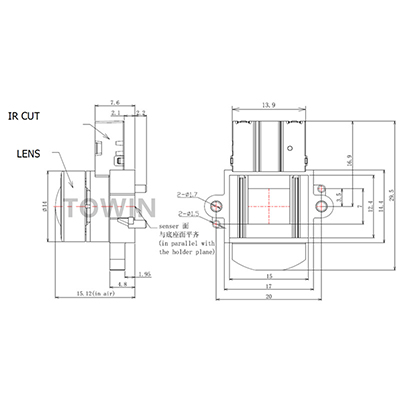
M12 wide angle 2.1 board lens
FAQs
What is the ideal focal length for the M12 lens?
The ideal focal length depends on your application. For wide-angle shooting, shorter focal lengths (e.g., 2.8mm to 3.6mm) are generally used. For finer details, longer focal lengths (e.g., 6mm to 12mm) are better.
Can I use the diagonal field of view calculator to calculate the field of view of other lenses?
Yes, the formula for calculating the diagonal field of view applies to any combination of lens and sensor, not just the M12 lens. However, the specific parameters (sensor size and focal length) must be calculated accurately for each lens type.
How does sensor size affect field of view?
Larger sensors capture a wider area, resulting in a wider field of view. Conversely, smaller sensors result in a narrower field of view. This is why choosing the appropriate sensor size when pairing with an M12 lens is crucial.
What are the applications of M12 lenses?
M12 lenses are commonly used in industrial cameras, security cameras, robotics, and other vision systems where space is limited but high-quality imaging is required.
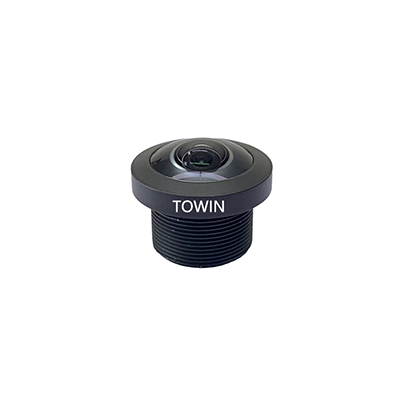
Fisheye lens 1/3″ Φ3 210° HD M12 mount lens
Conclusion
Proper calculation of the M12 Lenses diagonal field of view is essential for optimizing the performance of imaging systems. By using the Diagonal FoV Calculator for M12 Lenses, analyzing key factors such as sensor size and focal length, and making informed decisions, you can improve the quality and coverage of your camera setup. Mastering this calculation method is important for achieving optimal results in surveillance, robotics, and other fields requiring precise vision.