


C-Mount lens definition and applications
11/14/2025
Pinhole lens 2.5mm IR HD CCTV M12 mount lens
11/14/2025
In the world of industrial optics and camera technology, choosing the right lens is crucial for achieving optimal image quality and functionality. One such lens type that has garnered attention for its compact size and versatility is the M12 lens. These lenses are commonly used in a variety of applications, from surveillance cameras to machine vision systems.
What is the M12 Lens Aperture?
The M12 lens refers to a type of lens that utilizes a standard M12 thread mount, commonly found in miniature cameras, security systems, and other compact imaging devices. The M12 lens aperture plays a significant role in determining the amount of light that enters the lens and hits the image sensor. This is a critical factor that impacts the exposure, depth of field, and overall image sharpness.
The aperture size, often measured in f-stops, essentially controls the lens’s light-gathering ability. A larger aperture (a smaller f-stop number) allows more light to reach the sensor, while a smaller aperture (a larger f-stop number) lets in less light, which can affect image brightness and clarity.
How the Aperture Size Affects the M12 Lens Performance
When comparing M12 lens apertures, it’s important to understand how aperture size influences various aspects of lens performance:
- Depth of Field: A larger aperture (e.g., f/1.4 or f/2) creates a shallower depth of field, meaning only a small part of the image will be in focus, while the rest will be blurred. This effect is often used in photography to highlight the subject and create a pleasing bokeh effect. In contrast, smaller apertures (e.g., f/8 or f/16) result in a deeper depth of field, which is useful for keeping more of the image in focus, especially in wide-angle shots.
- Light Sensitivity: The aperture size directly affects the lens’s sensitivity to light. A wider aperture allows for better performance in low-light conditions, making it ideal for applications like surveillance cameras and machine vision systems that operate in varying lighting conditions.
- Sharpness and Image Quality: While larger apertures allow more light, they can sometimes result in a softer image, especially at their widest settings. This is due to optical phenomena like spherical aberration. On the other hand, smaller apertures tend to produce sharper images across the frame, although they may suffer from diffraction at very small f-stop numbers.
- Shutter Speed and Motion Blur: The aperture size also affects the shutter speed in most imaging systems. A larger aperture enables faster shutter speeds, which can freeze motion, while a smaller aperture requires slower shutter speeds, which may introduce motion blur if the subject is moving.
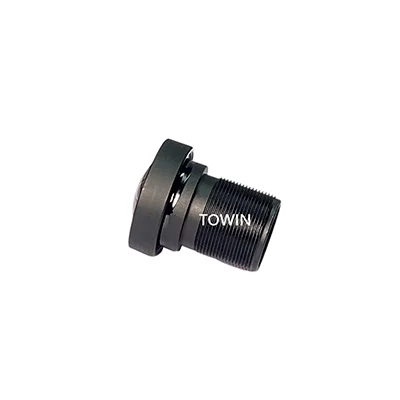
Low distortion lens 12-Megapixel M12 F2.2 CCTV lens
M12 Lens Aperture Comparison: Which One is Right for You?
The M12 lens aperture comparison is essential when deciding on the right lens for your specific needs. Here’s a breakdown of different aperture sizes and their suitable use cases:
- Wide Apertures (f/1.4 – f/2.8): These lenses excel in low-light environments and offer a shallow depth of field, making them ideal for applications such as portrait photography, product shots, or low-light surveillance. These lenses tend to be more expensive but offer high performance in challenging lighting conditions.
- Moderate Apertures (f/4 – f/5.6): These offer a good balance between light-gathering ability and sharpness. Lenses with moderate apertures are versatile and perform well in both bright and low-light conditions. They are a good choice for applications like general surveillance and standard machine vision tasks.
- Narrow Apertures (f/8 – f/16): Lenses with these apertures are best for applications requiring a large depth of field, such as wide-angle imaging or capturing landscapes in machine vision applications. They offer sharp images but require more light or slower shutter speeds, which might limit their effectiveness in low-light situations.
How to Choose the Right M12 Lens for Your Project
Selecting the correct M12 lens aperture depends on several factors, including the specific requirements of your application:
- Lighting Conditions: If you’re working in low-light conditions or need to capture high-speed motion, a wide aperture lens will likely be the best choice.
- Image Clarity: If image sharpness across the entire frame is a priority, opting for a moderate or narrow aperture lens might be more suitable, particularly for high-definition security or industrial cameras.
- Depth of Field: Consider how much of the image needs to be in focus. A wide aperture provides a blurred background, while a smaller aperture keeps everything in focus, which can be crucial in applications like machine vision and industrial inspection.
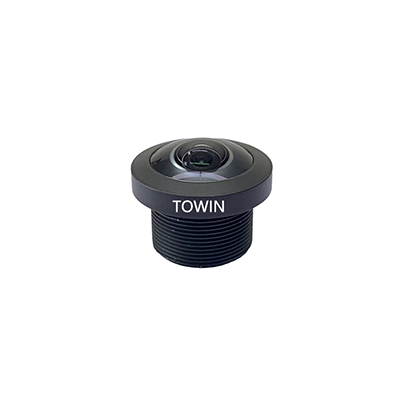
Fisheye lens 1/3″ Φ3 210° HD M12 mount lens
FAQs
What is the difference between an M12 lens with a wide aperture and one with a narrow aperture?
A wide aperture allows more light to reach the sensor, making it better for low-light situations and producing a shallow depth of field. A narrow aperture, while letting in less light, provides a deeper depth of field and sharper images, particularly in well-lit conditions.
Can I use an M12 lens with a small aperture for low-light applications?
While an M12 lens with a small aperture can still capture images in low-light, it may require slower shutter speeds or higher ISO settings, which could lead to noise or motion blur. For low-light applications, a wider aperture lens is typically preferred.
Are M12 lenses with wider apertures more expensive?
Yes, M12 lenses with wider apertures (such as f/1.4 or f/2.8) are generally more expensive due to their advanced optical design and performance in low-light conditions.
Do M12 lenses with smaller apertures provide better sharpness?
Smaller aperture M12 lenses tend to offer better sharpness and less optical distortion, particularly in well-lit conditions. However, they may suffer from diffraction at very small apertures, reducing image quality.
What is the ideal aperture for general surveillance cameras using M12 lenses?
For general surveillance, M12 lenses with moderate apertures (f/4 to f/5.6) are typically the best choice, as they balance light sensitivity, sharpness, and depth of field effectively.

1.8mm F2.5 M12 S-Mount wide angle board lens
Conclusion
The M12 lens aperture comparison is an important aspect to consider when selecting lenses for various imaging applications. The aperture size influences light sensitivity, image sharpness, depth of field, and the overall performance of the lens. Whether you need a lens for industrial use, security systems, or photography, understanding how aperture size affects lens behavior will help you make an informed decision.