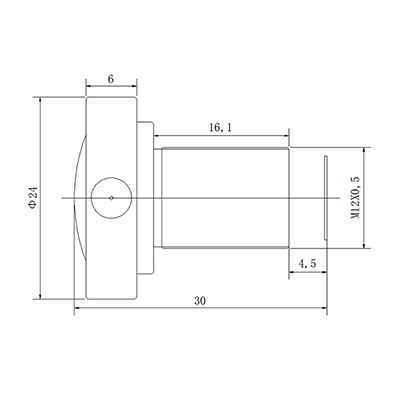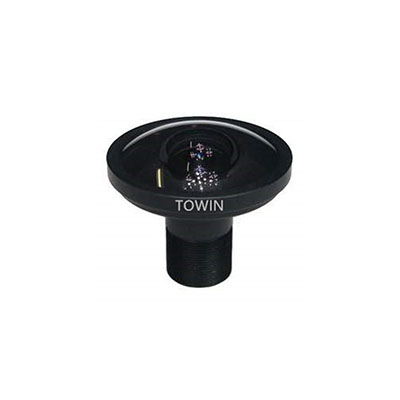



<1% Distortion ITS Lens
10/21/2025
Shockproof CCTV lens
10/21/2025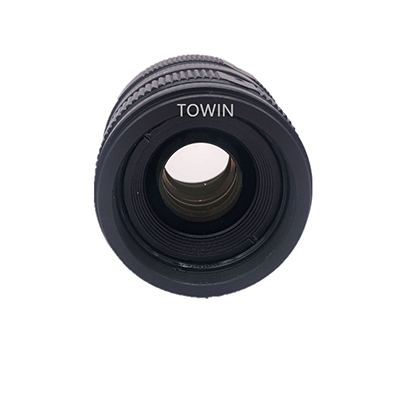
A fixed aperture lens is an optical lens with a preset aperture opening or F-number that cannot be adjusted during normal operation. It is commonly considered for imaging systems where lighting conditions, exposure settings, and image acquisition requirements remain relatively stable. In industrial imaging, understanding fixed aperture, adjustable iris, and lens specifications is essential when selecting the right FA lens for machine vision and factory automation.
However, fixed aperture should not be confused with fixed focal length or constant maximum aperture. These terms describe different optical characteristics. This guide explains how fixed aperture lenses work, their advantages and limitations, how they compare with adjustable aperture lenses, and when to use them in industrial imaging applications.
1. What Is a Fixed Aperture Lens?
A fixed aperture lens has an aperture opening that is preset and cannot be changed by the user during normal operation. The aperture controls how much light passes through the optical system and reaches the camera sensor.
The aperture is commonly expressed as an F-number, such as F1.8, F2.0, F2.8, or F4.0. A smaller F-number generally indicates a larger aperture opening and greater light-gathering capability, while a larger F-number indicates a smaller opening.
For industrial cameras, a fixed aperture configuration can be useful when the camera operates under controlled illumination and requires consistent optical settings. Once the lens and lighting system are properly configured, the aperture does not need to be adjusted during normal operation.
Understanding the F-number
The F-number is calculated using the following formula:
F-number = Focal Length / Entrance Pupil Diameter
For example, a lens with a 25mm focal length and a 12.5mm entrance pupil diameter has an F-number of F2.0.
The F-number influences several important imaging characteristics:
- Light transmission: A larger aperture generally allows more light to reach the sensor.
- Exposure: Aperture affects image brightness together with exposure time, sensor sensitivity, and illumination.
- Depth of field: Aperture influences the range of distances that appear acceptably sharp.
- Optical performance: Aperture selection can affect aberrations, sharpness, and diffraction.
For machine vision applications, the appropriate aperture should be selected according to the camera sensor, lighting conditions, working distance, resolution requirements, and inspection accuracy.
2. Fixed Aperture vs. Variable Aperture Lens
The main difference between a fixed aperture lens and a variable aperture lens is whether the aperture can be adjusted to control the amount of incoming light.
A fixed aperture lens maintains a preset opening, whereas a variable aperture lens allows users to adjust the iris according to changing imaging conditions.
| Comparison | Fixed Aperture Lens | Variable Aperture Lens |
|---|---|---|
| Aperture setting | Preset F-number | Adjustable F-number |
| Light control | Limited optical adjustment | Flexible optical adjustment |
| System configuration | Suitable for stable lighting | Suitable for changing lighting |
| Depth of field | Determined by the preset aperture and imaging geometry | Can be adjusted through the iris |
| Exposure adjustment | Primarily through camera settings and lighting | Through aperture, exposure, and lighting |
| Typical applications | Fixed-position inspection | Variable lighting environments |
When Should You Choose a Fixed Aperture Lens?
A fixed aperture lens is a practical option when:
- The lighting environment is stable and controlled.
- The camera operates at a fixed working distance.
- The imaging system uses predetermined exposure settings.
- Frequent aperture adjustments are unnecessary.
- The optical configuration is established during system integration.
When Is a Variable Aperture Lens Better?
An adjustable aperture lens is more appropriate when lighting conditions change frequently or when different working environments require different exposure and depth-of-field settings.
For example, industrial cameras used in outdoor inspection, traffic monitoring, and day-and-night surveillance may benefit from adjustable iris designs.
The choice between fixed and variable aperture should be based on the actual imaging environment rather than assuming that one design is always superior.
3. Fixed Aperture vs. Fixed Focal Length: What Is the Difference?
Fixed aperture and fixed focal length describe two different properties of a lens. They should not be used interchangeably when selecting an industrial camera lens.
Fixed Aperture
A fixed aperture lens has a preset iris opening or F-number. The user cannot adjust the aperture during normal operation.
Fixed Focal Length
A fixed focal length lens has a constant focal length. Unlike a varifocal or zoom lens, it cannot change its focal length to provide a different field of view.
Fixed focal length lenses are widely used in machine vision because their optical configuration can be optimized for a specific field of view, working distance, and sensor format.
However, a fixed focal length lens may still have an adjustable manual iris. Therefore, fixed focal length does not automatically mean fixed aperture.
For example, a C-Mount lens with a 25mm focal length and an F1.4–16 aperture has a fixed focal length but an adjustable aperture.
Explore C-Mount industrial lenses for different focal lengths, sensor formats, resolutions, and iris configurations.
4. When Should You Use a Fixed Aperture Lens?
Fixed aperture lenses are particularly suitable for imaging systems where illumination and camera settings are carefully controlled. The following applications are common examples.
4.1 Machine Vision and Automated Inspection
In automated inspection systems, cameras frequently capture products at predetermined positions under controlled lighting. A fixed aperture configuration can simplify optical setup and maintain consistent aperture settings throughout production.
Typical applications include:
- Electronic component inspection.
- PCB defect detection.
- Product dimension inspection.
- Packaging and label inspection.
- Automated quality control.
For these applications, lens resolution, distortion, sensor compatibility, and working distance are often more important than the ability to adjust the aperture during operation.
Learn more about TOWIN machine vision lens solutions for industrial inspection, factory automation, and precision imaging.
4.2 Embedded Vision and Compact Camera Systems
Compact imaging devices often operate with predefined optical and mechanical configurations. A fixed aperture lens can be suitable when the camera has a stable operating environment and does not require frequent optical adjustment.
Examples include:
- Embedded vision cameras.
- Compact industrial inspection devices.
- Barcode and QR code readers.
- Robotics vision systems.
- Fixed-position monitoring cameras.
When selecting a lens for these systems, engineers should also consider lens dimensions, mounting compatibility, sensor size, and the required field of view.
4.3 Controlled Lighting Environments
Fixed aperture configurations can work well in production environments equipped with stable LED illumination, ring lights, or dedicated inspection lighting.
When illumination is consistent, the camera exposure can be configured to provide the required image brightness without continuously adjusting the iris.
However, changes in object reflectivity, ambient light, or inspection speed may still require adjustments to the lighting system or camera exposure.
4.4 Robotics and Automated Positioning
Robotic vision systems often use cameras to identify objects, determine positions, and guide automated movements. In fixed inspection stations, a preset aperture can help simplify the optical configuration.
Engineers should prioritize field of view, depth of field, resolution, and distortion according to the robot’s working range and positioning accuracy requirements.
5. Advantages and Limitations of Fixed Aperture Lenses
Advantages
- Consistent aperture setting: The optical opening remains unchanged during normal operation.
- Simplified system configuration: No routine iris adjustment is required.
- Suitable for controlled lighting: Works well when illumination and exposure settings remain stable.
- Repeatable setup: Helps maintain a predefined optical configuration across production runs.
- Potentially simpler integration: Can reduce the need for iris control mechanisms in applications that do not require them.
Limitations
- Limited light adjustment: The aperture cannot be changed to compensate for changing illumination.
- Less flexibility: Different imaging environments may require different optical configurations.
- Depth-of-field constraints: The preset aperture may not provide the required depth of field for every application.
- Exposure dependence: Camera exposure and illumination must be configured to achieve suitable image brightness.
A fixed aperture lens is therefore not necessarily better than an adjustable aperture lens. The most suitable configuration depends on the optical requirements and operating conditions of the imaging system.
6. How to Choose the Right Fixed Aperture Lens for Machine Vision
Selecting a fixed aperture lens requires more than choosing an F-number. Engineers should evaluate the complete optical system to ensure that the lens meets the camera and application requirements.
6.1 Match the Lens to the Camera Sensor Size
The lens image circle must cover the camera sensor. If the image circle is too small, the image may show vignetting or dark corners.
Common industrial sensor formats include 1/2″, 2/3″, 1″, 1.1″, and 4/3″. Always verify the actual image circle and optical compatibility of the selected lens.
Read the industrial camera sensor guide to understand sensor formats, pixel size, and lens compatibility.
6.2 Select the Appropriate Focal Length
Focal length determines the field of view together with sensor dimensions and object distance. Shorter focal lengths generally provide a wider field of view, while longer focal lengths provide a narrower field of view at the same working distance.
Before choosing a lens, determine:
- Object width and height.
- Camera-to-object working distance.
- Required horizontal and vertical field of view.
- Available installation space.
Use the FOV calculator for machine vision lenses to estimate the required field of view and focal length.
6.3 Consider Resolution and Pixel Size
The lens must provide sufficient resolving power for the camera sensor and inspection task. A high-megapixel camera does not automatically guarantee high-quality imaging if the lens cannot resolve the required details.
For industrial inspection, evaluate optical resolution, MTF performance, sensor pixel size, and the smallest feature that must be detected.
6.4 Evaluate Depth of Field
Depth of field determines how much variation in object distance can remain acceptably sharp in an image.
A smaller aperture (larger F-number) generally increases depth of field, while a larger aperture (smaller F-number) generally reduces it, assuming other imaging conditions remain unchanged.
However, stopping down the aperture too far can increase diffraction and reduce image sharpness. The optimal F-number should balance light availability, depth of field, and resolution.
6.5 Check Optical Distortion
Distortion can affect dimensional measurements, object positioning, and geometric recognition. Applications requiring accurate measurements should use lenses with suitable distortion specifications.
Learn more about lens distortion and low-distortion optical design before selecting a lens for precision inspection.
6.6 Confirm the Lens Mount
Mechanical compatibility is essential when integrating an industrial lens with a camera.
Common lens mounts include:
- C-Mount: Widely used in industrial machine vision and factory automation.
- CS-Mount: Common in CCTV, IP cameras, and security imaging.
- M12 / S-Mount: Suitable for compact embedded vision and miniature camera systems.
Check the mount thread, flange focal distance, back focal length, and available installation space before purchasing.
For a complete selection process, refer to the machine vision lens selection guide.
7. TOWIN Industrial FA Lens Solutions
TOWIN provides industrial optical lenses for factory automation, machine vision, automated inspection, and other industrial imaging applications.
Our FA lens product range includes different optical configurations designed to meet varying sensor formats, focal lengths, resolution requirements, and industrial imaging needs.
Available configurations include:
- 5MP and 10MP industrial lens options.
- 2/3″ sensor-compatible lens models.
- Multiple focal lengths for different fields of view.
- Fixed F-number and adjustable manual iris configurations, depending on the model.
- Low-distortion optical options for industrial inspection.
For example, TOWIN’s FA lens range includes models with F2.8 fixed aperture specifications as well as models with adjustable F1.4–16 apertures. The appropriate model should be selected according to the actual optical requirements.
For additional specifications and product information, visit the TOWIN FA Lens product overview.
Whether you need a lens for automated inspection, measurement, positioning, or robotics vision, selecting the correct sensor format, focal length, aperture, and optical performance is essential for achieving reliable imaging results.
8. Frequently Asked Questions About Fixed Aperture Lenses
Q1. What is a fixed aperture lens?
A: A fixed aperture lens has a preset aperture opening or F-number that cannot be adjusted during normal operation. It is suitable for imaging applications where lighting and exposure conditions are relatively stable.
Q2. What is the difference between fixed aperture and variable aperture?
A: A fixed aperture lens maintains a preset aperture, while a variable aperture lens allows the user to adjust the iris opening. Variable aperture designs offer greater flexibility when lighting conditions change.
Q3. Is a fixed aperture lens the same as a fixed focal length lens?
A: No. Fixed aperture refers to the iris opening, while fixed focal length means the lens has a non-adjustable focal length. A fixed focal length lens can still have an adjustable manual iris.
Q4. Does a fixed aperture lens provide better image quality?
A: Not necessarily. Image quality depends on optical design, resolution, MTF, aberration correction, aperture, sensor compatibility, and other factors. A fixed aperture alone does not guarantee better image quality.
Q5. Is a fixed aperture lens suitable for machine vision?
A: Yes. It can be suitable for machine vision systems with controlled lighting, fixed working distances, and predefined exposure settings. Engineers should verify resolution, depth of field, distortion, and sensor compatibility.
Q6. Does a smaller F-number mean a larger aperture?
A: Yes. A smaller F-number generally indicates a larger aperture opening and greater light-gathering capability. For example, F1.8 allows more light than F4.0 under comparable conditions.
Q7. What is the difference between fixed iris and manual iris?
A: A fixed iris has a preset aperture that cannot be adjusted by the user. A manual iris allows the user to change the aperture mechanically to control light intake and depth of field.
Q8. How do I choose the right FA lens for my application?
A: Consider the camera sensor size, focal length, field of view, working distance, resolution, aperture, distortion, and mounting requirements. You should also evaluate the lighting environment and whether an adjustable iris is necessary.
Conclusion: Choosing the Right Fixed Aperture Lens
A fixed aperture lens can be an effective solution for industrial imaging systems that operate under stable lighting and predefined camera settings. Its main benefit is a consistent optical configuration, while its primary limitation is reduced flexibility when lighting conditions change.
When selecting a Fixed Aperture Lens, engineers should evaluate aperture, focal length, sensor compatibility, resolution, depth of field, and distortion together rather than considering any single specification in isolation.
For industrial applications requiring reliable imaging performance, explore TOWIN industrial FA lenses or C-Mount machine vision lenses.
Need help selecting an optical configuration for your camera or machine vision project? Contact TOWIN’s optical team to discuss your application, specifications, and customization requirements.