


Depth Sensing Camera Lens Selection Guide: How to Choose the Right Lens for 3D Vision Systems
06/12/2026
Why Is Low Distortion Important in Medical Imaging?
06/12/2026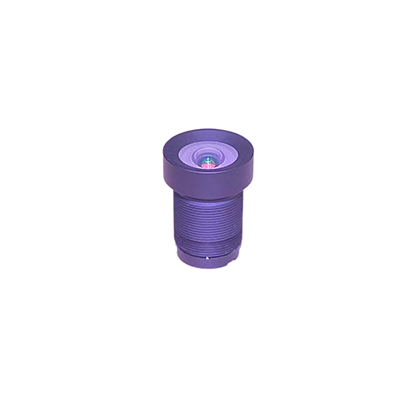
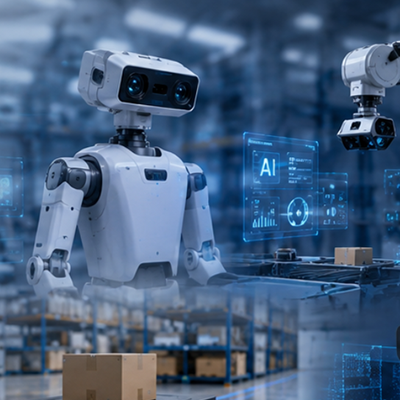
Modern robots rely heavily on depth perception to understand and interact with their environment. Whether used in autonomous mobile robots (AMRs), automated guided vehicles (AGVs), service robots, or industrial automation systems, accurate distance measurement is essential for safe and efficient operation.
One of the most effective technologies for robotic depth sensing is the Time-of-Flight (TOF) camera system. However, the performance of a TOF camera depends not only on the sensor but also on the optical system. Selecting the right TOF lens for robotics is critical for achieving accurate depth measurement, obstacle avoidance, and navigation performance.
If you are new to TOF technology, start with our guide: What Is a TOF Lens?.
Why Robots Need Depth Sensing
Traditional RGB cameras can capture images but cannot directly measure distance.
For autonomous operation, robots must understand:
- Object location
- Distance to obstacles
- Navigation paths
- Environmental structure
- Human presence
Depth sensing enables robots to perform these tasks reliably.
Common robotics applications include:
- Autonomous Mobile Robots (AMRs)
- Automated Guided Vehicles (AGVs)
- Service Robots
- Warehouse Robots
- Delivery Robots
- Industrial Inspection Robots
- Collaborative Robots (Cobots)
Many of these systems rely on TOF technology because of its ability to generate real-time depth maps.
What Is a TOF Lens?
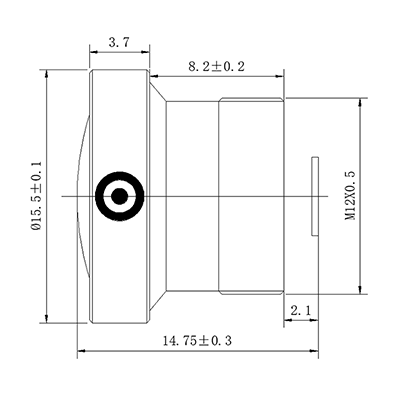
A TOF lens is a specialized optical lens designed for use with Time-of-Flight depth sensing cameras.
Unlike standard imaging lenses, TOF optics must optimize:
- Infrared light transmission
- Low distortion
- Uniform illumination
- Sensor matching
- Depth measurement accuracy
TOF systems typically operate using infrared wavelengths such as 850nm or 940nm.
For more information, see our detailed guide on 940nm TOF Lenses.
How TOF Cameras Work in Robotics
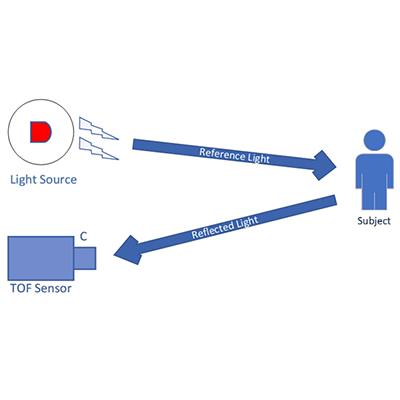
TOF cameras measure depth by emitting infrared light and calculating the time required for reflected light to return to the sensor.
The process involves:
- Infrared illumination projection
- Reflection from surrounding objects
- Signal capture by the TOF sensor
- Distance calculation
- Real-time depth map generation
Because distance measurement is direct, TOF systems provide fast and reliable depth information for robotic applications.
Advantages of TOF Lenses in Robotics
Real-Time Depth Measurement
Robots often operate in dynamic environments where objects and people move continuously.
TOF systems generate depth data in real time, allowing robots to react immediately.
Benefits include:
- Faster navigation
- Improved obstacle avoidance
- Better collision prevention
Reliable Indoor Performance
Many robotic systems operate indoors where GPS signals are unavailable.
Examples include:
- Warehouses
- Manufacturing facilities
- Hospitals
- Hotels
- Retail stores
TOF cameras perform exceptionally well in these environments because they use active infrared illumination.
Unlike passive vision systems, TOF technology can maintain accurate depth sensing even in low-light conditions.
Compact Camera Design
Space is often limited in robotic systems.
TOF cameras typically require:
- One sensor
- One lens
- One infrared illumination source
This compact architecture simplifies integration and reduces system size.
Enhanced SLAM Performance
Simultaneous Localization and Mapping (SLAM) is a critical technology used by mobile robots.
SLAM allows robots to:
- Build environmental maps
- Determine their location
- Navigate autonomously
Accurate depth information improves SLAM reliability and mapping precision.
For robotics vision applications, explore our Robotics Vision Solutions.
Common Robotics Applications for TOF Lenses
Autonomous Mobile Robots (AMRs)
AMRs use TOF cameras to:
- Detect obstacles
- Navigate warehouse aisles
- Avoid collisions
- Track movement paths
Wide-angle TOF lenses are commonly used to maximize environmental coverage.
Automated Guided Vehicles (AGVs)
AGVs require precise depth measurement to operate safely around workers and equipment.
TOF cameras help AGVs:
- Identify obstacles
- Maintain safe distances
- Improve route planning
Service Robots
Service robots in hotels, restaurants, and healthcare environments use TOF systems for:
- Human detection
- Object recognition
- Indoor navigation
- Elevator interaction
Industrial Robots
Industrial robots often use TOF depth sensing for:
- Bin picking
- Material handling
- Palletizing
- Quality inspection
The ability to generate accurate 3D information improves automation efficiency.
TOF Lens vs Stereo Vision for Robotics
Engineers often compare TOF technology with Stereo Vision when designing robotic systems.
Both technologies provide depth information but operate differently.
TOF Advantages
- Faster depth calculation
- Better low-light performance
- Lower computational load
- More compact system design
Stereo Vision Advantages
- Better outdoor performance
- Longer measurement range
- No active illumination required
For a detailed comparison, read our article: TOF vs Stereo Vision.
Key Specifications When Selecting a TOF Lens for Robotics
Field of View (FOV)
The field of view determines how much of the environment the robot can observe.
Typical robotics applications require:
- 90°–120° FOV for navigation
- 120°–160° FOV for obstacle detection
- Ultra-wide FOV for SLAM systems
Selecting the correct FOV helps maximize environmental awareness.
Low Distortion Design
Lens distortion can negatively affect depth measurement accuracy.
Robotics systems generally require:
- Low geometric distortion
- Consistent edge performance
- Stable depth mapping
Low-distortion optics improve navigation precision and object localization.
Infrared Transmission Efficiency
TOF cameras depend on infrared illumination.
High-quality TOF lenses should provide:
- Excellent infrared transmission
- Minimal signal loss
- Uniform image brightness
This improves depth accuracy across the entire scene.
Sensor Compatibility
The lens must match:
- Sensor size
- Resolution
- Pixel structure
- Wavelength requirements
Proper optical matching ensures maximum performance from the TOF camera system.
Why 940nm TOF Lenses Are Popular in Robotics
Many robotic vision systems use 940nm illumination because it offers several advantages:
- Reduced interference from ambient light
- Improved eye safety
- Lower visible glow
- Better indoor performance
As a result, 940nm TOF systems are widely used in warehouse automation, service robotics, and smart devices.
Learn more in our 940nm TOF Lens Guide.
How to Choose the Right TOF Lens for Your Robot
Before selecting a TOF lens, consider the following factors:
Application Type
- AMR
- AGV
- Service Robot
- Industrial Robot
- Delivery Robot
Working Distance
Determine the required sensing range.
Sensor Model
Lens performance must match the selected TOF sensor.
FOV Requirement
Choose the appropriate viewing angle based on navigation and coverage needs.
Environmental Conditions
Indoor and outdoor environments often require different optical solutions.
For customized recommendations, visit our TOF Lens Solutions page.
Frequently Asked Questions
Q: Why do robots use TOF cameras?
A: TOF cameras provide real-time depth information that helps robots navigate, avoid obstacles, and build environmental maps.
Q: Is TOF better than Stereo Vision for robotics?
A: For indoor navigation and obstacle detection, TOF is often preferred because it delivers faster and more reliable depth data.
Q: What FOV is best for robotic navigation?
A: Most robotic systems use lenses between 90° and 160° depending on application requirements.
Q: Why are 940nm TOF lenses commonly used?
A: 940nm systems offer better ambient light suppression, improved eye safety, and stronger performance in indoor environments.
Q: Can TOF lenses be customized?
A: Yes. Lens manufacturers can customize focal length, field of view, distortion levels, infrared optimization, and mechanical design to meet specific robotics requirements.
Conclusion
A high-quality TOF lens for robotics plays a critical role in depth sensing, obstacle detection, autonomous navigation, and SLAM performance. By combining optimized infrared transmission, low distortion design, and appropriate field of view, TOF optics help robots operate more accurately and safely in complex environments.
As robotic automation continues to expand across industries, selecting the right TOF lens becomes increasingly important for achieving reliable 3D vision performance.