


What Is a TOF Lens? A Complete Guide to Time-of-Flight Imaging Technology
06/11/2026
Depth Sensing Camera Lens Selection Guide: How to Choose the Right Lens for 3D Vision Systems
06/12/2026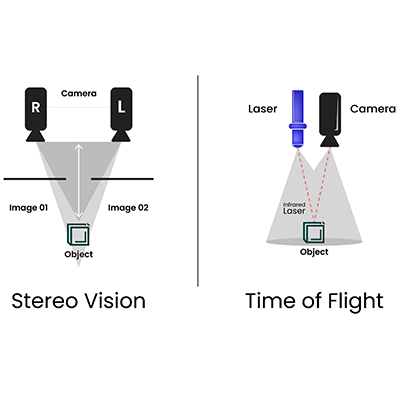
As 3D imaging technologies continue to evolve, engineers and system integrators often face an important decision: TOF vs Stereo Vision.
Both technologies are widely used for depth measurement, object detection, navigation, and environmental perception. They are commonly found in robotics, autonomous mobile robots (AMRs), industrial automation systems, facial recognition devices, and smart cameras.
However, the way they calculate depth information is fundamentally different. Understanding these differences is essential when selecting the right camera and optical system for your project.
If you are new to TOF technology, you may also want to read our guide on What Is a TOF Lens? before continuing.
What Is TOF (Time-of-Flight) Technology?
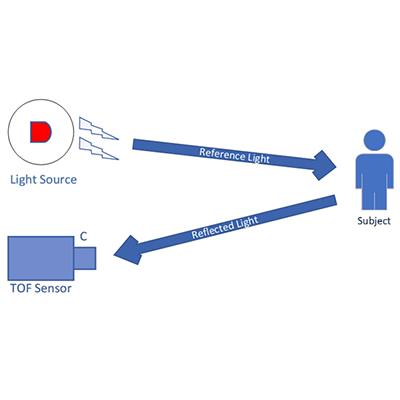
A Time-of-Flight (TOF) system measures distance by emitting infrared light and calculating the time it takes for the reflected light to return to the sensor.
The process typically involves:
- Infrared illumination emission
- Reflection from the target object
- Signal reception by the image sensor
- Distance calculation based on light travel time
Because depth is measured directly, TOF cameras can generate accurate depth maps in real time.
A high-quality TOF Lens Solution is essential for maximizing depth accuracy, reducing distortion, and ensuring consistent infrared performance.
What Is Stereo Vision?
Stereo Vision works similarly to human eyesight.
A stereo camera system uses two cameras placed a fixed distance apart. By comparing differences between the two images, software algorithms estimate depth through triangulation.
The workflow includes:
- Capturing left and right images
- Identifying matching feature points
- Calculating disparity
- Generating a depth map
Unlike TOF systems, Stereo Vision relies heavily on image texture and lighting conditions.
TOF vs Stereo Vision: Technology Comparison
| Feature | TOF | Stereo Vision |
|---|---|---|
| Depth Measurement | Direct | Indirect |
| Infrared Illumination | Required | Not Required |
| Performance in Low Light | Excellent | Limited |
| Real-Time Speed | Fast | Moderate |
| Long-Range Accuracy | Good | Depends on Baseline |
| Texture Dependence | Low | High |
| Computational Load | Low | High |
| Outdoor Performance | Moderate | Good |
| Power Consumption | Higher | Lower |
Accuracy Comparison
TOF Accuracy
TOF systems provide direct distance measurement, allowing highly consistent depth information even when objects have smooth surfaces or minimal texture.
Advantages include:
- Reliable short-range measurement
- Stable depth mapping
- Fast response speed
- Strong performance in indoor environments
Many industrial robots and smart devices use specialized 940nm TOF lenses to improve depth accuracy while reducing ambient light interference.
Stereo Vision Accuracy
Stereo Vision accuracy depends heavily on:
- Camera calibration
- Baseline distance
- Scene texture
- Lighting conditions
When sufficient texture is available, Stereo Vision can achieve excellent depth performance, especially over larger distances.
However, reflective surfaces and uniform-colored objects often create challenges.
TOF vs Stereo Vision for Robotics
Robotics is one of the most common applications for both technologies.
Why TOF Is Popular in Robotics
TOF systems offer:
- Real-time depth data
- Compact hardware design
- Fast obstacle detection
- Reliable indoor navigation
These advantages make TOF particularly suitable for:
- AMRs
- AGVs
- Service robots
- Warehouse automation
Learn more in our guide to TOF Lens for Robotics Applications.
Why Stereo Vision Is Used in Robotics
Stereo Vision remains popular for:
- Outdoor robots
- Agricultural robots
- Autonomous vehicles
- Long-distance perception
Because it does not require active infrared illumination, Stereo Vision often performs better in bright outdoor environments.
Performance in Low-Light Conditions
One of the biggest advantages of TOF technology is its ability to operate in darkness.
Since TOF cameras actively emit infrared light, they can generate depth maps even when visible light is unavailable.
Stereo Vision, on the other hand, requires sufficient visual features to identify matching points between images.
As a result:
- TOF generally performs better indoors
- Stereo Vision often performs better outdoors
Hardware Complexity and Cost
TOF Systems
A TOF solution typically requires:
- TOF sensor
- Infrared emitter
- Infrared optical filter
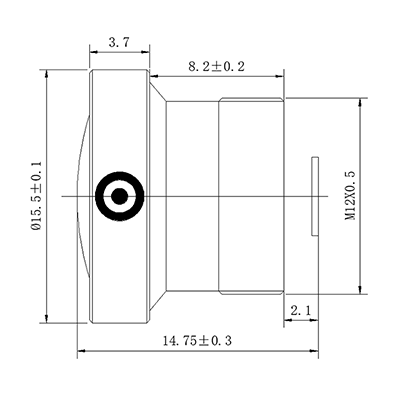
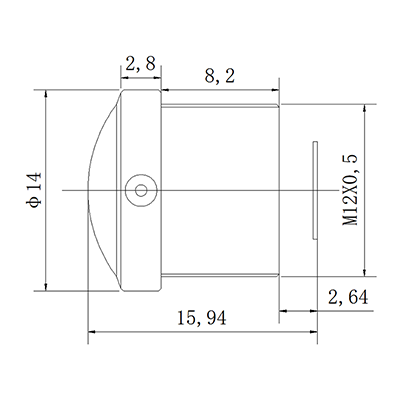
- Dedicated TOF lens
The optical design is critical for depth precision.
For lens selection considerations, see our guide on Depth Sensing Camera Lens Selection.
Stereo Vision Systems
Stereo Vision systems require:
- Two image sensors
- Two lenses
- Calibration mechanism
- Image processing algorithms
While hardware costs may be lower in some scenarios, computational requirements are often significantly higher.
Which Technology Is Better?
The answer depends on the application.
Choose TOF If You Need:
- High-speed depth sensing
- Indoor navigation
- Real-time obstacle avoidance
- Compact camera modules
- Consistent short-range accuracy
Choose Stereo Vision If You Need:
- Outdoor operation
- Long-range depth perception
- Passive sensing
- Lower power consumption
Many modern systems combine both technologies to leverage the strengths of each approach.
The Importance of Lens Selection
Whether using TOF or Stereo Vision, lens quality significantly affects system performance.
Important considerations include:
- Distortion control
- Infrared transmission
- Field of view (FOV)
- Resolution compatibility
- Sensor matching
At TOWIN, we provide customized optical solutions for 3D vision systems, including specialized TOF optics optimized for depth sensing applications.
Explore our complete TOF Lens Solutions for robotics, industrial automation, biometric recognition, and smart imaging systems.
Frequently Asked Questions
Q: Is TOF more accurate than Stereo Vision?
A: For short-range indoor applications, TOF generally provides more stable and reliable depth measurements. Stereo Vision can be highly accurate when sufficient texture and lighting are available.
Q: Does TOF work in complete darkness?
A: Yes. TOF cameras use active infrared illumination, allowing depth sensing even without visible light.
Q: Why do TOF cameras use 940nm lenses?
A: 940nm illumination offers better ambient light rejection, improved eye safety, and reduced visible glow compared with 850nm systems.
Q: Is Stereo Vision better outdoors?
A: In many cases, yes. Stereo Vision does not rely on active infrared illumination and can perform well in bright outdoor environments.
Q: What industries use TOF technology?
A: TOF is widely used in robotics, industrial automation, facial recognition, logistics, smart home devices, and machine vision systems.
Conclusion
When comparing TOF vs Stereo Vision, neither technology is universally superior. TOF excels in real-time indoor depth sensing and robotic navigation, while Stereo Vision offers advantages in outdoor and long-range applications.
The best solution depends on your environment, accuracy requirements, working distance, and system architecture. By selecting the appropriate sensing technology and optical components, engineers can build highly reliable 3D vision systems for a wide range of applications.