


What lens is best for SLAM navigation?
06/11/2026
TOF vs Stereo Vision: Which Depth Sensing Technology Is Better?
06/12/2026
A TOF lens (Time-of-Flight lens) is a specialized optical lens designed for depth sensing cameras that measure the distance between the camera and objects by calculating the travel time of emitted infrared light.
Unlike traditional imaging lenses that capture only color or grayscale images, a TOF lens works together with infrared illumination and a depth sensor to generate accurate 3D depth maps in real time.
Today, TOF lenses are widely used in:
- Robotics navigation
- Autonomous mobile robots (AMR)
- AGV systems
- Facial recognition devices
- Industrial automation
- Smart home products
- Gesture recognition systems
- 3D machine vision
As depth sensing technology becomes increasingly important in AI vision systems, TOF camera lenses have become a critical component in modern imaging solutions.
How Does a TOF Lens Work?
A TOF lens itself does not measure distance. Instead, it enables infrared light emitted by a Time-of-Flight camera system to accurately reach the sensor.
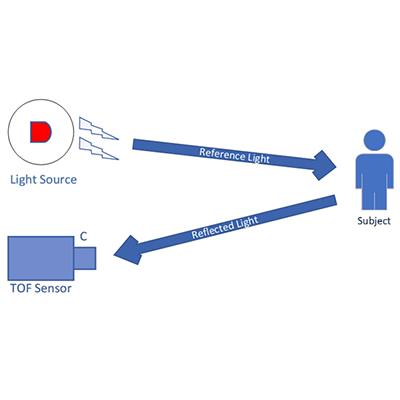
The complete TOF imaging process consists of four steps:
Step 1: Infrared Light Emission
An infrared VCSEL or LED emits light, typically at:
- 850nm
- 940nm
toward the target object.
Step 2: Reflection from the Object
The infrared light reflects off surfaces and returns to the camera.
Step 3: Time Measurement
The TOF sensor calculates how long the light takes to travel from the emitter to the object and back.
Step 4: Depth Map Generation
The sensor converts the measured time information into distance data, generating a real-time 3D depth map.
The TOF lenses ensures:
- Accurate light transmission
- Low distortion imaging
- High infrared transmittance
- Stable depth measurement
Without a properly designed TOF lenses, depth accuracy can be significantly reduced.
Key Components of a TOF Camera System
A typical TOF camera includes the following components:
| Component | Function |
|---|---|
| TOF Lens | Focuses infrared light onto the sensor |
| IR Emitter | Generates infrared illumination |
| TOF Sensor | Measures light travel time |
| ISP Processor | Creates depth maps |
| Software Algorithm | Processes 3D data |
The optical performance of the lens directly impacts depth accuracy, image quality, and measurement reliability.
For a deeper understanding of lens selection, see our guide on:
👉 Sensor Size and Lens Matching
Why Are TOF Lenses Different from Standard Camera Lenses?
Many engineers assume that any lens can be used for a TOF camera.
However, TOF systems require specific optical characteristics.
| Feature | Standard Lens | TOF Lens |
|---|---|---|
| IR Optimization | Limited | Optimized |
| Depth Accuracy | Low | High |
| Distortion Control | Moderate | Critical |
| IR Transmittance | Standard | Enhanced |
| 3D Mapping Support | No | Yes |
TOF lenses are specifically designed to support infrared wavelengths and depth sensing algorithms.
Common TOF Lens Wavelengths
850nm TOF Lenses
850nm systems provide:
- Higher signal strength
- Longer sensing distance
- Better outdoor performance
However, the infrared glow may be slightly visible.
940nm TOF Lenses
940nm systems provide:
- Better eye safety
- Lower visible light emission
- Improved ambient light suppression
- Better performance in consumer electronics
Many robotics and smart device manufacturers now prefer 940nm TOF lenses.
Learn more in our dedicated guide:
👉 940nm TOF Lens Guide
https://www.towinlens.com/940nm-tof-lens-guide.html
TOF Lenses Applications
Robotics Navigation
Robots use TOF cameras for:
- Obstacle detection
- Path planning
- SLAM navigation
- Autonomous movement
Related Solution:
👉 https://www.towinlens.com/solutions/robotics-vision
3D Machine Vision
Industrial systems use TOF lenses for:
- Volume measurement
- Bin picking
- Object recognition
- Automated inspection
Related Solution:
👉 https://www.towinlens.com/solutions/machine-vision
Facial Recognition
TOF cameras improve:
- Face authentication
- Anti-spoofing
- Secure access control
- Biometric verification
Related Solution:
👉 https://www.towinlens.com/solutions/biometric-recognition
Smart Home Devices
Applications include:
- Presence detection
- Gesture recognition
- Human tracking
- Security monitoring
TOF Lens vs Stereo Vision
Both technologies generate depth information, but they operate differently.
| Feature | TOF Lens | Stereo Vision |
|---|---|---|
| Depth Accuracy | High | Moderate |
| Low-Light Performance | Excellent | Limited |
| Processing Complexity | Lower | Higher |
| Real-Time Performance | Excellent | Good |
| Hardware Cost | Higher | Lower |
TOF technology is often preferred for robotics and industrial automation where accurate depth information is critical.
Read the full comparison:
👉 https://www.towinlens.com/solutions/tof-lens
How to Choose a TOF Lenses
Selecting the correct TOF lenses requires evaluating several factors.
Sensor Compatibility
The lens must match the sensor format.
Common sensor sizes include:
- 1/4″
- 1/3″
- 1/2.8″
- 1/2″
For guidance, visit:
👉 https://www.towinlens.com/knowledge-center/sensor-guide
Wavelength Selection
Choose:
- 850nm for longer range
- 940nm for consumer and indoor applications
Field of View
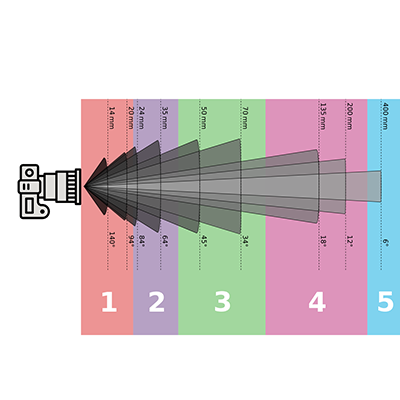
A wider field of view captures more area but may reduce measurement precision.
Common TOF lens FOV ranges:
- 70°
- 90°
- 120°
- 150°
Use our:
👉 FOV Calculator
https://www.towinlens.com/fov-calculator
Distortion Performance
Low distortion is critical because geometric errors directly affect depth calculations.
Learn more:
👉 https://www.towinlens.com/knowledge-center/distortion-guide
Why Choose TOWIN TOF Lens Solutions?
TOWIN provides customized TOF lens solutions for:
- Robotics manufacturers
- AI camera developers
- Industrial automation companies
- Smart home device manufacturers
- Biometric recognition systems
Our capabilities include:
- 850nm and 940nm optical design
- Low distortion architecture
- Wide-angle TOF lenses
- Custom mechanical structures
- OEM and ODM support
Explore our dedicated solution page:
👉 https://www.towinlens.com/solutions/tof-lens
Frequently Asked Questions
Q: What is the purpose of a TOF lenses?
A: A TOF lenses focuses infrared light onto a depth sensor and helps generate accurate 3D depth information.
Q: Can a standard lens be used in a TOF camera?
A: In most cases, no. TOF systems require infrared-optimized optics and low distortion designs.
Q: What wavelength is commonly used for TOF cameras?
A: The most common wavelengths are 850nm and 940nm.
Q: Are TOF lenses used in robotics?
A: Yes. TOF lenses are widely used in mobile robots, AMRs, AGVs, and autonomous navigation systems.
Q: What is the difference between a TOF lenses and a depth sensing lens?
A: A TOF lenses is a type of depth sensing lens specifically designed for Time-of-Flight imaging technology.
Q: Which is better, TOF or stereo vision?
A: It depends on the application. TOF generally offers higher depth accuracy and better low-light performance, while stereo vision may provide lower hardware costs.
Conclusion
A TOF lens is a critical component in modern depth sensing systems. By enabling accurate infrared imaging and supporting Time-of-Flight measurement technology, TOF lenses help create reliable 3D vision systems for robotics, machine vision, facial recognition, and smart devices.
As demand for AI-powered imaging continues to grow, selecting the right TOF lenses becomes increasingly important for achieving accurate depth measurement and dependable system performance.