


CCTV camera lens options
07/03/2025
Waterproof Lenses for Vehicle Surveillance
07/03/2025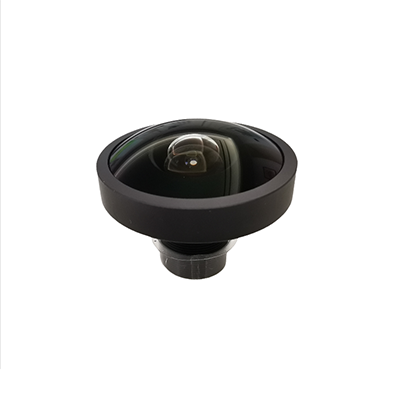
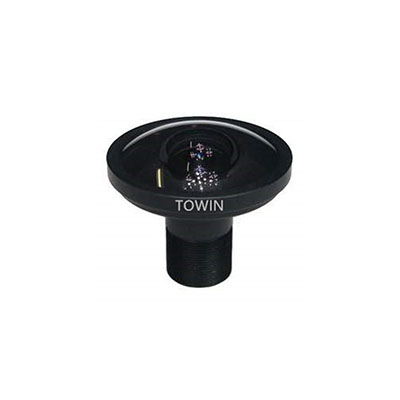
A fisheye lens captures an exceptionally wide field of view by using a specialized optical projection that maps a large angular scene onto a camera sensor. Unlike conventional rectilinear lenses, a fisheye lens allows straight lines away from the image center to appear curved. This design makes it useful for applications that need broad scene coverage, compact camera integration, or panoramic imaging.
For engineers selecting an industrial fisheye camera lens, the most important factors are not just the viewing angle. Focal length, sensor size, image circle, resolution, optical projection, distortion characteristics, and mounting compatibility must also be considered.
This guide explains how a fisheye lens works, how focal length affects its field of view, and how to evaluate fisheye optics for industrial imaging applications. To compare available configurations, visit TOWIN fisheye lens products.
1. What Does a Fisheye Lens Do?
A fisheye lens is an ultra-wide-angle optical lens designed to capture a much larger angular field of view than a conventional rectilinear lens with a comparable sensor format. It uses a non-rectilinear projection to fit a wide scene onto the image sensor.
Its primary function is to capture more of the surrounding environment in one image. Depending on the optical design, a fisheye lens may provide a field of view approaching or exceeding 180 degrees in one or more directions.
In practical imaging systems, a fisheye lens can provide several benefits:
- Wide-area coverage: Captures a large scene without requiring multiple cameras for every viewing direction.
- Reduced blind spots: Helps surveillance and mobile vision systems monitor more of their surroundings.
- Compact optical integration: Supports wide-angle imaging in compact camera modules.
- Panoramic imaging: Provides image data that can be processed, corrected, or stitched into panoramic views.
- Environmental perception: Supplies surrounding visual information for robotics and automotive vision systems.
However, a wider field of view does not automatically mean better image quality. The image must still provide sufficient resolution, contrast, and usable detail for the intended application.
2. How Does a Fisheye Lens Work?
A fisheye lens works by using a specialized optical projection to map incoming light rays from a wide angular field onto a two-dimensional image sensor. Unlike a conventional rectilinear lens, which attempts to preserve straight-line geometry, a fisheye lens allows substantial geometric curvature to achieve a wider angular coverage.
Fisheye Projection and Image Formation
Different fisheye lenses use different projection models. These models describe how an incoming scene angle is mapped to a position on the image plane.
| Projection Model | Basic Relationship | Key Characteristic |
|---|---|---|
| Equidistant | r = f × θ | Image height is proportional to the incident angle. |
| Equisolid Angle | r = 2f × sin(θ/2) | Designed to preserve solid-angle relationships. |
| Stereographic | r = 2f × tan(θ/2) | Provides a different angular-to-image scaling relationship. |
| Orthographic | r = f × sin(θ) | Maps angular position according to a sine relationship. |
In these simplified equations, r is the radial image height, f is the focal-length parameter, and θ is the incident angle measured from the optical axis. The usable angular range depends on the optical design and the physical image area.
These projection models are not interchangeable. Two fisheye lenses with the same nominal focal length can produce different image geometry and field-of-view characteristics.
Why Does a Fisheye Lens Produce Curved Lines?
In a conventional rectilinear imaging system, straight lines in the object space generally remain straight in the image, provided they do not pass through the optical center in a way that creates projection singularities.
A fisheye lens uses a different projection relationship. As a result, lines away from the image center may appear curved. This characteristic is commonly associated with barrel-shaped image geometry.
For wide-area imaging, this curvature is often an accepted part of the optical design. When the application requires geometric correction, image-processing software can apply fisheye dewarping or calibration based on the lens projection model.
Fisheye Distortion Is Not the Same as Poor Optical Quality
It is important to distinguish intentional fisheye projection from unwanted optical aberrations. A fisheye lens is designed to provide a wide angular field through a non-rectilinear projection. This is different from uncontrolled blur, chromatic aberration, poor contrast, or manufacturing defects.
For engineers, evaluating a fisheye lens should therefore include both its intended projection behavior and its actual image quality across the sensor.
For a deeper explanation of lens geometry and image deformation, see the optical design resources and industrial lens distortion guide.
3. Fisheye Lens Focal Length and Field of View
Focal length is one of the most important parameters when selecting a fisheye camera lens. It influences the relationship between the scene angle and the image position. However, the resulting field of view also depends on sensor size, optical projection, image circle, and the effective sensor area.
In general, a shorter focal length can provide a wider angular view when other relevant optical and sensor parameters remain comparable. However, focal length alone cannot determine the final field of view of a fisheye system.
How Does Focal Length Affect Fisheye Angle?
The focal length affects how incoming light rays are mapped onto the sensor. In a given fisheye projection design, a shorter focal length generally maps a wider angular range into a smaller image area.
When comparing fisheye lenses, engineers should evaluate:
- Nominal focal length in millimeters.
- Horizontal, vertical, and diagonal field of view.
- Fisheye projection type.
- Sensor format and active sensor dimensions.
- Image circle and usable image coverage.
For this reason, two lenses with the same focal length may not provide identical viewing angles when their projection designs or sensor configurations differ.
How Does Sensor Size Affect Fisheye Lens FOV?
Sensor size determines how much of the image formed by the lens is recorded. A larger sensor may capture a wider portion of the image circle, provided the lens produces sufficient image coverage. A smaller sensor may crop the outer image area and reduce the recorded field of view.
| Selection Parameter | What to Check | Why It Matters |
|---|---|---|
| Sensor Format | 1/4″, 1/3″, 1/2″, 1/1.8″, or other formats | Determines the active image area used by the camera. |
| Image Circle | Lens image coverage versus sensor dimensions | Helps prevent unwanted corner shading or incomplete coverage. |
| Focal Length | Nominal focal length in millimeters | Influences the angular-to-image mapping. |
| Field of View | Horizontal, vertical, and diagonal angles | Defines the actual scene coverage. |
| Resolution | Lens resolving capability and camera pixel count | Determines how much usable detail is captured. |
| Projection | Equidistant, equisolid, or other design | Affects image geometry and calibration requirements. |
To understand sensor dimensions and lens compatibility in more detail, read the image sensor guide for machine vision.
How to Calculate Fisheye Lens Field of View
Fisheye field of view should be evaluated using the lens manufacturer’s projection model and optical specifications. A standard rectilinear field-of-view formula should not automatically be applied to a fisheye lens, because its image-height relationship differs from conventional perspective projection.
For example, an equidistant fisheye projection follows the simplified relationship:
Therefore, θ = r / f
Here, r represents radial image height, f is the projection focal-length parameter, and θ is the incident angle in radians. This relationship is an idealized model; actual lens specifications and usable image coverage must be checked.
For a practical camera-lens system, the active sensor dimensions, optical center, projection model, and image circle must all be considered. Theoretical estimates should be verified against the lens datasheet or actual calibration results.
For conventional industrial camera calculations and working-distance examples, use the machine vision FOV calculation guide or the interactive FOV calculator.
4. Main Characteristics of Industrial Fisheye Lenses
Industrial fisheye lenses are selected for their ability to capture wide scenes within compact imaging systems. Their optical characteristics should be evaluated according to the actual camera and application requirements.
Ultra-Wide Field of View
Captures a large angular area in one image, making it useful for surveillance, robotics, and panoramic imaging systems.
Compact Optical Design
Supports embedded camera modules and space-constrained equipment that require wide-angle imaging.
Projection Characteristics
Uses a specialized projection model that determines how scene angles are represented on the sensor.
Image Processing Compatibility
Can be combined with calibration and dewarping algorithms to transform fisheye images into more conventional viewing formats.
Resolution and Image Quality
Wide-angle coverage is useful only when the captured image contains enough detail for the intended task. A fisheye lens should be evaluated for resolution, contrast, sharpness across the image field, chromatic aberration, and illumination uniformity.
Engineers should also check whether the lens’s resolving performance is suitable for the camera sensor’s pixel size and resolution. A high-megapixel camera cannot deliver its full potential if the optical system does not provide sufficient image detail.
Distortion and Image Correction
Fisheye lenses intentionally use non-rectilinear projection, so their geometric behavior should not be judged by the same criteria used for low-distortion measurement lenses.
If the system needs to recognize objects across a wide scene, fisheye projection may be acceptable or even beneficial. If the system needs accurate dimensional measurement, engineers should evaluate calibration accuracy and consider whether a dedicated low-distortion lens is more appropriate.
5. Industrial Applications of Fisheye Lenses
Because a fisheye lens can capture a broad angular scene, it is useful in systems where environmental awareness and wide-area coverage are more important than preserving straight-line geometry in the raw image.
5.1 Smart Security and Surveillance
Fisheye camera lenses are commonly used in wide-area surveillance systems. A single ceiling-mounted or strategically positioned camera can capture a broad indoor scene, helping reduce blind spots and supporting panoramic monitoring.
Typical applications include:
- Indoor panoramic surveillance.
- Retail and commercial space monitoring.
- Building and facility security.
- Wide-area monitoring in compact camera systems.
For camera manufacturers and system integrators, the lens should be selected according to the required viewing angle, sensor format, image correction method, and lighting conditions. Explore TOWIN’s smart security lens solutions.
5.2 Robotics Vision and Autonomous Mobile Robots
Robots and autonomous mobile platforms need visual information about their surroundings to support navigation, obstacle detection, and environmental awareness.
A compact fisheye lens can provide a wide view around a robot, especially when the camera must fit into a limited space. Computer vision algorithms may then process the resulting image to support scene understanding and navigation.
Important selection factors include camera mounting position, viewing coverage, sensor resolution, frame-processing requirements, and distortion calibration.
Learn more about TOWIN robotics vision solutions.
5.3 Automotive Surround-View Systems
Automotive surround-view systems use multiple cameras to capture different areas around a vehicle. Wide-angle and fisheye optical designs can help each camera cover a broad viewing region.
Image-processing software can combine and correct the camera images to create a bird’s-eye or surround-view representation. The final system performance depends on lens characteristics, camera placement, calibration, sensor performance, and image-processing algorithms.
For automotive imaging projects, explore TOWIN ADAS camera lens solutions.
5.4 Panoramic and Embedded Imaging
Engineers also use compact fisheye lenses in embedded camera modules to achieve a wide viewing angle instead of installing multiple separate cameras.
Examples include:
- Compact panoramic camera modules.
- Embedded monitoring devices.
- Smart vision equipment.
- Specialized wide-angle imaging systems.
In these systems, M12 or other compact lens interfaces may be considered, depending on the camera housing and mechanical requirements. Explore M12 lens solutions for compact camera integration.
6. How to Choose the Right Industrial Fisheye Lens
Selecting an industrial fisheye lens requires more than choosing the shortest available focal length. The lens must match the camera sensor, required field of view, mechanical interface, resolution, and operating environment.
Step 1: Define the Required Field of View
Determine whether the application needs a horizontal, vertical, diagonal, or near-hemispherical field of view. The required viewing angle should be based on the actual scene and camera installation position.
Step 2: Confirm Sensor Size and Image Circle
Check the camera’s active sensor dimensions and confirm that the lens image circle covers the required sensor area. An incorrect sensor match can cause corner shading, image cropping, or reduced usable coverage.
Step 3: Select the Appropriate Focal Length
Compare focal length together with the lens’s projection model and specified field of view. Do not select a lens based on focal length alone.
Step 4: Match Resolution Requirements
Confirm that the lens provides adequate image quality for the sensor resolution and the application’s object-recognition or image-processing requirements.
Step 5: Evaluate Distortion and Calibration
Determine whether the application can accept the native fisheye projection or requires software dewarping. If accurate measurement is required, validate the complete optical and calibration system before final selection.
Step 6: Check Mounting and Mechanical Compatibility
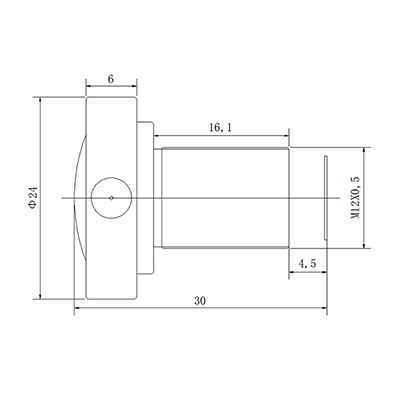
Verify the lens mount, thread dimensions, flange or back focal requirements, mechanical clearance, and camera housing compatibility. Engineers commonly consider M12/S-Mount lenses for compact embedded camera designs, but they must confirm the exact interface for each camera.
For a broader selection methodology, read the industrial lens selection guide.
7. TOWIN Industrial Fisheye Lens Solutions
TOWIN provides fisheye lens options for compact camera systems and wide-angle imaging applications. You can evaluate different configurations according to focal length, sensor format, field of view, resolution, optical performance, and mounting requirements.
Explore TOWIN Fisheye Lens Products
TOWIN’s fisheye lens portfolio includes different optical configurations for applications that require broad scene coverage in compact imaging systems.
- Wide-angle imaging: Lens options for systems that require a broad field of view.
- Compact integration: M12/S-Mount configurations for embedded camera applications.
- Sensor compatibility: Options to be evaluated against the camera’s active sensor size and image circle.
- Resolution matching: Lens selection based on camera resolution and application requirements.
- Customization support: Optical and mechanical requirements can be discussed for OEM/ODM projects.
Available focal lengths, viewing angles, sensor formats, and resolution specifications vary by model. Please refer to the individual product datasheet for confirmed parameters.
Need Help Selecting a Fisheye Camera Lens?
If you are developing a surveillance camera, robotics vision system, automotive camera, or embedded imaging device, selecting the correct optical configuration early can help avoid compatibility issues during system integration.
When contacting TOWIN, providing the following information will help narrow down suitable lens options:
- Camera sensor model and active sensor size.
- Required horizontal, vertical, and diagonal field of view.
- Target focal length or preferred working distance, if known.
- Required resolution and image quality.
- Lens mounting interface and available mechanical space.
- Application environment and operating conditions.
Visit the TOWIN industrial lens solutions page to explore application-specific optical solutions, or contact our team to discuss your project requirements.
8. Frequently Asked Questions About Fisheye Lenses
Q1: What does a fisheye lens do?
A fisheye lens captures an exceptionally wide field of view by using a specialized optical projection. People commonly use it in panoramic imaging, surveillance, robotics, and automotive camera systems where broad scene coverage is important.
Q2: Why do fisheye lenses make images look curved?
Fisheye lenses use non-rectilinear optical projection to map a wide angular scene onto a flat image sensor. This projection causes straight lines away from the image center to appear curved. The effect is an intentional characteristic of fisheye imaging.
Q3: What is the typical field of view of a fisheye lens?
The field of view varies according to the lens design, projection model, focal length, and sensor format. Some fisheye lenses provide viewing angles approaching or exceeding 180 degrees in specified directions. Always check the manufacturer’s horizontal, vertical, and diagonal FOV specifications.
Q4: Does a shorter focal length always mean a wider fisheye angle?
In comparable optical designs and sensor configurations, a shorter focal length generally provides a wider angular view. However, the final field of view also depends on the projection model, sensor dimensions, and usable image circle. Focal length alone is not enough to determine the exact viewing angle.
Q5: What is the difference between a fisheye lens and a wide-angle lens?
A conventional wide-angle lens generally uses rectilinear projection to preserve straight lines, while a fisheye lens uses a non-rectilinear projection to capture a wider angular field. Fisheye lenses therefore show more pronounced image curvature, while people often prefer conventional wide-angle lenses when maintaining geometric appearance is important.
Q6: Can a fisheye lens be used for machine vision?
Yes. Fisheye lenses can be used in machine vision systems that require wide-area scene coverage, environmental monitoring, or robotic perception. However, applications involving precise dimensional measurement should carefully evaluate distortion, calibration, and image resolution before selecting a fisheye design.
Q7: Can fisheye distortion be corrected by software?
Yes. Calibration and dewarping algorithms can process fisheye images to generate corrected or panoramic views. The correction method should match the lens projection model. Software correction cannot restore image detail that the optical system never captured.
Q8: How do I choose a fisheye lens for an industrial camera?
Start with the required field of view and camera sensor size. Then evaluate focal length, image circle, projection type, resolution, distortion characteristics, and mounting compatibility. You should validate the final configuration against the actual application and camera system.
Conclusion
A fisheye lens is designed to capture a very wide angular scene through a specialized optical projection. Its ability to collect extensive visual information in one image makes it valuable for smart security, robotics vision, automotive surround-view systems, and compact embedded imaging applications.
For industrial camera manufacturers and system integrators, choosing the right fisheye lens requires more than considering its viewing angle. Focal length, sensor size, image circle, resolution, projection characteristics, and mechanical compatibility must all work together.
Understanding what a fisheye lens does is the first step toward selecting the right optical configuration. Explore TOWIN fisheye lens products or contact TOWIN to discuss a suitable industrial imaging solution for your application.
Looking for an Industrial Fisheye Lens?
Explore available fisheye lens configurations or discuss your sensor, FOV, resolution, and mechanical requirements with TOWIN.