


What Is a Good Field of View for Machine Vision?
06/29/2026
Global Shutter vs Rolling Shutter: Which One Is Better
07/01/2026
Pixel Size vs Resolution is one of the most important considerations when selecting an image sensor for industrial machine vision. Many engineers assume that a higher-resolution sensor automatically delivers better image quality. In reality, image quality depends on the balance between pixel size, sensor size, optical performance, lighting conditions, and application requirements.
Choosing the wrong combination of pixel size and resolution can lead to increased image noise, reduced low-light performance, higher processing requirements, and even lower inspection accuracy. Understanding the relationship between these two parameters helps engineers design imaging systems that achieve the best balance between performance, cost, and reliability.
In this guide, you’ll learn how pixel size and image resolution work together, when each parameter should be prioritized, and how to select the right sensor for different industrial applications. If you’re new to industrial image sensors, we recommend reading our Image Sensor Guide first for a complete overview of sensor fundamentals.
Why Pixel Size vs Resolution Matters
When selecting an industrial camera, engineers often focus on megapixels while overlooking the physical size of each individual pixel. However, Pixel Size vs Resolution is not a competition where one parameter is always better than the other. Instead, both characteristics work together to determine the overall imaging performance of a machine vision system.
Image sensors with higher resolutions contain more pixels, allowing cameras to capture finer details. At the same time, larger pixels collect more light, improving sensitivity, reducing image noise, and increasing dynamic range. Optimizing these two factors requires understanding the inspection task rather than simply selecting the highest available resolution.
In practical machine vision projects, the optimal sensor depends on multiple factors, including:
- Required inspection accuracy
- Lighting conditions
- Object size
- Working distance
- Lens resolution
- Sensor size
- Frame rate requirements
- Image processing capability
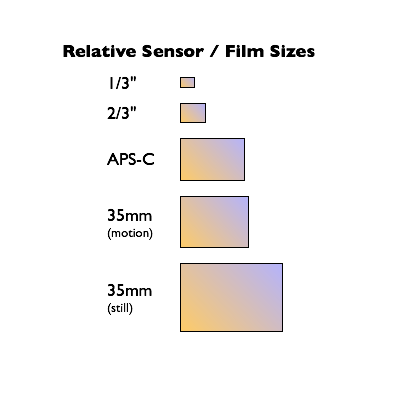
Before comparing pixel size and resolution, it is also important to understand how sensor size affects field of view, lens compatibility, and overall image quality.
Engineering Insight
A high-resolution sensor paired with an unsuitable lens often produces worse images than a lower-resolution sensor combined with high-quality optics. Successful machine vision systems optimize the entire imaging chain—not just a single specification.
What Is Pixel Size?
Pixel size refers to the physical dimensions of an individual pixel on an image sensor and is typically measured in micrometers (μm). Each pixel functions as a tiny light collector, converting incoming photons into electrical signals that eventually become digital image data.
Larger pixels have a greater surface area, allowing them to collect more photons during exposure. As a result, sensors with larger pixel sizes generally provide better low-light performance, lower image noise, improved dynamic range, and higher signal-to-noise ratios.
Common pixel sizes found in industrial CMOS sensors include:
| Pixel Size | Typical Characteristics |
|---|---|
| 1.45 μm | Very high resolution, limited light collection |
| 2.0 μm | Compact industrial cameras |
| 2.74 μm | Balanced performance for machine vision |
| 3.45 μm | Excellent sensitivity and dynamic range |
| 5.5 μm+ | Low-light and scientific imaging |
Larger pixels are especially beneficial in applications such as:
- Low-light inspection
- High-speed imaging
- Medical imaging
- Microscopy
- Outdoor intelligent transportation systems
Pixel size should never be evaluated independently. It works together with sensor size, lens resolution, and illumination conditions to determine final image quality.
What Is Image Resolution?
Image resolution represents the total number of pixels used to capture an image. It is commonly expressed as the width and height of the image (for example, 1920 × 1080 pixels) or as the total number of megapixels (MP).
Higher-resolution sensors capture more image detail, allowing smaller defects and finer features to be detected. This is especially important in precision inspection, semiconductor manufacturing, metrology, and high-accuracy measurement applications.
However, increasing resolution also increases the amount of image data that must be processed, stored, and transmitted. Higher-resolution sensors often require more powerful processors, faster interfaces, larger storage capacity, and lenses capable of resolving finer details.
| Resolution | Megapixels | Typical Applications |
|---|---|---|
| 1920 × 1080 | 2 MP | General machine vision |
| 2448 × 2048 | 5 MP | Factory automation |
| 3840 × 2160 | 8 MP | Precision inspection |
| 4096 × 3000 | 12 MP | High-detail measurement |
| 5472 × 3648 | 20 MP | Metrology and scientific imaging |
Resolution should always be selected based on the application’s required measurement accuracy rather than marketing specifications. It should also be considered alongside pixel size, lighting conditions, and the optical resolving power of the lens. For guidance on selecting compatible optics, see our Industrial Lens Selection Guide.
In the next section, we’ll compare Pixel Size vs Resolution directly to understand how these two specifications influence image quality, sensitivity, inspection accuracy, and machine vision performance.
Pixel Size vs Resolution Comparison
Pixel Size vs Resolution is not about deciding which specification is better—it is about understanding how each parameter contributes to image quality and selecting the right balance for a specific machine vision application.
Pixelsize primarily affects the amount of light each pixel can capture, while image resolution determines how much spatial detail can be recorded. Increasing one often requires compromising the other when the sensor size remains unchanged. Understanding this relationship helps engineers choose sensors that meet both optical and inspection requirements.
| Parameter | Larger Pixel Size | Higher Resolution |
|---|---|---|
| Light Collection | ★★★★★ Excellent | ★★☆☆☆ Limited |
| Low-Light Performance | ★★★★★ Better | ★★☆☆☆ Lower |
| Image Detail | ★★★☆☆ Moderate | ★★★★★ Excellent |
| Image Noise | ★★★★★ Lower | ★★☆☆☆ Higher |
| Dynamic Range | ★★★★★ Wider | ★★★☆☆ Moderate |
| Frame Rate | ★★★★☆ Easier to Achieve | ★★★☆☆ Depends on Sensor |
| Lens Resolution Requirement | ★★★☆☆ Moderate | ★★★★★ Very High |
| Storage & Processing | ★★★★☆ Lower Demand | ★★☆☆☆ Higher Demand |
Key Takeaway
Higher resolution captures more detail, while larger pixels capture more light. The best sensor combines both characteristics according to the application’s inspection accuracy, lighting environment, and optical system.
Remember that sensor performance also depends on sensor size. A larger sensor with larger pixels behaves very differently from a small sensor with the same resolution.
Understanding the Trade-Off
The relationship between Pixel Size vs Resolution becomes most apparent when the physical sensor size remains constant.
Imagine two image sensors with exactly the same sensor dimensions. If one sensor contains twice as many pixels, each pixel must become smaller in order to fit onto the sensor surface. Smaller pixels receive fewer photons during the same exposure time, reducing signal strength and increasing image noise—especially in low-light environments.
This explains why increasing megapixels does not always improve image quality. A higher-resolution sensor may capture more detail under ideal lighting, but it can also produce noisier images when illumination is insufficient.
Fixed Sensor Size Example
| Scenario | Result |
|---|---|
| Same Sensor Size | No physical size change |
| Higher Resolution | More pixels added |
| Smaller Pixel Size | Each pixel collects less light |
| Signal-to-Noise Ratio | May decrease |
| Image Noise | May increase |
| Low-Light Performance | May decrease |
Conversely, when resolution remains constant but the sensor size increases, individual pixels become larger. Larger pixels improve sensitivity, increase dynamic range, and generally provide cleaner images under challenging lighting conditions.
When Should You Prioritize Larger Pixels?
- Low-light industrial inspection
- Warehouse automation
- Medical imaging
- Microscopy
- High-speed production lines
- Outdoor intelligent transportation systems
When Should You Prioritize Higher Resolution?
- Precision dimensional measurement
- PCB inspection
- Semiconductor manufacturing
- AOI systems
- Surface defect detection
- Fine-feature inspection
Engineer Tip
Do not select a sensor based solely on megapixels. Always evaluate lighting conditions, object size, required measurement accuracy, frame rate, lens resolution, and system cost together.
How Pixel Size Affects Lens Selection
One of the most overlooked aspects of Pixel Size vs Resolution is the relationship between the image sensor and the optical lens. Even the highest-resolution sensor cannot deliver sharp images if the lens cannot resolve the required level of detail.
As pixel sizes become smaller, the optical requirements placed on the lens increase significantly. High-resolution sensors demand lenses with excellent modulation transfer function (MTF), low distortion, minimal chromatic aberration, and high edge-to-edge sharpness.
| Sensor Characteristics | Lens Recommendation |
|---|---|
| 2 MP Sensor | Standard Industrial M12 Lens |
| 5 MP Sensor | High-Quality M12 Lens |
| 8 MP Sensor | High-Resolution FA Lens |
| 12 MP Sensor | Precision Industrial Lens |
| 20 MP Sensor | High-MTF Industrial C-Mount Lens |
Lens selection should always consider:
- Sensor size
- Pixel size
- Image circle coverage
- Lens resolving power (MTF)
- Working distance
- Field of view (FOV)
- Distortion requirements
For a complete explanation of industrial lens selection, read our Industrial Lens Selection Guide.
If you are still determining the required imaging area, use our FOV Calculator to calculate the appropriate field of view before selecting both the sensor and the lens.
Best Practice
A high-resolution sensor combined with a low-resolution lens wastes imaging performance. The sensor, lens, lighting, and working distance should always be optimized as a complete imaging system rather than selected independently.
Choosing the Right Sensor for Different Applications
The ideal balance between Pixel Size vs Resolution depends on the application’s inspection objectives, lighting environment, movement speed, and required measurement accuracy. There is no universal sensor that fits every industrial vision system. Instead, engineers should select the combination of sensor and lens that best matches their specific application.
| Application | Recommended Sensor Characteristics | Recommended Lens |
|---|---|---|
| Machine Vision Inspection | Balanced resolution and pixel size | Machine Vision Lens Solutions |
| Robotics Vision | High frame rate with medium resolution | Robotics Vision Solutions |
| Medical Imaging | High resolution with excellent dynamic range | Medical Imaging Solutions |
| Smart Security | Large pixels for low-light performance | Smart Security Solutions |
| Smart Traffic | Global shutter with high dynamic range | Smart Traffic Solutions |
| Drone Imaging | Lightweight sensor with moderate resolution | Drone Imaging Solutions |
Before selecting an image sensor, it is also recommended to determine the required field of view and working distance using the FOV Calculator. This ensures proper matching between the image sensor and the industrial lens.
Common Mistakes When Choosing Pixel Size and Resolution
Many imaging systems fail to achieve their expected performance because key sensor parameters are misunderstood or evaluated independently. Avoiding the following common mistakes can significantly improve overall machine vision performance.
1. Assuming More Megapixels Always Mean Better Images
Higher resolution increases image detail but does not automatically improve image quality. Lighting conditions, lens quality, and pixel size are equally important.
2. Ignoring Lens Resolution
A high-resolution sensor cannot deliver sharp images if the lens lacks sufficient resolving power. Sensor performance should always be matched with an appropriate industrial lens.
3. Selecting Sensors Without Considering Lighting
Applications operating in dim environments usually benefit from larger pixels because they collect more light and produce less image noise.
4. Choosing Resolution Beyond Inspection Requirements
Higher resolutions generate larger image files, require faster processors, consume more bandwidth, and increase system cost. Choose only the resolution necessary to achieve the required inspection accuracy.
5. Forgetting Sensor and Lens Compatibility
Sensor size, image circle, focal length, working distance, and field of view must all be evaluated together. Learn more in our Lens Selection Guide.
Engineering Recommendation
Rather than asking “Which sensor has the highest resolution?”, ask “Which sensor provides the best overall imaging performance for my application?” This approach almost always leads to a more reliable machine vision system.
Frequently Asked Questions
Q: Is higher resolution always better?
A: No. Higher resolution captures more detail but also increases processing requirements and often reduces low-light performance if the sensor size remains unchanged.
Q: Does larger pixel size improve image quality?
A: Generally, yes. Larger pixels collect more light, improving sensitivity, reducing noise, and increasing dynamic range, particularly in challenging lighting conditions.
Q: Which is more important: pixel size or resolution?
A: Neither parameter is universally more important. The optimal choice depends on the application’s inspection accuracy, lighting environment, frame rate, and optical design.
Q: How does pixel size affect low-light performance?
A: Larger pixels capture more photons during exposure, producing cleaner images with higher signal-to-noise ratios under low-light conditions.
Q: Can a low-resolution sensor outperform a high-resolution sensor?
A: Yes. In low-light or high-speed applications, a lower-resolution sensor with larger pixels often produces higher-quality images than a high-resolution sensor with very small pixels.
Q: How does lens quality affect image resolution?
A: The lens determines how much optical detail reaches the sensor. A poor-quality lens limits the performance of even the highest-resolution image sensor.
Q: Should I upgrade my camera or my lens first?
A: If your current lens cannot resolve the sensor’s resolution, upgrading the lens usually provides greater image quality improvements than replacing the camera.
Q: How do I match a lens to my image sensor?
A: Consider sensor size, image circle, focal length, working distance, field of view, and lens resolution together. Our Lens Selection Guide explains the complete selection process.
Conclusion
Pixel Size vs Resolution is not about choosing one specification over another. The best machine vision systems achieve the right balance between pixel size, image resolution, sensor size, lens performance, lighting conditions, and inspection requirements.
Higher-resolution sensors provide greater image detail, while larger pixels improve light sensitivity, reduce noise, and enhance dynamic range. The optimal choice depends entirely on the application’s imaging goals and environmental conditions.
Engineers should always evaluate the complete imaging system—including the image sensor, industrial lens, illumination, working distance, and software algorithms—to achieve the highest inspection accuracy and long-term reliability.
By understanding the trade-offs discussed in this guide, you can confidently select the most suitable sensor for your industrial vision project. Ultimately, mastering Pixel Size vs Resolution is one of the most important steps toward building a high-performance machine vision system.
Continue Learning
- Image Sensor Guide
- Industrial Lens Selection Guide
- Interactive FOV Calculator
- Optical Design Guide
- Distortion Guide