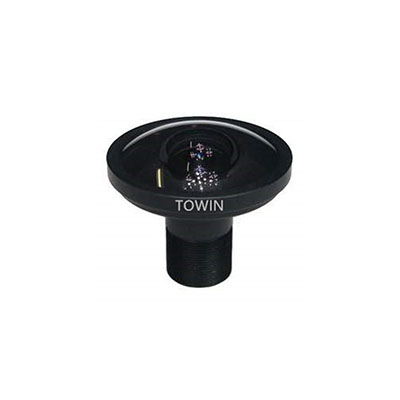



3mm ITS Lens: Ultra Wide Angle CCTV
10/16/2025
Fluorine-coated low distortion lens
10/16/2025
In industrial automation, achieving consistent image sharpness is essential for reliable inspection, measurement, positioning, and identification. When selecting an industrial FA lenses, one important consideration is how the focus is adjusted. Should you use a manual focus lens or an autofocus imaging system?
Understanding manual focus vs auto focus helps engineers choose an appropriate optical configuration for their machine vision systems. The right choice depends on whether the object distance remains constant, whether the imaging setup needs to change during operation, and how much control the application requires.
This guide explains the differences between manual focus, autofocus, and fixed focus in industrial imaging, compares their advantages and limitations, and provides practical guidance for selecting an industrial FA lens for factory automation.
Manual focus is generally suitable when the camera-to-object distance is stable and the focus can be adjusted during installation. Autofocus is useful when object distance changes and the imaging system needs to maintain focus dynamically. Fixed focus is suitable for applications designed around a predetermined working distance.
1. What Is an FA Lens?
FA stands for Factory Automation. An FA lens is an industrial lens used in automated manufacturing and machine vision systems. It helps cameras capture images for inspection, measurement, positioning, barcode reading, and quality control.
Unlike consumer photography lenses, industrial FA lenses are selected according to system-level imaging requirements. These include sensor size, resolution, focal length, field of view (FOV), working distance, distortion, aperture, and mechanical compatibility.
In a factory automation system, the lens must work together with the camera, lighting, mechanical structure, and image-processing software. A suitable optical configuration helps produce consistent images for repeatable inspection tasks.
Explore TOWIN’s 2/3-inch 5–10MP FA lenses for examples of industrial lens configurations used in factory automation and machine vision.
2. What Is Manual Focus in Industrial FA Lenses?
Manual focus is a focusing method in which the lens focus is adjusted manually, typically by rotating a focus ring or another mechanical adjustment mechanism. The operator or technician sets the focus during installation or system setup.
Once the desired focus position is established and secured, the lens can capture images at the intended working distance. In many industrial inspection systems, the camera and target remain in fixed positions, so the focus does not need to change during normal production.
How Manual Focus Works
- Install the lens on the industrial camera.
- Position the camera at the required working distance.
- Adjust the focus while observing the image.
- Verify image sharpness across the required inspection area.
- Secure the focus position if the lens design and application require it.
Advantages of Manual Focus
- Direct adjustment: Technicians can set focus according to the actual installation distance.
- Simple system integration: No autofocus control function is required when the application only needs a one-time focus adjustment.
- Suitable for stable inspection: It works well when the camera and target maintain a consistent relative position.
- Control over initial setup: Engineers can adjust focus during installation and verify the image before production begins.
Limitations of Manual Focus
- Focus usually needs to be readjusted manually if the working distance changes significantly.
- It may be inconvenient in systems that inspect objects at multiple distances.
- Installation quality depends on correct adjustment and mechanical stability.
- It does not automatically compensate for changes in object position.
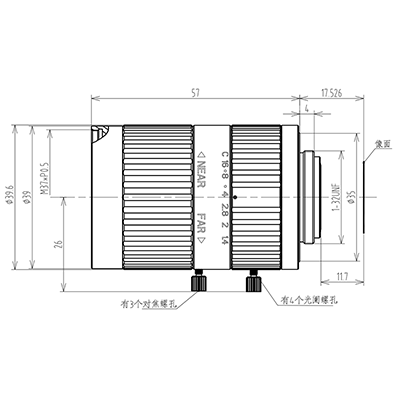
The C1223014M5 12mm C-Mount FA lens is specified with a 2/3-inch image format, 5MP resolution, F1.4–16 aperture, less than 0.8% TV distortion, and manual focus. This is an example of a manually focused industrial FA lens, not an autofocus product.
3. What Is Auto Focus in Industrial Imaging?
Autofocus is a focusing function that adjusts the imaging system to maintain image sharpness when the target distance or focus requirement changes. Unlike a conventional manual focus setup, an autofocus system can adjust focus without requiring an operator to rotate the lens manually for every change.
Importantly, autofocus does not necessarily mean that the lens itself contains a built-in autofocus motor. Depending on the system architecture, focus adjustment may be implemented through a motorized lens mechanism, an external focusing assembly, a camera-controlled mechanism, or another integrated optical and mechanical solution.
How an Autofocus System Works
An autofocus imaging system generally uses image information or distance-related data to determine whether the image is in focus. A controller then coordinates the focusing mechanism to adjust the optical position.
- The camera captures an image or receives focus-related measurement data.
- The system evaluates whether the current focus is suitable.
- The control system determines whether a focus adjustment is required.
- A motorized or external focusing mechanism changes the focus position.
- The system checks the resulting image and continues adjustment when necessary.
The actual autofocus method depends on the camera, lens mechanism, controller, software, and application requirements. Not every industrial camera or lens supports the same autofocus architecture.
Advantages of Autofocus
- Adapts to changing distances: Useful when inspected objects move between different positions or heights.
- Reduced manual intervention: Focus adjustments can be performed automatically within the system’s operating range.
- Flexible inspection: Suitable for applications involving different object heights or changing imaging distances.
- Supports dynamic workflows: Can help maintain image sharpness in systems where the target position is not fixed.
Limitations of Autofocus
- Requires compatible focusing hardware and control functionality.
- May increase system integration and calibration requirements.
- Focus performance depends on the autofocus method, target characteristics, lighting, and operating conditions.
- Focus adjustment may introduce additional time into the imaging process.
- Not every autofocus system is suitable for high-speed inspection or every industrial environment.
4. Manual Focus vs Auto Focus: Key Differences
The main difference between manual focus and autofocus is how the imaging system adjusts focus. Manual focus relies on an operator or technician to set the focus position, while autofocus uses a control system to adjust focus according to changing imaging conditions.
| Comparison | Manual Focus | Auto Focus |
|---|---|---|
| Focus adjustment | Manual adjustment | Automatic system-controlled adjustment |
| Initial setup | Focus is set during installation | Requires autofocus setup and calibration |
| Changing object distance | Usually requires manual readjustment | Can adjust automatically within its operating range |
| System integration | Generally simpler for fixed-distance applications | Requires compatible hardware and control |
| Stable inspection setup | Often suitable | May be unnecessary if distance never changes |
| Variable object heights | May need manual adjustment or sufficient depth of field | Can be useful when focus must change dynamically |
| Maintenance | Focus mechanism and mounting stability need checking | Also requires checking control, motor, and calibration components where applicable |
Neither method is universally better. The appropriate choice depends on the working distance, object movement, inspection speed, required image quality, and overall system design.
5. What About Fixed Focus?
Fixed focus is another important concept in industrial imaging. It is often confused with manual focus, but the two terms describe different aspects of a lens configuration.
A fixed-focus setup is designed to capture objects at a predetermined distance or within a specified depth-of-field range. The focus is established during optical design, assembly, or system installation and is not intended to be adjusted dynamically during normal operation.
A manually focused lens, on the other hand, provides a manual adjustment method that allows the focus position to be set during installation or maintenance. After adjustment, it may remain unchanged throughout production.
| Focus Type | How It Works | Typical Use |
|---|---|---|
| Manual Focus | Focus position is adjusted manually. | Installation and fixed-distance inspection. |
| Auto Focus | Focus is adjusted by a control system. | Applications with changing object distances. |
| Fixed Focus | Designed for a predetermined focus range without dynamic adjustment. | Stable imaging geometry and embedded vision. |
For industrial applications, the choice should be based on the required focus range and depth of field rather than the terminology alone.
6. Which Focus Method Is Better for Machine Vision?
The best focus method depends on the movement and positioning characteristics of the inspection system. In many automated inspection applications, the object and camera are installed at a controlled distance. In other applications, the target may move vertically or appear at different distances.
Manual Focus for Stable Inspection
Manual focus is often a practical choice for inspection systems with a fixed camera position and a consistent working distance. Examples include:
- PCB component inspection at a fixed imaging height.
- Barcode and OCR reading on a conveyor with controlled object positioning.
- Dimensional inspection with a fixed camera-to-object distance.
- Product presence and absence detection.
- Automated quality inspection on a stable production line.
In these applications, correct initial focusing and mechanical stability are often more important than continuous focus adjustment.
Autofocus for Variable-Distance Imaging
Autofocus can be useful when the inspection system needs to image objects at different distances or heights. Potential applications include:
- Inspection of products with varying heights.
- Robotic vision systems that observe objects at different positions.
- Automated imaging stations handling multiple product sizes.
- Systems where the camera-to-object distance changes during operation.
However, autofocus should not be selected automatically just because the target moves. If the object moves within the available depth of field, a manually focused lens may still provide sufficient image sharpness.
For more application examples, see TOWIN’s machine vision applications, including factory automation, barcode and OCR, robotics vision, measurement, and quality control.
7. How to Choose an FA Lens for Factory Automation
Focus type is only one part of industrial lens selection. A suitable FA lens must also match the camera sensor, field of view, working distance, resolution, and optical performance requirements.
1. Confirm the Camera Sensor Size
The lens image circle must cover the camera sensor. If the image circle is too small, the image may show vignetting or dark corners. Check the sensor format and image circle before choosing a lens.
2. Determine the Required Field of View
Define the area that the camera needs to capture. The field of view depends on the sensor dimensions, focal length, and working distance. A suitable focal length should cover the target area while providing the required image detail.
3. Check the Working Distance
Working distance is the distance between the lens and the object being inspected. It directly affects the optical configuration and focus requirements. If the distance changes during operation, determine whether the required depth of field is sufficient or whether an adjustable focusing system is necessary.
4. Match Lens Resolution to the Camera
The lens should provide sufficient resolving performance for the camera sensor and inspection task. Consider sensor resolution, pixel size, required feature size, and the optical performance across the image field.
5. Evaluate Distortion and Depth of Field
Low distortion is important for dimensional measurement, positioning, and other applications where geometric accuracy matters. Depth of field is also important when the object surface is not perfectly flat or its position varies within a defined range.
6. Confirm the Mount and Mechanical Compatibility
Check the lens mount, flange distance, available installation space, and mechanical interface. C-Mount and CS-Mount lenses, for example, have different flange focal distances and should not be treated as interchangeable without the correct configuration.
For a more systematic approach, refer to TOWIN’s industrial lens selection guide and explore the available C-Mount industrial lenses.
8. Frequently Asked Questions
Q1. What is the main difference between manual focus and autofocus?
A: Manual focus requires an operator or technician to adjust the focus position. Autofocus uses a control system and compatible focusing mechanism to adjust focus automatically according to imaging conditions.
Q2. Is manual focus suitable for machine vision?
A: Yes. Manual focus is suitable for many machine vision applications where the camera and target maintain a stable working distance. It is commonly used in fixed-position inspection and measurement systems.
Q3. Does an autofocus lens always have a built-in motor?
A: No. Autofocus may be implemented through a motorized lens, an external focusing mechanism, or a camera-controlled system. The actual architecture depends on the imaging equipment and application.
Q4. Is fixed focus the same as manual focus?
A: No. Manual focus describes how the focus is adjusted, while fixed focus describes a configuration designed for a predetermined focus range without dynamic adjustment during normal operation.
Q5. Which focus method is better for factory automation?
A: Manual focus is often suitable for stable inspection setups with a fixed working distance. Autofocus may be more appropriate when the object distance changes and the system needs to adjust focus dynamically.
Q6. Does manual focus affect image resolution?
A: Manual focus does not inherently reduce a lens’s optical resolution. However, incorrect focusing can cause image blur and reduce the amount of detail captured by the camera.
Q7. What parameters should I check when selecting an industrial FA lens?
A: Check sensor size, focal length, field of view, working distance, resolution, distortion, aperture, depth of field, mount, and focus requirements. These parameters should be evaluated together according to the inspection task.
Q8. Can a manual focus lens be used when object distance changes?
A: It depends on the amount of distance variation and the lens’s depth of field. If the object remains within the acceptable focus range, manual focus may still work. If the distance changes beyond that range, refocusing or an autofocus solution may be required.
9. Conclusion: Choose the Right Focus Method for Your Application
Choosing between manual focus and autofocus for an industrial FA lens depends primarily on the working distance, object movement, and focus requirements of the machine vision system.
Manual focus is a practical option for stable inspection environments where the focus can be set during installation. Autofocus is worth considering when object distance changes and the system requires dynamic focus adjustment. Fixed-focus configurations are suitable when the imaging geometry is predetermined and remains within the designed focus range.
Beyond focus type, engineers should evaluate sensor compatibility, focal length, field of view, resolution, distortion, depth of field, and mechanical requirements together. A well-matched optical system helps improve image consistency and supports reliable industrial inspection.
Need Help Selecting an Industrial FA Lens?
Share your camera sensor, working distance, field of view, object dimensions, and inspection requirements with TOWIN. Our team can help evaluate suitable industrial lens configurations for your machine vision or factory automation project.