


How to Calculate Field of View (FOV): Formula & Examples
03/16/2026
Low distortion wide angle 4mm M12 mount lens
03/18/2026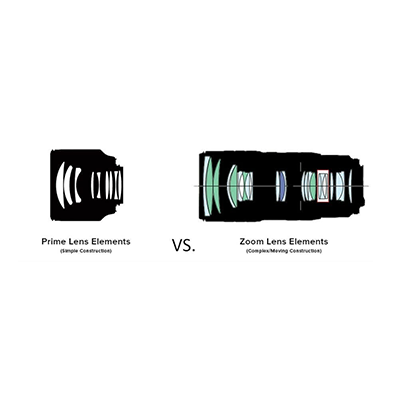
Choosing between fixed focal and varifocal lenses is an important part of industrial camera lens selection.
A fixed focal lens provides a predefined focal length and field of view, making it suitable for imaging systems with stable camera positions and inspection requirements. A varifocal lens allows focal-length adjustment within a specified range, offering greater flexibility when the required viewing angle needs to be configured during installation. The right choice depends on sensor size, working distance, resolution, optical performance, and application requirements.
Fixed Focal vs. Varifocal Lenses: Quick Answer
The main difference between a fixed focal lens and a varifocal lens is the ability to adjust focal length. A fixed focal lens has one optical focal length, while a varifocal lens allows adjustment between its minimum and maximum focal lengths.
| Parameter | Fixed Focal Lens | Varifocal Lens |
|---|---|---|
| Focal Length | Constant | Adjustable within a range |
| Field of View | Fixed for a given sensor | Adjustable |
| System Configuration | Suitable for predefined setups | Flexible during setup |
| Optical Performance | Depends on optical design | Depends on optical design and focal setting |
| Installation | Generally simpler | Requires focal-length and focus adjustment |
| Typical Applications | Inspection, measurement, automation | Flexible observation and configurable imaging |
What Is a Fixed Focal Length Lens?
A fixed focal length lens is an optical lens with a single, predefined focal length. The focal length determines the relationship between the lens and the image sensor and directly affects the field of view.
For example, a 6mm C-Mount lens and a 25mm C-Mount lens produce different viewing angles when used with the same image sensor. The shorter focal length generally captures a wider scene, while the longer focal length provides a narrower field of view.
Fixed focal lenses are commonly used in industrial cameras when the camera position, working distance, and inspection area are clearly defined.
Advantages of Fixed Focal Length Lenses
- Consistent focal length: The optical focal length does not need to be adjusted during normal operation.
- Repeatable system configuration: Useful for production lines with fixed camera positions and established inspection parameters.
- Flexible optical design options: Fixed focal lenses can be designed for high resolution, low distortion, large apertures, and different sensor formats.
- Potentially simpler integration: A predefined optical configuration can make camera and lens integration easier.
- Suitable for precision applications: Specific models can be optimized for measurement, inspection, and high-resolution imaging.
Limitations of Fixed Focal Lenses
A fixed focal lens cannot change its focal length to adjust the field of view. If the camera’s working distance or required viewing area changes significantly, another focal length or camera configuration may be needed.
Therefore, fixed focal lenses are most suitable when the optical requirements can be determined before the imaging system is installed.
What Is a Varifocal Lens?
A varifocal lens is an optical lens that allows the focal length to be adjusted within a defined range. For example, a 12–50mm varifocal lens can provide different fields of view by changing the focal-length setting.
When the focal length changes, the image framing and field of view also change. The focus must be adjusted according to the lens design and operating configuration to maintain a sharp image.
Varifocal lenses are useful when an imaging system requires flexibility during installation, observation, or configuration. They are available in different optical formats, including C-Mount configurations.
Advantages of Varifocal Lenses
- Adjustable field of view: Users can select different viewing angles within the specified focal-length range.
- Flexible installation: Useful when the final camera position or target area is not fully determined in advance.
- Multiple observation distances: A suitable focal-length range can support different image framing requirements.
- Reduced need for lens replacement: The field of view can be adjusted without changing the lens, provided the required setting is within its range.
- Adaptable system configuration: Useful for industrial observation and imaging systems that require installation flexibility.
Limitations of Varifocal Lenses
Varifocal lenses require additional adjustment during installation. Their optical performance may also vary across the focal-length range, so resolution, distortion, illumination, and focus performance should be evaluated at the intended operating settings.
For precision machine vision systems, the selected focal length should be secured and the final image quality validated under actual operating conditions.
Fixed Focal vs. Varifocal: Optical Performance Comparison
1. Focal Length and Field of View
Focal length determines the field of view together with sensor size and working distance. A shorter focal length generally produces a wider field of view, while a longer focal length produces a narrower field of view.
A fixed focal lens delivers a set field of view for a specific sensor and working distance. A varifocal lens lets you adjust focal length to alter image framing within its available range.
Before choosing a lens, calculate the required horizontal and vertical field of view. TOWIN’s FOV Calculator can help estimate imaging coverage based on sensor size, focal length, and working distance.
2. Resolution and MTF Performance
Resolution is an important factor in industrial imaging, particularly when inspecting small defects, measuring dimensions, or recognizing fine details.
Lens resolution should be matched to the camera sensor. MTF (Modulation Transfer Function) describes how effectively a lens reproduces image contrast at different spatial frequencies.
A fixed focal lens optimizes for a specific focal length and imaging configuration. Evaluate a varifocal lens across application-relevant focal-length settings. Neither lens type is automatically sharper; the actual MTF performance and sensor compatibility determine the result.
3. Distortion and Image Accuracy
Optical distortion changes the geometric representation of objects in an image. It is particularly important in machine vision applications involving dimensional measurement, positioning, and defect inspection.
Fixed focal and varifocal lenses can both be designed with controlled distortion. However, the distortion characteristics of a varifocal lens may change with focal-length settings.
For precision applications, evaluate distortion at the actual operating focal length and consider calibration requirements. Learn more about lens distortion and optical performance.
4. Aperture and Depth of Field
The aperture determines how much light passes through the lens. A larger maximum aperture can improve light collection, while the selected F-number also affects depth of field.
Aperture, focal length, object distance, and acceptable image sharpness control depth of field. For industrial inspection, you must consider the required depth of field alongside exposure time, lighting, and sensor sensitivity.
Do not assume that fixed focal lenses always provide better low-light performance. Compare the actual maximum aperture and optical transmission of the individual lens models.
5. Mechanical Compatibility and Mount Type
Lens compatibility involves more than focal length. The mount type, flange focal distance, image circle, mechanical dimensions, and sensor format must all match the camera system.
C-Mount lenses are widely used in industrial cameras and machine vision systems. C-Mount has a nominal flange focal distance of 17.526mm, while CS-Mount uses 12.526mm.
Use a proper 5mm spacer adapter to fit a C-Mount lens onto a CS-Mount camera. This spacer arrangement does not work for mounting a CS-Mount lens to a C-Mount camera. Always verify the camera manufacturer’s compatibility requirements.
How to Choose Between Fixed Focal and Varifocal Lenses for Industrial Cameras
The right lens depends on the imaging task rather than the lens type alone. Follow these steps to identify the most suitable configuration.
Step 1: Identify the Camera Sensor Size
Determine the sensor format, such as 1/2.3-inch, 1/1.8-inch, 2/3-inch, 1-inch, or 1.1-inch. The lens image circle must cover the sensor area to avoid unwanted vignetting.
Step 2: Define the Working Distance
Measure the distance between the lens and the object being inspected. Working distance is an important factor when determining focal length and field of view.
Step 3: Calculate the Required Field of View
Determine the width and height of the target area that must appear in each image. Consider the object size, inspection tolerance, and camera position.
Step 4: Match Resolution and Optical Performance
Check the camera resolution and lens resolving capability. For high-precision inspection, also consider MTF, distortion, relative illumination, and image sharpness across the sensor.
Step 5: Decide Whether Focal-Length Adjustment Is Necessary
- Choose fixed focal: When the camera position, working distance, and required field of view are clearly defined.
- Choose varifocal: Adjust the viewing angle during installation or switch to different observation configurations as needed.
Step 6: Verify the Mount and Mechanical Dimensions
Confirm C-Mount or CS-Mount compatibility, flange distance, lens barrel dimensions, filter requirements, and available installation space.
For a more comprehensive selection process, refer to TOWIN’s Industrial Lens Selection Guide.
Fixed Focal vs. Varifocal Lenses in Machine Vision Applications
Different machine vision applications have different optical requirements. The choice between fixed focal and varifocal lenses should be based on inspection accuracy, working distance, field of view, and system flexibility.
| Application | Suggested Lens Type | Key Requirements |
|---|---|---|
| Precision Measurement | Fixed Focal | Low distortion, stable geometry, suitable resolution |
| PCB Inspection | Fixed Focal | Fine detail, MTF, repeatable imaging |
| Factory Automation | Fixed or Varifocal | Sensor matching, working distance, installation flexibility |
| Robotics Vision | Fixed or Varifocal | Field of view, object distance, image stability |
| Industrial Observation | Varifocal | Adjustable viewing angle and observation distance |
| Barcode and OCR | Fixed Focal | Resolution, contrast, working distance |
For industrial inspection and automated imaging applications, explore TOWIN’s Machine Vision Lens Solutions. For robotic imaging systems, see Robotics Vision Solutions.
TOWIN Fixed Focal and Varifocal Lens Solutions
TOWIN provides C-Mount optical lenses for machine vision, factory automation, industrial observation, and intelligent imaging. The product range includes fixed focal and adjustable focal-length options for different sensor sizes and imaging requirements.
Fixed Focal C-Mount Lenses
Fixed focal C-Mount lenses are suitable for industrial imaging systems with established camera positions and predefined field-of-view requirements.
Examples from TOWIN’s product range include:
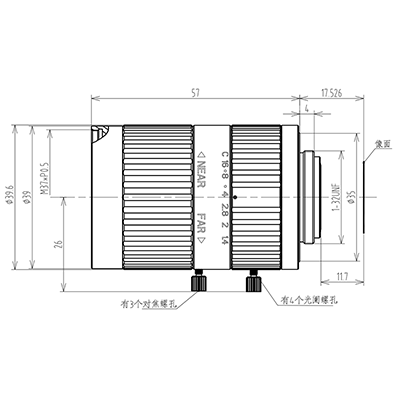
- C0611018M20: 6mm focal length, 1.1-inch sensor format, 20MP, F1.4–16, manual iris.
- C2012028M25: 20mm focal length, 1.1-inch / 1.2-inch sensor format, 25MP, F2.8, manual iris.
- C0811820M5: 8mm focal length, 1/1.8-inch sensor format, 5MP, F2.0, manual iris.
Explore the 1.1-inch 20MP Machine Vision Lens range for high-resolution industrial imaging requirements and other C-Mount industrial lenses.
Varifocal C-Mount Lenses
Varifocal C-Mount lenses provide adjustable focal lengths for imaging systems that require flexible viewing angles and different observation distances.
Examples from TOWIN’s product range include:
- C105011820M8: 12–50mm focal length, 1/1.8-inch sensor format, 8MP, F2.0–16, manual iris.
- C1212011818M3: 12–120mm focal length, 1/1.8-inch sensor format, 3MP, F2.0–16, manual iris.
- C167011714A8: 16–70mm focal length, 1/1.7-inch sensor format, 8MP, F1.4, DC Auto Iris.
- C06152314A3: 6–15mm focal length, 2/3-inch sensor format, 3MP, F1.4, DC Auto Iris.
Explore TOWIN’s Varifocal C-Mount Lens Collection for available focal-length ranges and optical configurations.
Note: Product specifications should be confirmed against the latest official datasheets before final system integration. The listed products have different sensor formats, optical performance, and intended applications. Not every varifocal product suits precision metrology or every machine vision task.
Frequently Asked Questions
Q1: What is the difference between fixed focal and varifocal lenses?
A: A fixed focal lens has one permanent focal length, while a varifocal lens allows focal-length adjustment within a defined range. This changes the field of view and provides greater flexibility during installation.
Q2: Which lens is better for machine vision?
A: Fixed focal lenses are often suitable for machine vision systems with stable working distances and predefined fields of view. Varifocal lenses are useful when the viewing angle needs to be adjusted. The final choice depends on resolution, distortion, MTF, working distance, and application requirements.
Q3: Are fixed focal lenses always sharper than varifocal lenses?
A: No. Image sharpness depends on optical design, MTF performance, manufacturing quality, focus, aperture, and sensor compatibility. Both fixed focal and varifocal lenses can provide high-quality imaging when properly designed and matched to the camera.
Q4: Can a varifocal lens be used for industrial inspection?
A: Yes, provided its resolution, distortion, focus stability, and mechanical configuration meet the application requirements. For precision inspection, operators shall configure and validate the focal length before normal operation.
Q5: What is the difference between a varifocal lens and a zoom lens?
A: A conventional manual varifocal lens requires physical adjustment of focal length and focus. A zoom lens may maintain focus during focal-length changes, depending on its optical design. Motorized zoom systems can also provide remote focal-length adjustment.
Q6: How do I choose the right focal length for an industrial camera?
A: Consider sensor size, working distance, required field of view, object dimensions, and image resolution. Use an FOV calculation tool to estimate the focal length, then verify the result with the actual optical specifications.
Q7: What is better for a desktop camera or webcam: fixed-focus or varifocal?
A: A fixed-focus lens is often suitable for desktop cameras with a predefined viewing distance and fixed framing. A varifocal lens may be useful when the viewing angle needs adjustment. The choice depends on the camera’s optical design and intended operating distance.
Q8: Can C-Mount and CS-Mount lenses be used on the same camera?
A: C-Mount and CS-Mount have different flange focal distances. A suitable 5mm spacer can generally adapt a C-Mount lens to a CS-Mount camera, subject to camera compatibility. You cannot normally fit a CS-Mount lens onto a C-Mount camera with this setup.
Related Reading
For CCTV and IP camera surveillance projects, read our guide to Fixed vs. Varifocal CCTV Lenses to compare focal length, field of view, and surveillance applications.
Conclusion: Choosing the Right Industrial Camera Lens
Choosing between fixed focal and varifocal lenses requires a clear understanding of the camera’s imaging requirements.
- Fixed focal lenses are suitable for industrial cameras with stable installation positions, predefined fields of view, and repeatable imaging configurations.
- Varifocal lenses provide adjustable focal lengths and are useful when different viewing angles or working distances need to be configured.
Before selecting a lens, evaluate sensor size, focal length, field of view, resolution, MTF, distortion, aperture, and mount compatibility.
TOWIN offers a range of C-Mount industrial lenses and varifocal lens options for machine vision, industrial observation, and other imaging applications.
Need Help Selecting an Industrial Lens?
Tell us your camera sensor size, required field of view, working distance, resolution, and application. TOWIN can help you evaluate a suitable fixed focal or varifocal lens configuration.