

TOF Lens Solutions
TOF Lens for High-Accuracy 3D Depth Sensing Systems
Industrial TOF lenses designed for robotics, 3D vision, AMR navigation and depth sensing cameras.
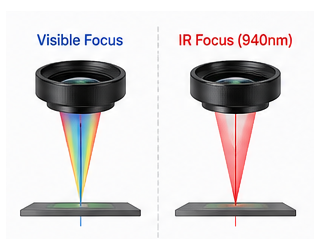
Optimized for 850nm and 940nm infrared wavelengths.
What Is a TOF Lens?
TOF Lens Structure
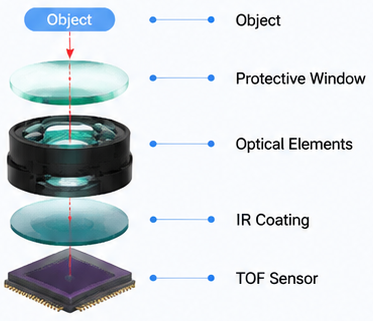
| Component | Function |
|---|---|
| Optical Elements | Focus IR signals onto the TOF sensor for accurate depth measurement. |
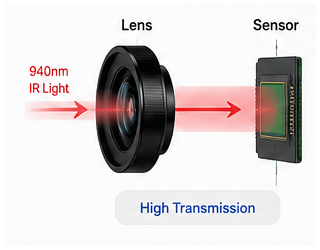
| IR Coating | Improve transmission efficiency at 850nm and 940nm wavelengths. |
| Low Distortion Design | Minimize optical distortion to improve depth accuracy and point cloud quality. |
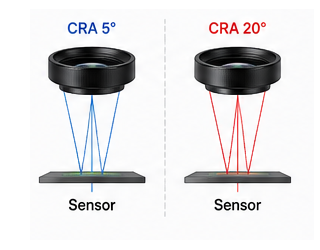
| CRA Optimization | Optimize chief ray angle to match sensor pixels and improve performance. |
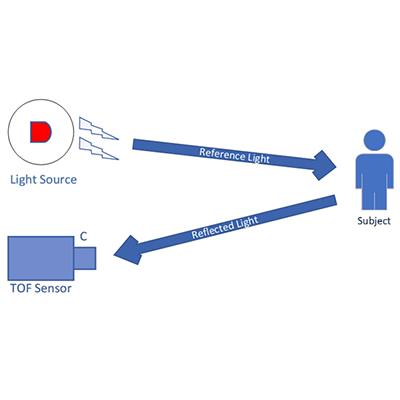
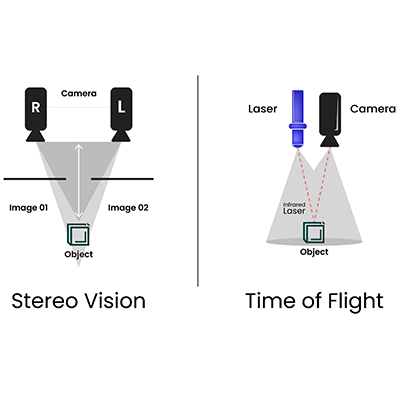
How TOF Imaging Works
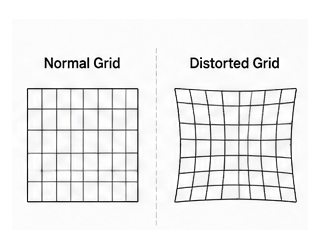
The accuracy of TOF measurement depends heavily on lens distortion, infrared transmission efficiency, and optical consistency.
Learn More About TOF Technology
Key Requirements for TOF Lenses
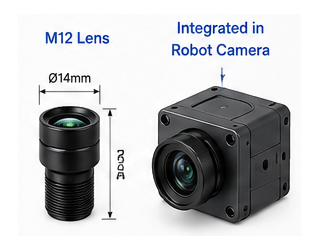
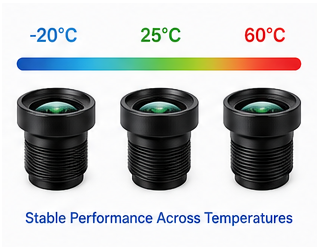
850nm vs 940nm TOF Lenses
| Feature | 850nm | 940nm |
|---|---|---|
| Eye Safety | Lower (more visible to eyes) | Higher (safer for eyes) |
| Ambient Light Interference | Higher | Lower |
| Range Performance | Short to Medium Range | Medium to Long Range |
| Power Consumption | Lower | Slightly Higher |
| Cost | Lower | Slightly Higher |
| Typical Use | Indoor, short-range | Indoor & outdoor, long-range |
Summary
850nm is ideal for indoor, cost-sensitive, short-range applications.
940nm is better for eye-safe, outdoor, and long-range applications.
Which wavelength should you choose?
| Application | Recommended Wavelength |
|---|---|
| Robot Navigation | 940nm |
| Indoor 3D Scanner | 850nm |
| Face Recognition | 940nm |
| Industrial Inspection | 850nm |
| Outdoor System | 940nm |
Select TOF Lenses for 3D Depth Sensing
Selecting a TOF lens requires matching:
- Sensor
- Wavelength
- FOV
- Distortion
- IR performance
Why it's important?




Recommended TOF Lens Models
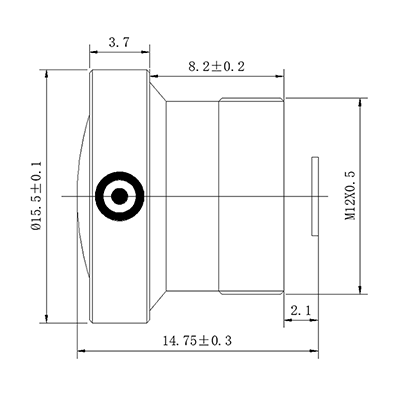
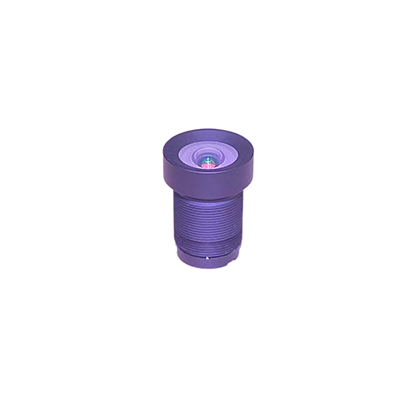
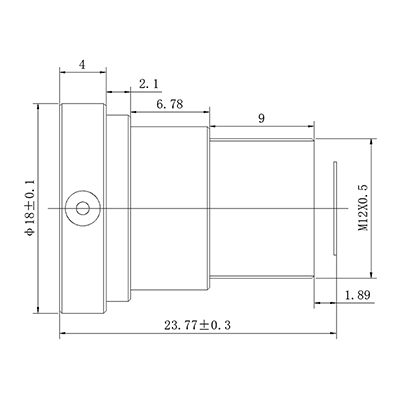
| Model | FOV (D) | Sensor | Mount | Wavelength | Key Features | Best Application |
|---|---|---|---|---|---|---|
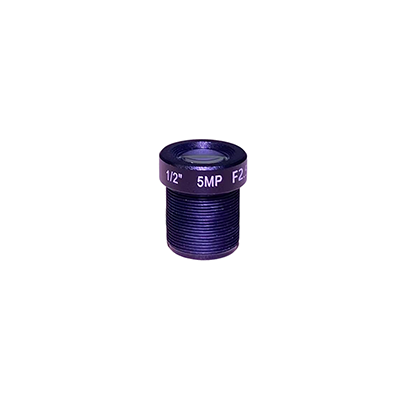
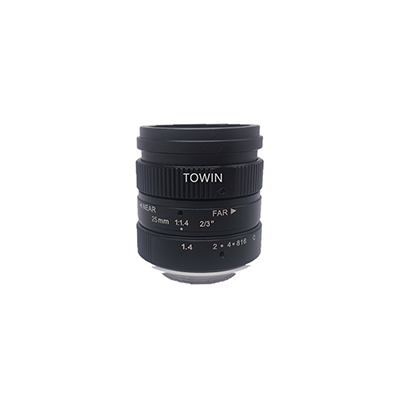
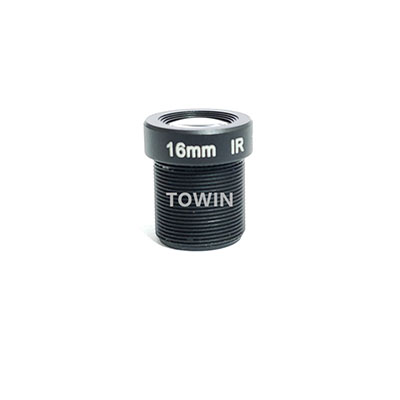
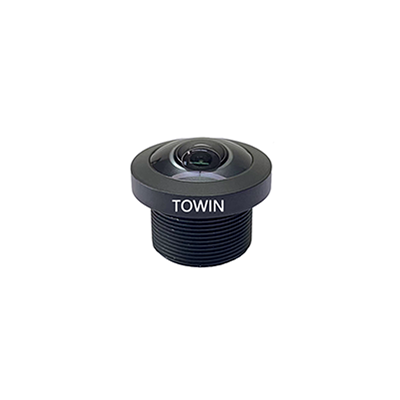
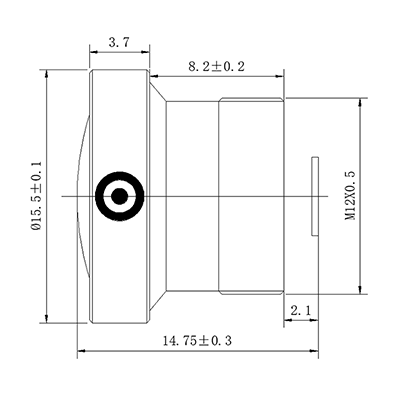
| S01714012013IRB9 | 147° | 1/4" | M12 | 850/940nm | Ultra wide FOV, compact size, high IR transmission | Robot Navigation |
| S04112009316IR | 120° | 1/2" | M12 | 850/940nm | Balanced performance, low distortion, high uniformity | Industrial 3D Vision |
| S08012004812IR | 60° | 1/2" | M12 | 850/940nm | High resolution, low distortion, precision depth | Precision Measurement |
Optical Performance Verification
Distortion Curve
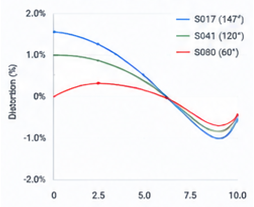
Low distortion design ensures accurate depth measurement and minimal geometric error across the entire FOV.
S01714012013IRB9 < ±2.0% S04112009316IR < ±1.0% S08012004812IR < ±0.5%
Relative Illumination Curve
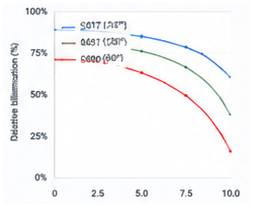
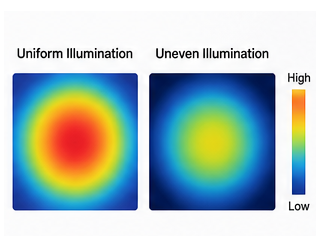
High and uniform illumination improves point cloud consistency and depth measurement reliability.
S01714012013IRB9 > 70% S04112009316IR > 80% S08012004812IR > 85%
CRA Distribution
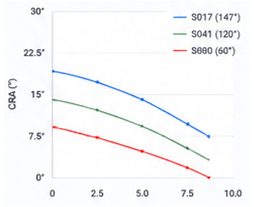
Optimized CRA design matches sensor microlens acceptance angle for high quantum efficiency.
S01714012013IRB9 < 25° S04112009316IR < 18° S08012004812IR > 12°
MTF Chart (10 lp/mm)
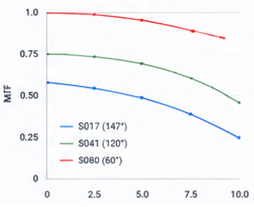
High MTF lens performance ensures clear depth details and precise accurate 3D reconstruction.
S01714012013IRB9 > 0.45 S04112009316IR > 0.60 S08012004812IR > 0.70
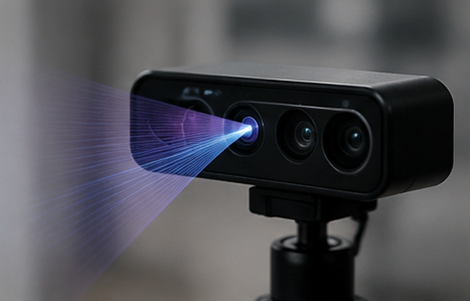
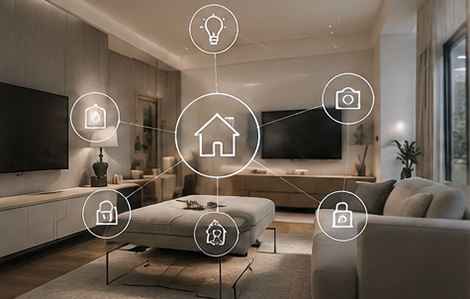
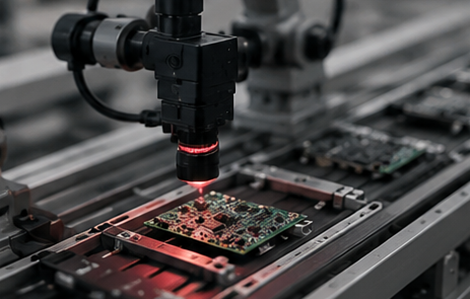
TOF Lens Applications Across Industries

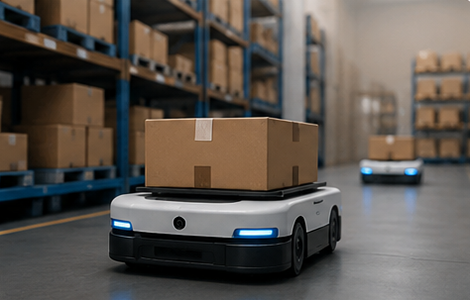

Why Choose Towin TOF Lenses

Recommended TOF Lens Specifications
| Parameter | Recommendation |
|---|---|
| Focal Length | 2.1-8mm |
| Distortion | <2% |
| Wavelength | 850nm / 940nm |
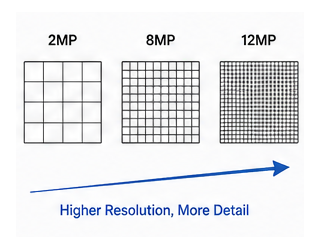
| Resolution | 2MP-8MP |
| Mount | M12 |
| Sensor Format | 1/4" - 1/1.8" |
Knowledge Center
Related Technical Guides
Frequently Asked Questions
Need Help Selecting the Right TOF Lens?
Tell us:
Sensor Model
Wavelength (850nm / 940nm)
FOV Requirement
Working Distance
Target Accuracy
Our optical engineers will recommend the most suitable TOF lens for your project.
Let’s Build the Right Optical Solution Together
Have a question, need a quote, or want to discuss your project? Our optical experts are ready to help.

Expert Support
Get professional advice from our optical engineers.

Tailored Solutions
We provide customized lens solutions that fit your application.

Reliable Quality
High-quality manufacturing with strict testing and quality control.

Fast Response
We value your time and will get back to you as soon as possible.
Send Us a Message