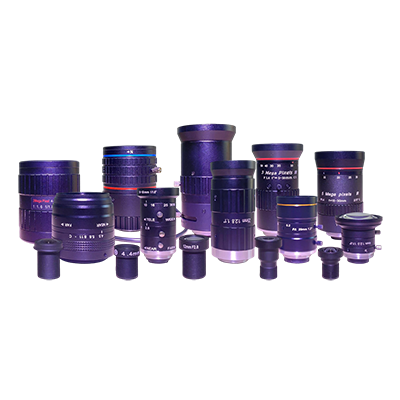


Lens Basics for Machine Vision & Industrial Cameras
Master industrial optics from beginner to expert.
Learn focal length, FOV, sensor size, image circle, distortion, MTF, lens selection, optical design, and real-world machine vision applications—all in one comprehensive knowledge hub.
✔ 50+ Technical Articles
✔ 8 Knowledge Categories
✔ 20+ Lens Selection Guides
✔ Industrial Engineer Resources
Understanding Industrial Lens Fundamentals
What You Will Learn in This Knowledge Center
Optical Fundamentals
- ✓ Focal Length
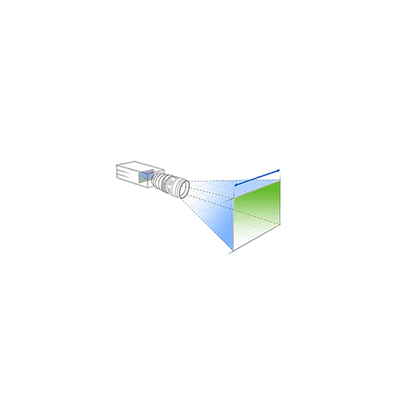
- ✓ Field of View (FOV)
- ✓ Depth of Field (DOF)
- ✓ Aperture & F-number

Lens Performance
- ✓ MTF (Modulation Transfer Function)
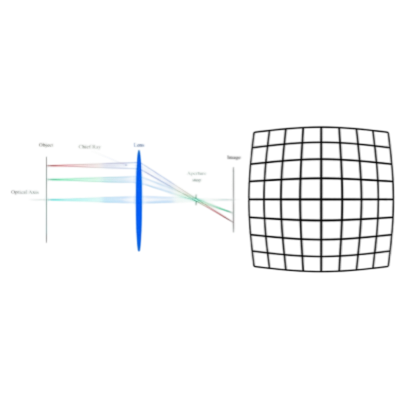
- ✓ Distortion
- ✓ CRA (Chief Ray Angle)
- ✓ Relative Illumination

Application Design
- ✓ Machine Vision
- ✓ Robotics
- ✓ Medical Imaging
- ✓ ADAS & Autonomous Driving
Core Industrial Lens Knowledge

Lens Basics
Understand the fundamentals of industrial lenses.

Focal Length
Learn how focal length affects magnification and field of view.
Sensor Size
Understand sensor formats and their impact on imaging.

Field of View (FOV)
Learn how to calculate and optimize the field of view.
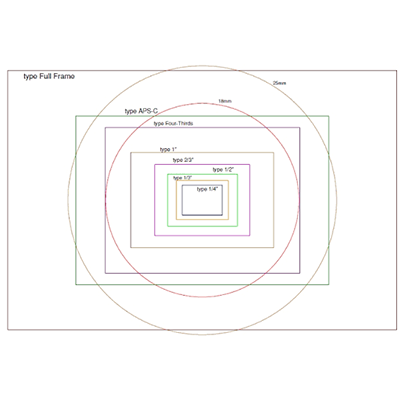
Image Circle
Understand image circle coverage and vignetting.

Depth of Field (DOF)
Learn how DOF affects focus range and image clarity.

Resolution
Understand resolution, pixel size and system performance.

MTF
Learn how MTF determines lens sharpness and contrast.
Distortion
Understand distortion types and their impact on measurement.
Lens Selection
Learn how to select the right lens for your application.
Applications
Explore real-world applications across industries.

Master Industrial Vision Optics
Apply your knowledge to solve real-world imaging challenges.
Key Lens Parameters Comparison
| Parameter | Affects | Typical Unit | Description | Related Guide |
|---|---|---|---|---|
| Focal Length | Field of View (FOV) Magnification | mm | Determines the angle of view and magnification of the imaging system. | Learn More → |
| Brightness | Brightness Depth of Field | F-number (f/) | Controls the amount of light entering the lens and affects depth of field. | Learn More → |
| Image Circle | Image Circle Vignetting | inch | The sensor size determines the required image circle for full coverage. | Learn More → |
| Image Sharpness | Image Sharpness Detail Resolution | MP (Megapixel) | Higher resolution requires lenses with better optical performance. | Learn More → |
| Measurement Accuracy | Measurement Accuracy Image Geometry | % | Distortion affects image geometry and measurement accuracy. | Learn More → |
| Optical Performance | Optical Performance Contrast | lp/mm | MTF indicates how well the lens reproduces contrast at different spatial frequencies. | Learn More → |
Featured Lens Basics Articles

How Does Aperture Affect Depth of Field in Industrial Imaging?
How does aperture affect depth of field? Learn how F-number, brightness, sharpness and lens selection impact machine vision.
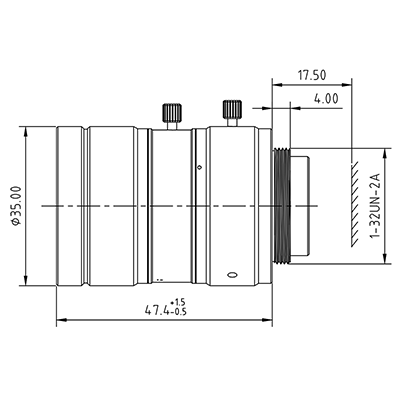
What Is Depth of Field in Industrial Imaging?
Understand what is depth of field in industrial imaging, how DOF affects machine vision, and how to select the right industrial lens.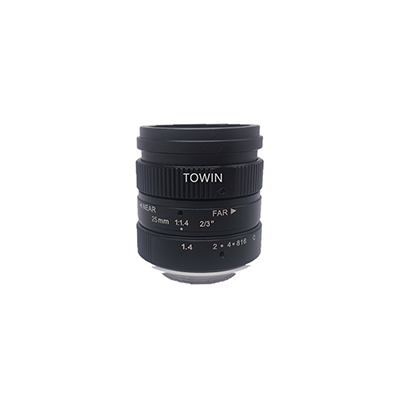
Why Is Low Distortion Important in Machine Vision?
Why is low distortion important in machine vision? Learn how distortion affects accuracy, inspection and lens selection.What Is Image Circle in an Industrial Lens?
Learn what image circle is in an industrial lens, how it matches sensor size, and why it matters for lens selection.
Lens Basics Across Industrial Applications
Machine Vision
High-precision imaging for inspection and measurement
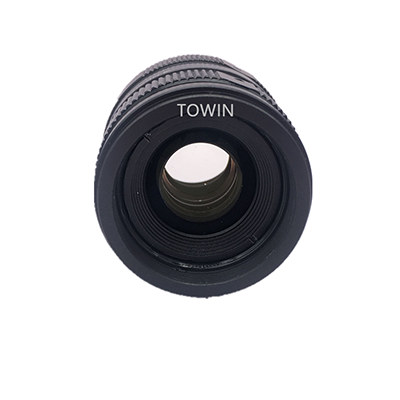 FA Lens Low Distortion
 5MP~20MP
Applications
Robotics & Automation
Reliable vision for guidance, pick-and-place, and navigation
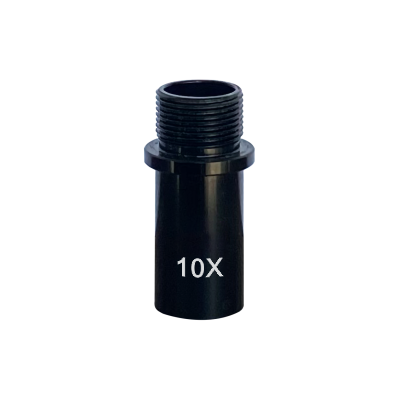 Telecentric Lens
 High Accuracy 3MP~12MP
Applications
ADAS & Autonomous Driving
Advanced imaging for vehicle perception and safety
 Wide Angle Lens
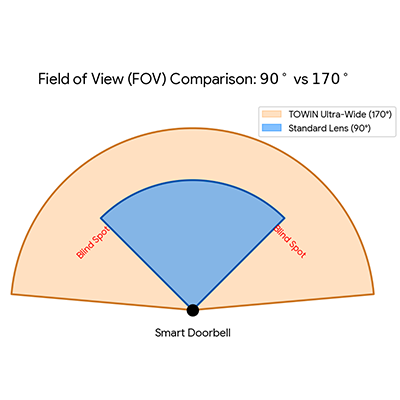 Wide FOV 2MP~8MP
Applications
Medical Imaging
High-quality imaging for diagnostic and medical devices
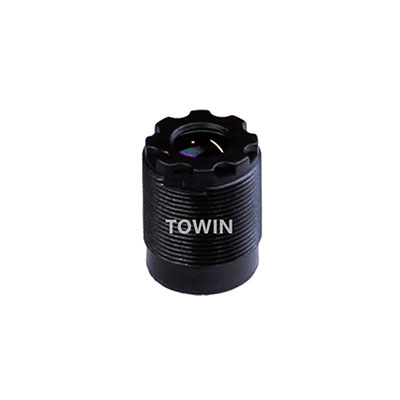 Macro Lens High Resolution 2MP~16MP
Applications
Security & Surveillance
Day/night monitoring for safety and perimeter protection
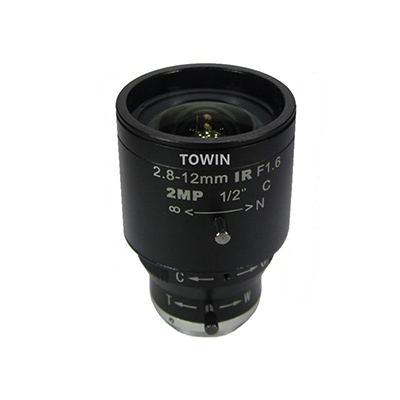 Varifocal Lens
 Low Light 2MP~8MP
Applications
Drones & UAV
Lightweight imaging for aerial inspection and mapping
Wide Angle Lens Lightweight 2MP~24MP
Applications
Scientific & Research
Precision imaging for analysis and scientific discovery
Macro/Zoom Lens High Precision 5MP~45MPApplications
AR / VR / 3D Imaging
Immersive imaging for augmented and virtual reality
Ultra Wide Lens 3D Perception 2MP~12MP
Applications
How to Select an Industrial Lens
Sensor Size
Identify your camera sensor size to determine the required image circle.
Working Distance
Define the distance between the lens and the target object.
Field of View
Calculate the required FOV to capture the target area.
Calculate With
Resolution
Match the lens resolution with your camera's pixel size and system needs.
Distortion
Choose low distortion lenses for measurement and high-precision applications.

Lens Mount
Select the right lens mount for your camera interface.
Recommended Lens
Get the best matching lens for your application.
Lens selection is the key to high-performance imaging.
Use Lens Selection Guide
Get a complete guide to lens selection with detailed explanations and practical examples.
View Lens Selection Guide→Use FOV Calculator
Calculate field of view, object size and find the perfect focal length for your application.
Open FOV Calculator→Common Industrial Lens Design Questions
Why Is My Image Blurry?

How Do I Reduce Image Glare?
What Causes Lens Distortion?
What Is the Difference Between C-Mount and CS-Mount?

Does a Larger Aperture Always Improve Image Quality?

How Does Sensor Size Affect Field of View?
Frequently Asked Questions
Choose the Right Industrial Lens for Your Application
FA Lens
Designed for factory automation & machine vision, FA lenses deliver high resolution, low distortion and reliable imaging for inspection, measurement, barcode reading and other vision applications.
Best For
- Factory Automation
- High-Speed Inspection
- Barcode Reading
- OCR / Text Recognition
Key Features
- High Resolution
- Low Distortion
- Compact Design
- Wide Fext Options
Typical Applications
Low Distortion Lens
Optimized for geometric accuracy, low distortion lenses reduce image deformation and improve measurement consistency across the entire field of view.
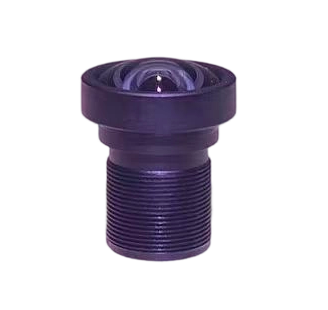
Best For
- Precision Measurement
- PCB / SMT Inspection
- Semiconductor
- Calibration / Metrology
Key Features
- Ultra-Low Distortion (<0.1%)
- High MTF Performance
- Accurate Geometry
- Sharp Edge Imaging
Typical Applications
Telecentric Lenses
Ideal for precision metrology and dimensional inspection, telecentric lenses minimize perspective error and maintain consistent magnification for high-accuracy measurements.
Best For
- Precision Metrology
- Dimension Measurement
- Gauging / Inspection
- Defect Detection
Key Features
- Constant Magnification
- No Perspective Error
- High Depth of Field
- Ultra-High Accuracy
Typical Applications
Industrial Lens Category Comparison
| Lens Type | Resolution | Distortion | Field of View | Depth of Field | Best For |
|---|---|---|---|---|---|
| FA Lens for Machine Vision | ★★★★★ | Low | Wide | Medium | General Machine Vision |
| Low Distortion Lens | ★★★★★ | Ultra Low (<0.1%) | Wide | Medium | Measurement & Inspection |
| Telecentric Lens | ★★★★★ | Near Zero | Medium | High | Metrology & Precision Measurement |
Not sure which lens is right for your project?
Use our Lens Selection Guide to compare different lenses based on sensor size, working distance, field of view, and image accuracy.
Need Help Selecting an Industrial Lens?
Towin Lens provides industrial optical solutions for machine vision, robotics, medical imaging, intelligent transportation, and AI vision systems. Contact our engineering team for lens selection support and custom optical recommendations.
Let’s Build the Right Optical Solution Together
Have a question, need a quote, or want to discuss your project? Our optical experts are ready to help.

Expert Support
Get professional advice from our optical engineers.

Tailored Solutions
We provide customized lens solutions that fit your application.

Reliable Quality
High-quality manufacturing with strict testing and quality control.

Fast Response
We value your time and will get back to you as soon as possible.
Send Us a Message