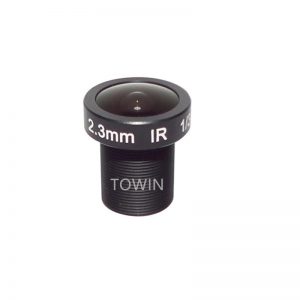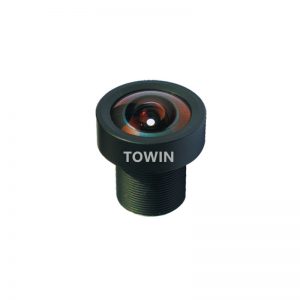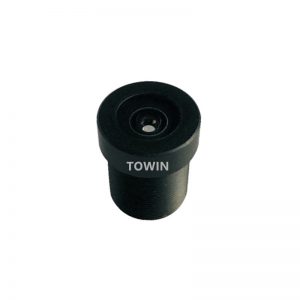



Fisheye Lens – CCL118032MPF
06/30/2025
Wide Angle Lens – CCL118040MP1
07/01/2025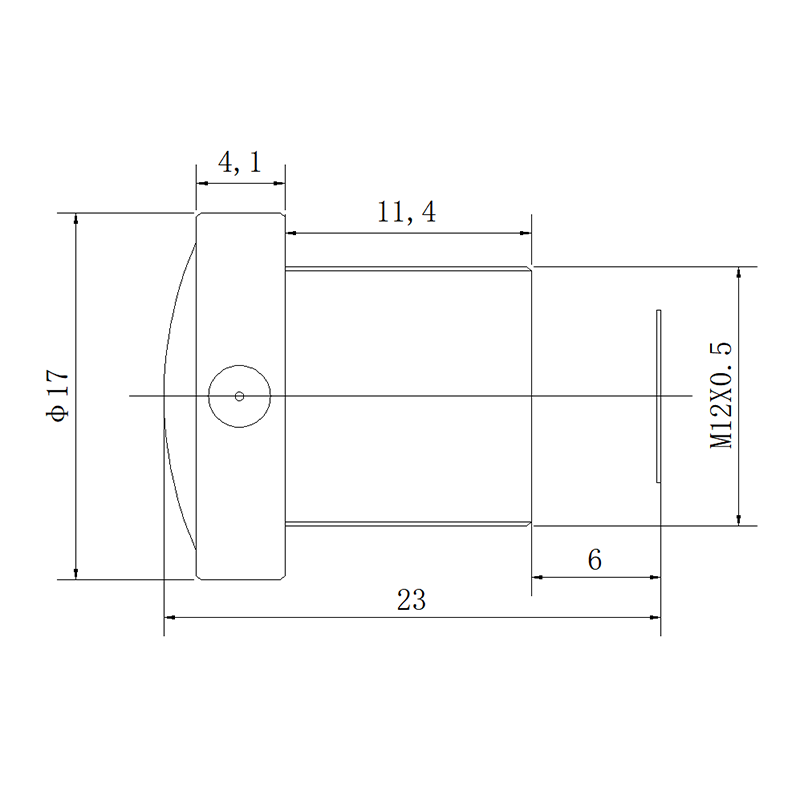
Wide Angle Lens – CCL118040MP
4mm 8MP M12 Wide Angle lens with up to 135° diagonal FOV, F2.0 aperture, manual focus, and compact 6G optical structure for ultra-wide industrial vision.
CCL118040MP-Wide angle lens, 8 MP F2.0 M12-mount manual focus lens
| IMAGE FORMAT | 1/1.8″ |
| FOCAL LENGTH | 4mm |
| F.O.V.(@IMX334) | 134°(D=8.86) |
| 115°(H=7.73) | |
| 63° (V=4.35) | |
| F.O.V.(@IMX178) | 135°(D=8.95) |
| 110°(H=7.43) | |
| 73° (V=4.99) | |
| RESOLUTION | 8 MP |
| APERTURE | F2.0 |
| DISTORTION | <-49% |
| MOUNT | M12 |
| IRIS | Fixed |
| FOCUS | Manual |
| ZOOM | Fixed |
| B.F.L. | 7.5mm |
| STRUCTURE | 6G |
4mm 8MP M12 Wide Angle Lens for Ultra-Wide Machine Vision
This 4mm 8MP M12 Wide Angle lens is designed for compact imaging systems that require an exceptionally wide field of view with high-resolution image capture. Delivering up to 135° diagonal FOV with the IMX178 sensor and 134° diagonal FOV with the IMX334, the lens provides extensive scene coverage from a compact M12 optical configuration. Its F2.0 fixed aperture, manual focus, 7.5mm BFL, and 6G optical structure make it suitable for embedded cameras, industrial vision systems, robotic vision, and wide-area monitoring applications. Explore more compact optical solutions in TOWIN’s M12 lens range through M12 Lenses.
Product Core Highlights
- Up to 135° Ultra-Wide FOV — The lens delivers 134° diagonal FOV with IMX334 and 135° diagonal FOV with IMX178, enabling broad scene capture from a compact 4mm focal length.
- 8MP High-Resolution Imaging — Supports detailed image acquisition for systems that need to combine extensive coverage with higher image resolution.
- M12 Compact Mount — The M12 interface is well suited to embedded cameras, compact industrial imaging modules, and space-constrained optical assemblies.
- F2.0 Fixed Aperture — Provides practical light-gathering capability while maintaining a compact optical configuration.
- 6G Optical Structure — The six-element optical construction provides a compact solution for wide-angle imaging systems requiring a balance between optical performance and integration size.
Wide Angle Lens Applications
Core Application Scenes
The combination of a 4mm focal length, 8MP resolution, and more than 130° diagonal field of view makes this lens suitable for imaging environments where a camera needs to observe a large area without using a long or bulky optical assembly. Compared with conventional narrow-angle lenses, its Wide Angle design allows a substantially larger scene to be captured from the same camera position.
For industrial machine vision, the lens can be used for applications where broad workspace visibility is more important than maintaining straight-line geometry. It can help monitor large equipment areas, robotic workspaces, production zones, and compact inspection environments where a wide viewing angle is required. For additional industrial optical solutions, see TOWIN’s Machine Vision solutions.
The lens is also suitable for robotic vision and embedded imaging, particularly when the camera must observe a large operating area from a relatively fixed position. Its compact M12 mount helps simplify integration into small camera housings and embedded vision modules. TOWIN’s Robotics Vision solutions provide additional optical options for robotic imaging systems.
Designed for ultra-wide-angle machine vision application, this lens is particularly useful when broad scene coverage is a primary design requirement.
Compatible Device List
- Compact industrial cameras
- M12 camera modules
- Embedded vision cameras
- Machine vision cameras
- Robotic vision cameras
- Industrial monitoring cameras
- Wide-area inspection cameras
- Compact AI vision devices
- Smart security imaging equipment
- Indoor panoramic and ultra-wide cameras
- Embedded monitoring modules
Understanding the Wide Angle Distortion
With distortion below -49%, this lens should be understood as a ultra-wide-angle lens rather than a low-distortion lens. The high distortion is a consequence of achieving a very large field of view from a short 4mm focal length.
This characteristic can be beneficial when the primary objective is to maximize scene coverage. For example, a system monitoring a large workspace may accept geometric deformation at the image edges in exchange for capturing a wider area with a single camera.
However, applications such as precision measurement, dimensional inspection, or image processing that depends on accurate geometric relationships may require a different optical design. In those situations, TOWIN’s Low Distortion Lens range should be considered instead.
Sensor Compatibility and Field of View
This lens is specified for a 1/1.8″ image format and provides different FOV characteristics depending on the image sensor used.
With the IMX334, the lens provides approximately 134° diagonal, 115° horizontal, and 63° vertical FOV. With the IMX178, it provides approximately 135° diagonal, 110° horizontal, and 73° vertical FOV.
This difference demonstrates why sensor selection is an important part of lens matching. Before selecting a lens for a new camera design, engineers should verify sensor format, active sensor dimensions, image circle, and required field of view. TOWIN’s Sensor Guide can help with sensor-to-lens compatibility evaluation.
Frequently Asked Questions
Q: What type of lens is the 4mm 8MP M12 lens?
A: This is a fixed-focal-length M12 Wide Angle lens designed for ultra-wide-angle imaging. Its approximately 134°–135° diagonal FOV provides broad scene coverage for compact camera systems.
Q: What is the field of view of this lens?
A: With the IMX334 sensor, the lens provides 134° diagonal, 115° horizontal, and 63° vertical FOV. With the IMX178, it provides 135° diagonal, 110° horizontal, and 73° vertical FOV.
Q: Is this lens a low-distortion lens?
A: No. Its distortion is below -49%, which is characteristic of its Wide Angle optical design. The lens is intended to prioritize ultra-wide scene coverage rather than low geometric distortion.
Q: What mount does this 4mm lens use?
A: The lens uses an M12 mount and is designed for compact camera modules and embedded imaging systems using an M12 optical interface.
Q: Is the lens suitable for machine vision?
A: Yes, particularly for machine vision applications that require very wide scene coverage. It is suitable for workspace monitoring, equipment observation, robotic environments, and other applications where wide-angle visibility is more important than low distortion.
Q: What aperture does the lens use?
A: The lens has a fixed F2.0 aperture, providing a practical balance between light collection and compact optical construction.
Q: Does the lens support manual focusing?
A: Yes. The lens uses manual focus, allowing the focus position to be adjusted during camera installation and optical setup.
Q: Is this lens IR corrected?
A: The supplied specification identifies the lens as a 6G optical structure and does not specify an IR-corrected optical design. Therefore, it should not be classified as an IR Corrected Lens based solely on the available specifications.
Lens Selection Resources
When selecting an ultra-wide-angle lens, engineers should evaluate focal length, sensor format, field of view, resolution, distortion, working distance, and mounting interface together rather than selecting a lens based on focal length alone.
TOWIN’s Lens Selection Guide provides practical guidance for comparing these optical parameters.
For calculating the expected image coverage, the FOV Calculator can be used to evaluate field of view based on lens and camera parameters.
For a broader understanding of focal length, sensor size, FOV, distortion, and other optical fundamentals, visit the Lens Basics Knowledge Center.
Online contact