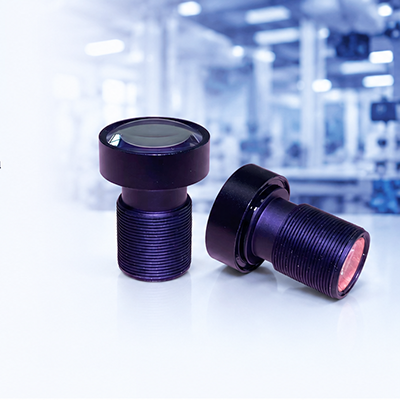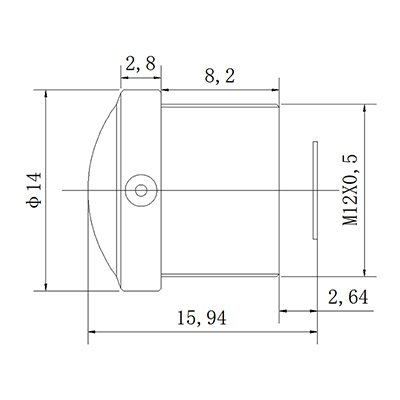



Plastic pinhole lens
08/27/2025
Macro lenses with adjustable aperture settings
08/27/2025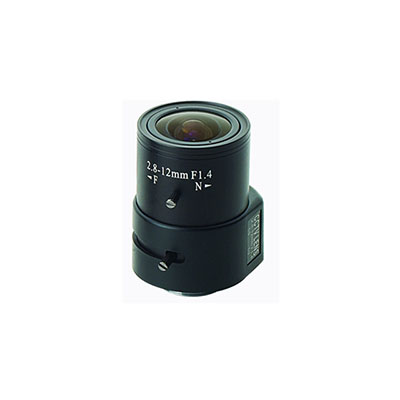
A constant aperture zoom lens maintains the same maximum aperture throughout its entire zoom range, helping cameras maintain consistent exposure when focal length changes. However, not every CCTV zoom lens or varifocal lens uses a constant aperture design. Understanding the difference between a constant aperture zoom lens and a variable aperture zoom lens is essential when selecting optics for surveillance, industrial imaging, and machine vision applications.
In this guide, we explain how constant aperture and variable aperture zoom lenses work, what F2.8 means in practical imaging, how iris control affects exposure, and which specifications matter when choosing a varifocal CCTV lens for your imaging system.
What Is a Constant Aperture Zoom Lens?
A constant aperture zoom lens is a zoom lens designed to maintain the same maximum aperture across its entire focal length range. For example, a 5–50mm F2.8 constant aperture zoom lens would maintain a maximum aperture of F2.8 at both the wide-angle and telephoto ends, as well as throughout the intermediate zoom positions.
This differs from a variable aperture zoom lens, whose maximum available aperture may become smaller as the lens zooms toward its telephoto end. The actual behavior depends on the optical design.
The term fixed aperture zoom lens is sometimes used to describe this design. However, fixed maximum aperture and fixed iris aperture are not necessarily the same thing. A lens can have a constant maximum aperture while still allowing the iris to be adjusted.
Constant F2.8 means that the maximum available aperture remains F2.8 throughout the zoom range. It does not mean that the iris cannot be stopped down to a smaller aperture.
How Does a Constant Aperture Zoom Lens Work?
A zoom lens uses multiple optical elements that move relative to one another to change the effective focal length. During this movement, the optical system must maintain its designed light-gathering capability if it is specified as a constant aperture zoom lens.
The maximum aperture is expressed as an F-number, calculated by dividing the focal length by the effective entrance pupil diameter:
A smaller F-number generally indicates a larger relative aperture.
For example, F2.8 allows more light than F4 under comparable optical conditions. However, actual image brightness also depends on transmission efficiency, sensor sensitivity, exposure time, and other system factors.
In surveillance and industrial imaging, stable exposure during zoom adjustment can be useful when a camera needs to monitor objects at different distances without unexpected brightness changes caused by a changing maximum aperture.
Constant Aperture vs. Variable Aperture Zoom Lens
The main difference between a constant aperture zoom lens and a variable aperture zoom lens is how the maximum available aperture behaves as focal length changes.
| Specification | Constant Aperture | Variable Aperture |
|---|---|---|
| Maximum F-number | Remains consistent | May change with zoom |
| Exposure behavior | More consistent maximum aperture | Maximum light availability may decrease |
| Optical design | Designed for constant maximum aperture | Allows changing maximum aperture |
| Typical selection priority | Consistent light-gathering capability | Flexible zoom and cost considerations |
| Applications | Video and specialized imaging systems | CCTV and general surveillance |
Which Design Is Better?
Neither design is universally better. A constant aperture zoom lens is useful when maintaining maximum light-gathering capability across the zoom range is important. A variable aperture zoom lens may be a practical choice when focal length flexibility, system cost, and application-specific exposure requirements are the main priorities.
For industrial and security camera systems, engineers should evaluate the complete optical and imaging configuration instead of selecting a lens based on aperture alone.
What Does F2.8 Mean in a Zoom Lens?
F2.8 is a common aperture specification in optical imaging. It describes the relationship between focal length and entrance pupil diameter, rather than directly specifying the total amount of light reaching the sensor.
A zoom lens with a constant F2.8 aperture maintains the same maximum F-number throughout its zoom range. This can help prevent the maximum available light from decreasing as the lens moves toward longer focal lengths.
F2.8 vs. F4: What Is the Difference?
At the same focal length and under comparable conditions, an F2.8 aperture has a larger entrance pupil than F4. The theoretical difference is approximately one stop, meaning F2.8 can admit about twice as much light as F4.
For low-light surveillance, traffic monitoring, and industrial imaging, a larger aperture can help improve exposure flexibility. Nevertheless, lens transmission, sensor performance, noise, depth of field, and illumination conditions must also be considered.
Constant Aperture, Fixed Iris, and Auto Iris: Understanding the Difference
These three terms are related to aperture control, but they describe different characteristics of a lens.
1. Constant Aperture
Constant aperture describes a zoom lens whose maximum available F-number remains unchanged throughout its zoom range.
2. Fixed Iris
A fixed iris lens has an aperture that is not designed for user or camera-controlled adjustment. The aperture remains at its specified setting during normal operation.
3. Auto Iris
An auto iris lens adjusts its iris opening in response to changing illumination, helping the camera maintain suitable exposure. DC auto iris and P-Iris are common iris control technologies used in surveillance and imaging systems.
Explore CS-Mount lenses with manual iris, DC auto iris, and P-Iris options to understand the different configurations available for CCTV and network camera systems.
Applications of Constant and Variable Aperture Zoom Lenses
Zoom lenses are used in different imaging systems where adjustable focal length helps engineers match the field of view to the working distance and target size.
CCTV and Video Surveillance
Varifocal CCTV lenses allow installers to adjust the viewing angle and framing during camera installation. Depending on the lens configuration, manual zoom, motorized zoom, manual iris, or DC auto iris may be available.
For security camera manufacturers and system integrators, TOWIN Smart Security Lens Solutions provide optical options for surveillance, intelligent monitoring, and day-and-night imaging systems.
Traffic Monitoring and Intelligent Transportation Systems
Traffic monitoring cameras often require longer focal lengths to capture vehicles and other targets at greater distances. Zoom range, sensor compatibility, IR correction, resolution, and aperture are important selection factors.
Explore C-Mount vari-focal CCTV lenses for different focal length and imaging requirements.
Industrial Imaging and Machine Vision
In industrial imaging, adjustable focal length can help engineers configure cameras for different working distances and inspection areas. However, machine vision applications may require additional attention to resolution, distortion, image circle, and optical consistency.
For applications requiring precision imaging, explore TOWIN C-Mount industrial lenses, designed for machine vision, factory automation, and industrial imaging systems.
How to Choose the Right Zoom Lens for Your Camera
Choosing a suitable zoom lens requires more than comparing maximum aperture values. The following specifications should be evaluated together.
1. Focal Length Range
Select a focal length range according to the required field of view, camera-to-object distance, and target size. Shorter focal lengths generally provide wider views, while longer focal lengths provide narrower views.
2. Maximum Aperture
Check the maximum aperture across the full zoom range. If constant aperture performance is required, request confirmation of the F-number at the wide-angle and telephoto positions.
3. Sensor Size and Image Circle
The lens image circle must adequately cover the camera sensor. A mismatch can cause vignetting, reduced image quality, or incomplete sensor coverage.
4. Resolution and Pixel Requirements
The lens resolution should match the camera sensor and the detail requirements of the application. Consider the sensor pixel size, optical resolution, and intended inspection or identification distance.
5. Iris Control
Choose between manual iris, fixed iris, and auto iris according to the lighting conditions and exposure control requirements of the system.
6. Lens Mount and Mechanical Compatibility
Verify the mount type, flange focal distance, mechanical dimensions, and back focal requirements before integrating the lens with a camera.
Browse C-Mount lens options and CS-Mount lens options to compare available optical configurations.
TOWIN Vari-Focal CCTV and Industrial Zoom Lens Options
TOWIN supplies C-Mount and CS-Mount optical lenses for CCTV surveillance, traffic monitoring, and industrial imaging. Available configurations include different focal lengths, aperture specifications, iris control methods, sensor formats, and resolutions.
The following examples illustrate different zoom lens configurations. They should not be interpreted as constant F2.8 zoom products.
C381811816A3 – 3.8–18mm C-Mount CCTV Lens
This IR-corrected vari-focal lens supports 1/1.8-inch sensors and 3MP imaging. Its F1.6 aperture and DC auto iris configuration make it an option for surveillance and traffic monitoring applications.
C1212011818M3 – 12–120mm C-Mount CCTV Lens
This long-range vari-focal lens supports 1/1.8-inch sensors and 3MP resolution. It features an F1.8–16 aperture range, manual iris, and a low-distortion optical design specified at less than 0.1%.
CS361111815A3 – 3.6–11mm CS-Mount CCTV Lens
This CS-Mount vari-focal lens supports 1/1.8-inch sensors and 3MP imaging. Its F1.5 aperture, DC auto iris, and IR-corrected optical design make it suitable for day-and-night surveillance systems.
For additional configurations, visit the complete TOWIN Vari-Focal CCTV Lens Collection.
Frequently Asked Questions About Constant Aperture Zoom Lenses
Q1: What is a constant aperture zoom lens?
A constant aperture zoom lens maintains the same maximum F-number throughout its focal length range. For example, a constant F2.8 zoom lens provides a maximum aperture of F2.8 at both the wide and telephoto ends.
Q2: Is F2.8 always a constant aperture?
No. F2.8 may describe the maximum aperture at a particular focal length or the constant maximum aperture across the entire zoom range. The complete lens specification must confirm which design is used.
Q3: What is the difference between constant aperture and variable aperture zoom lenses?
A constant aperture zoom lens maintains the same maximum F-number throughout zooming, while a variable aperture zoom lens may have a smaller maximum aperture at longer focal lengths.
Q4: What is the difference between fixed iris and constant aperture?
Fixed iris means the aperture is not adjustable during normal operation. Constant aperture describes the maximum available F-number across the zoom range. A constant aperture zoom lens can still have an adjustable iris.
Q5: Is a constant aperture zoom lens better for CCTV?
It can be useful when consistent maximum light-gathering capability is important during zoom adjustments. However, CCTV lens selection should also consider focal length, sensor size, resolution, iris control, and day-and-night performance.
Q6: What does DC auto iris mean in a zoom lens?
DC auto iris is an electronically controlled iris system that adjusts the aperture according to illumination conditions. It helps maintain suitable image exposure when ambient lighting changes.
Q7: How do I select a suitable CCTV zoom lens?
Start by matching the focal length range, sensor format, image circle, resolution, aperture, iris type, and mount to your camera and working environment. Also consider IR correction and mechanical compatibility for day-and-night surveillance applications.
Conclusion: Choosing the Right Constant Aperture Zoom Lens
A constant aperture zoom lens provides consistent maximum aperture performance throughout its zoom range, while a variable aperture zoom lens offers a different balance of optical design and system requirements. Understanding these differences helps engineers select suitable optics for CCTV, surveillance, traffic monitoring, and industrial imaging.
When selecting a zoom lens, evaluate aperture together with focal length, sensor size, resolution, iris control, and optical performance. TOWIN offers a range of C-Mount and CS-Mount varifocal lenses for different imaging requirements.
Looking for a suitable zoom lens for your camera system? Explore TOWIN vari-focal CCTV lenses or browse our industrial lens product range to find an optical solution for your application.