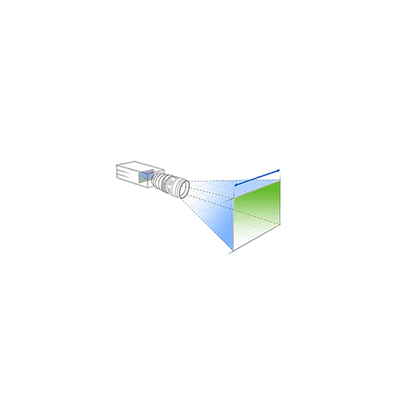



Application of fisheye lens in virtual reality
08/21/2025
Wide Angle Lens with Enhanced Color Reproduction
08/21/2025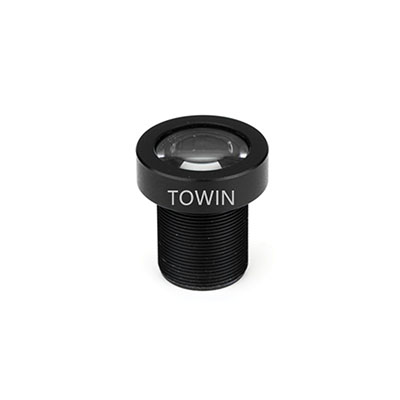
In the world of photography and videography, clarity and precision are non-negotiable. Whether you’re capturing architectural marvels, product details, or portraits, even the slightest distortion can compromise the integrity of your image. Enter the Low-Distortion Lens—a revolutionary tool designed to eliminate optical flaws and deliver unparalleled accuracy.
What Is a Low-Distortion Lens?
A Low-Distortion Lens is an optical device engineered to minimize imperfections like barrel distortion, pincushion distortion, and chromatic aberration. Unlike standard lenses, which may bend straight lines or cause color fringing at edges, a Low-Distortion Lens preserves geometric accuracy and color fidelity. This makes it ideal for applications where precision is critical, such as architectural photography, product imaging, and scientific documentation.
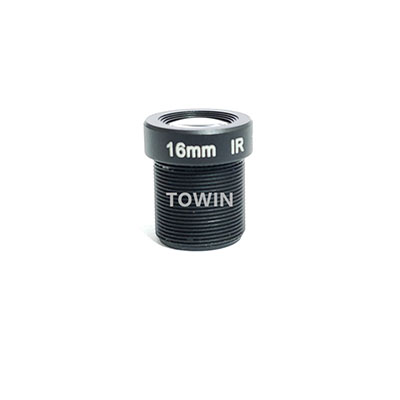
IR-corrected-Low-distortion-CCTV-16mm-M12-lens
How Does It Work?
Traditional lenses use curved glass elements to focus light, but this design can introduce distortions. A Low-Distortion Lens employs advanced optical engineering, including:
- Aspherical Elements: These non-spherical surfaces correct distortion more effectively than conventional lenses.
- ED (Extra-Low Dispersion) Glass: Reduces chromatic aberration by ensuring all wavelengths of light converge at the same point.
- Precision Alignment: Manufacturers use computer-aided design (CAD) and rigorous testing to ensure each element aligns perfectly, eliminating optical flaws.
Why Distortion Matters
Distortion isn’t just an aesthetic issue—it can misrepresent reality. For example:
- In architectural photography, warped lines may make buildings appear tilted or curved.
- In product photography, distorted shapes can mislead customers about an item’s true dimensions.
- In medical or forensic imaging, inaccuracies could lead to misdiagnoses or flawed evidence analysis.
A Low-Distortion Lens eradicates these problems, ensuring your images reflect the world as it truly is. Recommended Reading: 8.8mm 3-Megapixel Low distortion industrial lens
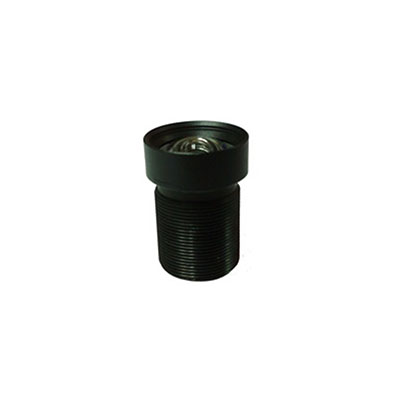
4mm low distortion IR Cut Filter S-Mount Lens
Key Benefits of a Low-Distortion Lens
1. Unmatched Accuracy
By eliminating geometric distortion, these lenses produce images where straight lines remain straight, even at the edges of the frame. This is invaluable for technical fields like engineering, real estate, and e-commerce.
2. Enhanced Color Fidelity
Chromatic aberration causes color fringing around high-contrast edges (e.g., a dark object against a bright sky). A Low-Distortion Lens with ED glass minimizes this effect, resulting in cleaner, more vibrant images.
3. Versatility Across Industries
From aerial photography to industrial inspection, these lenses adapt to diverse scenarios. For instance, drone operators rely on Low-Distortion Lenses to map landscapes accurately, while jewelers use them to capture intricate details without distortion.
4. Cost Efficiency in Post-Processing
Correcting distortion in software like Adobe Lightroom or Photoshop is time-consuming and may degrade image quality. A Low-Distortion Lens reduces the need for edits, saving hours of work and preserving image integrity.
5. Long-Term Investment
While Low-Distortion Lenses may cost more upfront, their durability and precision make them a wise investment for professionals. Brands like Nikon, Canon, and Zeiss offer high-quality options that last for decades.
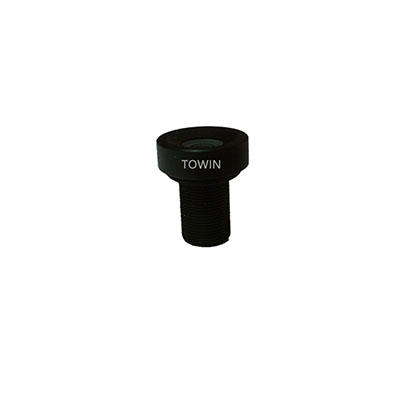
M8 mount low distortion lens
Real-World Applications
- Architecture: Photographers like Julius Shulman relied on distortion-free lenses to showcase iconic buildings like the Stahl House. Today, a Low-Distortion Lens ensures modern structures are captured with flawless geometry.
- E-Commerce: Online retailers use these lenses to display products accurately, reducing returns due to misrepresented sizes or shapes.
- Cinematography: Filmmakers like Christopher Nolan prioritize optical clarity to maintain immersion. A Low-Distortion Lens ensures wide-angle shots don’t distort actors’ faces or set designs.
Choosing the Right Low-Distortion Lens
When selecting a lens, consider:
- Focal Length: Wide-angle lenses (e.g., 14–24mm) are prone to distortion; opt for models specifically designed for low distortion.
- Aperture: A wider aperture (e.g., f/2.8) allows more light but may introduce aberrations. Balance speed with optical quality.
- Brand Reputation: Research reviews and sample images from trusted sources like DPReview to gauge performance.
Common Misconceptions
“All prime lenses are low-distortion.”
- Not true. While prime lenses often have simpler designs, distortion depends on optical engineering, not just lens type.
“Distortion can’t be fixed in post.”
- Software can correct distortion, but it’s a banda-aid solution. A Low-Distortion Lens addresses the issue at its source.
The Future of Low-Distortion Optics
Advancements in nanotechnology and AI are pushing the boundaries of lens design. For example, computational photography now allows lenses to correct distortion in real-time using embedded sensors and algorithms. However, physical Low-Distortion Lenses remain irreplaceable for applications demanding absolute precision.
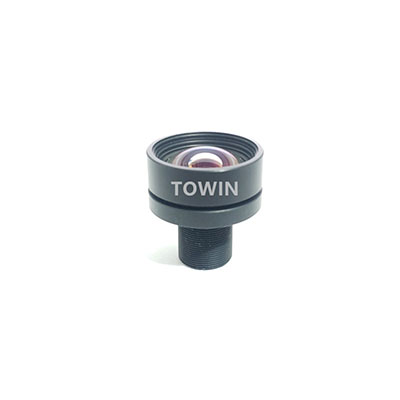
Low distortion industrial 8mm fixed focus lens
Conclusion
A Low-Distortion Lens isn’t just a tool—it’s a commitment to excellence. By eliminating optical flaws, it empowers creators to capture reality with breathtaking clarity. Whether you’re a professional photographer, videographer, or hobbyist, investing in one of these lenses will elevate your work to new heights.