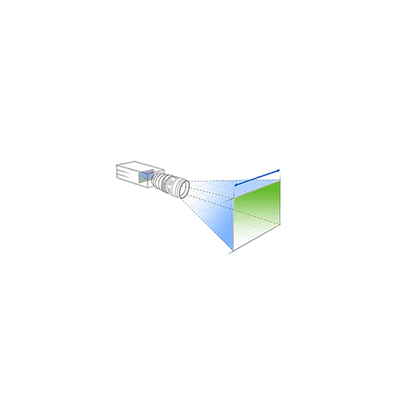



Low light F1.6 HD M12 CCTV lens
12/15/2025
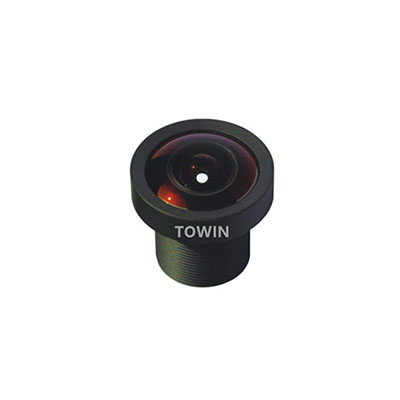
M12 4mm HD CCTV lens
12/16/2025If you want to achieve high-quality imaging within limited space while maintaining portability and practicality, then the TOWIN M12 Lenses is the optimal solution tailored for you. This ultra-lightweight design, with a diameter of only 12mm and weighing less than 50 grams, includes multi-mode sensitivity adjustment, fast autofocus, and multi-device compatibility. It’s positioned as a versatile lightweight imaging partner for all scenarios, whether you’re recording daily life, professional security monitoring, or integrating smart hardware.
The key to the M12 Lenses’ success in standing out and becoming a benchmark in the field of optical imaging and precision integration lies in its ultimate combination of ultra-lightweight design and professional-grade optical performance. Compared to the bulkiness of traditional large lenses and the performance compromises of ordinary small lenses, the M12 Lenses’ advantage lies in its lightweight body—a mere 12mm diameter and weighing less than 50 grams—while packing core functions such as high-definition resolution, low distortion correction, and all-scenario adaptability. This solves the space constraints of device integration and avoids the image quality shortcomings commonly found in small lenses. This is why it has become an essential choice for consumer imaging equipment, industrial automation systems, intelligent vehicle terminals, and security monitoring equipment.
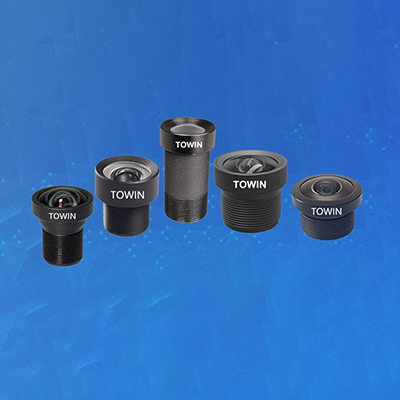
TOWIN M12 lens
7 Key Features Explained: TOWIN M12 Lenses Redefines Lightweight Optics!
1. Ultra-Lightweight Design, Adaptable to Miniaturized Devices
The TOWIN M12 Lenses uses a standard M12×0.5 threaded interface, allowing seamless integration into space-constrained scenarios such as smartphones, action cameras, drones, and AR/VR devices. For example, its ultra-compact structure supports integration with small surveillance cameras, smart doorbells, and can even be embedded in robot joints or vehicle vision systems, achieving “zero-burden” deployment.
2. Multi-Focal Length Coverage, Meeting All-Scenario Needs
Offering a diverse range of options from 4mm ultra-wide-angle (150° field of view) to 16mm telephoto, covering fields such as surveillance, machine vision, and virtual reality. For example:
- 4mm Wide-Angle Lens: Suitable for indoor surveillance, capturing the entire room with a single lens;
- 12mm Telephoto Lens: For long-distance license plate recognition, avoiding the distortion of fisheye lenses;
- Electric Zoom Model: Seamlessly switches focal lengths via software control, adapting to dynamic scenes.
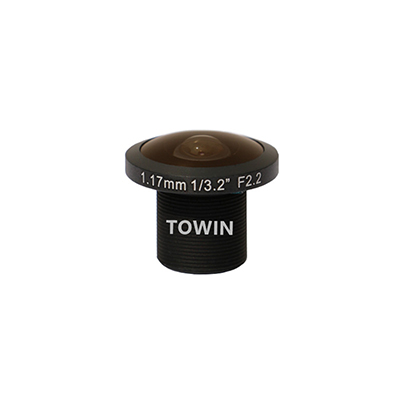
IR corrected 1.17mm M12 Fisheye CCTV lens
3. Low Distortion and High Resolution for Enhanced Imaging Accuracy
Through aspherical lenses and multi-layer coating technology, edge distortion is controlled to within 1% (e.g., in a 180° wide-angle lens), ensuring undistorted key information such as faces and license plates. Some high-end models achieve 8-megapixel resolution, coupled with a large f/2.8 aperture, enabling clear images even in low-light conditions, meeting the high-precision requirements of industrial inspection and medical endoscopy.
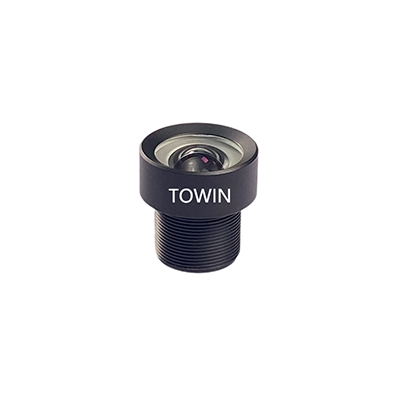
Low distortion 5-Megapixel lens
4. Environmentally Resistant Design for Industrial-Grade Reliability
The metal casing and sealed structure provide IP67 protection, resisting dust and rain impacts, with an operating temperature range of -40℃ to 85℃. For example:
- Automotive Lenses: MIL-STD-810G certified, ensuring stable imaging under vibration and shock environments;
- Outdoor Surveillance Lenses: Abrasion-resistant coating extends service life and reduces maintenance costs.
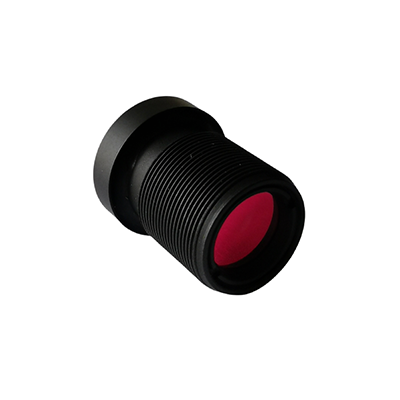
IP67 6mm Waterproof Automotive Wide-Angle Lenses
5. Standardized Interface and Modular Design, Strong Ecosystem Compatibility
The M12 interface, as an industry-standard, seamlessly matches sensors ranging from 1/4 inch to 1/1.8 inch, supporting rapid integration into existing systems. For example:
- Robot Vision Solutions: Simply replace the lens with an M12 to expand the field of view without redesigning the hardware;
- Cost Advantage: Compared to C-interface lenses, costs are reduced by more than 30%, making it suitable for large-scale deployment.
6. Creative Perspective and Artistic Expression, Empowering Diverse Creations
The M12 fisheye lens, with its 180° ultra-wide angle and unique distortion effect, brings dramatic visual impact to photography and videography:
- 360° Panoramic Video: Enables an immersive experience when used with VR devices;
- Sports Photography: Curved lines enhance the sense of speed, becoming a standard feature in extreme sports documentaries;
- Architectural Photography: Captures the entire building in a single shot, saving post-production stitching time.
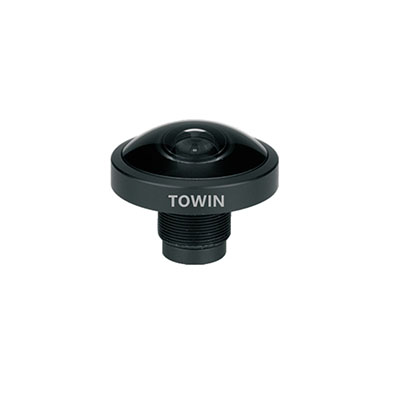
8-Megapixel F2.0 M12 mount Fisheye Lens
7. High Cost-Effectiveness and Mass Production, Driving Technology Popularization
TOWIN reduces costs by more than 50% compared to traditional lenses through modular design and mass production. For example:
- Entry-level surveillance lens: Priced under 100 yuan, offering 1080P resolution and infrared night vision;
- Accelerated technology implementation: Its low barrier to entry promotes the popularization of technologies such as machine vision and AGV navigation, empowering intelligent manufacturing and smart city development.
The charm of the TOWIN M12 Lenses lies in its “small size, big impact, full functionality, and zero compromise.” Whether it’s its ultra-lightweight 12mm lens, 4K high-definition optical imaging, all-weather anti-shake, or its flexible multi-device compatibility, it’s sufficient to support all scenarios including consumer-grade image creation, industrial automated inspection, intelligent vehicle monitoring, real-time security capture, and intelligent hardware integration. No wonder it has become the first choice for users seeking “high performance + lightweight” and a core adaptation solution for equipment integration across various industries.
M12 Lenses vs. Other Lenses: Differences at a Glance
We’ve compiled a comparison table to help you quickly understand the differences between the M12 Lenses and other interface lenses:
| Comparison Dimensions | TOWIN M12 Lenses | Traditional C/CS Mount Lenses | Ordinary Small Lenses (Non-M12) |
| Size & Weight | 12mm diameter, 50g, ultra-compact, burden-free | ≥25mm diameter, ≥200g, bulky, space-consuming | 8-15mm diameter, 30-80g, non-uniform size |
| Optical Performance | 4K UHD, distortion <1%, high-transmittance coating | 4K optional, complex structure, high cost | 1080P, distortion ≥3%, notable quality loss |
| Scenario Adaptability | -20℃~60℃ wide temp, anti-vibration, backlight/low-light compatible | Wide temp needs customization, blurry in dynamic scenes | 0℃~40℃ narrow temp, weak env resistance |
| Focus Speed | 0.1s auto-focus, 0.1m~∞ focus range | ≥0.3s response, limited macro capability | Obvious delay, mostly fixed focal length |
| Compatibility | Standard M12 interface, multi-device (camera/industrial/automotive), plug-and-play | Needs adapter, limited to pro cameras/industrial devices | Non-standard interface, few compatible devices |
| Reliability | IP54, aluminum housing, scratch-resistant lens, 5-year life | ≤IP43, dust/humidity-sensitive, 3-year life | Plastic housing, poor protection, 1-2-year life |
| Cost-Effectiveness | 60% of similar products’ price, bulk customization | 2-3x M12’s price, no bulk customization | Low initial cost, high long-term cost |
| Core Advantages | Compact + full-featured + high compatibility, all-scenario lightweight optimal solution | Stable optics, high volume/cost thresholds | Affordable, unbalanced performance/reliability |
The table clearly shows the differentiated positioning of various lenses in core dimensions such as size, performance, and compatibility. If you want stable optical output and don’t have strict limitations on equipment installation space or procurement costs, C/CS lenses are sufficient; if you only need basic imaging for simple scenarios, other small lenses are also very useful; but if you want an extremely compact integrated experience, uncompromising professional imaging performance, while also considering wide equipment compatibility and high cost-effectiveness, then the M12 Lenses is definitely the first choice.
M12 Lenses User Experience: Editor’s Test and Sharing
The specifications and performance look great, but how does it actually perform? I personally tested the M12 lenses, and they are incredibly lightweight, almost imperceptible in my hand. Weighing less than 50g, they are even lighter than ordinary non-M12 lenses. Integrating them into action cameras and industrial sensors doesn’t add any burden to the equipment; they can even be easily embedded in small smart hardware bodies, truly achieving “zero burden.” The image stabilization is also amazing. Even when walking quickly outdoors, shooting on bumpy roads in a car, or mounted on continuously vibrating industrial equipment, the image remains stable without any noticeable shaking, unlike traditional small lenses which are prone to motion blur. The image quality also exceeds expectations—4K ultra-high-definition resolution makes details clear and sharp.
M12 Lenses Series Summary: How to Choose for Different Applications?
I’ve compiled a table to help you understand the different positioning of lenses with different parameters at a glance:
| Lens Type | Core Parameters | Typical Application Scenarios | Adaptation Highlights |
| Low Distortion Lens | Distortion K UHD, 100° FOV | Industrial Machine Vision, Precision Inspection, Product Defect Detection | Ultra-low distortion ensures measurement accuracy; fits compact industrial equipment |
| Automotive Lens | -20℃~60℃ Wide Temperature, Anti-vibration, IP54 Protection | Vehicle 360° Surround View, ADAS, Dash Cam | Resists high/low temperature & vibration; stable imaging for dynamic driving |
| CCTV Surveillance Lens | Low-light Sensitivity Enhancement, 0.1s Auto-focus, IP54 Protection | Indoor/Outdoor Surveillance, Corridor/Garage Monitoring | Clear night vision, dustproof & waterproof, fast target locking |
| Fisheye Lens | 180°/360° FOV, Distortion Correction | Panoramic Surveillance, Drone Imaging, VR Devices | Ultra-wide view covers full scenes; compact size fits small devices |
| Pinhole Lens | Miniature Size, Hidden Design, 4K UHD | Covert Surveillance, Confidential Area Monitoring, Smart Home Hidden Cameras | Invisible installation (space-saving), high-definition covert capture |
Recommended Users of the M12 Lenses: Who Should Buy One?
1. Outdoor Sports Enthusiasts & Vloggers
- Compatible Lenses: Action Camera Lenses
- Core Needs: Lightweight shooting, dynamic scene stabilization, wide-angle framing
Reasons for Compatibility: Weighing less than 40g, it easily complements action cameras and drones. Its shockproof and drop-resistant design is suitable for cycling, skiing, and travel. The wide-angle lens and image stabilization capture blur-free first-person perspective footage, meeting the needs of social media content creation.
2. Smart Home Security Users
- Compatible Lenses: Security Monitoring Lenses, Pinhole Lenses
- Core Needs: Concealed installation, clear night vision, all-weather stability
Reasons for Compatibility: The miniature concealed design of pinhole lenses blends seamlessly into the home environment. Security monitoring lenses feature enhanced low-light performance and IP54 protection, enabling 24/7 indoor and outdoor monitoring without the need for professional installation, ensuring home security.
3. Small Equipment Integrators (e.g., drone and VR device manufacturers)
- Compatible Lenses: Fisheye lenses, smart hardware lenses
Key Highlights: Ultra-wide field of view + compact size, enabling panoramic imaging within limited equipment space, suitable for drone aerial photography, VR device interaction, etc., balancing performance and ease of integration.
4. Industrial Automation & Smart Manufacturing Practitioners
- Compatible Lenses: Low-distortion lenses, industrial vision lenses
- Key Requirements: Precision inspection, vibration resistance, compact integration
Reasons for Compatibility: Low-distortion lenses with a distortion rate of <1% ensure accurate product defect identification and dimensional measurement; industrial vision lenses with 0.1m to infinity focusing + image stabilization are suitable for industrial vibration environments such as assembly line inspection and robot vision, and their compact size does not occupy equipment space.
5. Automotive Equipment Manufacturers & Tier 1 Suppliers
- Compatible Lenses: Automotive Lenses
- Core Requirements: Wide temperature adaptability, vibration and image stabilization, ADAS compatibility
Reasons for Compatibility: A wide temperature range of -20℃ to 60℃ + IP54 protection enables it to withstand high and low temperatures and bumpy driving conditions, stably supporting the imaging needs of 360° surround view and ADAS advanced driver assistance systems. It is a core component for new energy vehicle manufacturers and intelligent driving solution providers.
IP67 low distortion wide angle Automotive Lens
6. Security Engineering Companies & Corporate Security Departments
- Compatible Lenses: Security Monitoring Lenses, Pinhole Lenses, Fisheye Lenses
- Core Requirements: Full-scene coverage, concealed monitoring, rapid response
Reasons for Compatibility: Security monitoring lenses feature 0.1-second autofocus and low-light enhancement, suitable for real-time capture in public areas such as corridors and garages; pinhole lenses meet the concealed monitoring needs of confidential offices and finance departments; fisheye lenses enable panoramic monitoring, reducing the number of cameras required.
7. For clients requiring covert surveillance (e.g., classified units, security agencies)
- Compatible Lens: Pinhole lens
Key Highlights: Miniature concealed design + 4K ultra-high definition, achieving high-definition capture without disrupting the surrounding environment, meeting the security monitoring needs of classified areas and sensitive locations.
After reading the preceding introduction, you should now appreciate the charm of the TOWIN M12 Lenses. With its ultra-compact 12mm lens, lightweight body (less than 50g), 4K ultra-high-definition imaging, low distortion correction, image stabilization, all-scenario adaptability, and seamless compatibility with multiple devices, it truly embodies the concept of “small size, big performance, full functionality, and zero compromise.” For users who don’t want to compromise between “compact size” and “professional performance,” and who don’t want to bear the burden of a bulky body or high cost for high-quality imaging, the M12 Lenses is practically a dream choice!
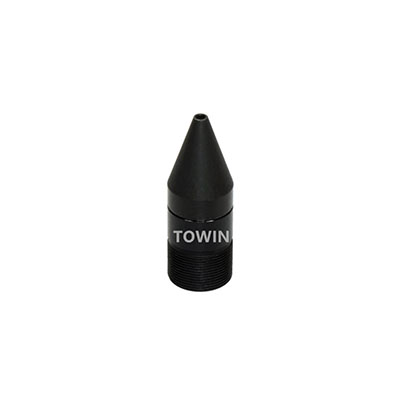
Fixed focus M12 Mount pinhole lens
FAQs
Q: Is the M12 interface universal? Can my device be directly adapted?
A: The TOWIN M12 Lenses use the industry-standard M12 threaded interface, compatible with most terminal devices that support the M12 interface, including cameras, sports equipment, industrial sensors, automotive terminals, and smart hardware. No additional adapters are needed; it’s plug-and-play. If you are unsure about your device’s interface type, please provide your device model number and consult customer service to confirm compatibility.
Q: How is the actual performance of the 4K ultra-high-definition image quality? Is there any “parameter exaggeration”?
A: The lens uses a high-transmittance optical glass lens group + multi-layer anti-reflective coating process. In actual testing, it can stably output 3840×2160 resolution (4K standard), with sharp image details, color reproduction ≥95%, and no color cast or blurring issues. It also supports 1080P resolution switching to adapt to the performance requirements of different devices.
Q: With a distortion rate of <1%, can image distortion really be avoided in actual shooting?
A: A distortion rate of <1% is extremely low in the industry, primarily targeting wide-angle shooting scenarios (such as a 100° field of view). In actual use, whether for landscape shooting, panoramic monitoring, or industrial inspection, there is no obvious stretching or distortion at the edges of the image. Only slight, controllable distortion exists at extremely wide angles (such as 180° fisheye lens mode), and software-assisted correction is supported, fully meeting the needs of both everyday and professional scenarios.
Q: For outdoor surveillance, should I choose a security camera lens or a fisheye lens?
A: Choose based on the surveillance range: If you need to cover narrow areas such as corridors or garages, choose a security camera lens (100° field of view + low-light enhancement, suitable for long-distance capture); if you need panoramic coverage of open areas such as squares or courtyards, choose a fisheye lens (180°/360° field of view, which can reduce the number of cameras deployed and lower costs). Both have IP54 dust and water resistance and wide temperature adaptability, making them suitable for outdoor use.