


DOT-certified Automotive lens
11/03/2025
How do Machine vision lenses support 3D scanning?
11/03/2025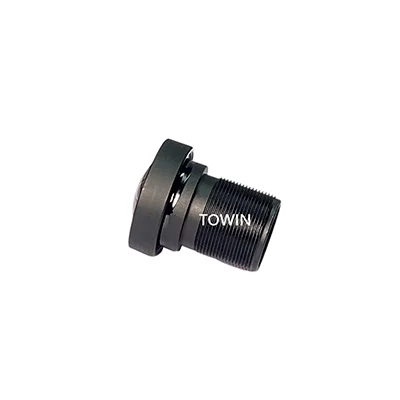
Photographers and videographers constantly seek tools to elevate their craft, and one innovation stands out: the Low-Distortion Lens. These lenses are engineered to reduce optical imperfections, ensuring images retain sharpness, color accuracy, and geometric integrity. Low-Distortion Lens Improve Image Quality by minimizing warping, enhancing clarity, and delivering professional-grade results.
What Is a Low-Distortion Lens?
A Low-Distortion Lens is designed to minimize two common optical flaws: barrel distortion (where edges bulge outward) and pincushion distortion (where edges pinch inward). Traditional lenses, especially wide-angle or zoom models, often struggle with these issues, leading to warped lines and unnatural proportions. In contrast, Low-Distortion Lenses use advanced glass elements, aspherical shapes, and precise coatings to correct these aberrations, ensuring straight lines remain straight and details stay crisp.
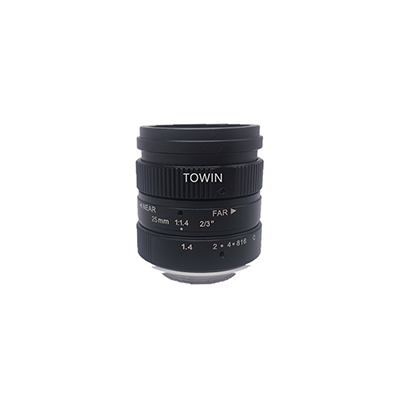
25mm Low Distortion Machine Vision Lens
How Low-Distortion Lens Improve Image Quality
1. Eliminate Geometric Warping
Architectural photographers know the frustration of curved buildings in wide-angle shots. A Low-Distortion Lens preserves straight lines, making it ideal for real estate, interior design, and cityscapes. For example, a 24mm Low-Distortion Lens can capture an entire room without distorting furniture or walls.
2. Enhance Sharpness Across the Frame
Distortion often causes soft edges, requiring post-processing corrections that degrade quality. Low-Distortion Lenses maintain edge-to-edge sharpness, reducing the need for editing and preserving fine details like textures or facial features.
3. Improve Color Accuracy
Chromatic aberration—a rainbow-like fringing around high-contrast edges—is common in cheaper lenses. Low-Distortion Lenses use multi-layer coatings to minimize this issue, ensuring vibrant colors without unwanted hues.
4. Boost Autofocus Precision
Distortion can confuse autofocus systems, leading to misplaced focus points. By maintaining a flat focal plane, Low-Distortion Lenses enable faster, more accurate focusing, critical for action shots or portraits.
5. Versatility in Challenging Light
Whether shooting in bright sunlight or low light, Low-Distortion Lenses handle flare and ghosting better than standard options. Their coatings reduce reflections, ensuring clean images even in backlit scenarios.
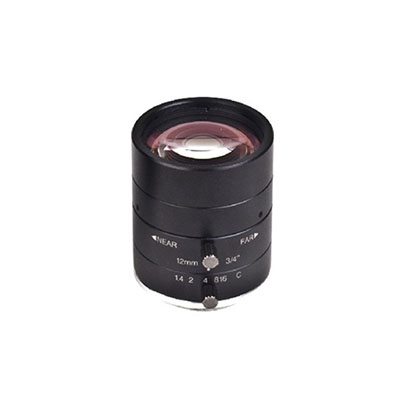
low-distortion C-mount lens
Real-World Applications of Low-Distortion Lenses
- Portrait Photography: Avoid facial distortion in close-ups, ensuring natural proportions.
- Product Photography: Capture items like electronics or jewelry without warping, highlighting intricate designs.
- Cinematography: Maintain consistent framing during camera movements, reducing post-production fixes.
- Astrophotography: Minimize star distortion for crisp night-sky shots.
For instance, filmmakers using anamorphic lenses often pair them with Low-Distortion primes to balance creative flair with technical precision.
FAQs
1. Why Are Low-Distortion Lenses More Expensive?
Low-Distortion Lenses require advanced engineering, including aspherical elements and precision coatings, which increase production costs. However, the investment pays off in superior image quality and reduced editing time.
2. Can Software Fix Distortion Instead of Using a Low-Distortion Lens?
While tools like Adobe Lightroom can correct distortion, they often degrade image quality by interpolating pixels. A Low-Distortion Lens captures cleaner data from the start, avoiding these compromises.
3. Are Low-Distortion Lenses Heavy or Bulky?
Not necessarily. Modern designs, like Sony’s G Master series or Sigma’s Art lenses, balance compactness with optical excellence. However, professional-grade models may still be heavier due to their glass elements.
4. Do Smartphones Use Low-Distortion Lenses?
Yes! Many flagship phones, such as the iPhone Pro series, incorporate Low-Distortion Lens technology in their ultra-wide cameras to reduce edge distortion in panoramic shots.
5. How Often Should I Clean My Low-Distortion Lens?
Regular cleaning is crucial to maintain performance. Use a microfiber cloth and lens-specific solution to remove dust and smudges without scratching the coatings.
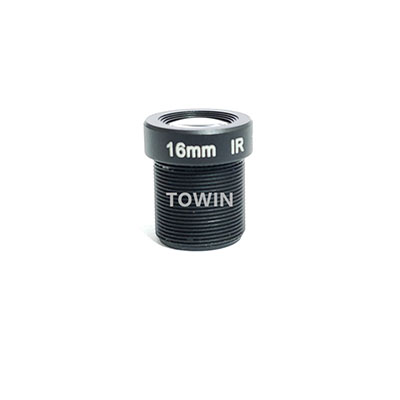
IR-corrected-Low-distortion-CCTV-16mm-M12-lens
Conclusion
Low-Distortion Lenses are no longer a luxury—they’re a necessity for creators who demand perfection. By reducing warping, enhancing sharpness, and preserving colors, these lenses empower photographers and videographers to tell stories with unmatched clarity. As technology advances, expect even more compact, affordable, and high-performing options to hit the market.