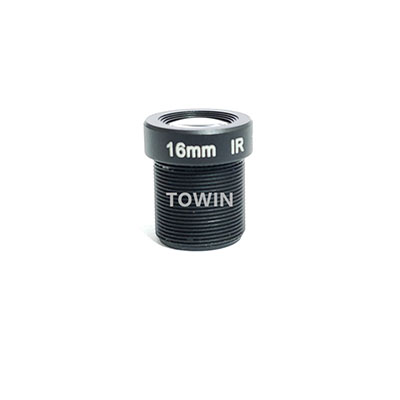



Low-Distortion Lens Improve Image Quality
11/03/2025
4mm M12 Lenses Specifications
11/03/2025
In the era of Industry 4.0, 3D scanning has become indispensable for applications ranging from quality control in manufacturing to reverse engineering and augmented reality. But how do machine vision lenses support 3D scanning to achieve such precision? The answer lies in their ability to capture detailed, distortion-free images while optimizing light transmission and depth perception.
Machine vision lenses are engineered to work seamlessly with 3D scanning systems, ensuring that every scan is accurate, fast, and reliable. Whether used in industrial automation, medical diagnostics, or robotics, these lenses form the backbone of modern 3D imaging technologies.
How Do Machine Vision Lenses Support 3D Scanning?
3D scanning relies on capturing multiple perspectives of an object to reconstruct its geometry in three dimensions. Machine vision lenses facilitate this process by:
1. Enhancing Resolution and Clarity
High-resolution machine vision lenses minimize optical aberrations, ensuring that even the smallest details are captured. This is critical for industries like aerospace, where sub-millimeter accuracy is required.
2. Optimizing Light Transmission
Advanced coatings on machine vision lenses reduce glare and reflections, allowing scanners to operate efficiently under varying lighting conditions. This improves scan quality and reduces post-processing time.
3. Enabling Depth Perception
Stereoscopic and structured-light 3D scanners depend on precise lens alignment to calculate depth. Machine vision lenses ensure consistent focal lengths and minimal distortion, enabling accurate 3D models.
4. Supporting High-Speed Scanning
In automated production lines, speed is crucial. Machine vision lenses with fast aperture settings allow scanners to capture data rapidly without compromising image quality.
5. Ensuring Durability in Harsh Environments
Industrial 3D scanners often operate in dusty, vibrating, or high-temperature settings. Machine vision lenses are built to withstand these conditions, maintaining performance over time.
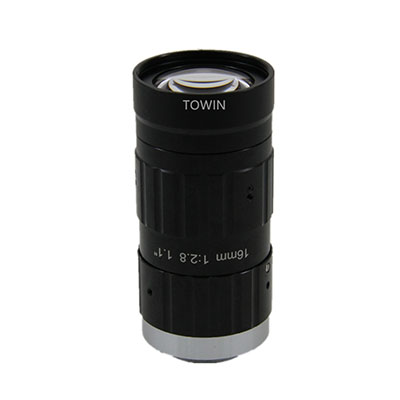
C-mount Machine Vision lens
Key Technologies Behind Machine Vision Lenses for 3D Scanning
Several innovations make machine vision lenses ideal for 3D scanning:
- Telecentric Lenses: These lenses eliminate perspective errors, making them perfect for measuring flat surfaces with extreme precision.
- Liquid Lenses: Adjustable focal lengths enable dynamic focusing, improving scan speed in changing environments.
- Multi-Spectral Coatings: Enhance contrast in low-light conditions, crucial for medical and forensic 3D scanning.
Applications of Machine Vision Lenses in 3D Scanning
1. Industrial Automation
Machine vision lenses enable robots to inspect parts, assemble components, and detect defects with sub-micron accuracy.
2. Healthcare and Dentistry
Intraoral scanners use machine vision lenses to create digital impressions of teeth, improving prosthetic fitting and orthodontic planning.
3. Archaeology and Cultural Heritage
High-precision lenses help digitize historical artifacts, preserving them in 3D for research and virtual exhibitions.
4. Automotive and Aerospace
Reverse engineering of complex parts, such as turbine blades, relies on machine vision lenses to capture intricate geometries.
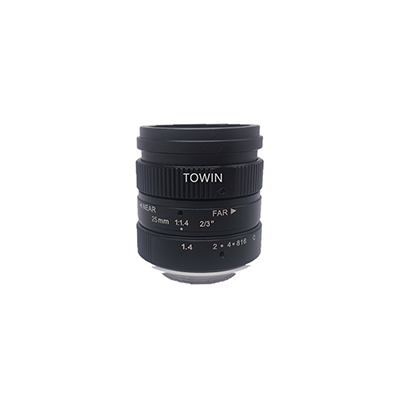
25mm Low Distortion Machine Vision Lens
FAQs
1. What Makes Machine Vision Lenses Different from Regular Lenses?
Machine vision lenses are designed for industrial-grade performance, featuring higher resolution, durability, and compatibility with automated systems. Unlike consumer lenses, they prioritize consistency over artistic flexibility.
2. Can Machine Vision Lenses Be Used with Any 3D Scanner?
Most 3D scanners are compatible with standard machine vision lenses, but some high-end systems require specialized optics. Always check the scanner’s specifications for lens compatibility.
3. How Do Environmental Factors Affect Machine Vision Lenses in 3D Scanning?
Dust, vibrations, and temperature fluctuations can degrade lens performance. However, ruggedized machine vision lenses are built to resist these issues, ensuring reliable operation in factories or outdoor settings.
4. Are Machine Vision Lenses Expensive?
While premium lenses can be costly, advancements in manufacturing have made high-quality machine vision lenses more affordable. The ROI in terms of improved accuracy and reduced downtime often justifies the investment.
5. What Future Innovations Can We Expect in Machine Vision Lenses for 3D Scanning?
Emerging trends include AI-driven lens optimization, ultra-compact designs for portable scanners, and enhanced multi-spectral imaging for better material differentiation.
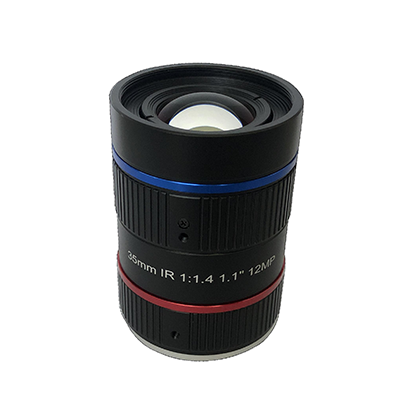
IR 12MP Low Distortion Machine Vision Lens
Conclusion
How do machine vision lenses support 3D scanning? By providing unmatched precision, durability, and adaptability. As 3D scanning technologies evolve, machine vision lenses will remain a cornerstone, enabling breakthroughs in fields like robotics, healthcare, and smart manufacturing.