


3mm Industrial Lens for Compact Inspection
10/20/2025
ISO-certified low distortion lens
10/20/2025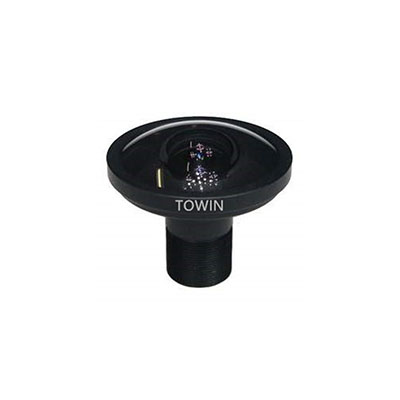
Virtual Reality (VR) content creation demands precision, creativity, and tools that push boundaries. Among these, the Fisheye Lens for Virtual Reality (VR) Content Creation stands out as a game-changer, offering unparalleled immersion and visual storytelling.
Why Fisheye Lenses Are Essential for VR Content Creation
The Fisheye Lens for Virtual Reality (VR) Content Creation is not just a camera accessory—it’s a gateway to hyper-immersive worlds. Unlike traditional lenses, fisheye lenses capture extreme wide-angle views (up to 180° or more), mimicking human peripheral vision. This distortion-rich perspective creates a sense of “being there,” making VR environments feel lifelike.
Key Benefits:
- 360° Immersion: Fisheye lenses reduce the need for stitching multiple shots, simplifying workflows for 360° VR videos.
- Depth Perception: Curved distortion enhances spatial awareness, critical for VR navigation.
- Cost Efficiency: Single-lens setups save time and resources compared to multi-camera rigs.
For creators, this means delivering jaw-dropping visuals without compromising on performance.
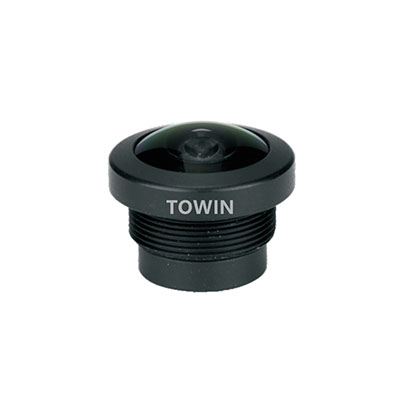
4-Megapixel F2.4 M12 mount fisheye lens
Technical Insights: How Fisheye Lenses Work in VR
Fisheye lenses use a unique optical design to bend light radially, creating a spherical projection. This distortion, while extreme, is intentionally engineered to maximize field-of-view (FOV). In VR, a wider FOV translates to reduced motion sickness and heightened realism.
Optimal Settings for VR:
- Aperture: f/8–f/11 balances sharpness and depth-of-field.
- Shutter Speed: 1/125s or faster minimizes motion blur in dynamic scenes.
- Resolution: 8K+ sensors ensure clarity when viewers “look around” in VR.
Platforms like YouTube VR and Oculus TV recommend fisheye-captured content for their immersive libraries.
Practical Tips for Using Fisheye Lenses in VR
- Calibrate Distortion: Use software like Adobe Premiere Pro or PTGui to correct barrel distortion without losing FOV.
- Avoid Close-Ups: Fisheye lenses exaggerate proximity; maintain a 3–5-foot distance from subjects.
- Lighting Matters: Even illumination prevents vignetting in ultra-wide shots.
- Test in Headsets: Preview content on devices like Meta Quest Pro to ensure comfort and clarity.
Pro Tip: Pair fisheye lenses with 3D audio for multi-sensory VR experiences.
Case Studies: Fisheye Lenses in Action
- National Geographic VR: Used fisheye lenses to film underwater ecosystems, letting viewers “swim” alongside sharks.
- BMW’s VR Test Drive: Fisheye-captured interiors gave users a 180° view of dashboard controls and scenery.
These examples highlight how fisheye lenses bridge the gap between observation and participation.

Fisheye IR Cut Filter S-Mount Lens
Challenges and Solutions in Fisheye VR Production
Challenge 1: Distortion Management
Solution: Use post-production tools like Mettle SkyBox to refine edges.
Challenge 2: Stitching Errors
Solution: Opt for lenses with minimal chromatic aberration (e.g., Zeiss Distagon T*).
Challenge 3: File Size
Solution: Compress 8K footage using codecs like H.265 without losing quality.
Future Trends: Fisheye Lenses and Next-Gen VR
As VR headsets evolve (e.g., Apple Vision Pro’s 120° FOV), fisheye lenses will become indispensable. Expect advancements in:
- AI-Powered Distortion Correction: Real-time fixes during live streams.
- Lightweight Designs: Carbon fiber builds for drone-mounted VR filming.
FAQs
1. What is the ideal focal length for VR fisheye lenses?
Aim for 4.5mm–15mm to balance FOV and practicality.
2. Can fisheye lenses work with 360° cameras?
Yes, but they’re better suited for monoscopic VR. For stereoscopic 360°, dual-fisheye rigs are preferred.
3. How do fisheye lenses compare to multi-camera VR setups?
Fisheye lenses are cheaper and faster but may lack the resolution of multi-camera arrays.
4. Is post-processing mandatory for fisheye VR footage?
Yes, to correct distortion and optimize for headset displays.
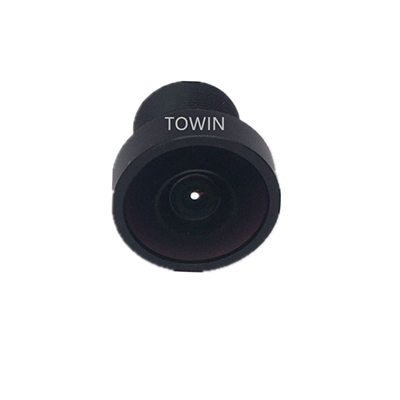
Megapixel Fisheye S mount Lens
Conclusion
The Fisheye Lens for Virtual Reality (VR) Content Creation is more than a tool—it’s a paradigm shift. By leveraging its ultra-wide capabilities, creators can craft experiences that transport audiences beyond screens. Whether filming nature documentaries or interactive gaming environments, fisheye lenses unlock creativity while staying cost-effective.