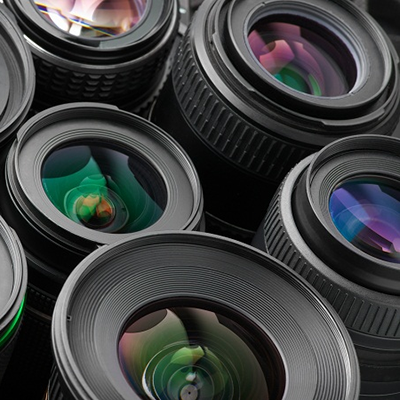



The Best CCTV Lenses for High-Security Areas
11/06/2025
ECE-certified Automotive lens
11/06/2025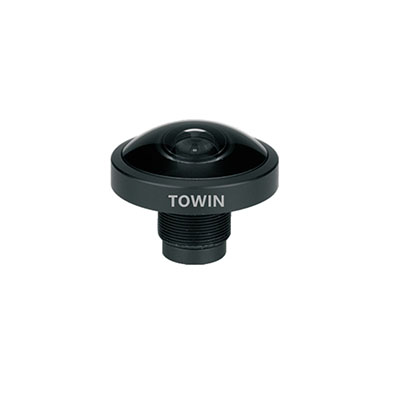
Street photography thrives on spontaneity, emotion, and perspective. While traditional lenses capture scenes as they appear, a Fisheye Lens for Street Photography introduces a bold, distorted reality that can elevate your work from ordinary to extraordinary. This ultra-wide-angle lens, known for its 180-degree field of view and characteristic barrel distortion, forces viewers to see the world through a surreal lens—literally.
Why Choose a Fisheye Lens for Street Photography?
The Fisheye Lens isn’t just a gimmick; it’s a tool for storytelling. Its extreme curvature bends straight lines into sweeping arcs, creating a sense of immersion that draws viewers into the chaos or calm of urban life. Here’s why it’s worth considering:
- Unique Perspective: Stand in the middle of a bustling market, and a Fisheye Lens will capture every vendor, customer, and detail in a single frame, emphasizing the energy of the scene.
- Creative Distortion: Use the lens’s distortion to exaggerate emotions—a laughing child’s face or a towering skyscraper becomes a focal point.
- Compact Size: Many Fisheye Lenses are lightweight, making them ideal for street photographers who value mobility.
- Low-Light Performance: Some models, excel in dimly lit alleys or nighttime cityscapes.

Fisheye IR Cut Filter S-Mount Lens
How to Use a Fisheye Lens for Street Photography
Mastering the Fisheye Lens requires rethinking composition. Here are actionable tips:
1. Get Close—Really Close
The Fisheye Lens’s magic lies in its proximity. To avoid empty space, position your subject inches from the lens. This intensifies facial expressions or textures, like the cracks in a sidewalk.
2. Embrace the Curves
Straight lines become dramatic arcs. Use this to frame architecture or crowds, creating a sense of motion. For example, photograph a subway entrance with the Fisheye Lens to warp the stairs into a spiral.
3. Watch Your Feet
Be mindful of your own shadow or legs in the frame. A slight tilt upward or downward can eliminate distractions.
4. Shoot Vertical for Height
Turn your camera 90 degrees to emphasize vertical elements, like lampposts or skyscrapers. The distortion will stretch them into towering arcs.
5. Post-Processing Matters
Correcting distortion isn’t always necessary. Enhance contrast or saturation to make the Fisheye Lens’s effects pop. Tools like Adobe Lightroom offer fisheye-specific presets.
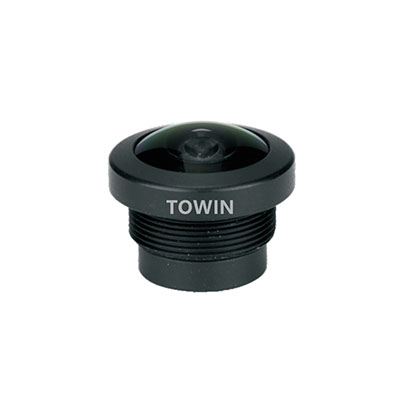
4-Megapixel F2.4 M12 mount fisheye lens
Pros and Cons of Using a Fisheye Lens for Street Photography
Pros:
- Creativity: Forces you to see scenes differently.
- Versatility: Works in crowded spaces, tight alleys, or open plazas.
- Attention-Grabbing: Fisheye photos stand out on social media or galleries.
Cons:
- Distortion Overload: Overuse can make images feel gimmicky.
- Limited Use Cases: Not ideal for portraits or flat-lay compositions.
- Edge Softness: Some lenses produce blurry corners at wide apertures.
FAQs
1. What is the best aperture for a Fisheye Lens in street photography?
Start at f/8 for sharpness and depth of field. Use f/2.8–f/4 in low light, but expect softer edges.
2. Can a Fisheye Lens replace a wide-angle lens?
No. Fisheye Lenses excel in creative distortion, while wide-angle lenses (e.g., 24mm) offer natural perspectives.
3. How do I avoid unwanted distortion?
Keep the horizon centered and avoid tilting the camera. Alternatively, embrace the distortion for artistic effect.
4. Is a Fisheye Lens worth the investment?
If you crave uniqueness and enjoy experimental photography, yes. For beginners, rent one first to test its fit.
5. What’s the difference between circular and full-frame Fisheye Lenses?
Circular Fisheye Lenses produce a round image with black borders, while full-frame Fisheye Lenses fill the frame with a distorted rectangle.
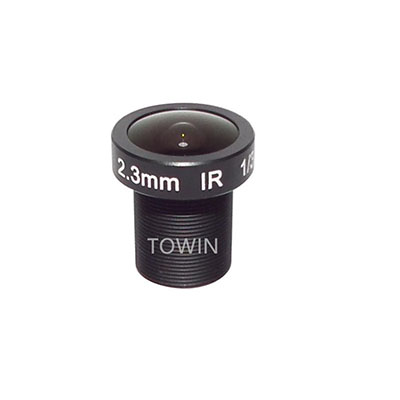
4 megapixel CCTV lens Fisheye Lens
Final Thoughts
A Fisheye Lens for Street Photography isn’t about capturing reality—it’s about reimagining it. Whether you’re documenting a protest’s chaos or a lone street performer’s quiet moment, this lens pushes boundaries. Pair it with a fast prime lens for versatility, and don’t shy away from post-processing to refine your vision.