


How to Calculate Field of View for Machine Vision?
06/01/2026
How Optical Distortion Affects AI Vision Accuracy
06/03/2026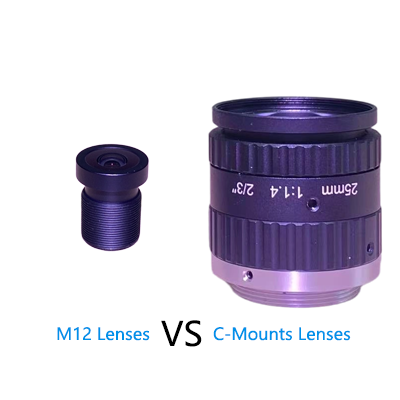
Introduction
C-Mount vs M12 Lens is one of the most common comparison topics in industrial imaging, machine vision, robotics, and embedded camera systems. Choosing the correct lens mount directly affects image quality, sensor compatibility, field of view, system size, and overall imaging performance.
As industrial vision technology continues to evolve, engineers and system integrators must understand the advantages and limitations of different lens mounts before selecting a camera system. While C-Mount lenses are widely used in high-resolution industrial imaging, M12 lenses are preferred for compact and lightweight embedded applications.
This guide explains the differences between C-Mount and M12 lenses, compares their technical characteristics, and helps users select the right solution for machine vision, robotics, smart security, and industrial automation systems. Readers can also explore additional imaging resources through the TOWIN Knowledge Center.
What Is a C-Mount Lens?
A C-Mount lens is a standardized industrial lens mount with a 1-inch thread diameter and a flange focal distance of 17.526mm. It has long been the industry standard for machine vision, industrial inspection, and scientific imaging systems.
C-Mount lenses are known for:
- High optical flexibility
- Support for larger image sensors
- Better compatibility with high-resolution cameras
- Interchangeable industrial lens systems
These lenses are commonly used in:
- Machine vision inspection
- Semiconductor imaging
- Smart traffic systems
- Medical imaging
- Industrial automation
Because of their larger optical design, C-Mount lenses can support advanced features such as:
- Motorized zoom
- Low distortion optics
- Large aperture designs
- High MTF performance
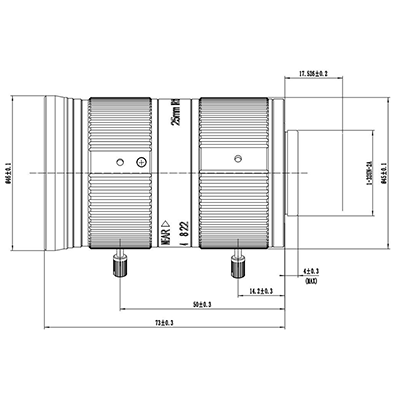
C-Mount 1/1.2″ 25mm low-distortion lens
What Is an M12 Lens?
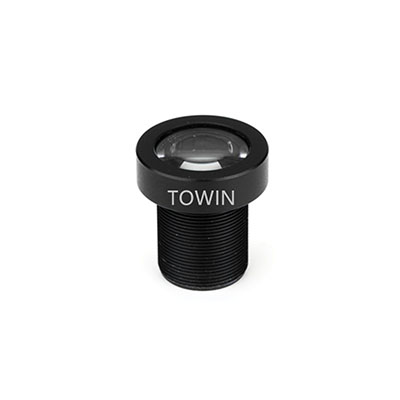
An M12 lens, also known as an S-Mount lens, uses a compact 12mm threaded mount design. These lenses are significantly smaller and lighter than C-Mount lenses, making them ideal for embedded imaging systems and compact camera modules.
M12 lenses are widely used in:
- Robotics vision
- Smart home cameras
- Drones
- AGV systems
- Compact AI cameras
- IoT imaging devices
Advantages of M12 lenses include:
- Compact size
- Lightweight structure
- Lower cost
- Easy integration into small devices
However, M12 lenses are generally optimized for smaller image sensors and may have more limited optical flexibility compared to larger industrial C-Mount systems.
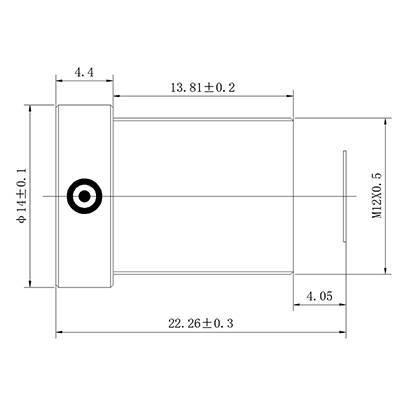
M12 Lens with IR Cut Filter
C-Mount vs M12 Lens: Key Differences
The main differences between these two lens types involve sensor compatibility, optical performance, size, flexibility, and application scenarios.
| Feature | C-Mount Lens | M12 Lens |
|---|---|---|
| Mount Diameter | 1 inch | 12mm |
| Flange Distance | 17.526mm | ~5–6mm |
| Typical Sensor Support | Up to 1″ or larger | Usually ≤1/2″ |
| Lens Size | Larger | Compact |
| Weight | Heavier | Lightweight |
| Optical Flexibility | High | Moderate |
| Resolution Support | Excellent for high-resolution imaging | Suitable for compact systems |
| Cost | Higher | Lower |
| Common Applications | Machine vision, industrial inspection | Embedded vision, robotics |
Sensor Compatibility
Sensor size is one of the most important factors when selecting a lens mount.
C-Mount Sensor Compatibility
C-Mount lenses commonly support:
- 1/2″
- 2/3″
- 1″
- APS-C sensors
These larger sensor formats allow:
- Better image quality
- Larger field of view
- Higher resolution support
This makes C-Mount lenses ideal for:
- High-end industrial cameras
- Precision inspection systems
- AI imaging platforms
M12 Sensor Compatibility
M12 lenses are generally designed for smaller sensors such as:
- 1/4″
- 1/3″
- 1/2.3″
Their compact optical structure helps reduce:
- Camera size
- Weight
- System cost
This is especially useful for:
- Drones
- Mobile robots
- Embedded AI devices
Users can learn more about sensor selection through the TOWIN Knowledge Center.
Field of View and Focal Length
Field of view (FOV) depends on:
- Sensor size
- Focal length
- Working distance
A larger sensor combined with the same focal length produces a wider viewing angle.
FOV Formula
FOV =
Sensor Size × Working Distance
Focal Length
For FOV calculations, users can access the:
Optical Performance Comparison
Resolution and Image Quality
C-Mount lenses typically provide:
- Better edge sharpness
- Higher MTF performance
- Improved low distortion imaging
- Stronger support for 4K and 8MP cameras
This is critical in applications requiring:
- Precision measurement
- Defect inspection
- AI analysis
- Industrial automation
M12 lenses can also deliver excellent image quality, especially in compact systems, but they are generally more limited in:
- Sensor coverage
- Optical complexity
- Long-range imaging capability
Distortion Control
Low distortion is extremely important in machine vision systems.
C-Mount lenses often provide:
- Better geometric accuracy
- Lower distortion levels
- Improved measurement consistency
M12 lenses may exhibit more distortion depending on:
- Lens quality
- Focal length
- Compact optical design

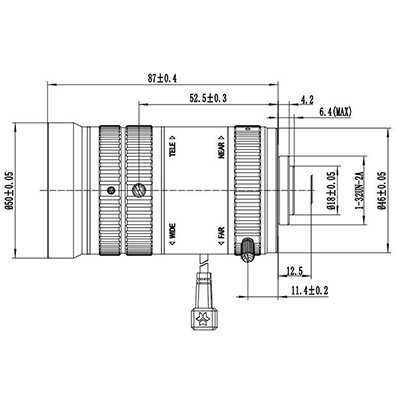
8-40mm C mount IR corrected machine vision lenses
Physical Size and System Integration
One of the biggest differences between these lens types is physical size.
C-Mount Advantages
C-Mount lenses are ideal when:
- Space is not highly restricted
- High optical performance is required
- Interchangeable optics are needed
Applications include:
- Factory inspection
- Traffic monitoring
- Scientific imaging
M12 Advantages
M12 lenses are preferred when:
- Compact size is critical
- Weight reduction matters
- Embedded integration is required
Applications include:
- Drones
- Autonomous robots
- Compact security cameras
- Edge AI devices
Applications of C-Mount and M12 Lenses
Machine Vision
Machine vision systems frequently use C-Mount lenses because they support:
- Large sensors
- High-resolution cameras
- Precise optical alignment
Explore related solutions at:
Robotics Vision
Both lens types are used in robotics.
C-Mount
Best for:
- Precision robotic inspection
- Industrial automation
- High-resolution AI vision
M12
Best for:
- Mobile robots
- AGVs
- Compact navigation systems
Smart Security
Security systems may use either mount depending on requirements.
C-Mount
Used for:
- PTZ surveillance
- Long-distance monitoring
- Traffic enforcement
M12
Used for:
- Compact security cameras
- Smart home systems
- Embedded surveillance devices
Drone Imaging
M12 lenses are widely used in drones due to:
- Lightweight structure
- Compact integration
- Reduced payload
C-Mount systems may still be used in advanced industrial drones requiring:
- High optical precision
- Long-range observation
- Mapping accuracy
How to Choose Between C-Mount and M12 Lenses
Choosing the correct lens mount depends on application requirements and imaging goals.
Step 1 — Determine Sensor Size
Larger sensors usually require C-Mount lenses.
Smaller sensors can use M12 lenses effectively.
Step 2 — Evaluate Resolution Requirements
High-resolution imaging systems generally benefit from:
- Better optics
- Larger lens structures
- Higher MTF performance
This often favors C-Mount designs.
Step 3 — Consider Physical Constraints
If your system requires:
- Compact size
- Lightweight hardware
- Embedded integration
M12 lenses may be the better option.
Step 4 — Analyze Working Distance
Long-range imaging systems often require:
- Larger optics
- Better zoom capability
- Higher optical stability
C-Mount lenses typically perform better in these environments.
Step 5 — Evaluate Budget
M12 lenses are usually:
- More affordable
- Easier to integrate
- Suitable for high-volume embedded devices
C-Mount systems are generally chosen for:
- Professional industrial imaging
- Precision applications
- Advanced machine vision systems
Common Challenges and Solutions
| Problem | Possible Cause | Recommended Solution |
|---|---|---|
| Vignetting | Sensor too large for lens | Use compatible sensor format |
| Poor edge sharpness | Low-quality optics | Choose higher MTF lens |
| Excessive distortion | Compact lens limitations | Use low distortion optics |
| Large system size | Oversized optics | Consider compact M12 design |
| Limited image quality | Small sensor + low-end lens | Upgrade to industrial-grade optics |
Why Lens Mount Selection Matters
Lens mount selection directly influences:
- Optical quality
- Sensor compatibility
- System flexibility
- Mechanical integration
- AI imaging performance
As industrial automation and intelligent vision systems continue to expand, selecting the correct lens architecture becomes increasingly important for long-term system reliability and performance.
This is why understanding C-Mount vs M12 Lens differences is essential for engineers, OEM designers, and industrial camera integrators.
Why Choose TOWIN Lens Solutions
TOWIN provides industrial optical solutions for:
- Machine vision
- Robotics vision
- Smart security
- ADAS systems
- Drone imaging
- Industrial automation
Key advantages include:
- Industrial-grade optical design
- Low distortion lens technology
- High-resolution imaging support
- OEM/ODM customization
- Technical application support
Users can explore additional technical resources through the:
FAQs
Q: What is the main difference between C-Mount and M12 lenses?
A: C-Mount lenses are larger industrial optics designed for higher performance and larger sensors, while M12 lenses are compact and optimized for embedded systems.
Q: Which lens mount is better for machine vision?
A: C-Mount lenses are generally preferred for machine vision because they support larger sensors and better image quality.
Q: Are M12 lenses suitable for robotics?
A: Yes. M12 lenses are widely used in robotics because of their compact size and lightweight design.
Q: Which lens mount is better for compact cameras?
A: M12 lenses are typically better for compact devices such as drones, embedded AI cameras, and smart home systems.
Q: How do I calculate field of view?
A: Field of view depends on sensor size, focal length, and working distance. Users can estimate FOV using the:
Q: Are C-Mount lenses more expensive?
A: Generally, yes. C-Mount systems often use larger and more advanced optical designs, resulting in higher cost.
Conclusion
Understanding the differences between C-Mount vs M12 Lens systems is essential for selecting the right imaging solution for industrial cameras, robotics, machine vision, and embedded vision applications. C-Mount lenses provide superior optical flexibility, larger sensor compatibility, and higher imaging performance, while M12 lenses offer compact size, lightweight integration, and cost-effective deployment for embedded systems.
The best choice depends on sensor size, working distance, field of view, image quality requirements, and mechanical constraints. By carefully evaluating these factors, engineers and system designers can optimize imaging performance and long-term system reliability.
To explore more industrial imaging resources, visit the TOWIN Knowledge Center and discover professional optical solutions from TOWIN. Whether designing a compact AI camera or a high-resolution inspection platform, understanding C-Mount vs M12 Lens differences helps ensure the right optical choice for your application.