


Professional Optical Lenses Supplier: How to Choose the Right Partner for Your Application
05/02/2026
Cost-Effective Design Tips for Custom Industrial Lenses
05/04/2026
Key Takeaways
- Automotive Grade Camera Lenses are designed for high durability, wide temperature ranges, and long-term reliability in vehicles.
- Key parameters include FOV, aperture (F-number), distortion, resolution, and IP rating.
- Automotive lenses must meet strict standards such as AEC-Q and ISO quality systems.
- Different applications (ADAS, rear view, cabin monitoring) require different lens specifications.
- Choosing the right supplier ensures consistent quality, customization, and mass production stability.
Introduction
Automotive Grade Camera Lenses are critical components in modern vehicles, enabling advanced driver assistance systems (ADAS), parking assistance, and in-cabin monitoring. Unlike consumer-grade optics, these lenses must operate reliably under extreme conditions such as vibration, temperature fluctuations, and long-term exposure to dust and moisture.
As automotive imaging systems continue to evolve, selecting the right lens is no longer just about image quality—it directly impacts safety, system accuracy, and product lifespan. This guide will help you understand specifications, standards, and how to choose the right solution for your project.
What Is an Automotive Grade Camera Lens?
An automotive-grade camera lens is an optical component specifically engineered for vehicle-mounted imaging systems.
Key Characteristics:
- Built for harsh environments (heat, cold, vibration)
- Designed for long lifecycle (5–10 years)
- High consistency for mass production
- Optimized for machine vision and AI processing
Automotive vs Consumer Lenses
| Feature | Automotive Lens | Consumer Lens |
|---|---|---|
| Temperature Range | -40°C to +85°C | 0°C to 40°C |
| Durability | High | Moderate |
| Lifecycle | Long-term | Short-term |
| Certification | Required | Not required |
Key Applications of Automotive Camera Lenses
Automotive lenses are used across multiple vehicle systems:
Common Applications:
- ADAS (Advanced Driver Assistance Systems)
- Rear-view cameras
- Surround-view (360° systems)
- Driver Monitoring Systems (DMS)
Application Comparison Table
| Application | Function | Lens Requirements |
|---|---|---|
| ADAS | Lane detection, object recognition | Wide FOV, low distortion |
| Rear View | Parking assistance | Medium FOV, good low-light |
| Surround View | Bird’s-eye view | Ultra-wide angle |
| Driver Monitoring | Eye/face tracking | IR-compatible |
Key Specifications of Automotive Camera Lenses
Understanding specifications is essential for selecting the right lens.
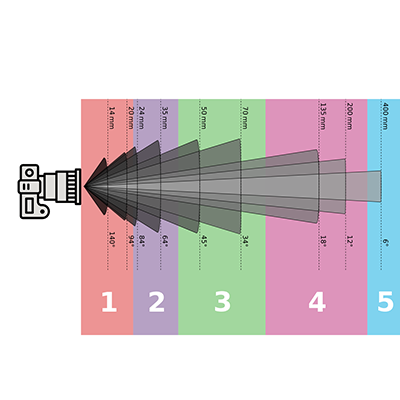
Field of View (FOV)
- Determines how much area the camera can capture
- Wide FOV (120°–200°) is ideal for ADAS and surround view
Aperture (F-Number)
- Controls light intake
- Lower F-number (e.g., F1.6) improves low-light performance
Distortion
- Affects image accuracy
- Critical for AI-based detection systems
Resolution & Sensor Compatibility
- Must match CMOS sensor size
- Ensures sharp and usable images
Temperature Resistance
- Typical range: -40°C to +85°C
- Ensures reliability in extreme climates
IP Rating
- Protects against dust and water
- Common ratings: IP67, IP69K
Mount Type
- Common: M12 (S-mount), M8
- Affects compatibility and installation
Specification Overview Table
| Parameter | Typical Value | Importance |
|---|---|---|
| FOV | 120°–200° | Coverage |
| Aperture | F1.6–F2.8 | Night performance |
| Temp Range | -40°C~85°C | Reliability |
| Distortion | <20% | Image accuracy |
| IP Rating | IP67/IP69K | Protection |
Automotive Lens Standards & Certifications
Meeting industry standards is essential for automotive applications.
Key Standards:
- AEC-Q (Automotive Electronics Council qualification)
- ISO/TS 16949 (Quality management)
- RoHS / REACH (Environmental compliance)
Why Standards Matter:
- Ensure product reliability
- Required for OEM partnerships
- Reduce risk in mass production
- Improve global market acceptance
How to Choose the Right Automotive Camera Lens
Selecting the right lens involves both technical and practical considerations.
Step-by-Step Selection Guide:
- Define the application
- ADAS, parking, cabin monitoring
- Match sensor size
- Ensure optical compatibility
- Choose appropriate FOV
- Wide vs narrow depending on use
- Consider environment
- Temperature, dust, vibration
- Check certifications
- AEC-Q, ISO compliance
- Evaluate supplier capability
- Customization, production capacity
Quick Selection Table
| Use Case | Recommended Lens Type |
|---|---|
| ADAS | Wide-angle, low distortion |
| Parking | Mid-FOV, high clarity |
| Cabin Monitoring | IR-compatible lens |
Why Custom Automotive Lenses Matter
Off-the-shelf lenses may not meet all requirements. Customization offers:
- Optimized optical performance
- Mechanical design tailored to housing
- Sensor-specific tuning
- Better integration with AI systems
Customization Benefits:
- Improved accuracy in ADAS
- Enhanced durability
- Competitive product differentiation
Why Choose TOWIN as Your Automotive Lens Manufacturer
TOWIN provides reliable and scalable solutions for global clients.
Key Advantages:
- Strong R&D and engineering support
- Flexible OEM/ODM customization
- Strict quality control systems
- Stable mass production capability
What You Get:
- Fast prototyping
- Consistent product quality
- International export experience
- Technical consultation support
FAQs
1. What makes a lens automotive grade?
- High durability
- Wide temperature tolerance
- Compliance with automotive standards
2. What is the best FOV for ADAS cameras?
- Typically 120° to 190°, depending on application
3. Are M12 lenses suitable for automotive use?
- Yes, M12 lenses are widely used due to compact size and flexibility
4. How do I choose a lens for low-light conditions?
- Select a lens with low F-number (e.g., F1.6)
5. Can automotive camera lenses be customized?
- Yes, most manufacturers (including TOWIN) offer full customization services
Conclusion
Choosing the right lens is essential for achieving reliable performance in modern vehicle imaging systems. From ADAS to driver monitoring, every application requires careful consideration of specifications, standards, and environmental conditions.
By understanding key parameters and working with a trusted supplier, you can ensure long-term success in your automotive projects. Whether you need standard products or customized solutions, investing in high-quality Automotive Grade Camera Lenses is the foundation of safe and intelligent driving systems.