


Low-light CCTV lenses
08/15/2025
10-Megapixels Low distortion wide angle HD lens
08/15/2025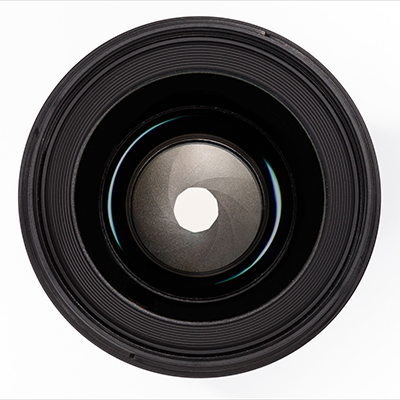
Aperture is one of the most important optical parameters in a camera lens because it controls how much light reaches the image sensor. Understanding aperture range comparison helps photographers, camera designers, and machine vision engineers evaluate lens performance under different lighting conditions. In industrial imaging, the F-number also influences exposure time, depth of field, image sharpness, and inspection reliability. Whether you are comparing F1.2, F1.4, F2.0, F2.8, or F4 lenses, selecting the right aperture requires considering the application, sensor characteristics, working distance, and lighting environment. This guide explains how different aperture ranges compare and how to choose an appropriate aperture for industrial machine vision applications.
Quick Answer: A lower F-number represents a wider aperture and allows more light to pass through the lens. A higher F-number represents a narrower aperture and generally provides greater depth of field, although diffraction may reduce image sharpness when the aperture becomes too small. For industrial applications, the best aperture is determined by balancing light sensitivity, depth of field, resolution, exposure time, and inspection requirements.
1. What Is Aperture in a Camera Lens?
Aperture refers to the opening inside a lens that controls the amount of light passing through the optical system to the image sensor. It is commonly expressed as an F-number, also called an F-stop, such as F1.2, F1.4, F2.0, F2.8, and F4.
The F-number is calculated using the following formula:
F-number = Focal Length / Entrance Pupil Diameter
A lower F-number indicates a larger relative aperture.
For example, an F1.4 lens has a wider maximum aperture than an F2.8 lens. Under comparable conditions, the F1.4 aperture allows approximately four times as much light as F2.8.
How Aperture Controls Light
The amount of light entering a lens is approximately proportional to the inverse square of its F-number, assuming comparable optical transmission and other imaging conditions.
- Wide aperture: Allows more light to reach the sensor, which can help reduce exposure time or ISO requirements.
- Narrow aperture: Allows less light to reach the sensor and generally increases depth of field.
- Adjustable aperture: Allows users to balance exposure and depth of field according to imaging requirements.
In machine vision systems, aperture selection is particularly important when inspecting moving objects, capturing fine surface details, or working under limited illumination.
2. Aperture Range Comparison: F1.2 vs F1.4 vs F2.0 vs F2.8 vs F4 vs F8
Different aperture values provide different light-gathering capabilities. Comparing their relative light transmission helps engineers understand how aperture settings affect exposure and industrial imaging performance.
Lens Aperture Comparison Table
| F-Number | Relative Light | Aperture Type | Typical Considerations |
|---|---|---|---|
| F1.2 | 100% | Very wide | Low-light imaging and shorter exposure potential |
| F1.4 | 73.5% | Wide | A balance of light collection and depth of field |
| F2.0 | 36% | Moderately wide | General-purpose imaging |
| F2.8 | 18.4% | Moderate | Controlled lighting and balanced imaging |
| F4 | 9% | Narrow | Greater depth of field |
| F8 | 2.25% | Very narrow | Greater depth of field, with increased diffraction considerations |
Note: Relative light values are theoretical calculations using F1.2 as the reference (100%), based on the inverse-square relationship of F-number. They assume equal shutter speed, ISO, scene illumination, and comparable lens transmission. Actual image brightness also depends on optical transmission, vignetting, and sensor characteristics. These values do not represent measured T-stops or the guaranteed aperture range of a particular lens.
What Is the Difference Between F1.2 and F1.4?
F1.2 provides a wider maximum aperture than F1.4. Theoretically, F1.2 collects approximately 36% more light than F1.4 under comparable conditions.
This difference can be useful in low-light applications where exposure time needs to remain short. However, a wider maximum aperture does not automatically guarantee better image quality. Optical aberrations, lens design, sensor matching, and actual operating aperture also influence final performance.
For industrial applications, engineers should evaluate the lens using its optical performance data and actual imaging conditions rather than selecting a lens based on F-number alone.
3. Wide Aperture vs Narrow Aperture
Understanding the differences between wide and narrow apertures is essential when selecting a lens for a particular imaging task. Both aperture types have advantages and limitations.
Wide Aperture: Advantages and Limitations
A wide aperture, such as F1.2 or F1.4, allows more light to enter the lens. This can be beneficial when the imaging environment has limited illumination or when a short exposure time is required.
Advantages:
- Collects more light under comparable conditions.
- Supports shorter exposure times in suitable imaging systems.
- Can improve low-light imaging flexibility.
- Provides greater exposure flexibility for high-speed imaging.
Limitations:
- Generally produces a shallower depth of field at the same magnification and focus distance.
- May make focusing and mechanical alignment more sensitive.
- Some optical aberrations may be more noticeable when a lens operates near maximum aperture.
Narrow Aperture: Advantages and Limitations
A narrow aperture, such as F4 or F8, reduces the amount of light reaching the sensor. It can increase depth of field and help keep objects at different distances within the acceptable focus range.
Advantages:
- Generally increases depth of field.
- Can improve image uniformity in some optical systems.
- May reduce certain lens aberrations when stopping down.
- Can help image objects with varying heights or working distances.
Limitations:
- Reduces the amount of incoming light.
- May require stronger illumination or longer exposure times.
- Can introduce diffraction-related resolution loss at very small apertures.
For this reason, the best aperture is not necessarily the widest or narrowest setting. It is the aperture that provides sufficient light, acceptable depth of field, and the required image quality for the application.
4. How Aperture Affects Industrial Machine Vision
In industrial machine vision, aperture is more than an exposure parameter. It directly influences how reliably a camera system can capture and analyze objects during inspection, measurement, identification, and automated production.
4.1 Aperture and Exposure Time
A larger aperture allows more light to reach the image sensor. This can help engineers use shorter exposure times while maintaining sufficient image brightness.
Short exposure times are especially important when inspecting products moving along a conveyor belt or capturing fast-moving components. Reducing exposure time can help minimize motion blur, provided the illumination and camera system are properly configured.
In applications such as automated optical inspection and high-speed manufacturing, aperture selection should be coordinated with camera frame rate, object speed, and lighting intensity.
4.2 Aperture and Depth of Field
Depth of field (DOF) refers to the range of object distances that appear acceptably sharp in an image. At the same focus distance and magnification, a smaller aperture generally increases depth of field.
This is particularly useful in industrial inspection when objects have uneven surfaces, different heights, or slight variations in positioning.
For example, a machine vision system inspecting components with different surface levels may require sufficient depth of field to keep critical inspection areas in focus.
However, increasing depth of field by continuously reducing the aperture is not always the best solution. The resulting reduction in light and potential diffraction must also be considered.
4.3 Aperture and Image Sharpness
Image sharpness depends on several optical and imaging factors, including lens aberrations, diffraction, sensor pixel size, focus accuracy, and image processing.
When a lens operates at its widest aperture, certain aberrations may reduce contrast or sharpness, particularly toward the image edges. Stopping down can improve performance in some lenses.
However, when the aperture becomes too small, diffraction spreads light and reduces the contrast of fine image details. This can be particularly important for high-resolution machine vision cameras with small pixel sizes.
Engineers should therefore evaluate the lens at its intended operating aperture using relevant optical performance data, such as MTF, rather than assuming that a smaller aperture always produces a sharper image.
4.4 Aperture and Resolution
Resolution is a critical consideration in precision inspection. A machine vision lens must deliver sufficient optical detail to match the image sensor’s resolution and pixel size.
Aperture influences the balance between optical aberrations and diffraction. A wide aperture may expose certain aberrations, while a very narrow aperture may reduce high-frequency contrast because of diffraction.
The optimum operating aperture depends on the lens optical design, wavelength, sensor characteristics, and required inspection detail.
For more information about the relationship between optical design and imaging performance, see our guide to industrial lens optical design.
5. How to Choose the Right Aperture for Industrial Lenses
Selecting an appropriate aperture requires evaluating the entire imaging system rather than focusing on a single lens specification. The following factors can help engineers determine a suitable aperture for different industrial applications.
5.1 Low-Light Inspection
When an inspection environment has limited illumination, a lens with a wider maximum aperture can provide greater light-gathering capability.
For example, F1.2 and F1.4 lenses may be considered for traffic monitoring, security imaging, and other applications where available light is limited.
However, engineers should also evaluate image noise, sensor sensitivity, lens transmission, exposure time, and the possibility of adding controlled illumination.
5.2 High-Speed Inspection
High-speed inspection systems often require short exposure times to reduce motion blur. A wider aperture can help maintain sufficient image brightness when exposure time is reduced.
In practice, aperture should be evaluated together with lighting intensity, camera frame rate, sensor shutter type, and object movement.
5.3 Precision Measurement
Precision measurement requires consistent image quality and reliable edge definition. The aperture should provide sufficient depth of field without sacrificing the contrast of fine details.
For these applications, engineers should test the lens at the intended working distance and aperture setting. MTF performance, distortion, sensor pixel size, and illumination uniformity should also be evaluated.
5.4 Large Depth-of-Field Applications
When objects have different heights or uneven surfaces, a smaller aperture may help increase the acceptable focus range.
However, if the aperture is reduced too much, diffraction may affect the visibility of small defects or measurement features. Additional lighting may be needed to compensate for the reduced light entering the lens.
Industrial Aperture Selection Reference
| Application Requirement | Aperture Consideration | Important Factors |
|---|---|---|
| Low-light monitoring | Consider a wider maximum aperture | Sensor sensitivity and exposure |
| High-speed inspection | Sufficient light for short exposure | Object speed and illumination |
| Precision measurement | Optimize aperture for sharpness | MTF and pixel size |
| Uneven object surfaces | Consider a smaller operating aperture | Depth of field and diffraction |
| Outdoor traffic monitoring | Consider adjustable iris control | Changing illumination conditions |
These are engineering considerations rather than fixed aperture prescriptions. The final aperture should be validated using the actual camera, lens, lighting, working distance, and inspection target.
For a more comprehensive selection process, explore our industrial lens selection guide.
6. Fixed Aperture vs Manual Iris vs Auto Iris
In addition to comparing F-number values, engineers should understand how the aperture is controlled. Industrial and security lenses may use fixed aperture, manual iris, or automatic iris mechanisms depending on the application.
6.1 Fixed Aperture Lenses
A fixed aperture lens has a non-adjustable aperture setting. It is suitable for applications where illumination conditions remain relatively stable and the imaging system operates under controlled conditions.
Fixed aperture designs can simplify system configuration because the aperture does not need to be adjusted during operation.
6.2 Manual Iris Lenses
A manual iris lens allows the user to adjust the aperture mechanically during installation or system setup. This provides flexibility when optimizing exposure and depth of field for a specific application.
Manual iris lenses are useful in industrial inspection systems where lighting conditions and camera settings are controlled after installation.
Explore manual iris lenses for available lens configurations.
6.3 Auto Iris Lenses
An auto iris lens adjusts its aperture automatically in response to changes in illumination. This is useful in outdoor monitoring and surveillance environments where lighting conditions can vary throughout the day.
DC auto iris lenses use an electrical control mechanism to adjust the iris according to the camera system’s control signal.
For applications requiring automatic exposure adjustment, explore TOWIN’s DC auto iris lenses.
Comparison of Iris Control Types
| Iris Type | Adjustment | Typical Application |
|---|---|---|
| Fixed Aperture | Not adjustable | Stable lighting environments |
| Manual Iris | Manual adjustment | Controlled industrial imaging |
| Auto Iris | Automatic electrical control | Changing outdoor lighting |
7. TOWIN Industrial Lenses with Different Aperture Options
TOWIN provides industrial optical lens solutions for machine vision, traffic monitoring, security, and other imaging applications. Different lens configurations are available to support different focal lengths, sensor formats, resolutions, and iris requirements.
When comparing industrial lenses, engineers should consider maximum aperture together with focal length, image circle, sensor compatibility, distortion, resolution, and iris control.
7.1 F1.2 ITS Lenses
For applications requiring a wide maximum aperture, TOWIN offers an F1.2 ITS lens category. These lenses can be considered for imaging systems where light-gathering capability is an important design requirement.
View the available F1.2 ITS lenses to review their specifications and configuration options.
7.2 F1.4 Traffic Monitoring Lenses
TOWIN’s F1.4 traffic monitoring lens category includes different focal lengths, sensor formats, resolutions, and iris configurations. Depending on the specific model, available configurations include manual iris and DC auto iris options.
These lenses can be evaluated for intelligent transportation systems and traffic monitoring applications where optical performance and changing illumination conditions must be considered.
Explore the available F1.4 traffic monitoring lenses to compare product specifications.
7.3 C-Mount Industrial Lenses
For machine vision systems requiring different focal lengths and sensor formats, C-Mount lenses provide a range of optical configurations. When selecting a C-Mount lens, engineers should evaluate its maximum and operating aperture, image circle, resolution, and mechanical compatibility with the camera.
Browse TOWIN’s C-Mount industrial lenses for more product options.
8. How Aperture Selection Fits into Machine Vision and Smart Traffic Applications
Aperture requirements vary according to the imaging environment, object characteristics, camera specifications, and inspection objectives. Understanding the application helps engineers determine whether a wide aperture, adjustable iris, or a different optical configuration is more appropriate.
8.1 Machine Vision Systems
In machine vision systems, aperture selection influences exposure, depth of field, and the visibility of small inspection details. Applications such as defect detection, automated sorting, and dimensional measurement require a suitable balance between light collection and optical sharpness.
Explore TOWIN’s machine vision solutions to learn more about industrial lens applications.
8.2 Smart Traffic and Intelligent Transportation
Traffic monitoring systems may operate under changing outdoor illumination, including daylight, nighttime, and variable weather conditions. Lens aperture and iris control should therefore be considered together with sensor sensitivity, exposure control, and infrared compatibility.
For these applications, explore TOWIN’s smart traffic solutions and industrial traffic monitoring lens options.
9. Other Factors to Consider When Selecting an Industrial Lens
Aperture is only one part of the lens selection process. To achieve reliable imaging performance, engineers should evaluate the following specifications together.
9.1 Sensor Size and Compatibility
The lens image circle must adequately cover the active area of the image sensor. A mismatch may result in vignetting or an unusable image area.
Sensor pixel size and resolution also influence how effectively the imaging system can capture fine details. Learn more about image sensor characteristics before selecting a lens.
9.2 Focal Length and Field of View
Focal length determines the lens’s angular field of view in combination with the sensor format and affects the required camera position and working distance.
Engineers should confirm that the selected focal length provides the required field of view for the target object and inspection area.
Use TOWIN’s field of view calculator to help evaluate imaging coverage and lens selection.
9.3 Resolution and MTF Performance
Lens resolution should match the image sensor’s requirements. Modulation Transfer Function (MTF) describes how effectively an optical system transfers contrast at different spatial frequencies.
When selecting a high-resolution industrial lens, engineers should evaluate MTF performance at the intended aperture and image field rather than relying only on the megapixel rating.
9.4 Distortion and Image Uniformity
Geometric distortion can affect measurement accuracy and object recognition, particularly in applications requiring precise dimensional analysis.
For applications where geometric accuracy is important, lens distortion should be evaluated together with resolution, field of view, and image quality across the sensor.
10. Frequently Asked Questions About Lens Aperture Comparison
Q1: What is the difference between F1.2 and F1.4?
A: F1.2 is a wider aperture than F1.4 and theoretically allows approximately 36% more light to enter the lens under comparable conditions. It can be useful in low-light applications, although actual image performance also depends on optical transmission, aberrations, sensor sensitivity, and operating conditions.
Q2: Is a lower F-number always better?
A: No. A lower F-number provides a wider aperture and greater light-gathering capability, but it does not automatically produce better image quality. Depth of field, optical aberrations, diffraction, and application requirements must also be considered.
Q3: Does a smaller aperture increase depth of field?
A: Generally, yes. At the same focal length, focus distance, and magnification, reducing the aperture increases depth of field. However, a very small aperture may introduce diffraction and reduce fine-detail contrast.
Q4: How does aperture affect machine vision image quality?
A: Aperture influences the amount of light reaching the sensor, exposure time, depth of field, and the balance between optical aberrations and diffraction. The correct operating aperture depends on sensor specifications, illumination, object movement, and required inspection accuracy.
Q5: What aperture is suitable for low-light industrial imaging?
A: A lens with a wider maximum aperture, such as F1.2 or F1.4, may be useful when illumination is limited. However, the final selection should also consider sensor sensitivity, lens transmission, exposure time, and whether additional illumination can be introduced.
Q6: What is the difference between manual iris and auto iris lenses?
A: Manual iris lenses require users to adjust the aperture mechanically, usually during installation or system setup. Auto iris lenses use an electrical control mechanism to adjust the aperture in response to changing illumination. Manual iris is often suitable for controlled environments, while auto iris can be useful for outdoor monitoring.
Q7: How do I select the right aperture for an industrial camera lens?
A: Start by identifying the lighting conditions, object speed, working distance, required depth of field, sensor pixel size, and inspection accuracy. Then compare lens aperture, MTF performance, and actual imaging results under the intended operating conditions.
11. Conclusion: Choosing the Right Aperture for Industrial Imaging
Aperture range comparison is an important step in understanding camera lens performance. A wider aperture, such as F1.2 or F1.4, allows more light to enter the optical system, while a narrower aperture can increase depth of field but may introduce diffraction when reduced too far.
For industrial machine vision and traffic monitoring applications, the right aperture depends on the balance between exposure, depth of field, resolution, lighting, and inspection requirements. Engineers should evaluate the complete optical system rather than choosing a lens based on F-number alone.
Whether you need a wide-aperture lens for low-light imaging, an adjustable iris for changing outdoor conditions, or a high-resolution lens for precision inspection, TOWIN can help evaluate suitable industrial optical configurations.
Looking for the Right Industrial Lens?
Share your sensor size, focal length, working distance, aperture requirements, and application details. TOWIN can help you evaluate suitable lens configurations for your imaging system.