


Which Lenses Are Used for Facial Recognition Systems?
06/27/2026
What Is a Smart Traffic Lens? A Complete Guide for Intelligent Transportation Systems
06/28/2026
How to Choose the Right Industrial Lens is one of the most common questions engineers face when designing machine vision, robotics, security, and industrial imaging systems.
Even the most advanced image sensor cannot achieve optimal performance if it is paired with the wrong lens. Factors such as sensor size, focal length, field of view (FOV), working distance, distortion, and mounting type all influence image quality and system accuracy.
Understanding these factors is a fundamental part of modern Optical Design. In this guide, we will explain the complete industrial lens selection process and help you identify the best lens for your application.
Why Industrial Lens Selection Matters
An industrial lens is responsible for directing light onto the image sensor and determining how accurately a system captures visual information.
Poor lens selection can lead to:
- Blurred images
- Reduced inspection accuracy
- Incorrect measurements
- Limited field of view
- AI recognition errors
- Increased system costs
A properly selected lens helps ensure:
- High image quality
- Reliable inspection results
- Better machine vision performance
- Improved measurement accuracy
- Long-term system stability
For industrial applications, lens selection should always be considered alongside overall optical design principles.
Key Parameters for Choosing an Industrial Lens
Before selecting a lens, it is important to understand the primary optical parameters.
Sensor Size
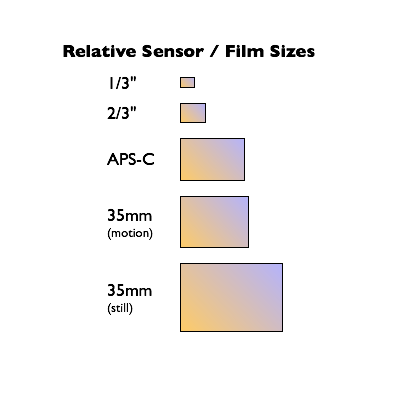
The sensor size determines the image circle required from the lens.
Common industrial sensor formats include:
- 1/3″
- 1/2.5″
- 1/2″
- 2/3″
- 1″
- 1.1″
A lens must provide sufficient image coverage for the selected sensor.
Learn more in our Sensor Guide.
Focal Length
Focal length directly affects image magnification and field of view.
General guidelines:
| Focal Length | Field of View |
|---|---|
| 2.8mm | Very Wide |
| 4mm | Wide |
| 6mm | Moderate |
| 8mm | Standard |
| 12mm | Narrow |
| 25mm+ | Telephoto |
Short focal lengths provide wider views, while longer focal lengths provide greater magnification.
Field of View (FOV)
Field of view refers to the area visible within the camera image.
The required FOV depends on:
- Object size
- Inspection area
- Working distance
Before purchasing a lens, engineers should calculate the required FOV using our FOV Calculator.
Working Distance
Working distance is the space between the lens and the target object.
A longer working distance generally requires:
- Longer focal lengths
- Larger imaging systems
A shorter working distance often benefits from:
- Wide-angle lenses
- Compact optical designs
Distortion
Lens distortion changes the perceived shape of objects.
Common distortion types include:
- Barrel distortion
- Pincushion distortion
- Mustache distortion
Applications involving measurement and metrology typically require low-distortion optics.
For more information, visit our Distortion Guide.
Resolution
Lens resolution must match sensor resolution.
As sensor megapixel counts increase, lens performance becomes increasingly important.
Factors influencing resolution include:
- Lens design
- Optical materials
- Manufacturing tolerances
- Sensor pixel size
Step-by-Step Industrial Lens Selection Process
The easiest way to choose a lens is to follow a structured process.
Step 1: Define Your Application
Determine the system purpose:
- Inspection
- Measurement
- Object detection
- Robotics guidance
- Traffic monitoring
- Security surveillance
Application requirements will drive all subsequent lens decisions.
Step 2: Select the Sensor
Choose the sensor based on:
- Resolution requirements
- Pixel size
- Frame rate
- Budget
Reference our Sensor Guide for sensor matching recommendations.
Step 3: Calculate Field of View
Determine the area that must be visible in the image.
Use the FOV Calculator to calculate the required focal length.
Step 4: Determine Working Distance
Measure the distance between the camera and target.
This value significantly influences lens selection.
Step 5: Select Focal Length
Using sensor size, FOV, and working distance, determine the appropriate focal length.
This step is one of the most critical aspects of successful lens selection.
Step 6: Evaluate Distortion Requirements
Measurement applications require minimal distortion.
If dimensional accuracy is important, consider:
- Low distortion lenses
- Telecentric lenses
See our article on Telecentric Lens vs Standard Lens.
Step 7: Choose Lens Mount Type
Common industrial lens mounts include:
Advantages:
- Compact size
- Lightweight
- Cost-effective
- Ideal for embedded vision
Advantages:
- Larger sensor support
- Higher optical performance
- Broad industrial adoption
Article recommendation:
Choosing a Lens Based on Application
Different applications require different optical characteristics.
Machine Vision Inspection
Machine Vision systems often require:
- High resolution
- Low distortion
- Stable image quality
Recommended:
- FA Lens
- Low Distortion Lens
Robotics Vision
Robotics Vision applications often require:
- Wide field of view
- Compact size
- Fast image acquisition
Recommended:
- M12 Lens
- Wide-Angle Lens
Smart Security
Smart Security systems often require:
- Wide coverage
- Day/night imaging
- Infrared correction
Recommended:
- IR Corrected Lens
ADAS Systems
ADAS applications require:
- Wide-angle imaging
- High reliability
- Automotive-grade performance
Recommended:
- Automotive Lens
- Low Distortion Lens
Medical Imaging
Medical Imaging applications require:
- High resolution
- Accurate color reproduction
- Minimal optical distortion
Recommended:
- Precision Imaging Lens
- Low Distortion Lens
Common Industrial Lens Selection Mistakes
Avoid these common mistakes:
Choosing Based on Price Alone
Low-cost lenses may reduce system performance.
Ignoring Sensor Compatibility
A lens must fully cover the sensor.
Incorrect FOV Calculations
Always verify calculations using the FOV Calculator.
Overlooking Distortion
Distortion can significantly impact measurement accuracy.
Ignoring Working Distance
The wrong focal length often results from incorrect distance assumptions.
Recommended Industrial Lens Types
Best for:
- Embedded Vision
- AI Cameras
- Robotics
Best for:
- Machine Vision
- Industrial Inspection
Best for:
- Measurement
- Optical Inspection
Telecentric Lens
Best for:
- Precision Metrology
- Semiconductor Inspection
- High-Accuracy Measurement
At this stage, many engineers searching for How to Choose the Right Industrial Lens realize that application requirements are often more important than lens specifications alone.
Industrial Lens Selection Checklist
Before finalizing your lens selection, verify:
- ✔ Sensor Size
- ✔ Resolution
- ✔ Field of View
- ✔ Working Distance
- ✔ Distortion Requirements
- ✔ Lens Mount
- ✔ Environmental Conditions
- ✔ Lighting Conditions
- ✔ Budget
- ✔ Future Scalability
Related Resources
Continue exploring these resources:
- Optical Design
- Lens Selection Guide
- Sensor Guide
- Distortion Guide
- FOV Calculator
- Machine Vision Solutions
- Robotics Vision Solutions
- ADAS Solutions
- Medical Imaging Solutions
Frequently Asked Questions
Q: How do I choose the right industrial lens?
A: Start by determining your sensor size, field of view, working distance, and application requirements.
Q: How do I match a lens to a sensor?
A: The lens image circle must fully cover the sensor size.
Q: What focal length should I use?
A: The correct focal length depends on sensor size, working distance, and desired FOV.
Q: How do I calculate field of view?
A: Use the FOV Calculator to determine the appropriate lens parameters.
Q: What causes image distortion?
A: Optical design limitations can create barrel, pincushion, or mustache distortion.
Q: What is the difference between M12 and C-Mount lenses?
A: M12 lenses are compact and cost-effective, while C-Mount lenses generally support larger sensors and higher performance.
Q: When should I use a telecentric lens?
A: Telecentric lenses are recommended for precision measurement and dimensional inspection applications.
Q: What lens is best for machine vision?
A: The best lens depends on the inspection task, sensor, resolution, and environmental conditions.
Q: How important is working distance?
A: Working distance directly affects focal length requirements and system layout.
Q: How can I improve image quality?
A: Use a properly matched lens, sensor, lighting system, and optical design strategy.
Conclusion
Choosing the correct industrial lens requires balancing sensor size, focal length, field of view, distortion control, working distance, and application requirements.
By understanding the principles of Optical Design and following a structured lens selection process, engineers can improve image quality, inspection accuracy, and overall system performance.
Whether you are developing a machine vision system, robotics platform, ADAS solution, medical imaging device, or security camera, understanding How to Choose the Right Industrial Lens is essential for building a reliable and successful imaging system.
.png)